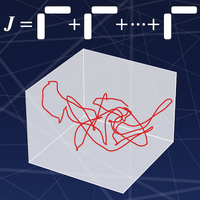
A new classical algorithm shows that noise restricts non-error-corrected quantum computational power more generally than previously recognized.
A Polynomial-Time Classical Algorithm for Noisy Quantum Circuits
Thomas Schuster, Chao Yin, Xun Gao, and Norman Y. Yao
Phys. Rev. X 15, 041018 (2025)
Eleonora Raimondo, Esteban Garzón, Yixin Shao, Andrea Grimaldi, Stefano Chiappini, Riccardo Tomasello, Noraica Davila-Melendez, Jordan A. Katine, Mario Carpentieri, Massimo Chiappini, Marco Lanuzza, Pedram Khalili Amiri, and Giovanni Finocchio
Phys. Rev. X 15, 041001 (2025) - Published 1 October, 2025
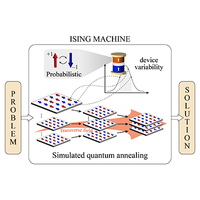
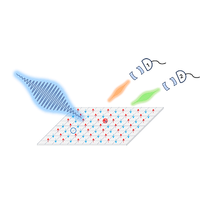
Simulated quantum annealing enhances probabilistic Ising Machines by enabling faster, more reliable solutions to complex optimization problems using interacting copies of the system guided by a time-dependent field.
K. E. Castoria, N. R. Beysengulov, G. Koolstra, H. Byeon, E. O. Glen, M. Sammon, S. A. Lyon, J. Pollanen, and D. G. Rees
Phys. Rev. X 15, 041002 (2025) - Published 2 October, 2025
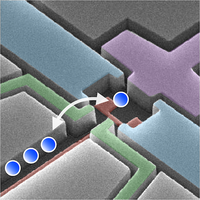
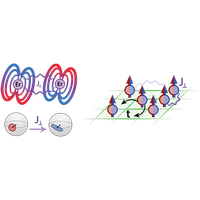
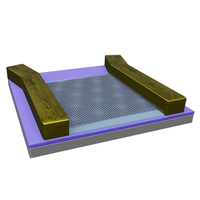
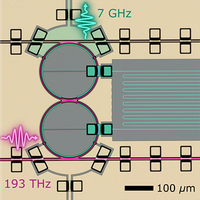
A microchannel quantum dot integrated with a superconducting resonator allows for the precision trapping and detection of single electrons on superfluid helium above 1 K, demonstrating control in conditions suited for scalable quantum processors.
Jonathan Hänni, Alberto E. Rodríguez-Moldes, Félicien Appas, Soeren Wengerowsky, Dario Lago-Rivera, Markus Teller, Samuele Grandi, and Hugues de Riedmatten
Phys. Rev. X 15, 041003 (2025) - Published 3 October, 2025
Heralded entanglement between two solid-state quantum memories with on-demand retrieval and temporal multimodality demonstrates a crucial building block for scalable quantum repeaters and long-distance quantum networks.
R. Dubey, K. Czerski, Gokul Das H., A. Kowalska, N. Targosz-Sleczka, M. Kaczmarski, and M. Valat
Phys. Rev. X 15, 041004 (2025) - Published 7 October, 2025
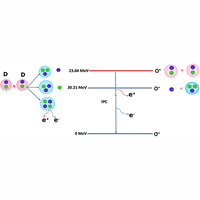
Deuteron-deuteron fusion at energies below 5 keV occurs mainly via a helium-4 resonance that decays by emitting electron-positron pairs, a newly observed, dominant reaction channel important for stellar nucleosynthesis and fusion models.
D. M. Broun, Vivek Mishra, J. S. Dodge, and P. J. Hirschfeld
Phys. Rev. X 15, 041005 (2025) - Published 8 October, 2025
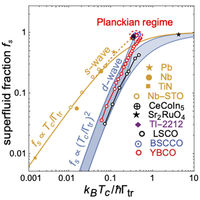
A newly uncovered fundamental form of universality classifies all superconductors into a unified framework by accounting for chemical impurities and inelastic scattering.
Pranay Gorantla, Shu-Heng Shao, and Nathanan Tantivasadakarn
Phys. Rev. X 15, 041006 (2025) - Published 8 October, 2025
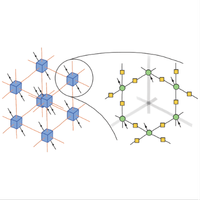
Relying on tensor networks and ZX-calculus, a visual framework for studying noninvertible symmetries in quantum systems reveals how these novel transformations constrain ground states and reshape our understanding of dualities.
Eric Nilsson, Ulf Gran, and Johannes Hofmann
Phys. Rev. X 15, 041007 (2025) - Published 14 October, 2025
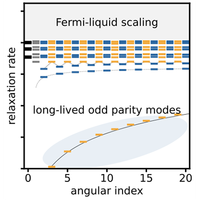
Analysis of the equations governing a two-dimensional Fermi liquid with Coulomb interactions uncovers long-lived odd-parity collective modes that decay far more slowly than standard theory predicts.
Lucas Daguerre, Robin Blume-Kohout, Natalie C. Brown, David Hayes, and Isaac H. Kim
Phys. Rev. X 15, 041008 (2025) - Published 14 October, 2025
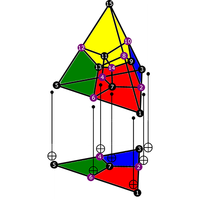
A new trapped-ion experiment creates the most reliable “magic state” yet, protecting the state from environmental noise using minimal overhead and advancing practical quantum computing.
Abdulkarim Hariri, Shuai Liu, Haowei Shi, Quntao Zhuang, Xudong Fan, and Zheshen Zhang
Phys. Rev. X 15, 041009 (2025) - Published 15 October, 2025
Entangled dual-comb spectroscopy combines a classical comb with an entangled quantum comb to suppress photon noise, achieving faster, more precise measurements than classical methods and enabling advanced sensing and metrology applications.
Tomotaka Kuwahara
Phys. Rev. X 15, 041010 (2025) - Published 16 October, 2025
Quantum systems at equilibrium are more localized than previously thought when looked at through the lens of conditional mutual information, a key way of measuring three-part correlations.
Samuel L. Moore, Miguel Sánchez Sánchez, M. C. Strasbourg, Y. Shao, J. Pack, Y. Wang, D. J. Rizzo, B. S. Jessen, Matthew Cothrine, David G. Mandrus, Takashi Taniguchi, Kenji Watanabe, K. S. Burch, C. R. Dean, J. Hone, M. Fogler, A. J. Millis, A. Rubio, P. J. Schuck, T. Stauber, and D. N. Basov
Phys. Rev. X 15, 041011 (2025) - Published 21 October, 2025
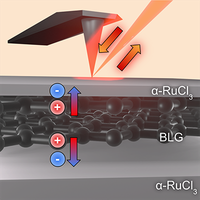
A new, gate-free, highly tunable platform for controlling charge-carrier density in multilayer graphene reveals how phonons and plasmons in the material respond to unexplored extremes of doping and electric fields.
Remmy Zen, Jan Olle, Luis Colmenarez, Matteo Puviani, Markus Müller, and Florian Marquardt
Phys. Rev. X 15, 041012 (2025) - Published 22 October, 2025
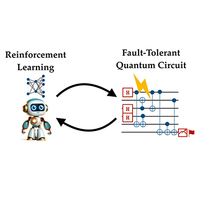
Using reinforcement learning to design fault-tolerant quantum circuits leads to efficient logical state preparation schemes with fewer gates and flag qubits than human-designed methods, advancing quantum error correction.
Amir Arqand, Thomas A. Hahn, and Ernest Y.-Z. Tan
Phys. Rev. X 15, 041013 (2025) - Published 28 October, 2025
A unified framework combining entropy accumulation and quantum probability estimation provides tight, practical bounds on certified randomness generation, paving the way for simpler and stronger security analyses in quantum cryptography.
Nicolò Beato, Pranay Patil, and Marin Bukov
Phys. Rev. X 15, 041014 (2025) - Published 29 October, 2025
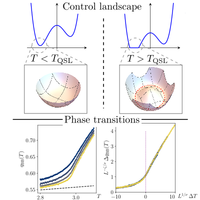
Analytical and numerical tools adapted from statistical physics reveal phase transitions in quantum control landscapes, explaining when new optimal strategies emerge and guiding the design of more efficient quantum technologies.
David Martin, Daniel Seara, Yael Avni, Michel Fruchart, and Vincenzo Vitelli
Phys. Rev. X 15, 041015 (2025) - Published 30 October, 2025
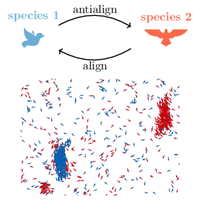
Nonreciprocal interactions—where influence is not mutual—dramatically reshape the phenomenology of flocking in active matter. Competing species form dynamic, synchronized clusters with time-dependent motion in the thermodynamic limit.
Guang Hao Low, Robbie King, Dominic W. Berry, Qiushi Han, A. Eugene DePrince, III, Alec F. White, Ryan Babbush, Rolando D. Somma, and Nicholas C. Rubin
Phys. Rev. X 15, 041016 (2025) - Published 31 October, 2025
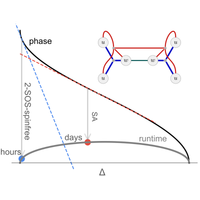
A new quantum algorithm framework reduces gate counts for ground-state energy estimation in molecular simulations by combining spectral amplification, sum-of-squares Hamiltonian representations, and integral compression.
Q. Martinet, Y. I. Li, A. Aubret, E. Hannezo, and J. Palacci
Phys. Rev. X 15, 041017 (2025) - Published 31 October, 2025
Active solids—elastic materials built from energy-consuming parts—in the shape of microbeams rotate or oscillate and reveal tunable lifelike motion, paving the way for adaptive, shape-shifting materials and microscopic machines.
Thomas Schuster, Chao Yin, Xun Gao, and Norman Y. Yao
Phys. Rev. X 15, 041018 (2025) - Published 3 November, 2025
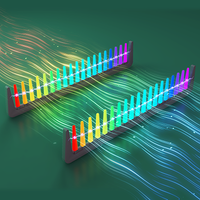
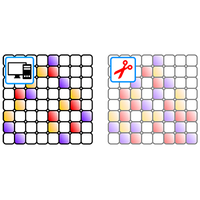
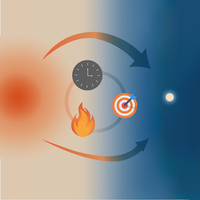
A new classical algorithm shows that noise restricts non-error-corrected quantum computational power more generally than previously recognized.
David G. Clark, Owen Marschall, Alexander van Meegen, and Ashok Litwin-Kumar
Phys. Rev. X 15, 041019 (2025) - Published 3 November, 2025
The structure of brain connectivity predicts collective neural activity, with a small number of connectivity features determining activity dimensionality, linking circuit architecture to network-level computations.
Gautam Nambiar, Andrey Grankin, and Mohammad Hafezi
Phys. Rev. X 15, 041020 (2025) - Published 4 November, 2025
By linking quantum optical measurements to electronic correlations, a new framework shows how photon correlations can reveal hidden properties of quantum materials, opening new ways to probe phenomena like spin chirality and anyons.
Alec Douglas, Vassilios Kaxiras, Lin Su, Michal Szurek, Vikram Singh, Ognjen Marković, and Markus Greiner
Phys. Rev. X 15, 041021 (2025) - Published 5 November, 2025
Quantum sensors can surpass their current limits by using entanglement. A method to create entangled states with fermionic erbium atoms reduces measurement noise fivefold while opening paths to advanced sensing and fundamental physics tests.
Michal P. Heller, Fabio Ori, and Alexandre Serantes
Phys. Rev. X 15, 041022 (2025) - Published 6 November, 2025
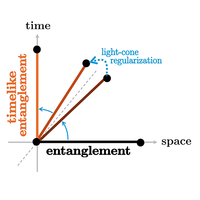
An approach for defining and computing temporal entanglement extends holographic methods from space to time, overcoming previously unsolved ambiguities and revealing how quantum information can be understood for systems extending in the time direction.
M. Valentini, M. W. van Mourik, F. Butt, J. Wahl, M. Dietl, M. Pfeifer, F. Anmasser, Y. Colombe, C. Rössler, P. C. Holz, R. Blatt, A. Bermudez, M. Müller, T. Monz, and P. Schindler
Phys. Rev. X 15, 041023 (2025) - Published 6 November, 2025
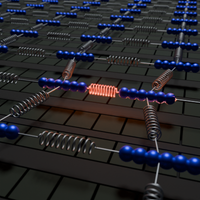
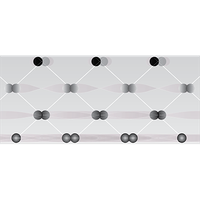
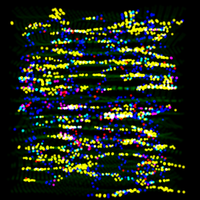
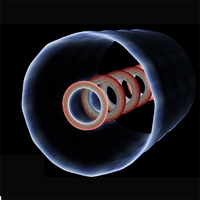
A two-dimensional trapped-ion architecture called the quantum spring array offers a novel method for hosting a large quantum computer.
Andrea De Luca, Chunxiao Liu, Adam Nahum, and Tianci Zhou
Phys. Rev. X 15, 041024 (2025) - Published 7 November, 2025
Rare measurements in quantum systems cause a slow purification process. Mapping this process to a 1D dilute gas reveals a universal scaling law for how entropy and uncertainty decrease over time.
Yijia Xu (许逸葭), Yixu Wang (王亦许), Christophe Vuillot, and Victor V. Albert
Phys. Rev. X 15, 041025 (2025) - Published 10 November, 2025
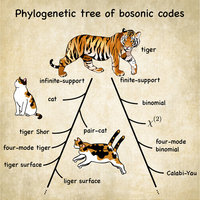
Tiger codes provide a unified framework for designing quantum error-correcting codes directly in harmonic oscillators, using integer-based homology to exploit their full structure and enable scalable quantum information processing.
O. Duranthon and L. Zdeborová
Phys. Rev. X 15, 041026 (2025) - Published 10 November, 2025
An asymptotic analysis of graph convolutional networks shows that deeper architectures can boost performance when designed with residual connections, offering the first precise theory for infinitely deep graph neural networks.
Jonathan Bauermann, Giacomo Bartolucci, Job Boekhoven, Frank Jülicher, and Christoph A. Weber
Phys. Rev. X 15, 041027 (2025) - Published 12 November, 2025
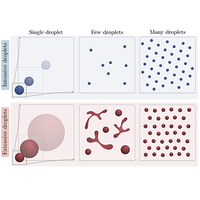
Analytical and numerical analyses show that chemically active droplets can either stabilize at a fixed size or grow indefinitely, revealing fundamental rules that may govern droplet dynamics in living cells.
Sebastian Buchberger, Yann in ’t Veld, Akhil Rajan, Philip A. E. Murgatroyd, Brendan Edwards, Bruno K. Saika, Naina Kushwaha, Maria H. Visscher, Jan Berges, Dina Carbone, Jacek Osiecki, Craig Polley, Tim Wehling, and Phil D. C. King
Phys. Rev. X 15, 041028 (2025) - Published 12 November, 2025
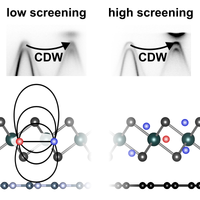
Experiments on monolayer TiSe grown on different substrates show that its charge-density wave persists even when exciton formation is suppressed, proving that lattice effects—not excitons—drive the ordered state.
Tan Van Vu and Keiji Saito
Phys. Rev. X 15, 041029 (2025) - Published 13 November, 2025
A universal trade-off links time, cost, and error in thermodynamic processes, showing that perfection requires infinite resources. This limit applies to both classical and quantum systems, guiding the design of efficient control and information processing.
Di Tian, Haotian Zheng, Zewei Huang, Sijie Wu, Pengcheng Li, Cong Li, Jianbing Zhang, Xinyu Shu, Jinling Zhou, Yang Liu, Yanhong Gu, Meng Wang, Di Yi, Tianxiang Nan, Zhen Chen, Qing He, Huaqiang Wu, Shuyun Zhou, Weidong Luo, and Pu Yu
Phys. Rev. X 15, 041030 (2025) - Published 14 November, 2025
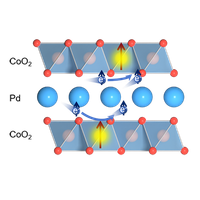
Hydrogenation treatment unlocks robust room-temperature ferromagnetism in the highly conductive layered oxide PdCoO, creating a natural superlattice of metallic and magnetic layers for potential spintronic applications.
Jia-Bao Ji et al.
Phys. Rev. X 15, 041031 (2025) - Published 14 November, 2025
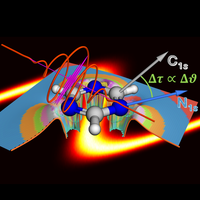
Attosecond x-ray measurements reveal that electrons escape more slowly from nitrogen than from carbon atoms in molecules, showing how atomic composition and symmetry shape ultrafast, element-specific electron dynamics.
Zijie Zhu, Yann Kiefer, Samuel Jele, Marius Gächter, Giacomo Bisson, Konrad Viebahn, and Tilman Esslinger
Phys. Rev. X 15, 041032 (2025) - Published 18 November, 2025
Neutral-atom qubits in optical lattices can be linked over long distances using topological pumping, robustly moving entangled atoms in their own “quantum lanes” to enable scalable, programmable quantum circuits.
A. Díez-Carlón, J. Díez-Mérida, P. Rout, D. Sedov, P. Virtanen, S. Banerjee, R. P. S. Penttilä, P. Altpeter, K. Watanabe, T. Taniguchi, S.-Y. Yang, K. T. Law, T. T. Heikkilä, P. Törmä, M. S. Scheurer, and D. K. Efetov
Phys. Rev. X 15, 041033 (2025) - Published 20 November, 2025
Experiments on twisted bilayer graphene Josephson junctions show that strong supercurrents persist even in flat electronic bands, revealing that quantum geometry and collective effects can sustain superconductivity without electron motion.
Yanxin Feng, Andrew Wu, James McInerney, Siddhartha Sarkar, Xiaoming Mao, and D. Zeb Rocklin
Phys. Rev. X 15, 041034 (2025) - Published 20 November, 2025
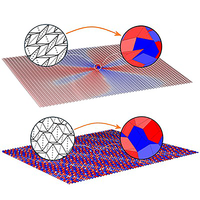
Origami sheets fall into two topological classes: Some crease patterns yield stiff, uniform bending, while others allow soft, irregular motion, offering a robust framework for designing adaptive materials and soft robotics.
Yuanqi Lyu (吕源祺), Luke Pritchard Cairns, Josue Rodriguez, Chunxiao Liu (刘春骁), Kenneth Ng (吴子建), John Singleton, and James G. Analytis
Phys. Rev. X 15, 041035 (2025) - Published 21 November, 2025
Experiments on NaYbSe reveal that mobile magnetic excitations arise from fluctuating boundaries between disordered clusters of entangled spins, showing how structural disorder can produce motion within a seemingly frozen quantum state.
D. Nicoletti, M. Rosenberg, M. Buzzi, M. Fechner, Y. Liu, S. Nakata, B. Keimer, R. A. Vitalone, D. N. Basov, P. E. Dolgirev, E. Demler, M. H. Michael, and A. Cavalleri
Phys. Rev. X 15, 041036 (2025) - Published 24 November, 2025
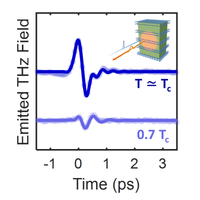
Coherent terahertz emission spectroscopy proves to be a sensitive technique for probing superconducting fluctuations in YBCO near its transition temperature, detecting strong, nonlinear optical signals that originate from critical behavior at phase boundaries.
Sopheak Sorn, Jörg Schmalian, and Markus Garst
Phys. Rev. X 15, 041037 (2025) - Published 25 November, 2025
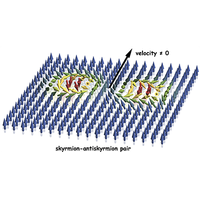
Skyrmions behave as fractonlike particles whose motion is constrained by a conserved topological dipole moment, linking their dynamics to quantum Hall physics and revealing how quantum skyrmions behave as massless particles.
Julien Bouvard, Swarnavo Basu, Charlott Leu, Onurcan Bektas, Joachim O. Rädler, Gabriel Amselem, and Karen Alim
Phys. Rev. X 15, 041038 (2025) - Published 26 November, 2025
Pulsing an erosive chemical through artificial flow networks allows them to self-organize for uniform flow, revealing a simple rule for achieving balanced transport and guiding the design of more efficient porous materials and devices.
Linwei Huai, Zhuying Wang, Huachen Rao, Yulei Han, Bo Liu, Shuikang Yu, Yunmei Zhang, Ruiqing Zang, Runqing Luan, Shuting Peng, Zhenhua Qiao, Zhenyu Wang, Junfeng He, Tao Wu, and Xianhui Chen
Phys. Rev. X 15, 041039 (2025) - Published 1 December, 2025
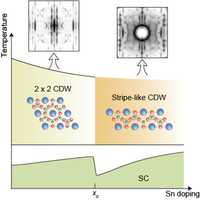
Tin doping in the superconductor CsVSb suppresses its usual charge-density-wave pattern, revealing a hidden stripe order that highlights how lattice instabilities and electronic correlations can control competing phases in quantum materials.
J. A. Muniz et al.
Phys. Rev. X 15, 041040 (2025) - Published 4 December, 2025
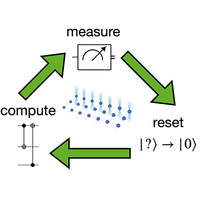
A neutral-atom quantum computing system that can repeatedly measure, reuse, and replace ancilla qubits without disrupting others enables longer computations and advances scalable, fault-tolerant operation.
Kamil Iwanowski, Gábor Csányi, and Michele Simoncelli
Phys. Rev. X 15, 041041 (2025) - Published 4 December, 2025
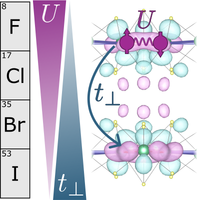
A new framework linking atomic disorder to thermal conductivity shows how variations in atomic bonding networks control heat flow in materials that are partly crystalline and partly glassy.
Joost Aretz, Sergii Grytsiuk, Xiaojing Liu, Giovanna Feraco, Chrystalla Knekna, Muhammad Waseem, Zhiying Dan, Marco Bianchi, Philip Hofmann, Mazhar N. Ali, Mikhail I. Katsnelson, Antonija Grubišić-Čabo, Hugo U. R. Strand, Erik G. C. P. van Loon, and Malte Rösner
Phys. Rev. X 15, 041042 (2025) - Published 5 December, 2025
Calculations and experiments show that in layered NbX compounds, changing the halogen element or thickness continuously tunes electron correlations, transforming the materials from weakly correlated band insulators to strongly correlated Mott insulators.
Yujun Deng, William Holtzmann, Ziyan Zhu, Timothy Zaklama, Paulina Majchrzak, Takashi Taniguchi, Kenji Watanabe, Makoto Hashimoto, Donghui Lu, Chris Jozwiak, Aaron Bostwick, Eli Rotenberg, Liang Fu, Thomas P. Devereaux, Xiaodong Xu, and Zhi-Xun Shen
Phys. Rev. X 15, 041043 (2025) - Published 5 December, 2025
Angle-resolved photoemission measurements reveal that twisting bilayer MoTe to about 2 flattens its valence band and enhances electron localization, pinpointing the “magic angle” where correlated quantum phases are most likely to emerge.
Charles Möhl, Annina Riedhauser, Max Glantschnig, Daniele Caimi, Ute Drechsler, Antonis Olziersky, Deividas Sabonis, David I. Indolese, Thomas M. Karg, and Paul Seidler
Phys. Rev. X 15, 041044 (2025) - Published 8 December, 2025
A new on-chip microwave-to-optical converter built from soft-ferroelectric barium titanate achieves bidirectional signal conversion, offering a promising path toward long-range interconnects for superconducting quantum computers.
Lalit Yadav, Afonso Rufino, Rabindranath Bag, Matthew Ennis, Jan Alexander Koziol, Clarina dela Cruz, Alexander I. Kolesnikov, V. Ovidiu Garlea, Keith M. Taddei, David Graf, Kai Phillip Schmidt, Frédéric Mila, and Sara Haravifard
Phys. Rev. X 15, 041045 (2025) - Published 8 December, 2025
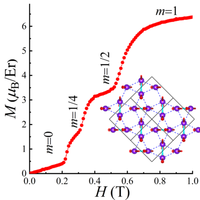
The frustrated magnet ErBeGeO exhibits two unexpected magnetization plateaus, revealing that subtle lattice distortions can dramatically alter spin order and offering a platform to study geometry driven magnetic behavior.
Samuel Van Stroud, Philippa Duckett, Max Hart, Nikita Pond, Sébastien Rettie, Gabriel Facini, and Tim Scanlon
Phys. Rev. X 15, 041046 (2025) - Published 9 December, 2025
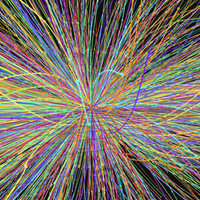
A unified transformer-based model accurately and efficiently reconstructs particle tracks in collider experiments, outperforming traditional methods and offering scalable solutions for handling the massive data of next-generation high-energy physics.
Di Yue, Hongya Wang, Guangyi Huang, Yadong Jiang, Zhiwei Huang, Pengyu Zheng, Yichen Song, Shuaifei Guo, Ning Tian, Mingyan Luo, Zhongxun Guo, Hengsheng Luo, Chuanying Xi, Guangli Kuang, Kenji Watanabe, Takashi Taniguchi, Zhimou Chen, Xi Lin, Jing Wang, Changlin Zheng, Xiaofeng Jin, Wei Ruan, and Yuanbo Zhang
Phys. Rev. X 15, 041047 (2025) - Published 9 December, 2025
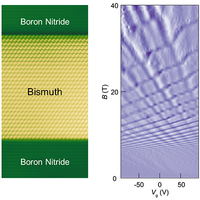
Ultrathin bismuth films grown on boron nitride host a high-mobility two-dimensional electron system dominated by spin-split surface states, revealing strong spin-orbit effects that could potentially enable stable, spin-based quantum behaviors at elevated temperatures.
Binze Tang, Chon-Hei Lo, Tiancheng Liang, Jiani Hong, Mian Qin, Yizhi Song, Duanyun Cao, Ying Jiang, and Limei Xu
Phys. Rev. X 15, 041048 (2025) - Published 11 December, 2025
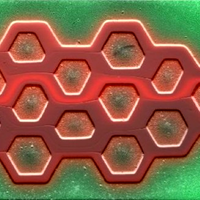
A combination of AI-assisted high-resolution AFM and simulations expose an amorphous ice layer, revealing how ice transforms before melting.
Qiaoling Xu, Ammon Fischer, Nicolas Tancogne-Dejean, Tao Zhang, Emil Viñas Boström, Martin Claassen, Dante M. Kennes, Angel Rubio, and Lede Xian
Phys. Rev. X 15, 041049 (2025) - Published 15 December, 2025
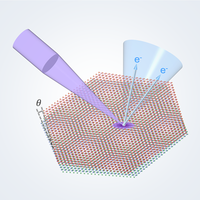
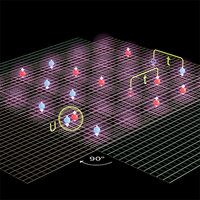
Rotating rectangular 2D materials by 90 degrees creates square moiré patterns with flat electronic bands, offering a simple, tunable platform for exploring cuprate-like magnetism and superconductivity in stacked materials.
Rintaro Masaoka, Tomohiro Soejima (副島智大), and Haruki Watanabe
Phys. Rev. X 15, 041050 (2025) - Published 16 December, 2025
A universal lower bound for the dynamical exponent in frustration-free systems is proven, showing that these systems can not host emergent Lorentz invariance.
Ziming Liu, Max Tegmark, Pingchuan Ma, Wojciech Matusik, and Yixuan Wang
Phys. Rev. X 15, 041051 (2025) - Published 17 December, 2025
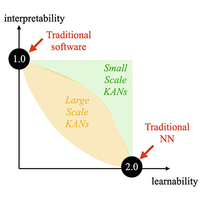
Kolmogorov-Arnold networks combine the predictive strength of deep learning with the interpretability of symbolic formulas, enabling AI systems to both validate physical laws and generate new scientific insights.
N. Johnson, L. C. Head, O. D. Lavrentovich, A. N. Morozov, G. Negro, E. Orlandini, C. A. Smith, G. M. Vasil, and D. Marenduzzo
Phys. Rev. X 15, 041052 (2025) - Published 18 December, 2025
A new theoretical framework shows that defects in chiral liquid crystals follow the same mathematical rules as Majorana and Weyl particles, revealing deep parallels between soft-matter textures and particle physics.
Katsu Nishiyama, John Berezney, Michael M. Norton, Akshit Aggarwal, Saptorshi Ghosh, Zahra Zarei, Michael F. Hagan, Seth Fraden, and Zvonimir Dogic
Phys. Rev. X 15, 041053 (2025) - Published 19 December, 2025
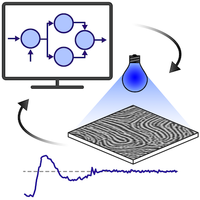
A feedback-controlled, light-responsive system regulates the chaotic motion of active fluids, maintaining steady flow speeds despite disturbances and enabling precise control over their dynamic behavior.
Du Chen, Thu T. M. Chu, Yanyan Li, Shunran Li, Qixuan Hu, Jee Yung Park, Tyler Wang, Luoqi Dai, Ming Lu, Mengxia Liu, Letian Dou, Xiaotong Li, Yi Xia, and Peijun Guo
Phys. Rev. X 15, 041054 (2025) - Published 22 December, 2025
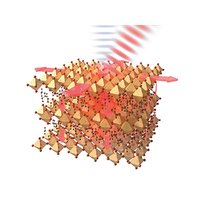
Vibrational-pump visible-probe spectroscopy and microscopy allows cross and in-plane measurements of thermal conductivity for two-dimensional materials.
Ammon Fischer, Lennart Klebl, Valentin Crépel, Siheon Ryee, Angel Rubio, Lede Xian, Tim O. Wehling, Antoine Georges, Dante M. Kennes, and Andrew J. Millis
Phys. Rev. X 15, 041055 (2025) - Published 22 December, 2025
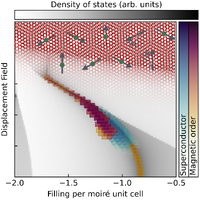
A first-principles study of twisted WSe bilayers reveals how antiferromagnetic magnetic order and superconductivity collaborate near a tunable Van Hove singularity and demonstrates their evolution as function of the twist angle.
Kfir Sulimany, Sri Krishna Vadlamani, Ryan Hamerly, Prahlad Iyengar, and Dirk Englund
Phys. Rev. X 15, 041056 (2025) - Published 24 December, 2025
A quantum-secure deep learning protocol lets multiple parties harness AI without exposing proprietary data or models.
Joanna Bławat, Grzegorz Chajewski, Daniel Gnida, John Singleton, Oscar Ayala Valenzuela, Dariusz Kaczorowski, and Ross D. McDonald
Phys. Rev. X 15, 041057 (2025) - Published 29 December, 2025
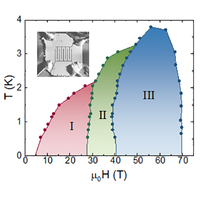
Magnetic field dependence studies on focused ion beam lithography fabricated CeRhAs reveals the competition between multiple superconducting and density-wave phases in strongly correlated materials.