Physrevx.7
NEWS AND COMMENTARY

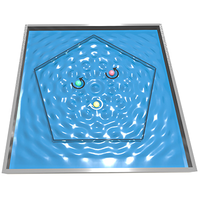
The Thermodynamic Cost of Measuring Time

August 2, 2017

A simple model of an autonomous quantum clock yields a quantitative connection between the clock’s thermodynamic cost and its accuracy and resolution.

Viewpoint on:
Paul Erker et al.
Phys. Rev. X 7, 031022 (2017)


Physrevx.7
NEWS AND COMMENTARY

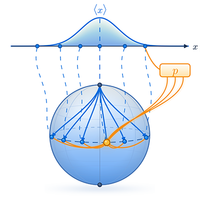
Causality in the Quantum World

July 31, 2017

A new model extends the definition of causality to quantum-mechanical systems.

Viewpoint on:
John-Mark A. Allen et al.
Phys. Rev. X 7, 031021 (2017)


Physrevx.7
NEWS AND COMMENTARY

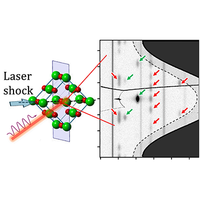
Seeing Scrambled Spins

July 19, 2017

Two experimental groups have taken a step towards observing the “scrambling” of information that occurs as a many-body quantum system thermalizes.  

Viewpoint on:
Jun Li et al.
Phys. Rev. X 7, 031011 (2017)


Prxcollectionfinal

Special Collection: Stochastic Thermodynamics

Guest Editor: Massimiliano Esposito
PRX brings to readers a collection of outstanding papers that showcase some of the most active and promising research directions in the field of stochastic thermodynamics.


Key image
SPECIAL COLLECTION ARTICLE

Brownian Duet: A Novel Tale of Thermodynamic Efficiency

The stochastic thermodynamic properties of an isothermal Brownian engine consisting of a micron-sized colloidal particle are calculated analytically and tested experimentally.

Karel Proesmans et al.
Phys. Rev. X 6, 041010 (2016)


Key image
SPECIAL COLLECTION ARTICLE

Cost and Precision of Brownian Clocks

Biomolecular networks capable of counting time can be thought of as “Brownian clocks.” The energy budgets necessary to run two classes of such clocks, assuming some minimal required precision, are theoretically determined.

Andre C. Barato and Udo Seifert
Phys. Rev. X 6, 041053 (2016)


Key image
SPECIAL COLLECTION ARTICLE

Stochastic and Macroscopic Thermodynamics of Strongly Coupled Systems

Thermodynamics describes how macroscopic systems exchange energy in the form of heat and work, yet many microscopic systems such as molecular motors exhibit behavior that seems to follow the same principles. A new theoretical framework for describing the thermodynamics of microscopic systems that interact strongly with their surroundings is presented.

Christopher Jarzynski
Phys. Rev. X 7, 011008 (2017)


Key image
SPECIAL COLLECTION ARTICLE

Quantum and Information Thermodynamics: A Unifying Framework Based on Repeated Interactions

Nanomachines are subject to random thermal and quantum fluctuations that are not captured by traditional thermodynamic theory. A new theoretical investigation offers a step toward a unified nanoscale theory by showing how externally prepared systems (e.g., atoms in an optical cavity or DNA bases in an enzyme reaction) that interact with a nanoscopic device can be a source of nonequilbrium free energy.

Philipp Strasberg, Gernot Schaller, Tobias Brandes, and Massimiliano Esposito
Phys. Rev. X 7, 021003 (2017)


Key image
SPECIAL COLLECTION ARTICLE

Thermodynamics of Computational Copying in Biochemical Systems

Both computers and living cells copy information, but doing so comes at a cost of energy. A new theoretical analysis shows that biological systems come close to but do not reach the predicted lower bound on this energy, and that the cost increases as copying becomes more accurate.

Thomas E. Ouldridge, Christopher C. Govern, and Pieter Rein ten Wolde
Phys. Rev. X 7, 021004 (2017)


Key image
SPECIAL COLLECTION ARTICLE

Experiments in Stochastic Thermodynamics: Short History and Perspectives

Stochastic thermodynamics extends the traditional laws of thermodynamics to microscopic systems where thermal and quantum fluctuations cannot be ignored. This review summarizes progress in this field with a look at several experimental and theoretical results and a look toward potential applications in biology and nanotechnology.

S. Ciliberto
Phys. Rev. X 7, 021051 (2017)

Current Issue

Vol. 7, Iss. 3 — July - September 2017

View Current Issue

Events

Physics Next Workshops
Thursday Aug. 24th, 2017 - Saturday Aug. 26th, 2017
Hyatt Place Long Island hotel, Long Island, NY

The American Physical Society is initiating a new series of international workshops. These Physics Next workshops will be aimed at fostering new and emerging areas of physics research, focusing on topics that straddle traditional subject boundaries and are starting to “emerge from the noise.”

The upcoming workshop is titled “Physics Next: From Quantum Fields to Condensed Matter,” and will take place on August 24 - 26, 2017. More information.

Announcements

APS Cultivates ORCID Links
July 18, 2017

On July 18, 2017, APS, along with the Institute of Physics Publishing (IOPP), has taken an important step towards working more closely with the Open Researcher and Contributor ID (ORCID) system of unique identifiers by signing the ORCID open letter requiring the collection of ORCID iDs in their publishing processes.

APS Joins the Initiative for Open Citations (IO4C)
July 11, 2017

Starting on July 11, APS will begin participating in the Initiative for Open Citations (I4OC), a collaboration among scholarly publishers to make information freely available about what papers are cited by a given journal article. This information had always been available to those subscribing to the Physical Review journals, but now the citation data will be open to all.

Physical Review Materials’ First Issue
June 19, 2017

The first articles from Physical Review Materials (PRMaterials) are now available online and showcase the high-quality, broad-scope research in APS’s newest journal. All articles appearing in the first issue are free to read through 2017. PRMaterials provides a common publication and reference source to the expanding community of physicists, materials scientists, chemists, engineers, and researchers in related disciplines that carry out high-quality original research in materials.

More Announcements

Sign up to receive regular email alerts from Physical Review X

Log In

Cancel
×

Search


Article Lookup

Paste a citation or DOI

Enter a citation
×