Browse by Subject

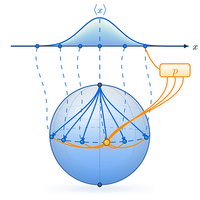
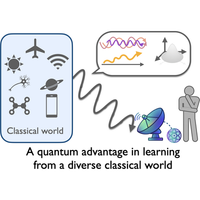
Quantum Advantage for Sensing Properties of Classical Fields

Jordan Cotler, Daine L. Danielson, and Ishaan Kannan

Phys. Rev. X 16, 041025 (2026) - Published 23 October, 2026

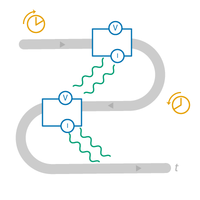
Researchers demonstrate a quantum sensing protocol that uses entanglement and squeezing to learn diverse classical signal properties with subvacuum precision.

Toward Complete Characterization of Topological Insulators and Superconductors: A Systematic Construction of Topological Invariants Based on Atiyah-Hirzebruch Spectral Sequence

Seishiro Ono and Ken Shiozaki

Phys. Rev. X 16, 041024 (2026) - Published 23 October, 2026

A framework based on the Atiyah-Hirzebruch spectral sequence in momentum space yields topological invariants that classify stable superconducting phases across 159 space groups.

Cosmological and High-Energy Physics Implications from Gravitational-Wave Background Searches in LIGO-Virgo-KAGRA’s O1–O4a Runs

A. G. Abac et al. (LIGO Scientific Collaboration, Virgo Collaboration, and KAGRA Collaboration)

Phys. Rev. X 16, 041023 (2026) - Published 22 October, 2026

Numerous well-motivated particle-physics-based models are constrained using the most recent LIGO-Virgo gravitational-wave data.

Nontrivial Boundary-Mediated Superconducting Transport in a TRSB Topological Iron-Based Superconductor

Wenyao Liu et al.

Phys. Rev. X 16, 041022 (2026) - Published 22 October, 2026

Edge-mediated nonlocal transport measurements in thin Fe(Te,Se) devices reveal a robust conductance plateau governed by spontaneous magnetic ordering.

Generalized Bogoliubov-Born-Green-Kirkwood-Yvon Hierarchy for Near-Integrable Dynamics

Leonardo Biagetti, Maciej Łebek, Miłosz Panfil, and Jacopo De Nardis

Phys. Rev. X 16, 041021 (2026) - Published 21 October, 2026

The BBGKY hierarchy is generalized to systems with strong integrable contact interactions and generic long-range two-body ones, enabling the computation of experimentally measurable expectation values and correlations for classical and quantum systems.

Tensor-Network Framework for Lindbladian Spectra and Steady States

Philipp Westhoff, Mattia Moroder, Ulrich Schollwöck, and Sebastian Paeckel

Phys. Rev. X 16, 041020 (2026) - Published 21 October, 2026

Researchers develop a tensor-network framework using complex-time evolution to accurately compute low-lying excitation spectra of open quantum systems.

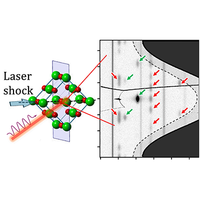
Orientation-Dependent Structural Phase Transitions and Melting in Shock-Compressed MgO

Raymond F. Smith, Saransh Singh, Zixuan Ye, Marius Millot, Melissa Sims, Anirudh Hari, Jon H. Eggert, Federica Coppari, and June K. Wicks

Phys. Rev. X 16, 041019 (2026) - Published 19 October, 2026

Shockwave observations resolve the high pressure structural transition and melting temperature of MgO, a critical planetary building block.

Non-Abelian Quantum Signal Processing: A Composite Pulse for Fast Analytic Control of Hybrid Oscillator-Qubit Processors

Shraddha Singh, Baptiste Royer, and Steven M. Girvin

Phys. Rev. X 16, 041018 (2026) - Published 15 October, 2026

Researchers extend quantum signal processing to noncommuting control variables, enabling analytical control of hybrid oscillator-qubit quantum processors.

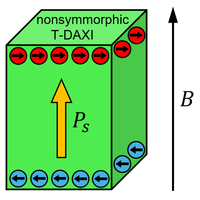
Nonsymmorphic Time-Reversal-Doubled Axion Insulators

Yue Xie, Haohao Sheng, Quansheng Wu, Xi Dai, Zhong Fang, Hongming Weng, and Zhijun Wang

Phys. Rev. X 16, 041017 (2026) - Published 15 October, 2026

Extension of time-reversal-doubled axion insulators to nonsymmorphic crystals establishes a spin-resolved classification scheme and identifies mixed bismuth monohalides as candidate materials.

Topological Phase Transitions and Their Thermodynamic Fate in Arbitrary-S Classical Pyrochlore Spin Ice

Sena Watanabe, Yukitoshi Motome, and Haruki Watanabe

Phys. Rev. X 16, 041016 (2026) - Published 14 October, 2026

A theoretical framework for arbitrary-spin pyrochlore spin ice reveals that S = 3/2 magnets alone switch abruptly between two distinct spin-liquid states, a transition that survives the thermal fluctuations that wash all the other transitions into crossovers.

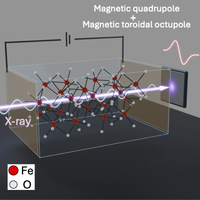
Electric-Field-Induced X-Ray Nonreciprocal Dichroism in Hematite

Takeshi Hayashida, Koei Matsumoto, Keito Arakawa, Yves Joly, Sergio Di Matteo, Kenji Tamasaku, Yoshikazu Tanaka, and Tsuyoshi Kimura

Phys. Rev. X 16, 041015 (2026) - Published 14 October, 2026

X-ray absorption spectroscopy under an applied electric field uncovers signatures of hidden higher-order magnetic multipoles in hematite (Fe2O3), supported by theoretical calculations.

Mixed-State Phases from Local Reversibility

Shengqi Sang, Leonardo A. Lessa, Roger S. K. Mong, Tarun Grover, Chong Wang, and Timothy H. Hsieh

Phys. Rev. X 16, 041014 (2026) - Published 13 October, 2026

Researchers establish a framework using local reversibility to correctly classify phases of matter in open and noisy quantum systems.

Tripartite Haar Random State Has No Bipartite Entanglement

Zhi Li, Takato Mori, and Beni Yoshida

Phys. Rev. X 16, 041013 (2026) - Published 13 October, 2026

Researchers demonstrate that bipartite Einstein-Podolsky-Rosen entanglement cannot be distilled from tripartite Haar random states by local operations.

Breakdown of the Kerr-Cat Qubit Tunneling Time Induced by Auxiliary Circuit Modes

Othmane Benhayoune-Khadraoui, Cristóbal Lledó, and Alexandre Blais

Phys. Rev. X 16, 041012 (2026) - Published 9 October, 2026

Researchers show that auxiliary circuit modes trigger multiphoton resonances that break down Kerr-cat qubit coherence under strong driving.

Fluidic Hysterons and Memory in Flow Networks

Abhineet Singh Rajput and Amir A. Pahlavan

Phys. Rev. X 16, 041011 (2026) - Published 9 October, 2026

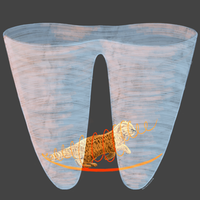
Soft elastic fibers in microfluidic channels can create a fluid system with memory of previous actions through a flow-structure feedback.

Theory of Out-of-Time-Ordered Transport

Ruchira Mishra, Jiaozi Wang, Silvia Pappalardi, and Luca V. Delacrétaz

Phys. Rev. X 16, 041010 (2026) - Published 8 October, 2026

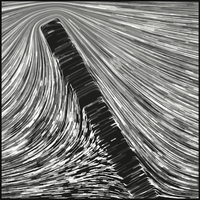
Researchers establish an effective field theory capturing late-time out-of-time-order correlators to uncover hidden transport parameters.

Stability, Degeneracy, and Scalability of a 600-Site Cavity Array Microscope

Anna Soper, Danial Shadmany, Adam L. Shaw, Lukas Palm, David I. Schuster, and Jonathan Simon

Phys. Rev. X 16, 041009 (2026) - Published 8 October, 2026

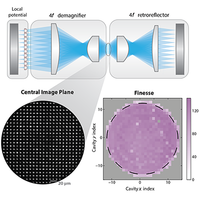
A scalable cavity array microscope architecture is presented, featuring over 600 independent optical cavities for parallelized light-matter interactions, providing opportunities for quantum networking and sensing applications.

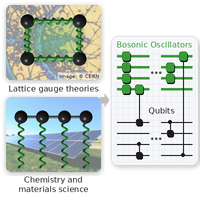
Hybrid Oscillator-Qubit Quantum Processors: Simulating Fermions, Bosons, and Gauge Fields

Eleanor Crane, Kevin C. Smith, Teague Tomesh, Alec Eickbusch, John M. Martyn, Stefan Kühn, Lena Funcke, Michael Austin DeMarco, Isaac L. Chuang, Nathan Wiebe, Alexander Schuckert, and Steven M. Girvin

Phys. Rev. X 16, 041008 (2026) - Published 7 October, 2026

Researchers develop a hybrid qubit-boson quantum processor framework to simulate interacting fermions, bosons, and lattice gauge fields.

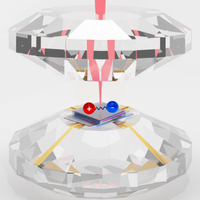
Observation of Wannier-Rydberg and Charge-Transfer Hybrid Moiré Excitons under Pressure

Jing Song, Yifan Wang, Xuan Zhao, Yuxuan Song, Song Liu, Chen Hu, and Yang Xu

Phys. Rev. X 16, 041007 (2026) - Published 6 October, 2026

Hydrostatic pressure continuously tunes the moiré potential in semiconductor superlattices, driving a crossover to a strong-moiré regime that hybridizes Wannier-Rydberg and charge-transfer excitons.

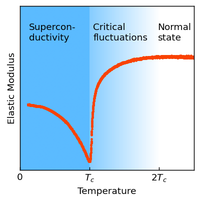
Vanishing Phase Stiffness and Fluctuation-Dominated Superconductivity in UTe2

Sahas Kamat, Jared Dans, Shanta Saha, Daniel F. Agterberg, Johnpierre Paglione, and B. J. Ramshaw

Phys. Rev. X 16, 041006 (2026) - Published 6 October, 2026

Ultrasound measurements in uranium ditelluride (UTe2) reveal precursor superconducting fluctuations up to twice the critical temperature, providing high kinetic inductance in a clean material.

Sign In to Your Journals Account

Filter

Subject

Filter

Article Lookup

Enter a citation