Browse by Subject

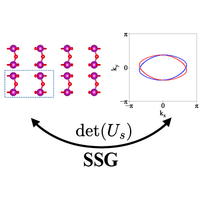
Unified Symmetry Classification of Magnetic Orders via Spin Space Groups: Prediction of Coplanar Even-Wave Phases

Ziyin Song, Ziyue Qi, Chen Fang, Zhong Fang, and Hongming Weng

Phys. Rev. X 16, 031038 (2026) - Published 13 August, 2026

A unified classification framework based on spin space group symmetry predicts a coplanar even-wave magnetic phase where electronic band spin polarization varies continuously and can vanish without band degeneracy.

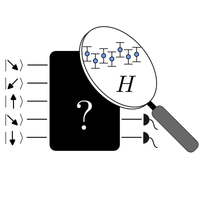
Bounded-Error Quantum Simulation via Hamiltonian and Lindbladian Learning

Tristan Kraft, Manoj K. Joshi, William T. Lam, Tobias Olsacher, Florian Kranzl, Johannes Franke, Lata Kh Joshi, Rainer Blatt, Augusto Smerzi, Daniel Stilck França, Benoît Vermersch, Barbara Kraus, Christian F. Roos, and Peter Zoller

Phys. Rev. X 16, 031037 (2026) - Published 13 August, 2026

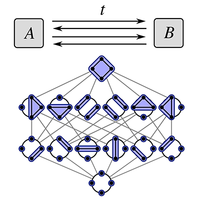
Researchers introduce a framework that infers quantum dynamics and error bounds from experimental data to validate large-scale quantum simulations.

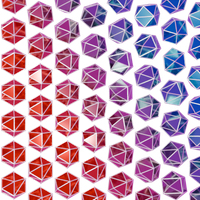
Evolution of Polycrystallinity in Homogeneously Nucleated Colloidal Crystals

Merin Jose, Nicholas H. P. Orr, Taiki Yanagishima, and Roel P. A. Dullens

Phys. Rev. X 16, 031036 (2026) - Published 12 August, 2026

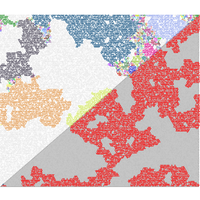
Direct observations of the birth and growth of polycrystalline colloidal crystals clarify the role of grain formation, a key aspect in understanding and tuning the properties of polycrystalline materials.

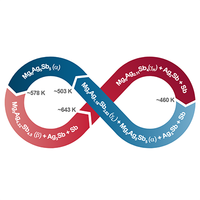
Unraveling Non-polymorphic Phase Evolution in Mg-Ag-Sb for Designing Thermally Recoverable Thermoelectrics

Shizhen Zhi, Xiaojing Ma, Shanghao Chen, Tianyu Zhang, Yao Xu, Jiang Chen, Sheng Ye, Chenhao Lin, Linmao Wen, Jinxuan Cheng, Rongpei Shi, Xingjun Liu, Feng Cao, Lijun Zhang, Yuhao Fu, Qian Zhang, and Jun Mao

Phys. Rev. X 16, 031035 (2026) - Published 12 August, 2026

Thermal degradation in MgAgSb thermoelectric material can be reversed with low-temperature annealing.

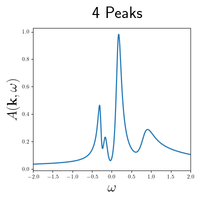
Pseudogap, Fermi Liquid, Van Hove Singularity, and Maxima of the Compressibility and of the Knight Shift as a Function of Doping in the Two-Dimensional Hubbard Model

Y. M. Vilk and A.-M. S. Tremblay

Phys. Rev. X 16, 031034 (2026) - Published 11 August, 2026

Analysis of Hubbard model simulations reveals that a maximum in the isothermal compressibility marks the pseudogap boundary, driven by spin-density-wave precursor bands crossing the zero-frequency level.

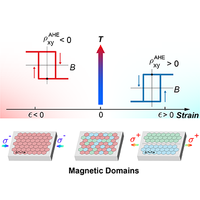
Strain-Tunable Anomalous Hall Effect in Hexagonal MnTe

Zhaoyu Liu, Sijie Xu, Jonathan M. DeStefano, Elliott Rosenberg, Tingjun Zhang, Jinyulin Li, Matthew B. Stone, Feng Ye, Wei Tian, Sarah Edwards, Rong Cong, Siyu Pan, Ching-Wu Chu, Liangzi Deng, Emilia Morosan, Rafael M. Fernandes, Jiun-Haw Chu, and Pengcheng Dai

Phys. Rev. X 16, 031033 (2026) - Published 11 August, 2026

Uniaxial strain applied to the hexagonal altermagnet α-MnTe isolates a single magnetic domain, revealing a sharp anomalous Hall effect and a sign reversal driven by modifications to the electronic Berry curvature.

Fast Algorithm for 2D Rigidity Percolation

Nina Javerzat and Daniele Notarmuzi

Phys. Rev. X 16, 031032 (2026) - Published 10 August, 2026

An algorithm for simulating the rigidity percolation transition, based on novel theoretical results, overcomes previous size limitations and enables the highly precise characterization of its universality classes, shedding new light on rigidity transitions in amorphous systems.

Observation of Correlated Plasmons in Low-Valence Nickelates

Y. Shen, W. He, J. Sears, Xuefei Guo, Xiangpeng Luo, A. Roll, J. Li, J. Pelliciari, Xi He, I. Božovič, Junjie Zhang, J. F. Mitchell, V. Bisogni, M. Mitrano, S. Johnston, and M. P. M. Dean

Phys. Rev. X 16, 031031 (2026) - Published 7 August, 2026

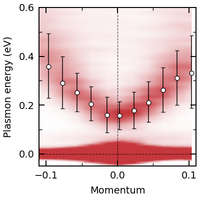
Resonant inelastic x-ray scattering measurements reveal propagating plasmons in the low-valence nickelate Pr4Ni3O8 with dynamics distinct from those of cuprate superconductors.

Infinite Temperature at Zero Energy

Matteo Ippoliti and David M. Long

Phys. Rev. X 16, 031030 (2026) - Published 7 August, 2026

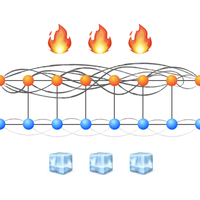
Researchers construct local Hamiltonians whose eigenstates inherit infinite-temperature properties, producing ground states with extensive entanglement.

Mechanochemical Nano-Writing of an Atomically Thin Metal

Shuai Zhang, Yanyu Jia, Atanu Samanta, Yutian Bao, Haosen Guan, Zhaoyi Joy Zheng, Guangming Cheng, Ting Liu, Cangyu Qu, Kenji Watanabe, Takashi Taniguchi, Nan Yao, Ashlie Martini, Leslie Schoop, Andrew M. Rappe, Sanfeng Wu, and Robert W. Carpick

Phys. Rev. X 16, 031029 (2026) - Published 6 August, 2026

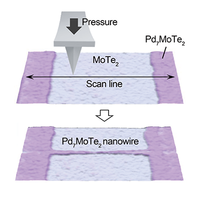
A large stress generated by a small tip drives a reaction between two materials in an 2D encapsulated space to produce a new material with interesting electronic properties that can be written into patterns as small as 50 nm.

Quantum Geometric Tensor Determines the Pure-State I.I.D. Conversion Rate in the Resource Theory of Asymmetry for Any Compact Lie Group

Koji Yamaguchi, Yosuke Mitsuhashi, Tomohiro Shitara, and Hiroyasu Tajima

Phys. Rev. X 16, 031028 (2026) - Published 5 August, 2026

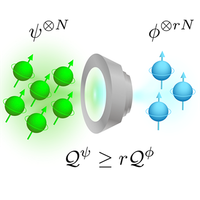
Researchers prove that the quantum geometric tensor completely dictates pure-state asymptotic conversion rates under any compact Lie group symmetry.

Free Probability in a Minimal Quantum Circuit Model

Felix Fritzsch and Pieter W. Claeys

Phys. Rev. X 16, 031027 (2026) - Published 5 August, 2026

Researchers characterize out-of-time-order correlation functions in a quantum circuit model, mapping system-bath interactions to free probability structures.

Riemannian Geometric Classification and Emergent Phenomena of Magnetic Textures

Koki Shinada and Naoto Nagaosa

Phys. Rev. X 16, 031026 (2026) - Published 4 August, 2026

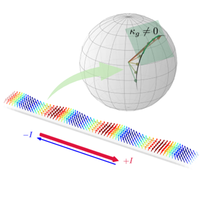
A classification framework based on differential geometry introduces geodesic and torsional scalar spin chiralities, revealing a quantum geometric effect that modifies electron equations of motion in complex magnetic textures.

High-Dimensional Dynamics in Low-Dimensional Networks

Yue Wan and Robert Rosenbaum

Phys. Rev. X 16, 031025 (2026) - Published 3 August, 2026

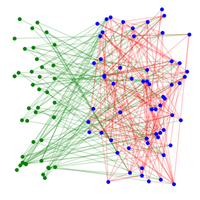
The relationship between the dimensionality of a network’s structure and its dynamics is investigated, showing that networks with low-dimensional structures can produce either high- or low-dimensional responses.

Editorial: Closing Special Collection on 2D Materials

Liuyan Zhao and Xavier Marie

Phys. Rev. X 16, 030002 (2026) - Published 3 August, 2026

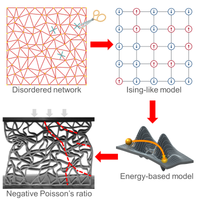
Unlocking Emergent Resilience in Amorphous Metamaterials via a Physics-Constrained Energy-Based Framework

Lingyu Jia, Changliang Zhu, Qiaozhi Lei, Hua Tong, Jinkui Meng, Chengyan Xu, Xiangying Shen, and Lei Xu

Phys. Rev. X 16, 031024 (2026) - Published 31 July, 2026

A physics-constrained design framework may aid the search for lightweight but resilient material.

Path-Dependency and Emergent Computing under Vectorial Driving

C. M. Meulblok, A. Singh, M. Labousse, and M. van Hecke

Phys. Rev. X 16, 031023 (2026) - Published 30 July, 2026

A general framework unravels path dependencies across a wide range of driven complex materials.

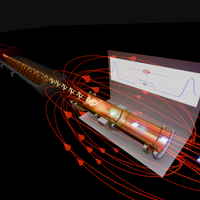
Deceleration of Accelerator-Produced and In-Trap Electron Cooling of Highly Charged Ions

S. Rausch, Z. Andelkovic, S. Fedotova, W. Geithner, F. Herfurth, M. Horst, J. Ködel, K. Mohr, D. Neidherr, W. Nörtershäuser, N. Stallkamp, S. Trotsenko, G. Vorobjev, and D. Zisis

Phys. Rev. X 16, 031022 (2026) - Published 29 July, 2026

The electron cooling of highly charged ions (HCI) in a Penning trap, as well as the deceleration and trapping of accelerator-produced HCI, has been demonstrated at the HITRAP facility, paving the way for unprecedented precision experiments in QED, materials science, and astrophysics.

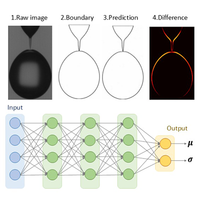
Predicting Liquid Properties and Behavior via Droplet Pinch-off and Machine Learning

Jingtao Wang, Qiwei Chen, C. Ricardo Constante-Amores, Denise Gorse, Alfonso Arturo Castrejón-Pita, and José Rafael Castrejón-Pita

Phys. Rev. X 16, 031021 (2026) - Published 29 July, 2026

A powerful method allows hard to measure properties like viscosity and surface tension to be determined from a single, high-speed snapshot.

Non-Hermitian Bethe-Salpeter Equation for Open Systems: Emergence of Exceptional Points in Excitonic Spectra from First Principles

Zhenlin Zhang, Wei Hu, Enrico Perfetto, and Gianluca Stefanucci

Phys. Rev. X 16, 031020 (2026) - Published 28 July, 2026
Extension of the Bethe-Salpeter equation to open quantum systems predicts that engineered photonic environments induce exceptional points in the excitonic spectra of transition-metal dichalcogenides, providing a pathway for non-Hermitian quantum devices with controllable optical and valleytronic properties.

Sign In to Your Journals Account

Filter

Subject

Filter

Article Lookup

Enter a citation