

- Open Access
Bounded-Error Quantum Simulation via Hamiltonian and Lindbladian Learning
Phys. Rev. X 16, 031037 – Published 13 August, 2026
DOI: https://doi.org/10.1103/s96t-n8tx
Abstract
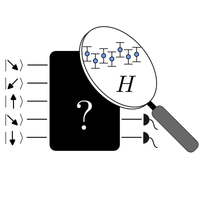
Analog quantum simulators offer a route to exploring strongly correlated many-body dynamics beyond classical computation, but their predictive power remains limited by the absence of quantitative error estimation. Establishing rigorous uncertainty bounds is essential for elevating such devices from qualitative demonstrations to quantitative scientific tools. Here we introduce a general framework for bounded-error quantum simulation, which provides predictions for many-body observables with experimentally quantifiable uncertainties. The approach combines Hamiltonian and Lindbladian Learning—a statistically rigorous inference of the coherent and dissipative generators governing the dynamics—with the propagation of their uncertainties into the simulated observables, yielding confidence bounds directly derived from experimental data. We demonstrate this framework on trapped-ion quantum simulators implementing long-range Ising interactions with up to 51 ions. We analyze error bounds on two levels. First, we learn an open-system model from experimental data collected in an initial time window of quench dynamics, simulate the corresponding master equation, and quantitatively verify consistency between theoretical predictions and measured dynamics at long times. Second, we discuss short-time error bounds directly from experimental measurements alone, without relying on classical simulation—crucial for entering regimes of quantum advantage. In both cases, the learned models reproduce the experimental evolution within the predicted bounds, demonstrating quantitative reliability and internal consistency. By integrating statistical learning, open-system modeling, and precise experimental control, bounded-error quantum simulation provides a scalable foundation for trusted analog quantum computation, bridging the gap between experimental quantum platforms and predictive many-body physics. The techniques presented here directly extend to digital quantum simulation.
Physics Subject Headings (PhySH)
Popular Summary
Analog quantum simulators offer a route to exploring complex many-body dynamics beyond classical computation, but their predictive power is limited by the absence of quantitative error estimation. To elevate these devices to quantitative scientific tools, we introduce a general framework for bounded-error quantum simulation that provides predictions for many-body observables with experimentally quantifiable uncertainties. We achieve this by combining Hamiltonian and Lindbladian learning from short-time experimental data with the mathematical propagation of their statistical uncertainties into error bounds on observables at later times—computable from experimental data alone, without classical simulation. We demonstrate our protocol on trapped-ion quantum simulators with up to 51 ions, showing that the learned models accurately reproduce the experimental evolution within the predicted bounds. Ultimately, our framework provides a scalable foundation for trusted quantum simulation, bridging the gap between experimental quantum platforms and predictive many-body physics.
Article Text
Supplemental Material
References (92)
- The Physics of Quantum Information, edited by D. Gross, A. Sevrin, and P. Zoller (World Scientific, Singapore, 2023).
- A. J. Daley, I. Bloch, C. Kokail, S. Flannigan, N. Pearson, M. Troyer, and P. Zoller, Practical quantum advantage in quantum simulation, Nature (London) 607, 667 (2022).
- R. Blatt and C. F. Roos, Quantum simulations with trapped ions, Nat. Phys. 8, 277 (2012).
- C. Gross and I. Bloch, Quantum simulations with ultracold atoms in optical lattices, Science 357, 995 (2017).
- E. Altman et al., Quantum simulators: Architectures and opportunities, PRX Quantum 2, 017003 (2021).
- C. Monroe, W. C. Campbell, L.-M. Duan, Z.-X. Gong, A. V. Gorshkov, P. W. Hess, R. Islam, K. Kim, N. M. Linke, G. Pagano, P. Richerme, C. Senko, and N. Y. Yao, Programmable quantum simulations of spin systems with trapped ions, Rev. Mod. Phys. 93, 025001 (2021).
- B. Fauseweh et al., Quantum many-body simulations on digital quantum computers: State-of-the-art and future challenges, Nat. Commun. 15, 2850 (2024).
- A. Browaeys and T. Lahaye, Many-body physics with individually controlled Rydberg atoms, Nat. Phys. 16, 132 (2020).
- D. Adler, D. Wei, M. Will, K. Srakaew, S. Agrawal, P. Weckesser, R. Moessner, F. Pollmann, I. Bloch, and J. Zeiher, Observation of Hilbert space fragmentation and fractonic excitations in 2D, Nature (London) 636, 80 (2024).
- R. Haghshenas et al., Digital quantum magnetism at the frontier of classical simulations, Nature (London) 653, 56 (2026).
- T. Manovitz, S. H. Li, S. Ebadi, R. Samajdar, A. A. Geim, S. J. Evered, D. Bluvstein, H. Zhou, N. U. Koyluoglu, J. Feldmeier, P. E. Dolgirev, N. Maskara, M. Kalinowski, S. Sachdev, D. A. Huse, M. Greiner, V. Vuletić, and M. D. Lukin, Quantum coarsening and collective dynamics on a programmable simulator, Nature (London) 638, 86 (2025).
- F. Alam et al., Programmable digital quantum simulation of 2D Fermi-Hubbard dynamics using 72 superconducting qubits, arXiv:2510.26845.
- F. Alam et al., Fermionic dynamics on a trapped-ion quantum computer beyond exact classical simulation, arXiv:2510.26300.
- D. K. Mark, F. M. Surace, T. Schuster, A. L. Shaw, W. Gong, S. Choi, and M. Endres, Observation of ballistic plasma and memory in high-energy gauge theory dynamics, arXiv:2510.11679.
- Google Quantum AI and Collaborators, Observation of constructive interference at the edge of quantum ergodicity, Nature (London) 646, 825 (2025).
- Y. Cai, Y. Tong, and J. Preskill, Stochastic error cancellation in analog quantum simulation, Leibniz Int. Proc. Inf. (LIPIcs) 310, 1 (2024).
- R. Trivedi, A. Franco Rubio, and J. I. Cirac, Quantum advantage and stability to errors in analogue quantum simulators, Nat. Commun. 15, 6507 (2024).
- D. Aharonov and S. Irani, Hamiltonian complexity in the thermodynamic limit, J. ACM 72, 1 (2025).
- J. Carrasco, A. Elben, C. Kokail, B. Kraus, and P. Zoller, Theoretical and experimental perspectives of quantum verification, PRX Quantum 2, 010102 (2021).
- J. Rao, J. Eisert, and T. Guaita, Stability of digital and analog quantum simulations under noise, arXiv:2510.08467.
- V. Kashyap, G. Styliaris, S. Mouradian, J. I. Cirac, and R. Trivedi, Accuracy guarantees and quantum advantage in analog open quantum simulation with and without noise, Phys. Rev. X 15, 021017 (2025).
- H. C. Nguyen, R. Zecchina, and J. Berg, Inverse statistical problems: From the inverse Ising problem to data science, Adv. Phys. 66, 197 (2017).
- F. G. Waqar, S. Patel, and C. M. Simon, A tutorial on the Bayesian statistical approach to inverse problems, APL Mach. Learn. 1, 041101 (2023).
- X.-L. Qi and D. Ranard, Determining a local Hamiltonian from a single eigenstate, Quantum 3, 159 (2019).
- E. Bairey, I. Arad, and N. H. Lindner, Learning a local Hamiltonian from local measurements, Phys. Rev. Lett. 122, 020504 (2019).
- T. J. Evans, R. Harper, and S. T. Flammia, Scalable Bayesian Hamiltonian learning, arXiv:1912.07636.
- G. Bentsen, I.-D. Potirniche, V. B. Bulchandani, T. Scaffidi, X. Cao, X.-L. Qi, M. Schleier-Smith, and E. Altman, Integrable and chaotic dynamics of spins coupled to an optical cavity, Phys. Rev. X 9, 041011 (2019).
- D. Stilck França, L. A. Markovich, V. V. Dobrovitski, A. H. Werner, and J. Borregaard, Efficient and robust estimation of many-qubit Hamiltonians, Nat. Commun. 15, 311 (2024).
- T. Olsacher, T. Kraft, C. Kokail, B. Kraus, and P. Zoller, Hamiltonian and Liouvillian learning in weakly-dissipative quantum many-body systems, Quantum Sci. Technol. 10, 015065 (2025).
- W. T. Lam, M. K. Joshi, D. S. França, and B. Vermersch, Pairwise Liouvillian learning from randomized measurements: Practical aspects and guidelines for operating the protocol in large-scale experiments, arXiv:2605.26953.
- H.-Y. Huang, Y. Tong, D. Fang, and Y. Su, Learning many-body Hamiltonians with Heisenberg-limited scaling, Phys. Rev. Lett. 130, 200403 (2023).
- C. Kokail, R. van Bijnen, A. Elben, B. Vermersch, and P. Zoller, Entanglement Hamiltonian tomography in quantum simulation, Nat. Phys. 17, 936 (2021).
- M. K. Joshi, C. Kokail, R. van Bijnen, F. Kranzl, T. V. Zache, R. Blatt, C. F. Roos, and P. Zoller, Exploring large-scale entanglement in quantum simulation, Nature (London) 624, 539 (2023).
- S.-A. Guo, Y.-K. Wu, J. Ye, L. Zhang, Y. Wang, W.-Q. Lian, R. Yao, Y.-L. Xu, C. Zhang, Y.-Z. Xu, B.-X. Qi, P.-Y. Hou, L. He, Z.-C. Zhou, and L.-M. Duan, Hamiltonian learning for 300 trapped ion qubits with long-range couplings, Sci. Adv. 11, eadt4713 (2025).
- G. Franceschetto, E. Pagliaro, L. Pereira, L. Zambrano, and A. Acín, Hamiltonian learning via quantum Zeno effect, arXiv:2509.15713.
- H.-Y. Hu, M. Ma, W. Gong, Q. Ye, Y. Tong, S. T. Flammia, and S. F. Yelin, Ansatz-free Hamiltonian learning with Heisenberg-limited scaling, PRX Quantum 6, 040315 (2025).
- M. Holzäpfel, T. Baumgratz, M. Cramer, and M. B. Plenio, Scalable reconstruction of unitary processes and Hamiltonians, Phys. Rev. A 91, 042129 (2015).
- D. Hangleiter, I. Roth, J. Fuksa, J. Eisert, and P. Roushan, Robustly learning the Hamiltonian dynamics of a superconducting quantum processor, Nat. Commun. 15, 9595 (2024).
- F. Wilde, A. Kshetrimayum, I. Roth, D. Hangleiter, R. Sweke, and J. Eisert, Scalably learning quantum many-body Hamiltonians from dynamical data, Quantum Sci. Technol. 11, 035002 (2026).
- E. Bairey, C. Guo, D. Poletti, N. H. Lindner, and I. Arad, Learning the dynamics of open quantum systems from their steady states, New J. Phys. 22, 032001 (2020).
- L. Pastori, T. Olsacher, C. Kokail, and P. Zoller, Characterization and verification of Trotterized digital quantum simulation via Hamiltonian and Liouvillian learning, PRX Quantum 3, 030324 (2022).
- G. González García, R. Trivedi, and J. I. Cirac, Error propagation in NISQ devices for solving classical optimization problems, PRX Quantum 3, 040326 (2022).
- R. Blume-Kohout, T. Proctor, and K. Young, Quantum characterization, verification, and validation, arXiv:2503.16383.
- J. Eisert, D. Hangleiter, N. Walk, I. Roth, D. Markham, R. Parekh, U. Chabaud, and E. Kashefi, Quantum certification and benchmarking, Nat. Rev. Phys. 2, 382 (2020).
- A. Gheorghiu, T. Kapourniotis, and E. Kashefi, Verification of quantum computation: An overview of existing approaches, Theor. Comput. Syst. 63, 715 (2019).
- M. Kliesch and I. Roth, Theory of quantum system certification, PRX Quantum 2, 010201 (2021).
- T. Xiao, Z. Li, S. Huang, C. Zhang, J. Deng, and G.-L. Long, Intelligent certification for quantum simulators via machine learning, npj Quantum Inf. 8, 146 (2022).
- A. Jackson, T. Kapourniotis, and A. Datta, Accreditation of analogue quantum simulators, Proc. Natl. Acad. Sci. U.S.A. 121, e2309627121 (2024).
- A. Jackson and A. Datta, Improved accreditation of analogue quantum simulation and establishing quantum advantage, arXiv:2502.06463.
- J. Mills, A. Sireesh, D. Leichtle, J. Roffe, and E. Kashefi, Logical accreditation: A framework for efficient certification of fault-tolerant computations, arXiv:2508.05523.
- Z. Liu, D. Devulapalli, D. Hangleiter, Y.-K. Liu, A. J. Kollár, A. V. Gorshkov, and A. M. Childs, Efficiently verifiable quantum advantage on near-term analog quantum simulators, PRX Quantum 6, 010341 (2025).
- D. Porras and J. I. Cirac, Effective quantum spin systems with trapped ions, Phys. Rev. Lett. 92, 207901 (2004).
- P. Jurcevic, B. P. Lanyon, P. Hauke, C. Hempel, P. Zoller, R. Blatt, and C. F. Roos, Quasiparticle engineering and entanglement propagation in a quantum many-body system, Nature (London) 511, 202 (2014).
- A. Elben, S. T. Flammia, H.-Y. Huang, R. Kueng, J. Preskill, B. Vermersch, and P. Zoller, The randomized measurement toolbox, Nat. Rev. Phys. 5, 9 (2022).
- J. Cotler and F. Wilczek, Quantum overlapping tomography, Phys. Rev. Lett. 124, 100401 (2020).
- K. Hansenne, R. Qu, L. T. Weinbrenner, C. de Gois, H. Wang, Y. Ming, Z. Yang, P. Horodecki, W. Gao, and O. Gühne, Optimal overlapping tomography, Phys. Rev. Lett. 135, 060801 (2025).
- C. Wei and T. Xin, Optimal quantum overlapping tomography, arXiv:2410.13473.
- C.-F. (Anthony) Chen, A. Lucas, and C. Yin, Speed limits and locality in many-body quantum dynamics, Rep. Prog. Phys. 86, 116001 (2023).
- R. Vershynin, High-Dimensional Probability: An Introduction with Applications in Data Science, Cambridge Series in Statistical and Probabilistic Mathematics (Cambridge University Press, Cambridge, England, 2018).
- M. Rudelson and R. Vershynin, Hanson-Wright inequality and sub-Gaussian concentration, Electron. Commun. Probab. 18, 1 (2013).
- C. Gardiner and P. Zoller, Quantum Noise: A Handbook of Markovian and Non-Markovian Quantum Stochastic Methods with Applications to Quantum Optics (Springer, New York, 2004).
We emphasize the validity of a master equation description for noise correlation times .
- F. Kranzl, M. K. Joshi, C. Maier, T. Brydges, J. Franke, R. Blatt, and C. F. Roos, Controlling long ion strings for quantum simulation and precision measurements, Phys. Rev. A 105, 052426 (2022).
- M. K. Joshi, F. Kranzl, A. Schuckert, I. Lovas, C. Maier, R. Blatt, M. Knap, and C. F. Roos, Observing emergent hydrodynamics in a long-range quantum magnet, Science 376, 720 (2022).
- See Supplemental Material at http://link.aps.org/supplemental/10.1103/s96t-n8tx for detailed derivations, which includes Refs. [66–72].
- E. H. Lieb and D. W. Robinson, The finite group velocity of quantum spin systems, Commun. Math. Phys. 28, 251 (1972).
- C.-F. (Anthony) Chen, A. Lucas, and C. Yin, Speed limits and locality in many-body quantum dynamics, Rep. Prog. Phys. 86, 116001 (2023).
- R. Sweke, J. Eisert, and M. Kastner, Lieb–Robinson bounds for open quantum systems with long-ranged interactions, J. Phys. A 52, 424003 (2019).
- B. Nachtergaele, H. Raz, B. Schlein, and R. Sims, Lieb-Robinson bounds for harmonic and anharmonic lattice systems, Commun. Math. Phys. 286, 1073 (2008).
- B. Nachtergaele, A. Vershynina, and V. A. Zagrebnov, Lieb-Robinson bounds and existence of the thermodynamic limit for a class of irreversible quantum dynamics, AMS Contemp. Math. 552, 161 (2011).
- M. Kastner, Diverging equilibration times in long-range quantum spin models, Phys. Rev. Lett. 106, 130601 (2011).
- A. Kiely, Exact classical noise master equations: Applications and connections, Europhys. Lett. 134, 10001 (2021).
We note that fast laser fluctuations appearing as collective dephasing can be modeled by a master equation. Instead, global magnetic field fluctuations , which are typically slow on the experimental scales, will also give rise to a collective dephasing. However, this would be described as an inhomogeneous average of unitary dynamics with Hamiltonian with static, averaged over a distribution .
- V. Gorini and A. Kossakowski, -level system in contact with a singular reservoir, J. Math. Phys. (N.Y.) 17, 1298 (1976).
- S. Boyd and L. Vandenberghe, Convex Optimization (Cambridge University Press, Cambridge, England, 2004).
- A. Agrawal, R. Verschueren, S. Diamond, and S. Boyd, A rewriting system for convex optimization problems, J. Control Decis. 5, 42 (2018).
- M. ApS, The mosek python fusion API manual. Version 11.0., https://docs.mosek.com/latest/pythonfusion/index.html (2025).
We disregard terms that are zero within one standard deviation.
Note that this is an eigenstate of the ideal model in Eq. (3), but not an exact eigenstate of the learned Hamiltonian.
- J.-C. Bergonzini and H. Ledoux, Éléments pour une introduction au Jackknife (CIRAD-FORET, 1993).
- J. Hauschild and F. Pollmann, Efficient numerical simulations with tensor networks: tensor network python (tenpy), SciPost Phys. Lect. Notes 5 (2018), 10.21468/SciPostPhysLectNotes.5.
- A. Bluhm, M. C. Caro, and A. Oufkir, Hamiltonian property testing, Quantum 10, 1979 (2026).
- D. González-Cuadra, D. Bluvstein, M. Kalinowski, R. Kaubruegger, N. Maskara, P. Naldesi, T. V. Zache, A. M. Kaufman, M. D. Lukin, H. Pichler, B. Vermersch, J. Ye, and P. Zoller, Fermionic quantum processing with programmable neutral atom arrays, Proc. Natl. Acad. Sci. U.S.A. 120, e2304294120 (2023).
- S. D. Mishra, M. Frías-Pérez, and R. Trivedi, Classically computing performance bounds on depolarized quantum circuits, PRX Quantum 5, 020317 (2024).
- M. K. Joshi, F. Kranzl, J. Franke, R. Roos, and R. Blatt, Bounded-error quantum simulation via Hamiltonian and Lindbladian learning [data set], 10.5281/zenodo.17750419 (2025).
- Å. Björck, Numerical Methods for Least Squares Problems: Second Edition (Society for Industrial and Applied Mathematics, Philadelphia, PA, 2024), 10.1137/1.9781611977950.
- K. Moshksar, Refining concentration for Gaussian quadratic chaos, arXiv:2412.03774.
- C. Giraud, Introduction to High-Dimensional Statistics (Chapman and Hall/CRC, New York, 2021), 10.1201/9781003158745.
We emphasize here, that not all measurement errors can necessarily be detected. For instance, it may happen, that certain measurement errors alter the structure of the inferred Hamiltonian but nevertheless lead to an observed dynamics that can be described by a Hamiltonian and Lindbladian, even in the limit of infinitely many experimental shots.
In the numerical simulations, twice the number of integration points are used to suppress numerical integration errors, while the number of shots per point is reduced accordingly to keep the total measurement budget unchanged.
Here, as in the experiment, these measurements were performed without taking any symmetry of the dynamics into account. Note that computing (measuring) fewer observables would require fewer shots.
- J. W. Britton, B. C. Sawyer, A. C. Keith, C. C. Wang, J. K. Freericks, H. Uys, M. J. Biercuk, and J. J. John J. Bollinger, Engineered two-dimensional Ising interactions in a trapped-ion quantum simulator with hundreds of spins, Nature (London) 484, 489 (2012).

