Highlights

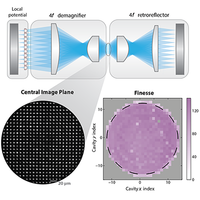
Stability, Degeneracy, and Scalability of a 600-Site Cavity Array Microscope

Anna Soper, Danial Shadmany, Adam L. Shaw, Lukas Palm, David I. Schuster, and Jonathan Simon

Phys. Rev. X 16, 041009 (2026) - Published 8 October, 2026

A scalable cavity array microscope architecture is presented, featuring over 600 independent optical cavities for parallelized light-matter interactions, providing opportunities for quantum networking and sensing applications.

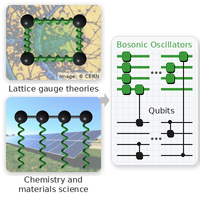
Hybrid Oscillator-Qubit Quantum Processors: Simulating Fermions, Bosons, and Gauge Fields

Eleanor Crane, Kevin C. Smith, Teague Tomesh, Alec Eickbusch, John M. Martyn, Stefan Kühn, Lena Funcke, Michael Austin DeMarco, Isaac L. Chuang, Nathan Wiebe, Alexander Schuckert, and Steven M. Girvin

Phys. Rev. X 16, 041008 (2026) - Published 7 October, 2026

Researchers develop a hybrid qubit-boson quantum processor framework to simulate interacting fermions, bosons, and lattice gauge fields.

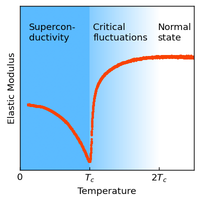
Vanishing Phase Stiffness and Fluctuation-Dominated Superconductivity in UTe2

Sahas Kamat, Jared Dans, Shanta Saha, Daniel F. Agterberg, Johnpierre Paglione, and B. J. Ramshaw

Phys. Rev. X 16, 041006 (2026) - Published 6 October, 2026

Ultrasound measurements in uranium ditelluride (UTe2) reveal precursor superconducting fluctuations up to twice the critical temperature, providing high kinetic inductance in a clean material.

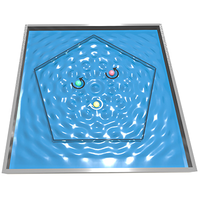
Quasicrystal Topological Hydrodynamics

Jun-liang Duan, Chuanjie Hu, Jiayun Ning, Xu-jie Chai, Li-Wei Wang, Yang Dong, Jianjun Liu, Shan Zhu, Huanyang Chen, Jian-Hua Jiang, and Jin-hui Chen

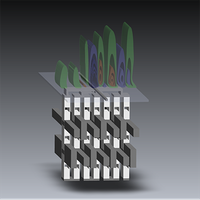
Phys. Rev. X 16, 031078 (2026) - Published 29 September, 2026

Quasicrystalline water waves allow exquisite insight into topological physics and provides a unique platform for manipulating particle for a wide range of applications.

Enduring Mechanical Memory from the Constitutive Response of Elastically Recoverable Nanostructured Materials

Abhishek Gupta, Bhanugoban Maheswaran, Nicholas Jaegersberg, Komal Chawla, and Ramathasan Thevamaran

Phys. Rev. X 16, 031073 (2026) - Published 18 September, 2026

Vertically aligned carbon nanotube foams exhibit return point memory, opening new opportunities for mechanical computing applications.

Quantum Birthmarks: Ergodicity Breaking Beyond Scarring

Anton M. Graf, Saul Atwood, Mingxuan Xiao, Roland Ketzmerick, Eric J. Heller, and Joonas Keski-Rahkonen

Phys. Rev. X 16, 031063 (2026) - Published 10 September, 2026

Researchers develop a theoretical framework showing that quantum systems permanently retain a memory of their initial state and early dynamics, in defiance of classical expectations.

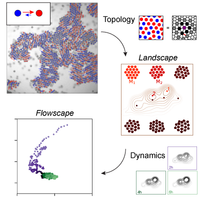
Topological Flowscape Reveals State Transitions in Nonreciprocal Living Matter

Hyunseok Lee, EliseAnne Koskelo, Shreyas Gokhale, Junang Li, Chenyi Fei, Chih-Wei Joshua Liu, Lisa Lin, Jörn Dunkel, Dominic J. Skinner, and Nikta Fakhri

Phys. Rev. X 16, 031061 (2026) - Published 8 September, 2026

Characterizing living systems far from the thermodynamic limit can yield insight into the physics of nonreciprocity and biological self-organization.

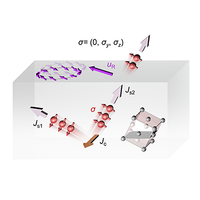
Ultrastrong Unconventional Spin Current via Noncollinear Spin-Orbit Filtering

Hongliang Chen, Zi-An Wang, Xingguo Gao, Hang Zhou, Jiaxin Chen, Chang Pan, Lizhu Ren, Qia Shen, Zhenyi Zheng, Dandan Guan, Xiaoxue Liu, Shiyong Wang, Yaoyi Li, Hao Zheng, Canhua Liu, Yumeng Yang, Xuepeng Qiu, Guowei Zhou, Jingsheng Chen, Jinfeng Jia, Ding-Fu Shao, and Liang Liu

Phys. Rev. X 16, 031060 (2026) - Published 3 September, 2026

An asymmetric platinum interface enables noncollinear spin-orbit filtering, breaking bulk symmetry constraints to generate out-of-plane spin currents for field-free magnetization switching.

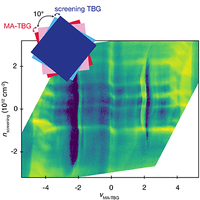
Coulomb Screening of Superconductivity in Magic-Angle Graphene

Julien Barrier, Liangtao Peng, Shuigang Xu, Christophe De Beule, V. I. Fal’ko, K. Watanabe, T. Tanigushi, A. K. Geim, Shaffique Adam, and Alexey I. Berdyugin

Phys. Rev. X 16, 031040 (2026) - Published 17 August, 2026

Metallic layers placed near magic-angle graphene suppress Coulomb interactions and reveal that its superconductivity is driven by electronic interactions rather than conventional atomic vibrations.

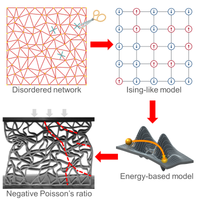
Unlocking Emergent Resilience in Amorphous Metamaterials via a Physics-Constrained Energy-Based Framework

Lingyu Jia, Changliang Zhu, Qiaozhi Lei, Hua Tong, Jinkui Meng, Chengyan Xu, Xiangying Shen, and Lei Xu

Phys. Rev. X 16, 031024 (2026) - Published 31 July, 2026

A physics-constrained design framework may aid the search for lightweight but resilient material.

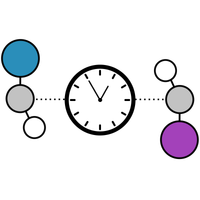
Engineered Molecular Clock Transitions for Precision Measurements

Yuiki Takahashi, Harish D. Ramachandran, Arian Jadbabaie, Yi Zeng, Chi Zhang, and Nicholas R. Hutzler

Phys. Rev. X 16, 031011 (2026) - Published 20 July, 2026

Special clock transitions in heavy polar molecules have been engineered to probe physics beyond the standard model, suppressing disruptive electromagnetic noise by orders of magnitude while preserving high sensitivity.

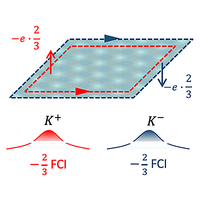
Candidate for a Fractional Topological Insulator in Twisted MoTe2

Yiping Wang, Gillian E. Minarik, Weijie Li, Yves Kwan, Shuai Yuan, Eric Anderson, Chaowei Hu, Julian Ingham, Jeongheon Choe, Takashi Taniguchi, Kenji Watanabe, Xavier Roy, Jiun-Haw Chu, Raquel Queiroz, James C. Hone, N. Regnault, Xiaodong Xu, and Xiaoyang Zhu

Phys. Rev. X 16, 031009 (2026) - Published 16 July, 2026

Pump-probe modulation spectroscopy of a MoTe2 bilayer superlattice reveals an out-of-plane antiferromagnetic response, providing experimental signatures of a putative fractional topological insulator state.

Topological Defect Propagation to Classify Knitted Fabrics

Daisuke S. Shimamoto, Keiko Shimamoto, Sonia Mahmoudi, and Samuel Poincloux

Phys. Rev. X 16, 031006 (2026) - Published 14 July, 2026

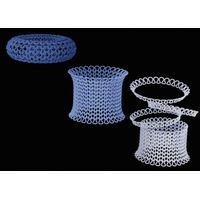
The ability of a fabric to be knitted into a textile can be determined on the basis of the topology of its pattern.

Distributing Stationary Qubit Entanglement through a Nonlocal Squeezed Reservoir

A. Andrés-Juanes, J. Agustí, R. Sett, E. S. Redchenko, L. N. Kapoor, S. Hawaldar, P. Rabl, and J. M. Fink

Phys. Rev. X 16, 031005 (2026) - Published 13 July, 2026

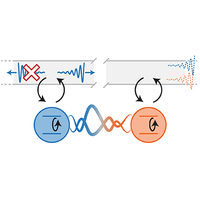
A fully autonomous process is demonstrated that entangles two spatially separated superconducting qubits by coupling them to a shared, quantum-correlated microwave reservoir, offering a robust new platform for high-throughput entanglement distribution in future quantum networks.

Autonomous Stabilization of Remote Entanglement in a Cascaded Quantum Network

Abdullah Irfan, Kaushik Singirikonda, Mingxing Yao, Andrew Lingenfelter, Michael Mollenhauer, Xi Cao, Aashish A. Clerk, and Wolfgang Pfaff

Phys. Rev. X 16, 031004 (2026) - Published 13 July, 2026

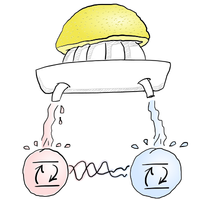
Researchers have achieved stable remote entanglement between separate quantum devices. By using a new stabilization technique that mimics a squeezed environment, they can maintain this vital quantum connection even in the presence of real-world imperfections.

Observation of Synchronization between Two Quantum van der Pol Oscillators in Trapped Ions

Jiarui Liu, Qiming Wu, Joel E. Moore, Hartmut Haeffner, and Christopher W. Wächtler

Phys. Rev. X 16, 021062 (2026) - Published 29 June, 2026

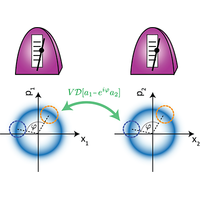
Synchronization between two quantum van der Pol oscillators is achieved by engineering dissipation in a trapped-ion quantum simulator, where the synchronized state is encoded in a fixed relative phase accessible only through joint measurement.

Super-resonance: Breaking the Bandwidth Limit of Resonant Modes and Its Application to Flow Control

Adam R. Harris, Armin Kianfar, David Roca, Daniel Yago, Christoph Brehm, and Mahmoud I. Hussein

Phys. Rev. X 16, 021045 (2026) - Published 28 May, 2026

Super-resonance maintains a broadband out-of-phase response well beyond the characteristic bandwidth of conventional resonance, enabling broadband flow stabilization among other applications.

Nondestructive Optical Readout and Manipulation of Circular Rydberg Atoms

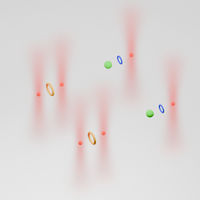
Y. Machu, A. Durán-Hernández, G. Creutzer, A. A. Young, J. M. Raimond, M. Brune, and C. Sayrin

Phys. Rev. X 16, 021040 (2026) - Published 20 May, 2026

Local quantum nondemolition measurements and optical manipulation of long-lived circular Rydberg atoms are demonstrated by coupling them to an auxiliary array of low-angular-momentum Rydberg atoms.

Stealthy-Hyperuniform Wave Dynamics in Two-Dimensional Photonic Crystals

Maria Barsukova, Zeyu Zhang, Brian Gould, Koorosh Sadri, Christian Rosiek, Søren Stobbe, Jonas Karcher, and Mikael C. Rechtsman

Phys. Rev. X 16, 021028 (2026) - Published 7 May, 2026

While disordered stealthy hyperuniform materials are expected to be largely transparent within a particular range of wavelengths, new experiments on large-scale silicon photonic crystals reveal unexpected residual scattering driven by radiative loss.

Hydroplasticity of Nanocrystal Films Induced by Mesopore Change

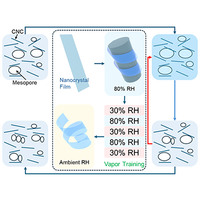
Siyuan Liu, Yonggui Wang, Yu Yin, Xintong Meng, Zhen Lang, and Kai Zhang

Phys. Rev. X 16, 021026 (2026) - Published 5 May, 2026
A vapor training process allows for improved plasticity and better shaping of wood-derived films.

Sign In to Your Journals Account

Filter

Filter

Article Lookup

Enter a citation