Highlights

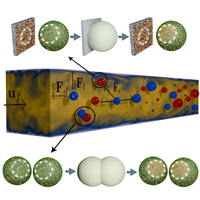
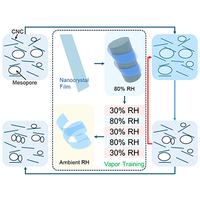
Hydroplasticity of Nanocrystal Films Induced by Mesopore Change

Siyuan Liu, Yonggui Wang, Yu Yin, Xintong Meng, Zhen Lang, and Kai Zhang

Phys. Rev. X 16, 021026 (2026) - Published 5 May, 2026

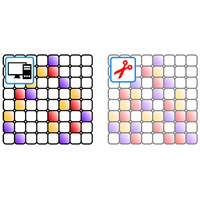
A vapor training process allows for improved plasticity and better shaping of wood-derived films.

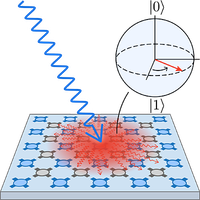
Correlated Phase Error Bursts in a Gap-Engineered Superconducting Qubit Array

Vladislav D. Kurilovich, Gabrielle Roberts, Leigh S. Martin, Matt McEwen, Alec Eickbusch, Lara Faoro, Lev B. Ioffe, Juan Atalaya, Alexander Bilmes, John Mark Kreikebaum, Andreas Bengtsson, Paul Klimov, Matthew Neeley, Wojciech Mruczkiewicz, Kevin Miao, Igor L. Aleiner, Julian Kelly, Yu Chen, Kevin Satzinger, and Alex Opremcak

Phys. Rev. X 16, 021025 (2026) - Published 4 May, 2026

Ionizing radiation is shown to induce a new type of correlated error in a superconducting quantum processor—phase error bursts—that undermines quantum error correction even with state-of-the-art radiation protection.

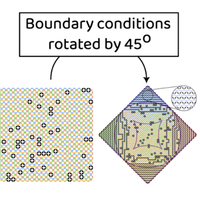
Breakdown of the Thermodynamic Limit in Quantum Spin and Dimer Models

Jeet Shah, Laura Shou, Jeremy Shuler, and Victor Galitski

Phys. Rev. X 16, 021020 (2026) - Published 27 April, 2026

Geometry-induced quantum phase separation in quantum dimer models demonstrates that domain shape can fundamentally alter macroscopic ground states, challenging traditional assumptions about the thermodynamic limit.

Seeing New Depths: Three-Dimensional Flow of a Free-Swimming Alga

Gregorius Pradipta, Wanho Lee, Van Tran, Kyle Welch, Santosh K. Sankar, Yongsam Kim, Satish Kumar, Xin Yong, Jiarong Hong, Sookkyung Lim, and Xiang Cheng

Phys. Rev. X 16, 021019 (2026) - Published 24 April, 2026

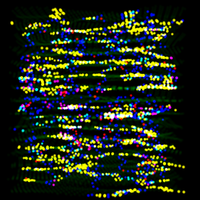
Experimental three-dimensional measurements of the flow field around a free-swimming microalga reveal that microscopic organisms generate unexpected low-Reynolds-number flow phenomena, expanding our understanding of microhydrodynamics with profound biological implications for microbial motility and physiology.

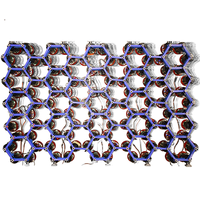
More is Less in Unpercolated Active Solids

Jack Binysh, Guido Baardink, Jonas Veenstra, Corentin Coulais, and Anton Souslov

Phys. Rev. X 16, 021012 (2026) - Published 13 April, 2026

By combining experiments with robotic metamaterials and theory, this work shows that increasing microscopic activity can counterintuitively cause a solid’s macroscale active response to vanish when active units are too sparse for the active forces to percolate through the structure.

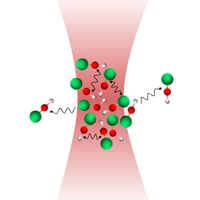
Quantum-State-Controlled Collisions of Ultracold Polyatomic Molecules

Nathaniel B. Vilas, Paige Robichaud, Christian Hallas, Junheng Tao, Loïc Anderegg, Grace K. Li, Hana Lampson, Lucie D. Augustovičová, John L. Bohn, and John M. Doyle

Phys. Rev. X 16, 021001 (2026) - Published 1 April, 2026

Ultracold collisions between polyatomic molecules are observed and characterized, revealing how their unique internal structure can be used to shield them from loss.

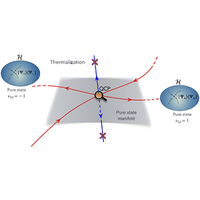
Fermion Quantum Criticality far from Equilibrium

Rohan Mittal, Tom Zander, Johannes Lang, and Sebastian Diehl

Phys. Rev. X 16, 011069 (2026) - Published 30 March, 2026

A new nonequilibrium universality class for fermions is identified. It displays an emergent “dark state symmetry” that protects quantum criticality, requiring only a single tuning parameter.

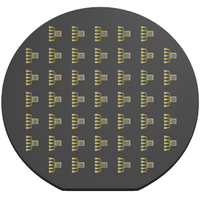
Scalable Photonic Quantum Interconnect Platform

Daniel Riedel, Teodoro Graziosi, Zhuoxian Wang, Chawina De-Eknamkul, Alex Abulnaga, Jonathan Dietz, Andrea Mucchietto, Michael Haas, Madison Sutula, Pierre Barral, Matteo Pompili, Mouktik Raha, Carsten Robens, Jeonghoon Ha, Denis Sukachev, David Levonian, Mihir Bhaskar, Matthew Markham, and Bartholomeus Machielse

Phys. Rev. X 16, 011063 (2026) - Published 24 March, 2026

A wafer-scale platform integrating high-quality diamond membranes with functionalized silicon substrates enables the parallel fabrication of quantum memory arrays with near-unity yield, paving the way for the mass production of modular quantum interconnects.

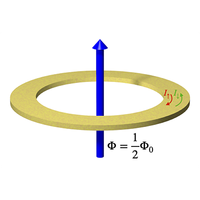
Slow Quasiparticle Dynamics and Anyonic Statistics in a Fractional Quantum Hall Fabry-Pérot Interferometer

Noah L. Samuelson, Liam A. Cohen, Will Wang, Simon Blanch, Takashi Taniguchi, Kenji Watanabe, Michael P. Zaletel, and Andrea F. Young

Phys. Rev. X 16, 011062 (2026) - Published 23 March, 2026

Anyons, collective excitations of fractional quantum Hall systems, are shown to exhibit unprecedented stability in graphene heterostructures, enabling their practical manipulation for use in fault-tolerant quantum computing.

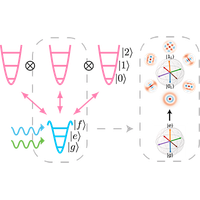
Fast Sideband Control of a Multimode Cavity Memory with Weak Dispersive Coupling to a Transmon

Jordan Huang, Thomas J. DiNapoli, Gavin Rockwood, Ming Yuan, Prathyankara Narasimhan, Eesh Gupta, Mustafa Bal, Francesco Crisa, Sabrina Garattoni, Yao Lu, Liang Jiang, and Srivatsan Chakram

Phys. Rev. X 16, 011058 (2026) - Published 17 March, 2026

Researchers use fast “sideband control” to swap quantum information between a processor and a superconducting-cavity memory far faster than traditional dispersive methods, even when the two are only weakly coupled. This enables robust encoding gates and reliable quantum storage in high-quality superconducting cavities.

Persistent Spin Currents in Superconducting Altermagnets

Kyle Monkman, Joan Weng, Niclas Heinsdorf, Alberto Nocera, Yafis Barlas, and Marcel Franz

Phys. Rev. X 16, 011057 (2026) - Published 16 March, 2026

Persistent spin currents in superconducting altermagnets offer a dissipationless mechanism for spin transport that could enable the development of high-efficiency spintronic computer chips.

Unifying Same- and Different-Material Particle Charging through Stochastic Scaling

Holger Grosshans, Gizem Ozler, Vyshnavi Veeravalli, and Simon Jantač

Phys. Rev. X 16, 011023 (2026) - Published 11 February, 2026

A model that predicts charging for different types of small particle collisions enables realistic simulations of electrostatic effects.

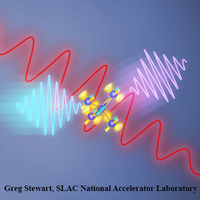
Second-Order Microscopic Nonlinear Optical Susceptibility in a Centrosymmetric Material: Application to Imaging Valence Electron Motion

Chance Ornelas-Skarin, Tatiana Bezriadina, Matthias Fuchs, Shambhu Ghimire, J. B. Hastings, Quynh L. Nguyen, Gilberto de la Peña, Takahiro Sato, Sharon Shwartz, Mariano Trigo, Diling Zhu, Daria Popova-Gorelova, and David A. Reis

Phys. Rev. X 16, 011006 (2026) - Published 7 January, 2026

Nonlinear x-ray diffraction is used to isolate the valence electron density in silicon, demonstrating a powerful imaging technique useful across a range of complex materials.

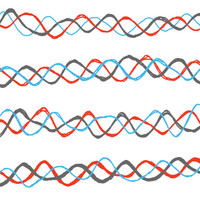
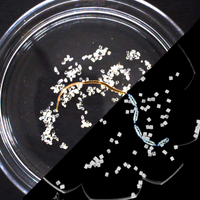
Particle Sweeping and Collection by Active and Living Filaments

R. Sinaasappel, K. R. Prathyusha, H. Tuazon, E. Mirzahossein, P. Illien, S. Bhamla, and A. Deblais

Phys. Rev. X 16, 011003 (2026) - Published 5 January, 2026

Active filaments collect nearby particles through sweeping motions driven by body bending. The size of the resulting clusters follows a simple geometric rule set by filament length and flexibility that unifies living, robotic, and simulated systems.

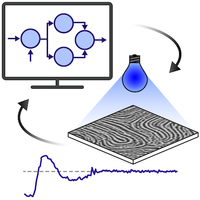
Closed-Loop Control of Active Nematic Flows

Katsu Nishiyama, John Berezney, Michael M. Norton, Akshit Aggarwal, Saptorshi Ghosh, Zahra Zarei, Michael F. Hagan, Seth Fraden, and Zvonimir Dogic

Phys. Rev. X 15, 041053 (2025) - Published 19 December, 2025

A feedback-controlled, light-responsive system regulates the chaotic motion of active fluids, maintaining steady flow speeds despite disturbances and enabling precise control over their dynamic behavior.

Kolmogorov-Arnold Networks Meet Science

Ziming Liu, Max Tegmark, Pingchuan Ma, Wojciech Matusik, and Yixuan Wang

Phys. Rev. X 15, 041051 (2025) - Published 17 December, 2025

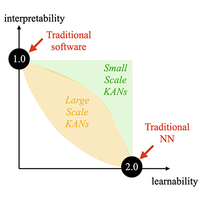
Kolmogorov-Arnold networks combine the predictive strength of deep learning with the interpretability of symbolic formulas, enabling AI systems to both validate physical laws and generate new scientific insights.

Bond-Network Entropy Governs Heat Transport in Coordination-Disordered Solids

Kamil Iwanowski, Gábor Csányi, and Michele Simoncelli

Phys. Rev. X 15, 041041 (2025) - Published 4 December, 2025

A new framework linking atomic disorder to thermal conductivity shows how variations in atomic bonding networks control heat flow in materials that are partly crystalline and partly glassy.

Repeated Ancilla Reuse for Logical Computation on a Neutral Atom Quantum Computer

J. A. Muniz et al.

Phys. Rev. X 15, 041040 (2025) - Published 4 December, 2025

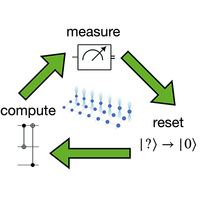
A neutral-atom quantum computing system that can repeatedly measure, reuse, and replace ancilla qubits without disrupting others enables longer computations and advances scalable, fault-tolerant operation.

A Polynomial-Time Classical Algorithm for Noisy Quantum Circuits

Thomas Schuster, Chao Yin, Xun Gao, and Norman Y. Yao

Phys. Rev. X 15, 041018 (2025) - Published 3 November, 2025

A new classical algorithm shows that noise restricts non-error-corrected quantum computational power more generally than previously recognized.

Emergent Dynamics of Active Elastic Microbeams

Q. Martinet, Y. I. Li, A. Aubret, E. Hannezo, and J. Palacci

Phys. Rev. X 15, 041017 (2025) - Published 31 October, 2025
Active solids—elastic materials built from energy-consuming parts—in the shape of microbeams rotate or oscillate and reveal tunable lifelike motion, paving the way for adaptive, shape-shifting materials and microscopic machines.

Sign In to Your Journals Account

Filter

Filter

Article Lookup

Enter a citation