Browse by Subject

Editorial: Physical Review X at Fifteen

Denis Bartolo and Brent Grocholski

Phys. Rev. X 16, 030001 (2026) - Published 1 July, 2026

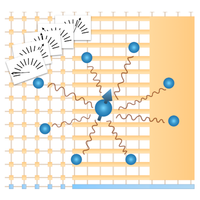
Multiscale Interfacial Mechanics of Soft Solids

Nicolas Bain, Lawrence A. Wilen, Dominic Gerber, Mengjie Zu, Carl P. Goodrich, Senthilkumar Duraivel, Kaarthik Varma, Harsha Koganti, Robert W. Style, and Eric R. Dufresne

Phys. Rev. X 16, 021063 (2026) - Published 30 June, 2026

Using high-precision 3D location and tracking of nanotracers, this work investigates interfacial properties and mechanical response of soft polymer solids, revealing the multiscale nature of soft solid interfaces.

Observation of Synchronization between Two Quantum van der Pol Oscillators in Trapped Ions

Jiarui Liu, Qiming Wu, Joel E. Moore, Hartmut Haeffner, and Christopher W. Wächtler

Phys. Rev. X 16, 021062 (2026) - Published 29 June, 2026

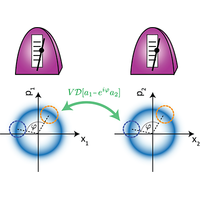
Synchronization between two quantum van der Pol oscillators is achieved by engineering dissipation in a trapped-ion quantum simulator, where the synchronized state is encoded in a fixed relative phase accessible only through joint measurement.

Rare Cage Escapes Drive Relaxation in Deeply Supercooled Liquids

Francesco Rusciano, Raffaele Pastore, Francesco Greco, and Walter Kob

Phys. Rev. X 16, 021061 (2026) - Published 26 June, 2026

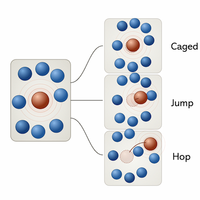
Simulations conducted significantly below the mode coupling temperature allow dynamic properties of glass forming systems to be uncovered.

Above-Unity Coherent Cooperativity of Tin-Vacancy Centers in Diamond Photonic Crystal Cavities

Nina Codreanu, Tim Turan, Daniel Bedialauneta Rodriguez, Matteo Pasini, Lorenzo de Santis, Maximilian Ruf, Christian F. Primavera, Leonardo G. C. Wienhoven, Caroline E. Smulders, Simon Gröblacher, and Ronald Hanson

Phys. Rev. X 16, 021060 (2026) - Published 25 June, 2026

Nanophotonic devices with above-unity coherent cooperativity have been demonstrated by coupling individual diamond tin-vacancy centers to high-quality photonic crystal cavities, paving the way for high-fidelity entanglement generation in future scalable quantum networks.

Complexity-Theoretic Foundations of BosonSampling with a Linear Number of Modes

Adam Bouland, Daniel Brod, Ishaun Datta, Bill Fefferman, Daniel Grier, Felipe Hernández, and Michał Oszmaniec

Phys. Rev. X 16, 021059 (2026) - Published 24 June, 2026

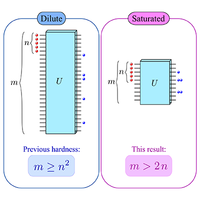
Experimental demonstrations of quantum advantage in photonic systems operate in the “saturated regime” of optics, whereas until now the complexity theory underpinning them has pertained only to the “dilute regime”—researchers bridge the gap.

Ghost Mechanism: An Analytical Model of Abrupt Learning in Recurrent Networks

Fatih Dinc, Ege Cirakman, Bariscan Kurtkaya, Mert Yuksekgonul, Yiqi Jiang, Mark J. Schnitzer, and Hidenori Tanaka

Phys. Rev. X 16, 021058 (2026) - Published 23 June, 2026

This study establishes the ghost mechanism as an underlying mechanism for abrupt learning, whereby the recurrent neural network develops ghost points—transient dynamical bottlenecks—and identifies ways to overcome the training instabilities.

Process Tensor Approaches to Non-Markovian Quantum Dynamics

Jonathan Keeling, E. Miles Stoudenmire, Mari-Carmen Bañuls, and David R. Reichman

Phys. Rev. X 16, 020502 (2026) - Published 22 June, 2026

Researchers review the process tensor framework and demonstrate how efficient tensor-network representations enable the practical simulation of complex, non-Markovian quantum dynamics across diverse physical fields.

Quantifying Quantum Computational Advantage on a Processor of Ultracold Atoms

Yong-Guang Zheng, Ying-Chao Shen, Wei-Yong Zhang, An Luo, Ying Liu, Ming-Gen He, Hao-Ran Zhang, Wan Lin, Han-Yi Wang, Zi-Hang Zhu, Pei-Yue Qiu, Tian-Yi Wang, Ming-Cheng Chen, Chao-Yang Lu, Supanut Thanasilp, Dimitris G. Angelakis, Zhen-Sheng Yuan, and Jian-Wei Pan

Phys. Rev. X 16, 021057 (2026) - Published 18 June, 2026

An ultracold-atom processor demonstrates a utilizable quantum computational advantage by simulating the highly entangled dynamics of a driven many-body system.

Dynamics of Quantum Chiral Solitons

Leandro M. Chinellato, Oleg A. Starykh, and Cristian D. Batista

Phys. Rev. X 16, 021056 (2026) - Published 15 June, 2026

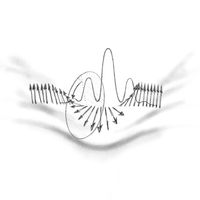
A nonperturbative quantization framework for chiral solitons in spin chains demonstrates that they condense into a Tomonaga-Luttinger liquid, appearing as low-energy excitations above the ferromagnetic phase and becoming detectable via inelastic neutron scattering.

Free and Interacting Fermionic Conformal Field Theories on the Fuzzy Sphere

Zheng Zhou (周正), Davide Gaiotto, and Yin-Chen He

Phys. Rev. X 16, 021055 (2026) - Published 12 June, 2026

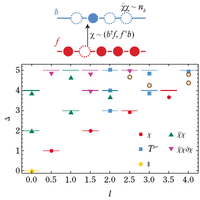
Researchers use noncommutative “fuzzy” spheres to study three-dimensional fermionic conformal field theories, uncovering emergent supersymmetry.

General Approach to Solving Spin Moiré Superstructures

Paul M. Neves, Takashi Kurumaji, Joshua P. Wakefield, Arno Hiess, Paul Steffens, Navid Qureshi, Robert Cubitt, Lisa M. DeBeer-Schmitt, Johanna C. Palmstrom, Satoru Hayami, Marek Bartkowiak, Markus Zolliker, Jonathan S. White, and Joseph G. Checkelsky

Phys. Rev. X 16, 021054 (2026) - Published 11 June, 2026

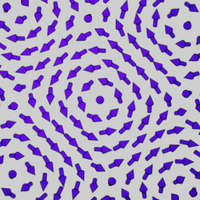
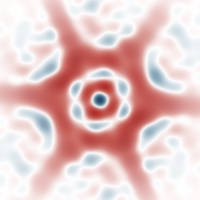
Mapping of spin textures in EuAg4Sb2 reveals three distinct, tunable magnetic phases, establishing a design framework for materials that manipulate information via spin-based vortex lattices.

Fate of Topological Dirac Magnons in van der Waals Ferromagnets at Finite Temperature

Rintaro Eto, Ignacio Salgado-Linares, Masahito Mochizuki, Johannes Knolle, and Alexander Mook

Phys. Rev. X 16, 021053 (2026) - Published 10 June, 2026

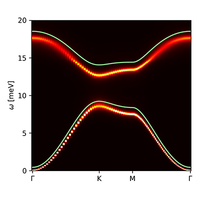
Theoretical modeling of magnon interactions at finite temperatures demonstrates that topological magnon gaps remain surprisingly stable near the Curie point, providing a roadmap for designing robust spintronic devices.

Lieb-Mattis States for Robust Entangled Differential Phase Sensing

Raphael Kaubruegger, Diego Fallas Padilla, Athreya Shankar, Christoph Hotter, Sean R. Muleady, Jacob Bringewatt, Youcef Baamara, Erfan Abbasgholinejad, Alexey V. Gorshkov, Klaus Mølmer, James K. Thompson, and Ana Maria Rey

Phys. Rev. X 16, 021052 (2026) - Published 9 June, 2026

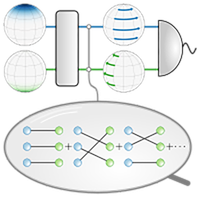
A robust approach to quantum-enhanced differential phase sensing is developed using entangled Lieb-Mattis states, which are intrinsically insensitive to common-mode noise, enabling a practical path toward scalable quantum sensor networks in noisy environments.

Are Neural Networks Collision Resistant?

Marco Benedetti, Andrej Bogdanov, Enrico M. Malatesta, Marc Mézard, Gianmarco Perrupato, Alon Rosen, Nikolaj I. Schwartzbach, and Riccardo Zecchina

Phys. Rev. X 16, 021051 (2026) - Published 5 June, 2026

A study of the computational complexity of finding collisions in a simple one-layer neural network shows that efficient algorithms fail to find collisions, a result of direct relevance for the definition of new cryptographic protocols based on machine-learning models.

Reassessing the Boundary between Classical and Nonclassical for Individual Quantum Processes

Yujie Zhang, David Schmid, Yìlè Yīng, and Robert W. Spekkens

Phys. Rev. X 16, 021050 (2026) - Published 4 June, 2026

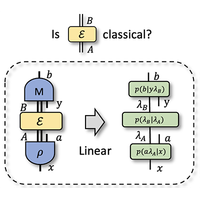
Researchers have proposed a unified rule to distinguish quantum from classical processes, recovering many standard signatures of quantumness while revealing that many phenomena long thought to be classical actually possess hidden, intrinsically quantum properties that could power future technologies.

Generating Arbitrary Superpositions of Nonclassical Quantum Harmonic Oscillator States

S. Saner, O. Băzăvan, D. J. Webb, G. Araneda, D. M. Lucas, C. J. Ballance, and R. Srinivas

Phys. Rev. X 16, 021049 (2026) - Published 3 June, 2026

Researchers have developed a method to generate arbitrary superpositions of non-Gaussian states in trapped-ion systems and applied it to realize superpositions of squeezed, trisqueezed, and higher-order squeezed states, with applications in quantum sensing and error correction.

Predicting Physical Links in Networks

Shuai Li, Wei Chen, and Jan Nagler

Phys. Rev. X 16, 021048 (2026) - Published 2 June, 2026

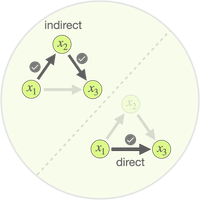
A physics-informed framework allows for inferring general causal links across a wide range of networked dynamics systems.

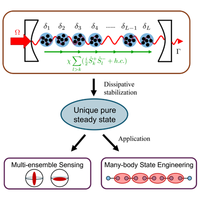
Reconfigurable Dissipative Entanglement between Many Spin Ensembles: From Robust Quantum Sensing to Many-Body State Engineering

Anjun Chu, Mikhail Mamaev, Martin Koppenhöfer, Ming Yuan, and Aashish A. Clerk

Phys. Rev. X 16, 021047 (2026) - Published 1 June, 2026

Researchers transform common cavity noise into a powerful tool to stabilize reconfigurable entangled states for ultraprecise sensing and topological matter.

General Framework Enabling Polarity-Tunable Time-Reversal Symmetric Superconducting Diode Effects in Gate-Defined Homojunctions

Hongwei Zhang, Chunsheng Wang, Ran Wang, Senyang Pan, Hengning Wang, Jiaqiang Cai, Yonglai Liu, Zhe Qu, Xiangde Zhu, Wei Ning, Chuanying Xi, Jinglei Zhang, Ning Hao, Guolin Zheng, and Mingliang Tian

Phys. Rev. X 16, 021046 (2026) - Published 29 May, 2026
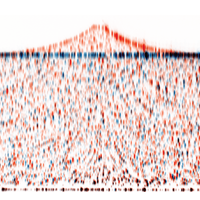
Local protonic gating in NbSe2 homojunctions induces a time-reversal symmetric superconducting diode effect, enabling the magnetic-field-free control of nonreciprocal critical currents.

Sign In to Your Journals Account

Filter

Subject

Filter

Article Lookup

Enter a citation