Yaofeng Xie, Sijie Xu, Yu Pan, Taekoo Oh, Tingjun Zhang, Masaaki Matsuda, Zhaoyu Liu, Zehao Wang, Yiheng Wang, Siyu Pan, Avishek Maity, Sylwia Pawledzio, Xiaoping Wang, Songxue Chi, Feng Ye, Yiqing Hao, Huibo Cao, Barry L. Winn, Melissa K. Graves-Brook, Shuai Wu, Fan Li, Xiaoyuan Zhou, Claudia Felser, Naoto Nagaosa, and Pengcheng Dai
Phys. Rev. X 16, 041001 (2026) - Published 1 October, 2026
Neutron scattering experiments on reveal that a dynamic spin nematic state coupled to magnetic fields generates scalar spin chirality, driving anomalous Hall and Nernst effects in the paramagnetic phase.
Tai-Hsuan Yang, Bowen Shi, and Jong Yeon Lee
Phys. Rev. X 16, 041002 (2026) - Published 2 October, 2026
A quantum information framework classifies mixed-state topological phases for open quantum systems, introducing phase invariants based on an information convex set, memory capacity, and secret sharing.
Wai-Keong Mok, Tobias Haug, Wen Wei Ho, and John Preskill
Phys. Rev. X 16, 041003 (2026) - Published 2 October, 2026
Researchers introduce Scrooge -designs to quantify how constrained quantum systems achieve universal randomness and deep thermalization.
Lukas J. Fiderer, Paul C. Barth, Isaac D. Smith, and Hans J. Briegel
Phys. Rev. X 16, 041004 (2026) - Published 5 October, 2026
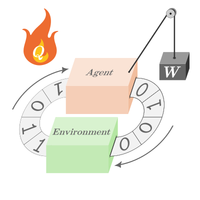
An information-theoretic model of agents, i.e., complex self-organizing systems, shows that agents must forget parts of their past actions in order to operate at thermodynamic efficiency.
Fuwei Yang, Wenjiang Zhou, Yelingyi Wang, Yuxi Wang, Deli Peng, Quanshui Zheng, and Bai Song
Phys. Rev. X 16, 041005 (2026) - Published 5 October, 2026
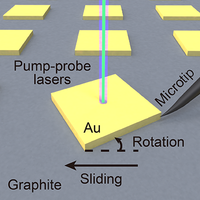
Structural superlubricity between gold micromesas and graphite enables high, wear-free interfacial thermal conductance that remains insensitive to sliding and rotation.
Sahas Kamat, Jared Dans, Shanta Saha, Daniel F. Agterberg, Johnpierre Paglione, and B. J. Ramshaw
Phys. Rev. X 16, 041006 (2026) - Published 6 October, 2026
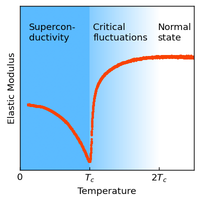
Ultrasound measurements in uranium ditelluride () reveal precursor superconducting fluctuations up to twice the critical temperature, providing high kinetic inductance in a clean material.
Jing Song, Yifan Wang, Xuan Zhao, Yuxuan Song, Song Liu, Chen Hu, and Yang Xu
Phys. Rev. X 16, 041007 (2026) - Published 6 October, 2026
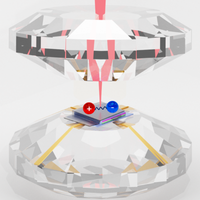
Hydrostatic pressure continuously tunes the moiré potential in semiconductor superlattices, driving a crossover to a strong-moiré regime that hybridizes Wannier-Rydberg and charge-transfer excitons.
Eleanor Crane, Kevin C. Smith, Teague Tomesh, Alec Eickbusch, John M. Martyn, Stefan Kühn, Lena Funcke, Michael Austin DeMarco, Isaac L. Chuang, Nathan Wiebe, Alexander Schuckert, and Steven M. Girvin
Phys. Rev. X 16, 041008 (2026) - Published 7 October, 2026
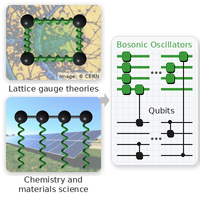
Researchers develop a hybrid qubit-boson quantum processor framework to simulate interacting fermions, bosons, and lattice gauge fields.
Anna Soper, Danial Shadmany, Adam L. Shaw, Lukas Palm, David I. Schuster, and Jonathan Simon
Phys. Rev. X 16, 041009 (2026) - Published 8 October, 2026
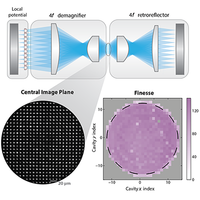
A scalable cavity array microscope architecture is presented, featuring over 600 independent optical cavities for parallelized light-matter interactions, providing opportunities for quantum networking and sensing applications.
Ruchira Mishra, Jiaozi Wang, Silvia Pappalardi, and Luca V. Delacrétaz
Phys. Rev. X 16, 041010 (2026) - Published 8 October, 2026
Researchers establish an effective field theory capturing late-time out-of-time-order correlators to uncover hidden transport parameters.
Abhineet Singh Rajput and Amir A. Pahlavan
Phys. Rev. X 16, 041011 (2026) - Published 9 October, 2026
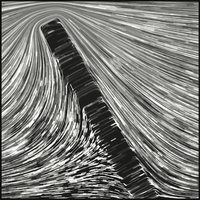
Soft elastic fibers in microfluidic channels can create a fluid system with memory of previous actions through a flow-structure feedback.
Othmane Benhayoune-Khadraoui, Cristóbal Lledó, and Alexandre Blais
Phys. Rev. X 16, 041012 (2026) - Published 9 October, 2026
Researchers show that auxiliary circuit modes trigger multiphoton resonances that break down Kerr-cat qubit coherence under strong driving.