

- Featured in Physics
- Open Access
Entangled Dual-Comb Spectroscopy
Phys. Rev. X 15, 041009 – Published 15 October, 2025
DOI: https://doi.org/10.1103/plh2-cr8s
Abstract
Optical frequency combs have emerged as a cornerstone for a wide range of areas, including spectroscopy, ranging, optical clocks, time and frequency transfer, waveform synthesis, and communications. However, quantum-mechanical fluctuations of the optical carrier impose fundamental performance limits on the precision of classical optical frequency combs, particularly in their use for interferometry and spectroscopy. Entanglement, as a quintessential quantum resource, allows for surpassing the fundamental limits of classical systems. Here, we introduce entanglement into the realm of optical frequency combs, formulating entangled dual-comb spectroscopy (EDCS) that surmounts the fundamental limits of classical DCS. EDCS capitalizes on tailored entangled structures across the frequency comb, enabling simultaneous detection of all comb lines below the standard quantum limit of classical DCS. Applying EDCS in gas detection, we achieve a 2.6-dB enhancement in signal-to-noise ratio and a 1.7-fold reduction in integration time over classical DCS, rendering EDCS particularly suited for dynamic chemical and biological sensing, where fast, precise measurements subject to power constraints are required. EDCS opens a new avenue for exploiting quantum frequency combs, underscoring their prospects in a plethora of applications in precision metrology, spectroscopy, and timekeeping.
Physics Subject Headings (PhySH)
 synopsis

Entanglement Boosts Spectroscopy
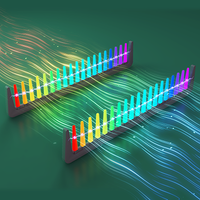
A new spectroscopy method outperforms its rivals by pairing an ordinary frequency comb with an entangled one.
See more in Physics
Popular Summary
Optical frequency combs are essential tools in precision measurement, powering technologies such as optical clocks and gas detectors. However, classical combs face a fundamental limitation: Quantum fluctuations of photons introduce noise that can only be reduced with more laser power or long averaging times. In this work, we show that quantum entanglement can overcome this limitation. We introduce entangled dual-comb spectroscopy (EDCS), the first quantum dual-comb approach that outperforms the best classical methods under the same optical power, boosting the signal-to-noise ratio and reducing measurement time.
To achieve this, we combine a bright classical comb with a specially engineered quantum comb containing many entangled frequency pairs. This generates an entangled signal comb with power comparable to that of traditional spectroscopy sources. When this entangled signal comb probes a sample, its correlations are read out by a reference comb at the detector. The entanglement suppresses quantum noise across the spectrum, as demonstrated in experiments with hydrogen cyanide vapor. All absorption lines are resolved simultaneously with precision beyond the classical limit, showing that EDCS enables faster and more sensitive spectroscopy.
EDCS could be implemented in compact, chip-based sensors for environmental monitoring, biomedical diagnostics, chemical detection, and materials testing. Beyond sensing, entangled frequency combs offer opportunities for faster optical clock readout, better calibration of astronomical spectrographs, and entirely new approaches to quantum metrology. Improvements in squeezing levels, spectral range, and source-detector integration will bring us closer to practical, field-ready entangled frequency-comb instruments.
Article Text
References (52)
- A. Einstein, B. Podolsky, and N. Rosen, Can quantum-mechanical description of physical reality be considered complete?, Phys. Rev. 47, 777 (1935).
- E. Schrödinger, Discussion of probability relations between separated systems, in Mathematical Proceedings of the Cambridge Philosophical Society (Cambridge University Press, Cambridge, England, 1935), Vol. 31, pp. 555–563.
- J. S. Bell, On the Einstein Podolsky Rosen paradox, Phys. Phys. Fiz. 1, 195 (1964).
- Z. Zhang, C. You, O. S. Magaña-Loaiza, R. Fickler, R. d. J. León-Montiel, J. P. Torres, T. S. Humble, S. Liu, Y. Xia, and Q. Zhuang, Entanglement-based quantum information technology: A tutorial, Adv. Opt. Photonics 16, 60 (2024).
- R. Jozsa and N. Linden, On the role of entanglement in quantum-computational speed-up, Proc. R. Soc. A 459, 2011 (2003).
- A. K. Ekert, Quantum cryptography based on Bell’s theorem, Phys. Rev. Lett. 67, 661 (1991).
- T. C. Ralph, Continuous variable quantum cryptography, Phys. Rev. A 61, 010303(R) (1999).
- E. S. Polzik, J. Carri, and H. J. Kimble, Spectroscopy with squeezed light, Phys. Rev. Lett. 68, 3020 (1992).
- Y. Xia, W. Li, W. Clark, D. Hart, Q. Zhuang, and Z. Zhang, Demonstration of a reconfigurable entangled radio-frequency photonic sensor network, Phys. Rev. Lett. 124, 150502 (2020).
- X. Guo, C. R. Breum, J. Borregaard, S. Izumi, M. V. Larsen, T. Gehring, M. Christandl, J. S. Neergaard-Nielsen, and U. L. Andersen, Distributed quantum sensing in a continuous-variable entangled network, Nat. Phys. 16, 281 (2020).
- S. Hao, H. Shi, C. N. Gagatsos, M. Mishra, B. Bash, I. Djordjevic, S. Guha, Q. Zhuang, and Z. Zhang, Demonstration of entanglement-enhanced covert sensing, Phys. Rev. Lett. 129, 010501 (2022).
- T. B. Pittman, Y. H. Shih, D. V. Strekalov, and A. V. Sergienko, Optical imaging by means of two-photon quantum entanglement, Phys. Rev. A 52, R3429 (1995).
- N. Picqué and T. W. Hänsch, Frequency comb spectroscopy, Nat. Photonics 13, 146 (2019).
- I. Coddington, N. Newbury, and W. Swann, Dual-comb spectroscopy, Optica 3, 414 (2016).
- E. D. Caldwell, L. C. Sinclair, N. R. Newbury, and J.-D. Deschenes, The time-programmable frequency comb and its use in quantum-limited ranging, Nature (London) 610, 667 (2022).
- M. Takamoto, F.-L. Hong, R. Higashi, and H. Katori, An optical lattice clock, Nature (London) 435, 321 (2005).
- Z. Jiang, C.-B. Huang, D. E. Leaird, and A. M. Weiner, Optical arbitrary waveform processing of more than 100 spectral comb lines, Nat. Photonics 1, 463 (2007).
- B. Xu, Z. Chen, T. W. Hänsch, and N. Picqué, Near-ultraviolet photon-counting dual-comb spectroscopy, Nature (London) 627, 289 (2024).
- M. Walsh, P. Chang, F. Emaury, G. Rieker, N. Newbury, F. Giorgetta, S. Diddams, and J. Genest, Mode-resolved, shot noise limited, dual-comb spectroscopy with independent free running lasers, in Fourier Transform Spectroscopy (Optica Publishing Group, Munich, Germany, 2023), pp. JTh1A–1.
- S. Camenzind, B. Sierro, B. Willenberg, A. Nussbaum-Lapping, A. Rampur, U. Keller, A. Heidt, and C. R. Phillips, Shot-noise limited dual-comb supercontinuum, Opt. Open 112418 (2024).
- M. Tse, H. Yu, N. Kijbunchoo, A. Fernandez-Galiana, P. Dupej, L. Barsotti, C. Blair, D. Brown, S. Dwyer, A. Effler et al., Quantum-enhanced Advanced LIGO detectors in the era of gravitational-wave astronomy, Phys. Rev. Lett. 123, 231107 (2019).
- Y. Xia, W. Li, Q. Zhuang, and Z. Zhang, Quantum-enhanced data classification with a variational entangled sensor network, Phys. Rev. X 11, 021047 (2021).
- Y. Xia, A. R. Agrawal, C. M. Pluchar, A. J. Brady, Z. Liu, Q. Zhuang, D. J. Wilson, and Z. Zhang, Entanglement-enhanced optomechanical sensing, Nat. Photonics 17, 470 (2023).
- Z. Zhang, S. Mouradian, F. N. C. Wong, and J. H. Shapiro, Entanglement-enhanced sensing in a lossy and noisy environment, Phys. Rev. Lett. 114, 110506 (2015).
- A. Belsley, Quantum-enhanced absorption spectroscopy with bright squeezed frequency combs, Phys. Rev. Lett. 130, 133602 (2023).
- H. Shi, Z. Chen, S. E. Fraser, M. Yu, Z. Zhang, and Q. Zhuang, Entanglement-enhanced dual-comb spectroscopy, npj Quantum Inf. 9, 91 (2023).
- D. I. Herman, M. Walsh, M. K. Kreider, N. Lordi, E. J. Tsao, A. J. Lind, M. Heyrich, J. Combes, J. Genest, and S. A. Diddams, Squeezed dual-comb spectroscopy, Science 387, 653 (2025).
- V. Giovannetti, S. Lloyd, and L. Maccone, Advances in quantum metrology, Nat. Photonics 5, 222 (2011).
- S. Steinlechner, J. Bauchrowitz, M. Meinders, H. Müller-Ebhardt, K. Danzmann, and R. Schnabel, Quantum-dense metrology, Nat. Photonics 7, 626 (2013).
- M. Chen, N. C. Menicucci, and O. Pfister, Experimental realization of multipartite entanglement of 60 modes of a quantum optical frequency comb, Phys. Rev. Lett. 112, 120505 (2014).
- D. Walls and G. Milburn, Quantum Optics 2nd Edition, St Lucia, Brisbane QLD (Springer, 2011), 4072.
- D. I. Herman, M. K. Kreider, N. Lordi, M. Walsh, E. J. Tsao, A. J. Lind, M. Heyrich, J. Combes, S. A. Diddams, and J. Genest, Phase-dependent squeezing in dual-comb interferometry, arXiv:2506.18698.
- I. E. Gordon, L. S. Rothman, e. R. Hargreaves, R. Hashemi, E. V. Karlovets, F. Skinner, E. K. Conway, C. Hill, R. V. Kochanov, Y. Tan et al., The HITRAN2020 molecular spectroscopic database, J. Quant. Spectrosc. Radiat. Transfer 277, 107949 (2022).
- A. Parriaux, K. Hammani, and G. Millot, Electro-optic frequency combs Adv. Opt. Photonics 12, 223 (2020).
- X. Jia, C. Zhai, X. Zhu, C. You, Y. Cao, X. Zhang, Y. Zheng, Z. Fu, J. Mao, T. Dai et al., Continuous-variable multipartite entanglement in an integrated microcomb, Nature (London) 639, 329 (2025).
- Y. Shen, P.-Y. Hsieh, S. K. Sridhar, S. Feldman, Y.-C. Chang, T. A. Smith, and A. Dutt, Strong nanophotonic quantum squeezing exceeding 3.5 dB in a foundry-compatible Kerr microresonator, Optica 12, 302 (2025).
- Z. Wang, K. Li, Y. Wang, X. Zhou, Y. Cheng, B. Jing, F. Sun, J. Li, Z. Li, B. Wu et al., Large-scale cluster quantum microcombs, Light Sci. Appl. 14, 164 (2025).
- Y. Zhang, M. Menotti, K. Tan, V. Vaidya, D. Mahler, L. Helt, L. Zatti, M. Liscidini, B. Morrison, and Z. Vernon, Squeezed light from a nanophotonic molecule, Nat. Commun. 12, 2233 (2021).
- S. Liu, A. Hariri, B.-H. Wu, Y. Zhang, and Z. Zhang, Generation of squeezed light in silicon nitride photonic integrated chips, in CLEO: Fundamental Science (Optica Publishing Group, 2024), pp. FF2H–6.
- M. Jahanbozorgi, Z. Yang, S. Sun, H. Chen, R. Liu, B. Wang, and X. Yi, Generation of squeezed quantum microcombs with silicon nitride integrated photonic circuits, Optica 10, 1100 (2023).
- H. Vahlbruch, M. Mehmet, K. Danzmann, and R. Schnabel, Detection of 15 dB squeezed states of light and their application for the absolute calibration of photoelectric quantum efficiency, Phys. Rev. Lett. 117, 110801 (2016).
- E. Lucas, S.-P. Yu, T. C. Briles, D. R. Carlson, and S. B. Papp, Tailoring microcombs with inverse-designed, meta-dispersion microresonators, Nat. Photonics 17, 943 (2023).
- S.-P. Yu, D. C. Cole, H. Jung, G. T. Moille, K. Srinivasan, and S. B. Papp, Spontaneous pulse formation in edgeless photonic crystal resonators, Nat. Photonics 15, 461 (2021).
- R. Moreira, S. Gundavarapu, and D. J. Blumenthal, Programmable eye-opener lattice filter for multi-channel dispersion compensation using an integrated compact low-loss silicon nitride platform, Opt. Express 24, 16732 (2016).
- A. Dutt, C. Joshi, X. Ji, J. Cardenas, Y. Okawachi, K. Luke, A. L. Gaeta, and M. Lipson, On-chip dual-comb source for spectroscopy, Sci. Adv. 4, e1701858 (2018).
- G. Millot, S. Pitois, M. Yan, T. Hovhannisyan, A. Bendahmane, T. W. Hänsch, and N. Picqué, Frequency-agile dual-comb spectroscopy, Nat. Photonics 10, 27 (2016).
- E. Deriushkina, I. Rebolledo-Salgado, M. Mazur, V. Torres-Company, P. Andrekson, J. Schröder, and M. Karlsson, Dual-comb swept-wavelength interferometry: Theory and experiment, J. Lightwave Technol. 40, 6508 (2022).
- V. Durán, P. A. Andrekson, and V. Torres-Company, Electro-optic dual-comb interferometry over 40 nm bandwidth, Opt. Lett. 41, 4190 (2016).
- A. S. Kowligy, D. R. Carlson, D. D. Hickstein, H. Timmers, A. J. Lind, P. G. Schunemann, S. B. Papp, and S. A. Diddams, Mid-infrared frequency combs at 10 GHz, Opt. Lett. 45, 3677 (2020).
- M. Yan, Z. Wan, Y. Chen, X. Zhang, and H. Zeng, Quantum correlation-enhanced dual-comb spectroscopy, Light Sci. Appl. 14, 257 (2025).
- T. Ralph, Can signal-to-noise be improved by heterodyne detection using an amplitude squeezed local oscillator?, Phys. Rev. Lett. 85, 677 (2000).
- H. Shi et al. (to be published).

