Browse by Subject

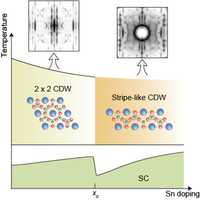
Electron-Correlation-Assisted Charge Stripe Order in a Kagome Superconductor

Linwei Huai, Zhuying Wang, Huachen Rao, Yulei Han, Bo Liu, Shuikang Yu, Yunmei Zhang, Ruiqing Zang, Runqing Luan, Shuting Peng, Zhenhua Qiao, Zhenyu Wang, Junfeng He, Tao Wu, and Xianhui Chen

Phys. Rev. X 15, 041039 (2025) - Published 1 December, 2025

Tin doping in the superconductor CsV3Sb5 suppresses its usual charge-density-wave pattern, revealing a hidden stripe order that highlights how lattice instabilities and electronic correlations can control competing phases in quantum materials.

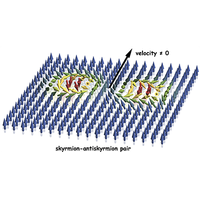
Topological Dipoles of Quantum Skyrmions

Sopheak Sorn, Jörg Schmalian, and Markus Garst

Phys. Rev. X 15, 041037 (2025) - Published 25 November, 2025

Skyrmions behave as fractonlike particles whose motion is constrained by a conserved topological dipole moment, linking their dynamics to quantum Hall physics and revealing how quantum skyrmions behave as massless particles.

Entanglement Randomness and Gapped Itinerant Carriers in a Frustrated Quantum Magnet

Yuanqi Lyu (吕源祺), Luke Pritchard Cairns, Josue Rodriguez, Chunxiao Liu (刘春骁), Kenneth Ng (吴子建), John Singleton, and James G. Analytis

Phys. Rev. X 15, 041035 (2025) - Published 21 November, 2025

Experiments on NaYbSe2 reveal that mobile magnetic excitations arise from fluctuating boundaries between disordered clusters of entangled spins, showing how structural disorder can produce motion within a seemingly frozen quantum state.

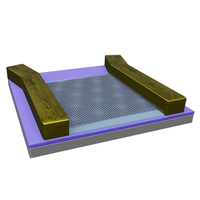
Probing the Flat-Band Limit of the Superconducting Proximity Effect in Twisted Bilayer Graphene Josephson Junctions

A. Díez-Carlón, J. Díez-Mérida, P. Rout, D. Sedov, P. Virtanen, S. Banerjee, R. P. S. Penttilä, P. Altpeter, K. Watanabe, T. Taniguchi, S.-Y. Yang, K. T. Law, T. T. Heikkilä, P. Törmä, M. S. Scheurer, and D. K. Efetov

Phys. Rev. X 15, 041033 (2025) - Published 20 November, 2025

Experiments on twisted bilayer graphene Josephson junctions show that strong supercurrents persist even in flat electronic bands, revealing that quantum geometry and collective effects can sustain superconductivity without electron motion.

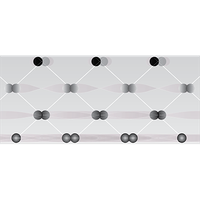
Splitting and Connecting Singlets in Atomic Quantum Circuits

Zijie Zhu, Yann Kiefer, Samuel Jele, Marius Gächter, Giacomo Bisson, Konrad Viebahn, and Tilman Esslinger

Phys. Rev. X 15, 041032 (2025) - Published 18 November, 2025

Neutral-atom qubits in optical lattices can be linked over long distances using topological pumping, robustly moving entangled atoms in their own “quantum lanes” to enable scalable, programmable quantum circuits.

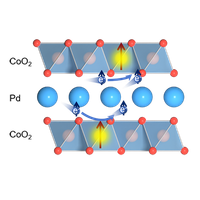
Hydrogenated PdCoO2: A layered Metallic Oxide with Robust Room-Temperature Ferromagnetism

Di Tian, Haotian Zheng, Zewei Huang, Sijie Wu, Pengcheng Li, Cong Li, Jianbing Zhang, Xinyu Shu, Jinling Zhou, Yang Liu, Yanhong Gu, Meng Wang, Di Yi, Tianxiang Nan, Zhen Chen, Qing He, Huaqiang Wu, Shuyun Zhou, Weidong Luo, and Pu Yu

Phys. Rev. X 15, 041030 (2025) - Published 14 November, 2025

Hydrogenation treatment unlocks robust room-temperature ferromagnetism in the highly conductive layered oxide PdCoO2, creating a natural superlattice of metallic and magnetic layers for potential spintronic applications.

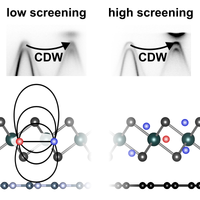
Persistence of Charge Ordering Instability to Coulomb Engineering in the Excitonic Insulator Candidate TiSe2

Sebastian Buchberger, Yann in ’t Veld, Akhil Rajan, Philip A. E. Murgatroyd, Brendan Edwards, Bruno K. Saika, Naina Kushwaha, Maria H. Visscher, Jan Berges, Dina Carbone, Jacek Osiecki, Craig Polley, Tim Wehling, and Phil D. C. King

Phys. Rev. X 15, 041028 (2025) - Published 12 November, 2025

Experiments on monolayer TiSe2 grown on different substrates show that its charge-density wave persists even when exciton formation is suppressed, proving that lattice effects—not excitons—drive the ordered state.

Universality Classes for Purification in Nonunitary Quantum Processes

Andrea De Luca, Chunxiao Liu, Adam Nahum, and Tianci Zhou

Phys. Rev. X 15, 041024 (2025) - Published 7 November, 2025

Rare measurements in quantum systems cause a slow purification process. Mapping this process to a 1D dilute gas reveals a universal scaling law for how entropy and uncertainty decrease over time.

Diagnosing Electronic Phases of Matter Using Photonic Correlation Functions

Gautam Nambiar, Andrey Grankin, and Mohammad Hafezi

Phys. Rev. X 15, 041020 (2025) - Published 4 November, 2025

By linking quantum optical measurements to electronic correlations, a new framework shows how photon correlations can reveal hidden properties of quantum materials, opening new ways to probe phenomena like spin chirality and anyons.

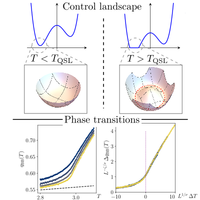
Toward a Theory of Phase Transitions in Quantum Control Landscapes

Nicolò Beato, Pranay Patil, and Marin Bukov

Phys. Rev. X 15, 041014 (2025) - Published 29 October, 2025

Analytical and numerical tools adapted from statistical physics reveal phase transitions in quantum control landscapes, explaining when new optimal strategies emerge and guiding the design of more efficient quantum technologies.

Collective Modes in Multilayer Graphene/α−RuCl3 Heterostructures

Samuel L. Moore, Miguel Sánchez Sánchez, M. C. Strasbourg, Y. Shao, J. Pack, Y. Wang, D. J. Rizzo, B. S. Jessen, Matthew Cothrine, David G. Mandrus, Takashi Taniguchi, Kenji Watanabe, K. S. Burch, C. R. Dean, J. Hone, M. Fogler, A. J. Millis, A. Rubio, P. J. Schuck, T. Stauber, and D. N. Basov

Phys. Rev. X 15, 041011 (2025) - Published 21 October, 2025

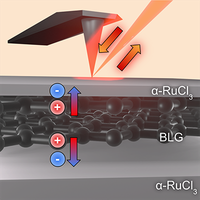
A new, gate-free, highly tunable platform for controlling charge-carrier density in multilayer graphene reveals how phonons and plasmons in the material respond to unexplored extremes of doping and electric fields.

Nonequilibrium Relaxation and Odd-Even Effect in Finite-Temperature Electron Gases

Eric Nilsson, Ulf Gran, and Johannes Hofmann

Phys. Rev. X 15, 041007 (2025) - Published 14 October, 2025

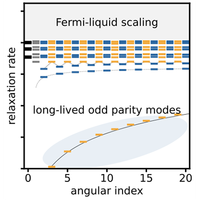
Analysis of the equations governing a two-dimensional Fermi liquid with Coulomb interactions uncovers long-lived odd-parity collective modes that decay far more slowly than standard theory predicts.

Tensor Networks for Noninvertible Symmetries in 3+1D and Beyond

Pranay Gorantla, Shu-Heng Shao, and Nathanan Tantivasadakarn

Phys. Rev. X 15, 041006 (2025) - Published 8 October, 2025

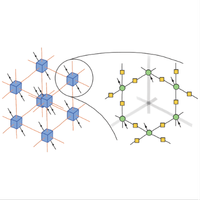
Relying on tensor networks and ZX-calculus, a visual framework for studying noninvertible symmetries in quantum systems reveals how these novel transformations constrain ground states and reshape our understanding of dualities.

Beyond Homes Scaling: Disorder, the Planckian Bound, and a New Universality

D. M. Broun, Vivek Mishra, J. S. Dodge, and P. J. Hirschfeld

Phys. Rev. X 15, 041005 (2025) - Published 8 October, 2025

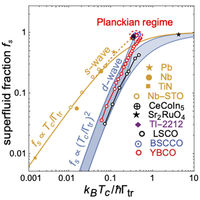
A newly uncovered fundamental form of universality classifies all superconductors into a unified framework by accounting for chemical impurities and inelastic scattering.

Sensing and Control of Single Trapped Electrons above 1 K

K. E. Castoria, N. R. Beysengulov, G. Koolstra, H. Byeon, E. O. Glen, M. Sammon, S. A. Lyon, J. Pollanen, and D. G. Rees

Phys. Rev. X 15, 041002 (2025) - Published 2 October, 2025

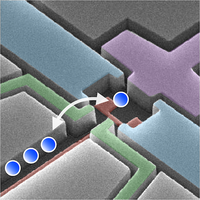
A microchannel quantum dot integrated with a superconducting resonator allows for the precision trapping and detection of single electrons on superfluid helium above 1 K, demonstrating control in conditions suited for scalable quantum processors.

Exciton Formation in Two-Dimensional Semiconductors

K. Mourzidis, V. Jindal, M. Glazov, A. Balocchi, C. Robert, D. Lagarde, P. Renucci, L. Lombez, T. Taniguchi, K. Watanabe, T. Amand, S. Francoeur, and X. Marie

Phys. Rev. X 15, 031078 (2025) - Published 29 September, 2025

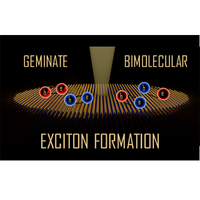
Excitons in two-dimensional transition-metal dichalcogenide monolayers form through both geminate and bimolecular pathways, resolving a key debate and enabling new control over exciton properties for quantum applications.

Thermal Transport in a 2D Amorphous Material

Yuxi Wang, Nianjie Liang, Xingxing Zhang, Wujuan Yan, Haiyu He, Alfredo Fiorentino, Xinwei Tao, Ang Li, Fuwei Yang, Buxuan Li, Te-Huan Liu, Jia Zhu, Wu Zhou, Wei Wang, Stefano Baroni, Lin Zhou, and Bai Song

Phys. Rev. X 15, 031077 (2025) - Published 26 September, 2025

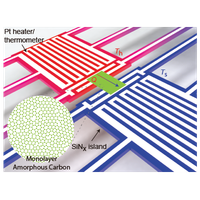
Monolayer amorphous carbon shows unexpectedly high in-plane thermal conductivity compared to its 3D form, revealing how reduced dimensionality can reshape heat transport in disordered materials.

Prototypes of Nonrelativistic Spin Splitting and Polarization in Symmetry Broken Antiferromagnets

Xiuwen Zhang, Jia-Xin Xiong, Lin-Ding Yuan, and Alex Zunger

Phys. Rev. X 15, 031076 (2025) - Published 25 September, 2025

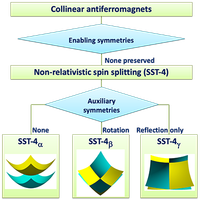
Breaking key symmetries in antiferromagnets enables nonrelativistic spin splitting without spin-orbit coupling, with auxiliary symmetries guiding a classification that predicts distinct spin polarization patterns for spintronic materials design.

Doping a Fractional Quantum Anomalous Hall Insulator

Zhengyan Darius Shi and T. Senthil

Phys. Rev. X 15, 031069 (2025) - Published 11 September, 2025

A universal field-theoretic framework to describe the doping of fractional quantum anomalous Hall insulators predicts that a nonzero density of mobile anyons form exotic metals and superconductors.

Středa Formula for Floquet Systems: Topological Invariants and Quantized Anomalies from Cesàro Summation

Lucila Peralta Gavensky, Gonzalo Usaj, and Nathan Goldman

Phys. Rev. X 15, 031067 (2025) - Published 10 September, 2025

A nonequilibrium extension of the Středa formula provides a physical framework for the topological classification of Floquet systems, revealing universal quantized magnetic responses in driven settings.

Sign In to Your Journals Account

Filter

Subject

Filter

Article Lookup

Enter a citation