Browse by Subject

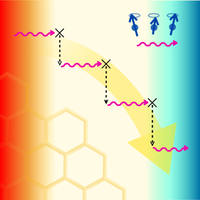
Extrinsic Contribution to Bosonic Thermal Hall Transport

Léo Mangeolle and Johannes Knolle

Phys. Rev. X 16, 011048 (2026) - Published 5 March, 2026

Disorder-induced side-jump effects, often neglected, are proven to be a crucial contributor to the thermal Hall conductivity in insulating quantum materials.

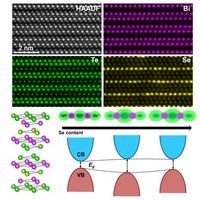
Atomic-Scale Chemical Inhomogeneity as a Determinant of Thermoelectric Transport in Bi2Te3-Based Materials

Wu Wang, Juan Cui, Zhongbin Wang, Jianrui Wang, Mingyuan Hu, Lin Xie, Lin Gan, and Jiaqing He

Phys. Rev. X 16, 011044 (2026) - Published 3 March, 2026

Atomic-scale imaging and theory show Se site preference in Bi2Te3 tunes the bonding and band gap, enabling intrinsic control of thermoelectric performance.

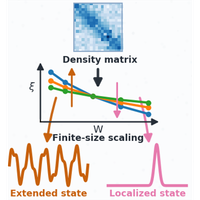
Anderson Localization: A Density Matrix Approach

Ziyue Qi, Yi Zhang, Mingpu Qin, Hongming Weng, and Kun Jiang

Phys. Rev. X 16, 011043 (2026) - Published 2 March, 2026

Characterization of the one-body density matrix provides a direct measure of the localization length, revealing how interactions can suppress or enhance insulating behavior in disordered quantum systems.

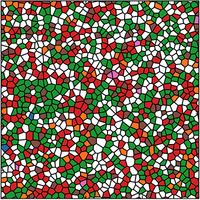
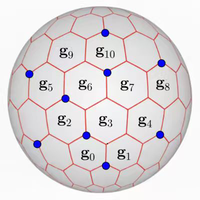
Hyperuniformity of Weighted Particle Systems

Salvatore Torquato, Jaeuk Kim, Michael A. Klatt, Roberto Car, and Paul J. Steinhardt

Phys. Rev. X 16, 011042 (2026) - Published 2 March, 2026

The concept of hyperuniform particle arrangements is generalized to treat particles with internal degrees of freedom.

Interaction-Driven Quantum Phase Transitions between Topological and Crystalline Orders of Electrons

André Haug, Ravi Kumar, Tomer Firon, Misha Yutushui, Kenji Watanabe, Takashi Taniguchi, David F. Mross, and Yuval Ronen

Phys. Rev. X 16, 011039 (2026) - Published 26 February, 2026

Electric-field-tunable Landau-level orbital composition in bilayer graphene provides a mechanism for stabilizing electron crystals and driving transitions into exotic topological liquid states.

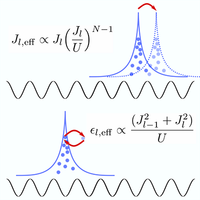
Quantum Theory of Fractional Topological Pumping of Lattice Solitons

Julius Bohm, Hugo Gerlitz, Christina Jörg, and Michael Fleischhauer

Phys. Rev. X 16, 011038 (2026) - Published 26 February, 2026

Self-bound many-particle objects (solitons) in topological pumps exhibit transitions between integer and fractional transport phases, controlled by interaction strength.

Stabilizer Rényi Entropy and Conformal Field Theory

Masahiro Hoshino, Masaki Oshikawa, and Yuto Ashida

Phys. Rev. X 16, 011037 (2026) - Published 25 February, 2026

Conformal field theory is used to uncover universal behaviors in nonstabilizerness. Like entanglement, this resource is governed by fundamental numbers such as the g factor.

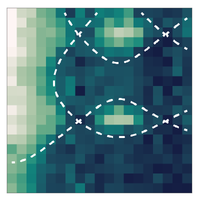
Exploring Light-Induced Phases of 2D Materials in a Modulated 1D Quasicrystal

Yifei Bai, Anna R. Dardia, Toshihiko Shimasaki, and David M. Weld

Phys. Rev. X 16, 011036 (2026) - Published 25 February, 2026

Mapping a one-dimensional quasicrystal to a two-dimensional quantum Hall system allows for the study of light-induced metal-insulator transitions, revealing an exotic multifractal phase stabilized by elliptically polarized driving.

Emulating 2D Materials with Magnons

Bobby Kaman, Jinho Lim, Yingkai Liu, and Axel Hoffmann

Phys. Rev. X 16, 011034 (2026) - Published 24 February, 2026

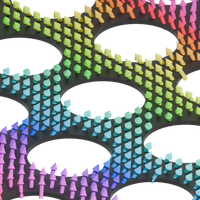
Patterning holes into magnetic thin films enables the emulation of electrons in 2D quantum materials and the precise control of magnon transport through topological band engineering.

Emergent Random Matrix Universality in Quantum Operator Dynamics

Oliver Lunt, Thomas Kriecherbauer, Kenneth T-R McLaughlin, and Curt von Keyserlingk

Phys. Rev. X 16, 011033 (2026) - Published 23 February, 2026

Researchers prove that the dynamics of complex quantum operators has a universal random matrix description, enabling a new “spectral bootstrap” algorithm to accurately calculate physical properties like conductivities.

Quantum Coherent Transport of 1D Ballistic States in Second-Order Topological Insulator Bi4Br4

Jules Lefeuvre, Masaru Kobayashi, Gilles Patriarche, Nathaniel Findling, David Troadec, Meydi Ferrier, Sophie Guéron, Hélène Bouchiat, Takao Sasagawa, and Richard Deblock

Phys. Rev. X 16, 011031 (2026) - Published 20 February, 2026

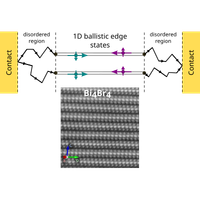
The transport measurements on Bi4Br4 single crystals here reveal the presence of 1D ballistic hinge states, confirming its status as a second-order topological insulator with exceptionally long phase coherence.

Bosonic Phases across the Superconductor-Insulator Transitions in Infinite-Layer Samarium Nickelate

Menghan Liao, Heng Wang, Mingwei Yang, Chuanwu Cao, Jiayin Tang, Wenjing Xu, Xianfeng Wu, Guangdi Zhou, Haoliang Huang, Kaiwei Chen, Yuying Zhu, Peng Deng, Jianhao Chen, Zhuoyu Chen, Danfeng Li, Kai Chang, and Qi-Kun Xue

Phys. Rev. X 16, 011029 (2026) - Published 19 February, 2026

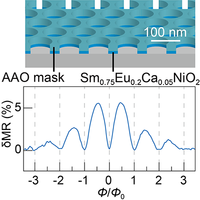
Magnetoresistance oscillations in nanofabricated nickelate networks reveal the existence of 2e Cooper pairing and exotic bosonic phases, clarifying the nature of superconductivity in these high-temperature materials.

Anomalies of Global Symmetries on the Lattice

Yi-Ting Tu, David M. Long, and Dominic V. Else

Phys. Rev. X 16, 011027 (2026) - Published 18 February, 2026

A rigorous framework is established to define and classify lattice anomalies, revealing unique “IR-trivial” invariants that constrain the physics of many-body-localized systems and more beyond the reach of standard field theories.

Microscopic Fingerprint of Chiral Superconductivity

Xuefeng Wu, Xuan Hao, Zhuo Chen, Yuchang Cai, Minghao Wu, Congrun Chen, Kedong Wang, Fangfei Ming, Steven Johnston, Rui-Xing Zhang, and Hanno H. Weitering

Phys. Rev. X 16, 011026 (2026) - Published 17 February, 2026

Direct imaging of electron scattering from atomic defects in a tin monatomic layer provides a clear microscopic signature of chiral superconductivity.

Real-Time Adaptive Tracking of Fluctuating Relaxation Rates in Superconducting Qubits

Fabrizio Berritta, Jacob Benestad, Jan A. Krzywda, Oswin Krause, Malthe A. Marciniak, Svend Krøjer, Christopher W. Warren, Emil Hogedal, Andreas Nylander, Irshad Ahmad, Amr Osman, Janka Biznárová, Marcus Rommel, Anita Fadavi Roudsari, Jonas Bylander, Giovanna Tancredi, Jeroen Danon, Jacob Hastrup, Ferdinand Kuemmeth, and Morten Kjaergaard

Phys. Rev. X 16, 011025 (2026) - Published 13 February, 2026

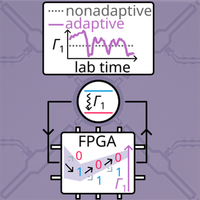
A field-programmable-gate-array-based Bayesian protocol is developed to track qubit relaxation fluctuations in real time, revealing environmental noise dynamics 10 000 times faster than previously reported.

Monitored Fluctuating Hydrodynamics

Sarang Gopalakrishnan, Ewan McCulloch, and Romain Vasseur

Phys. Rev. X 16, 011024 (2026) - Published 12 February, 2026

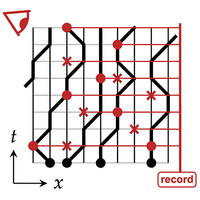
A monitored fluctuating hydrodynamics framework is introduced to study what can be learned about classical many-body dynamics from partial data. It is found that classical stochastic processes undergo phase transitions in learnability, mirroring striking effects in quantum systems.

Yang-Lee Quantum Criticality in Various Dimensions

Erick Arguello Cruz, Igor R. Klebanov, Grigory Tarnopolsky, and Yuan Xin

Phys. Rev. X 16, 011022 (2026) - Published 9 February, 2026

A study of the Yang-Lee universality class of critical phenomena, which arise in the Ising model with an imaginary magnetic field, finds broad agreement between 𝒫𝒯-symmetric Hamiltonians and conformal field theory.

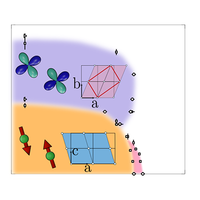
Inducing Ferroquadrupolar Order with Applied Magnetic Field in TbPO4

Paola Caterina Forino, Jens Jensen, Jian Rui Soh, Sonia Francoual, Oksana Zaharko, Steffen Sloth, Alexandra Turrini, Ralf Feyerherm, Karel Prokes, Sofie Holm-Janas, Ivica Zivkovic, Yong Liu, Arnaud Magrez, Niels Bech Christensen, Henrik M. Rønnow, and Rasmus Toft-Petersen

Phys. Rev. X 16, 011021 (2026) - Published 6 February, 2026

Magnetic fields are demonstrated to be able to be used to switch hidden electronic orders on and off in rare-earth magnets, uncovering a mechanism where field application induces rather than suppresses these elusive states

Exactly Solvable Models for Fermionic Symmetry-Enriched Topological Phases and Fermionic ’t Hooft Anomaly

Jing-Ren Zhou and Zheng-Cheng Gu

Phys. Rev. X 16, 011019 (2026) - Published 5 February, 2026

Research provides a class of exactly solvable lattice models to describe a diverse array of 2 + 1D fermionic symmetry-enriched topological phases, including those featuring the important ’t Hooft anomaly.

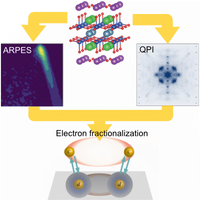
Unified Description of Cuprate Superconductors by Fractionalized Electrons Emerging from Integrated Analyses of Photoemission Spectra and Quasiparticle Interference

Shiro Sakai, Youhei Yamaji, Fumihiro Imoto, Tsuyoshi Tamegai, Adam Kaminski, Takeshi Kondo, Yuhki Kohsaka, Tetsuo Hanaguri, and Masatoshi Imada

Phys. Rev. X 16, 011018 (2026) - Published 4 February, 2026
An analysis of photoemission and scanning tunneling microscopy data reveals a possible novel type of electron fractionalization in cuprates based on a unified theoretical framework to address the unresolved mechanism of high-temperature superconductivity.

Sign In to Your Journals Account

Filter

Subject

Filter

Article Lookup

Enter a citation