Browse by Subject

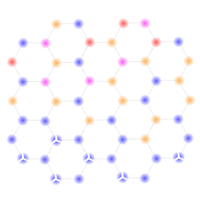
Breakdown of the Thermodynamic Limit in Quantum Spin and Dimer Models

Jeet Shah, Laura Shou, Jeremy Shuler, and Victor Galitski

Phys. Rev. X 16, 021020 (2026) - Published 27 April, 2026

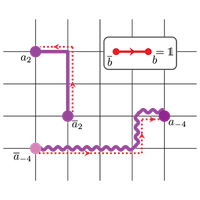
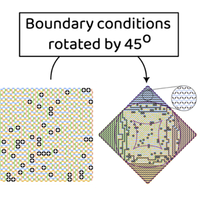
Geometry-induced quantum phase separation in quantum dimer models demonstrates that domain shape can fundamentally alter macroscopic ground states, challenging traditional assumptions about the thermodynamic limit.

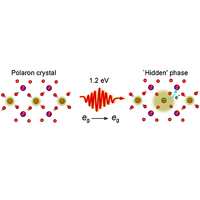
Excitations across the Equilibrium and Photoinduced “Hidden” States of Magnetoresistive Manganites

Shiyu Fan, Feng Jin, Taehun Kim, Umesh Kumar, Zixun Zhang, Vivek Bhartiya, Jiemin Li, Brandon Yalin, Yanhong Gu, Mingqiang Gu, Wen Hu, Claudio Mazzoli, G. Lawrence Carr, Osor S. Barišić, Andrey S. Mishchenko, Valentina Bisogni, Sobhit Singh, Wenbin Wu, and Jonathan Pelliciari

Phys. Rev. X 16, 021018 (2026) - Published 23 April, 2026

Ultrafast photoexcitation in La2/3Ca1/3MnO3 generates a long-lived hidden phase with unique polaronic and phononic excitations that do not exist under standard equilibrium conditions.

Entropy of Strongly Correlated Electrons in a Partially Filled Landau Level

Alexandre Assouline, Taige Wang, Heun Mo Yoo, Ruihua Fan, Fangyuan Yang, Ruining Zhang, Takashi Taniguchi, Kenji Watanabe, Michael P. Zaletel, and Andrea F. Young

Phys. Rev. X 16, 021016 (2026) - Published 17 April, 2026

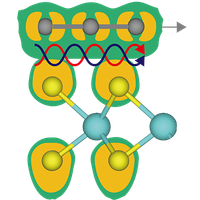
Entropy measurements in partially filled Landau levels reveal the successive freezing of spin and motional degrees of freedom, reaching sensitivities that constrain the isolation of topological entropy in non-Abelian quantum phases.

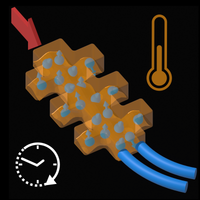
Heating Dynamics of Mesoscopic Electron Baths at High Magnetic Field

F. Zanichelli, A. Veillon, C. Piquard, A. Aassime, Y. Sato, A. Cavanna, Y. Jin, J. Folk, U. Gennser, A. Anthore, and F. Pierre

Phys. Rev. X 16, 021013 (2026) - Published 14 April, 2026

Time-resolved noise thermometry on mesoscopic metallic islands reveals a two-step thermalization process arising from the interplay between electronic quantum channels and nuclear spins.

Boosting the Thermoelectric Performance of α-MgAgSb through Phase-Transition-Induced Self-Doping

Kaiwei Guo, Tianyu Wang, Zhen Fan, Lunhua He, Fuhong Chen, Yi Wang, Qi Zhao, Jiawei Yang, Hangtian Zhu, Jun Li, Te-Huan Liu, and Huaizhou Zhao

Phys. Rev. X 16, 021011 (2026) - Published 10 April, 2026

A doping-free approach is able to boost thermoelectric performance, providing an attractive route for developing waste heat recovery technologies.

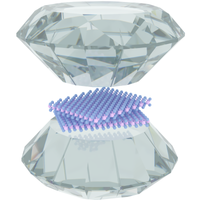
Subsurface Driven Size-Dependent Elasticity in Nanodiamond

Jiaqi Zhang, Chunmeng Liu, Xing Li, Dongyang Wang, Keke Zhao, Houlin Ji, Yoshifumi Oshima, Shaobo Cheng, and Chongxin Shan

Phys. Rev. X 16, 021010 (2026) - Published 10 April, 2026

Subsurface compliant regions in nanodiamond allow for an elastic response to strain, providing a method for engineering the mechanical properties of brittle materials like diamond.

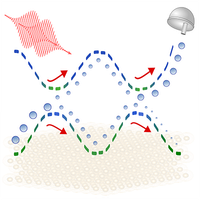
Observation of Nonadiabatic Landau-Zener Tunneling among Floquet States

Yun Yen, Marcel Reutzel, Andi Li, Zehua Wang, Hrvoje Petek, and Michael Schüler

Phys. Rev. X 16, 021004 (2026) - Published 3 April, 2026

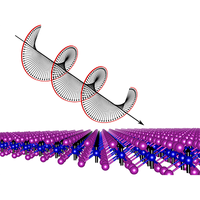
Spectroscopic data reveal copper electronic states transitioning to nonadiabatic Landau-Zener tunneling among Floquet states under intense light.

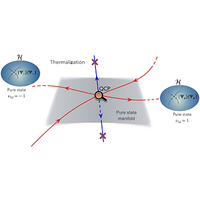
Fermion Quantum Criticality far from Equilibrium

Rohan Mittal, Tom Zander, Johannes Lang, and Sebastian Diehl

Phys. Rev. X 16, 011069 (2026) - Published 30 March, 2026

A new nonequilibrium universality class for fermions is identified. It displays an emergent “dark state symmetry” that protects quantum criticality, requiring only a single tuning parameter.

Hydrostatic Pressure-Enhanced Correlated Magnetism and Chern Insulator in Moiré WSe2

Pengfei Jiao et al.

Phys. Rev. X 16, 011068 (2026) - Published 27 March, 2026

Hydrostatic pressure acts as a reversible control knob in twisted WSe2 to enhance ferromagnetism and drive topological phase transitions between Chern and Mott insulating states.

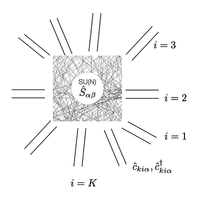
Fast Scrambling at the Boundary

Ancel Larzul, Anirvan M. Sengupta, Antoine Georges, and Marco Schirò

Phys. Rev. X 16, 011067 (2026) - Published 26 March, 2026

Researchers find that a simple boundary quantum spin in the multichannel Kondo model can scramble information as fast as the most complex random systems, revealing a link between impurity physics and fast scramblers.

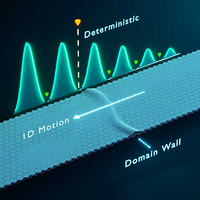
Deterministic 1D Domain Wall Motion with Nucleation-Free Nature in Sliding Ferroelectric Switching

Jiangang Chen, Changming Ke, Renji Bian, Er Pan, Peter Kun, Zefen Li, Biao Dong, Fan Yang, Qing Liu, Levente Tapaszto, Xiao Luo, Shi Liu, and Fucai Liu

Phys. Rev. X 16, 011066 (2026) - Published 26 March, 2026

Sliding ferroelectrics possess a nucleation-free nature, where collective and constrained domain wall motion enables deterministic polarization control far beyond conventional ferroelectrics.

Slow Quasiparticle Dynamics and Anyonic Statistics in a Fractional Quantum Hall Fabry-Pérot Interferometer

Noah L. Samuelson, Liam A. Cohen, Will Wang, Simon Blanch, Takashi Taniguchi, Kenji Watanabe, Michael P. Zaletel, and Andrea F. Young

Phys. Rev. X 16, 011062 (2026) - Published 23 March, 2026

Anyons, collective excitations of fractional quantum Hall systems, are shown to exhibit unprecedented stability in graphene heterostructures, enabling their practical manipulation for use in fault-tolerant quantum computing.

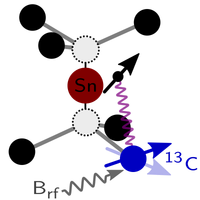
High-Fidelity Control of a C13 Nuclear Spin Coupled to a Tin-Vacancy Center in Diamond

Jeremias Resch, Ioannis Karapatzakis, Mohamed Elshorbagy, Marcel Schrodin, Philipp Fuchs, Philipp Graßhoff, Luis Kussi, Christoph Sürgers, Cyril Popov, Christoph Becher, Wolfgang Wernsdorfer, and David Hunger

Phys. Rev. X 16, 011060 (2026) - Published 19 March, 2026

High-fidelity control of a 13C nuclear spin coupled to a tin-vacancy center yields coherence times exceeding 1.35 s using a superconducting waveguide, highlighting the potential of the tin-vacancy center as a coherent spin-photon interface for future quantum network applications.

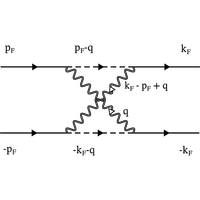
Superconductivity via Paramagnon and Magnon Exchange in a 2D Near-Ferromagnetic Full Metal and Ferromagnetic Half-Metal

Zachary M. Raines and Andrey V. Chubukov

Phys. Rev. X 16, 011059 (2026) - Published 18 March, 2026

Theoretical analysis of two-dimensional electron systems shows that magnon-mediated interactions drive robust p-wave superconductivity within a ferromagnetically order state at a temperature significantly higher than in a paramagnetic state.

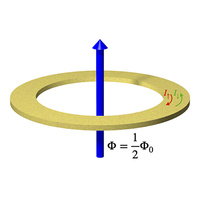
Persistent Spin Currents in Superconducting Altermagnets

Kyle Monkman, Joan Weng, Niclas Heinsdorf, Alberto Nocera, Yafis Barlas, and Marcel Franz

Phys. Rev. X 16, 011057 (2026) - Published 16 March, 2026

Persistent spin currents in superconducting altermagnets offer a dissipationless mechanism for spin transport that could enable the development of high-efficiency spintronic computer chips.

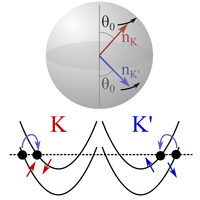
Superconductivity from Spin-Canting Fluctuations in Rhombohedral Graphene

Zhiyu Dong, Étienne Lantagne-Hurtubise, and Jason Alicea

Phys. Rev. X 16, 011055 (2026) - Published 12 March, 2026

A study predicts that soft magnon modes arising from spin-canting order can give rise to Cooper pairing in spin-orbit-proximitized rhombohedral graphene, naturally accounting for various experimentally observed trends.

Topological Stabilizer Models on Continuous Variables

Julio C. Magdalena de la Fuente, Tyler D. Ellison, Meng Cheng, and Dominic J. Williamson

Phys. Rev. X 16, 011054 (2026) - Published 11 March, 2026

Researchers develop topological stabilizer codes that leverage infinite-dimensional local degrees of freedom. These codes realize quantum phases with universal properties that go beyond discrete variable stabilizer codes.

Dimensionality Tuning of Heavy-Fermion States in Ultrathin CeSi2 Films

Yi Wu, Weifan Zhu, Teng Hua, Yuan Fang, Yanan Zhang, Jiawen Zhang, Yanen Huang, Hao Zheng, Shanyin Fu, Xinying Zheng, Zhengtai Liu, Mao Ye, Ye Chen, Tulai Sun, Michael Smidman, Johann Kroha, Chao Cao, Huiqiu Yuan, Frank Steglich, Hai-Qing Lin, and Yang Liu

Phys. Rev. X 16, 011053 (2026) - Published 10 March, 2026

Thickness-dependent studies of CeSi2 films reveal that the transition from three to two dimensions suppresses crystal electric field excitations and reduces the effective Kondo energy in heavy-fermion systems.

On-Device Control of Electronic Friction

Zhaokuan Yu, Jinbo Bian, Jin Wang, Zonghuiyi Jiang, Xuanyu Huang, Linxin Zhai, Xin Lu, Xiaofei Liu, Quanshui Zheng, and Zhiping Xu

Phys. Rev. X 16, 011050 (2026) - Published 6 March, 2026

Superlubric graphite-MoS2 contacts are constructed to demonstrate the isolation and control of electronic friction, showing a path toward on-demand tuning of energy dissipation in microscale devices.

Dynamical Response of Noncollinear Spin Systems at Constrained Magnetic Moments

Miquel Royo and Massimiliano Stengel

Phys. Rev. X 16, 011049 (2026) - Published 6 March, 2026
Constrained magnetic-moment simulations provide a stable and efficient framework for modeling coupled spin-lattice dynamics, enabling precise predictions of subgap optical responses in magnetic insulators.

Sign In to Your Journals Account

Filter

Subject

Filter

Article Lookup

Enter a citation