Browse by Subject

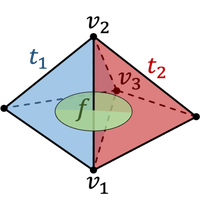
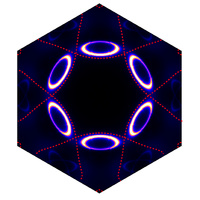
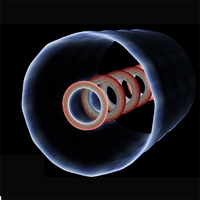
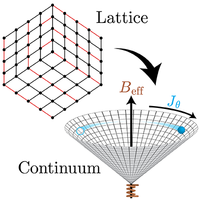
Disclinations, Dislocations, and Emanant Flux at Dirac Criticality

Maissam Barkeshli, Christopher Fechisin, Zohar Komargodski, and Siwei Zhong

Phys. Rev. X 16, 011017 (2026) - Published 3 February, 2026

Topological quantization of artificial magnetic flux at lattice defects in gapless crystals provides a measurable mechanism for generating electrical currents and observing new topological invariants.

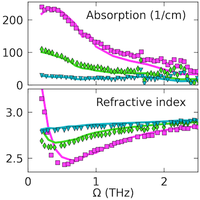
Lattice-Charge Coupling in a Trilayer Nickelate with Intertwined Density Wave Order

Xun Jia, Yao Shen, Harrison LaBollita, Xinglong Chen, Junjie Zhang, Yu Li, Hengdi Zhao, Mercouri G. Kanatzidis, Matthew Krogstad, Hong Zheng, Ayman H. Said, Ahmet Alatas, Stephan Rosenkranz, Daniel Phelan, Mark P. M. Dean, M. R. Norman, J. F. Mitchell, Antia S. Botana, and Yue Cao

Phys. Rev. X 16, 011013 (2026) - Published 23 January, 2026

A combined high-resolution x-ray scattering and theoretical study of trilayer nickelate superconductors reveals an intertwined charge and spin order driven by the spin degree of freedom, challenging existing paradigms that emphasized the role of the lattice.

Characterization of Drive-Induced Unwanted State Transitions in Superconducting Circuits

W. Dai, S. Hazra, D. K. Weiss, P. D. Kurilovich, T. Connolly, H. K. Babla, S. Singh, V. R. Joshi, A. Z. Ding, P. D. Parakh, J. Venkatraman, X. Xiao, L. Frunzio, and M. H. Devoret

Phys. Rev. X 16, 011011 (2026) - Published 15 January, 2026

A systematic framework is developed to identify and categorize three distinct mechanisms of drive-induced unwanted state transitions in superconducting circuits, enabling predictable mitigation of errors to advance high-fidelity quantum operations.

Generalized Statistics on Lattices

Ryohei Kobayashi (小林良平), Yuyang Li (李雨阳), Hanyu Xue (薛寒玉), Po-Shen Hsin (辛柏伸), and Yu-An Chen (陳昱安)

Phys. Rev. X 16, 011010 (2026) - Published 14 January, 2026

The notion of statistics is generalized from particles to loops and membranes using Berry phases of microscopic unitary processes on lattices.

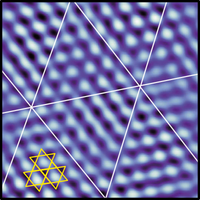
Nematic Order and Orbital Selective Mott State in a Partially Filled Kagome Flat Band

Caiyun Chen, Jiangchang Zheng, Yuman He, Siqi Wu, Xuzhe Ying, Soumya Sankar, Luanjing Li, Yizhou Wei, Xi Dai, Hoi Chun Po, and Berthold Jäck

Phys. Rev. X 16, 011009 (2026) - Published 13 January, 2026

This scanning tunneling microscopy study of kagome flat bands in Fe-doped CoSn identifies orbital-selective Mott states and nematic order, revealing how geometric frustration and Coulomb interactions drive exotic quantum phases.

Beyond-Quasiparticle Transport with Vertex Correction: Self-Consistent Ladder Formalism for Electron-Phonon Interactions

Jae-Mo Lihm and Samuel Poncé

Phys. Rev. X 16, 011008 (2026) - Published 13 January, 2026

A theoretical framework simultaneously captures quasiparticle breakdown and conservation laws, achieving high accuracy in modeling electron transport in materials with strong electron-phonon interactions.

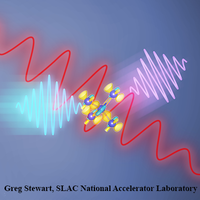
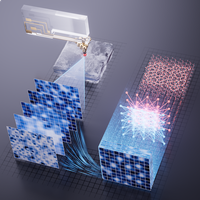
Second-Order Microscopic Nonlinear Optical Susceptibility in a Centrosymmetric Material: Application to Imaging Valence Electron Motion

Chance Ornelas-Skarin, Tatiana Bezriadina, Matthias Fuchs, Shambhu Ghimire, J. B. Hastings, Quynh L. Nguyen, Gilberto de la Peña, Takahiro Sato, Sharon Shwartz, Mariano Trigo, Diling Zhu, Daria Popova-Gorelova, and David A. Reis

Phys. Rev. X 16, 011006 (2026) - Published 7 January, 2026

Nonlinear x-ray diffraction is used to isolate the valence electron density in silicon, demonstrating a powerful imaging technique useful across a range of complex materials.

Pseudogap with Fermi Arcs and Fermi Pockets in Half-Filled Twisted Transition Metal Dichalcogenides

Yong-Yue Zong, Zhao-Long Gu, and Jian-Xin Li

Phys. Rev. X 16, 011005 (2026) - Published 6 January, 2026

A theoretical work on twisted bilayer tungsten diselenide reveals how tuning the electron bandwidth drives a complex sequence of electronic phases, including Mott insulator, pseudogap states, and strange metal.

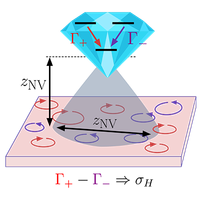
Nanoscale Defects as Probes of Time-Reversal Symmetry Breaking

Suman Jyoti De, T. Pereg-Barnea, and Kartiek Agarwal

Phys. Rev. X 16, 011001 (2026) - Published 2 January, 2026

A new technique using diamond NV centers detects time-reversal symmetry breaking in 2D materials by comparing spin relaxation due to opposite circular magnetic polarizations, enabling nanoscale probes of Hall conductivity and other chiral quantum effects.

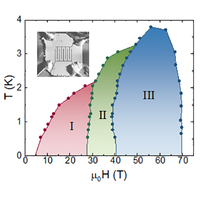
Competing Electronic Ground States in the Heavy-Fermion Superconductor CeRh2As2

Joanna Bławat, Grzegorz Chajewski, Daniel Gnida, John Singleton, Oscar Ayala Valenzuela, Dariusz Kaczorowski, and Ross D. McDonald

Phys. Rev. X 15, 041057 (2025) - Published 29 December, 2025

Magnetic field dependence studies on focused ion beam lithography fabricated CeRh2As2 reveals the competition between multiple superconducting and density-wave phases in strongly correlated materials.

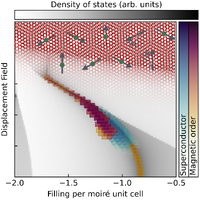
Theory of Intervalley-Coherent AFM Order and Topological Superconductivity in tWSe2

Ammon Fischer, Lennart Klebl, Valentin Crépel, Siheon Ryee, Angel Rubio, Lede Xian, Tim O. Wehling, Antoine Georges, Dante M. Kennes, and Andrew J. Millis

Phys. Rev. X 15, 041055 (2025) - Published 22 December, 2025

A first-principles study of twisted WSe2 bilayers reveals how antiferromagnetic magnetic order and superconductivity collaborate near a tunable Van Hove singularity and demonstrates their evolution as function of the twist angle.

Clifford Algebras and Liquid Crystalline Fermions

N. Johnson, L. C. Head, O. D. Lavrentovich, A. N. Morozov, G. Negro, E. Orlandini, C. A. Smith, G. M. Vasil, and D. Marenduzzo

Phys. Rev. X 15, 041052 (2025) - Published 18 December, 2025

A new theoretical framework shows that defects in chiral liquid crystals follow the same mathematical rules as Majorana and Weyl particles, revealing deep parallels between soft-matter textures and particle physics.

Rigorous Lower Bound on Dynamical Exponents in Gapless Frustration-Free Systems

Rintaro Masaoka, Tomohiro Soejima (副島智大), and Haruki Watanabe

Phys. Rev. X 15, 041050 (2025) - Published 16 December, 2025

A universal lower bound for the dynamical exponent in frustration-free systems is proven, showing that these systems can not host emergent Lorentz invariance.

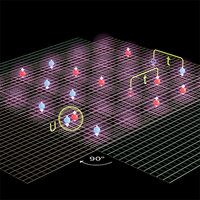
Engineering 2D Square Lattice Hubbard Models in 90° Twisted GeX/SnX (X=S, Se) Moiré Superlattices

Qiaoling Xu, Ammon Fischer, Nicolas Tancogne-Dejean, Tao Zhang, Emil Viñas Boström, Martin Claassen, Dante M. Kennes, Angel Rubio, and Lede Xian

Phys. Rev. X 15, 041049 (2025) - Published 15 December, 2025

Rotating rectangular 2D materials by 90 degrees creates square moiré patterns with flat electronic bands, offering a simple, tunable platform for exploring cuprate-like magnetism and superconductivity in stacked materials.

Unveiling the Amorphous Ice Layer during Premelting Using AFM Integrating Machine Learning

Binze Tang, Chon-Hei Lo, Tiancheng Liang, Jiani Hong, Mian Qin, Yizhi Song, Duanyun Cao, Ying Jiang, and Limei Xu

Phys. Rev. X 15, 041048 (2025) - Published 11 December, 2025

A combination of AI-assisted high-resolution AFM and simulations expose an amorphous ice layer, revealing how ice transforms before melting.

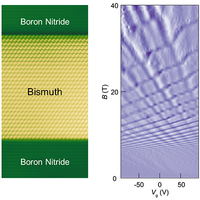
Quantum Transport in Bismuth Two-Dimensional Electron System

Di Yue, Hongya Wang, Guangyi Huang, Yadong Jiang, Zhiwei Huang, Pengyu Zheng, Yichen Song, Shuaifei Guo, Ning Tian, Mingyan Luo, Zhongxun Guo, Hengsheng Luo, Chuanying Xi, Guangli Kuang, Kenji Watanabe, Takashi Taniguchi, Zhimou Chen, Xi Lin, Jing Wang, Changlin Zheng, Xiaofeng Jin, Wei Ruan, and Yuanbo Zhang

Phys. Rev. X 15, 041047 (2025) - Published 9 December, 2025

Ultrathin bismuth films grown on boron nitride host a high-mobility two-dimensional electron system dominated by spin-split surface states, revealing strong spin-orbit effects that could potentially enable stable, spin-based quantum behaviors at elevated temperatures.

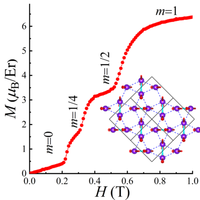
Observation of Unprecedented Fractional Magnetization Plateaus in a New Shastry-Sutherland Ising Compound

Lalit Yadav, Afonso Rufino, Rabindranath Bag, Matthew Ennis, Jan Alexander Koziol, Clarina dela Cruz, Alexander I. Kolesnikov, V. Ovidiu Garlea, Keith M. Taddei, David Graf, Kai Phillip Schmidt, Frédéric Mila, and Sara Haravifard

Phys. Rev. X 15, 041045 (2025) - Published 8 December, 2025

The frustrated magnet Er2Be2GeO7 exhibits two unexpected magnetization plateaus, revealing that subtle lattice distortions can dramatically alter spin order and offering a platform to study geometry driven magnetic behavior.

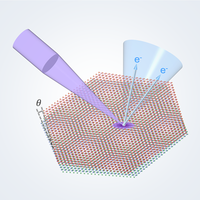
Nonmonotonic Band Flattening near the Magic Angle of Twisted Bilayer MoTe2

Yujun Deng, William Holtzmann, Ziyan Zhu, Timothy Zaklama, Paulina Majchrzak, Takashi Taniguchi, Kenji Watanabe, Makoto Hashimoto, Donghui Lu, Chris Jozwiak, Aaron Bostwick, Eli Rotenberg, Liang Fu, Thomas P. Devereaux, Xiaodong Xu, and Zhi-Xun Shen

Phys. Rev. X 15, 041043 (2025) - Published 5 December, 2025

Angle-resolved photoemission measurements reveal that twisting bilayer MoTe2 to about 2∘ flattens its valence band and enhances electron localization, pinpointing the “magic angle” where correlated quantum phases are most likely to emerge.

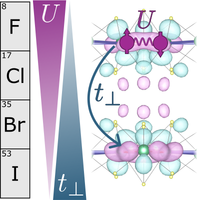
From Strong to Weak Correlations in Breathing-Mode Kagome van der Waals Materials: Nb3(F,Cl,Br,I)8 as a Robust and Versatile Platform for Many-Body Engineering

Joost Aretz, Sergii Grytsiuk, Xiaojing Liu, Giovanna Feraco, Chrystalla Knekna, Muhammad Waseem, Zhiying Dan, Marco Bianchi, Philip Hofmann, Mazhar N. Ali, Mikhail I. Katsnelson, Antonija Grubišić-Čabo, Hugo U. R. Strand, Erik G. C. P. van Loon, and Malte Rösner

Phys. Rev. X 15, 041042 (2025) - Published 5 December, 2025

Calculations and experiments show that in layered Nb3X8 compounds, changing the halogen element or thickness continuously tunes electron correlations, transforming the materials from weakly correlated band insulators to strongly correlated Mott insulators.

Bond-Network Entropy Governs Heat Transport in Coordination-Disordered Solids

Kamil Iwanowski, Gábor Csányi, and Michele Simoncelli

Phys. Rev. X 15, 041041 (2025) - Published 4 December, 2025

A new framework linking atomic disorder to thermal conductivity shows how variations in atomic bonding networks control heat flow in materials that are partly crystalline and partly glassy.

Sign In to Your Journals Account

Filter

Subject

Filter

Article Lookup

Enter a citation