Browse by Subject

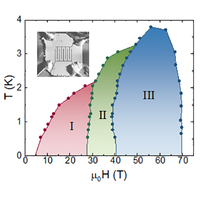
Competing Electronic Ground States in the Heavy-Fermion Superconductor CeRh2As2

Joanna Bławat, Grzegorz Chajewski, Daniel Gnida, John Singleton, Oscar Ayala Valenzuela, Dariusz Kaczorowski, and Ross D. McDonald

Phys. Rev. X 15, 041057 (2025) - Published 29 December, 2025

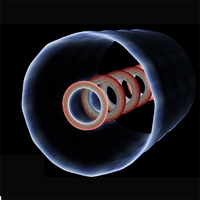
Magnetic field dependence studies on focused ion beam lithography fabricated CeRh2As2 reveals the competition between multiple superconducting and density-wave phases in strongly correlated materials.

Quantum-Secure Multiparty Deep Learning

Kfir Sulimany, Sri Krishna Vadlamani, Ryan Hamerly, Prahlad Iyengar, and Dirk Englund

Phys. Rev. X 15, 041056 (2025) - Published 24 December, 2025

A quantum-secure deep learning protocol lets multiple parties harness AI without exposing proprietary data or models.

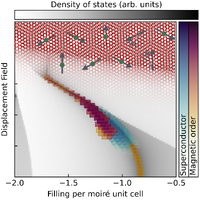
Theory of Intervalley-Coherent AFM Order and Topological Superconductivity in tWSe2

Ammon Fischer, Lennart Klebl, Valentin Crépel, Siheon Ryee, Angel Rubio, Lede Xian, Tim O. Wehling, Antoine Georges, Dante M. Kennes, and Andrew J. Millis

Phys. Rev. X 15, 041055 (2025) - Published 22 December, 2025

A first-principles study of twisted WSe2 bilayers reveals how antiferromagnetic magnetic order and superconductivity collaborate near a tunable Van Hove singularity and demonstrates their evolution as function of the twist angle.

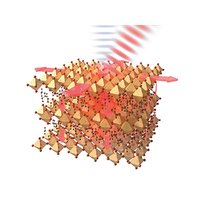
Anisotropic Thermal Transport in Quasi-2D Ruddlesden-Popper Hybrid Perovskite Superlattices

Du Chen, Thu T. M. Chu, Yanyan Li, Shunran Li, Qixuan Hu, Jee Yung Park, Tyler Wang, Luoqi Dai, Ming Lu, Mengxia Liu, Letian Dou, Xiaotong Li, Yi Xia, and Peijun Guo

Phys. Rev. X 15, 041054 (2025) - Published 22 December, 2025

Vibrational-pump visible-probe spectroscopy and microscopy allows cross and in-plane measurements of thermal conductivity for two-dimensional materials.

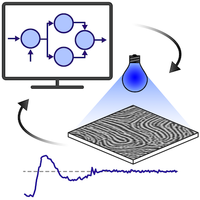
Closed-Loop Control of Active Nematic Flows

Katsu Nishiyama, John Berezney, Michael M. Norton, Akshit Aggarwal, Saptorshi Ghosh, Zahra Zarei, Michael F. Hagan, Seth Fraden, and Zvonimir Dogic

Phys. Rev. X 15, 041053 (2025) - Published 19 December, 2025

A feedback-controlled, light-responsive system regulates the chaotic motion of active fluids, maintaining steady flow speeds despite disturbances and enabling precise control over their dynamic behavior.

Clifford Algebras and Liquid Crystalline Fermions

N. Johnson, L. C. Head, O. D. Lavrentovich, A. N. Morozov, G. Negro, E. Orlandini, C. A. Smith, G. M. Vasil, and D. Marenduzzo

Phys. Rev. X 15, 041052 (2025) - Published 18 December, 2025

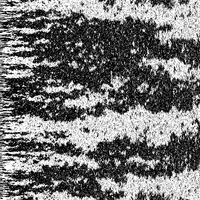
A new theoretical framework shows that defects in chiral liquid crystals follow the same mathematical rules as Majorana and Weyl particles, revealing deep parallels between soft-matter textures and particle physics.

Kolmogorov-Arnold Networks Meet Science

Ziming Liu, Max Tegmark, Pingchuan Ma, Wojciech Matusik, and Yixuan Wang

Phys. Rev. X 15, 041051 (2025) - Published 17 December, 2025

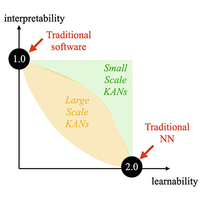
Kolmogorov-Arnold networks combine the predictive strength of deep learning with the interpretability of symbolic formulas, enabling AI systems to both validate physical laws and generate new scientific insights.

Rigorous Lower Bound on Dynamical Exponents in Gapless Frustration-Free Systems

Rintaro Masaoka, Tomohiro Soejima (副島智大), and Haruki Watanabe

Phys. Rev. X 15, 041050 (2025) - Published 16 December, 2025

A universal lower bound for the dynamical exponent in frustration-free systems is proven, showing that these systems can not host emergent Lorentz invariance.

Engineering 2D Square Lattice Hubbard Models in 90° Twisted GeX/SnX (X=S, Se) Moiré Superlattices

Qiaoling Xu, Ammon Fischer, Nicolas Tancogne-Dejean, Tao Zhang, Emil Viñas Boström, Martin Claassen, Dante M. Kennes, Angel Rubio, and Lede Xian

Phys. Rev. X 15, 041049 (2025) - Published 15 December, 2025

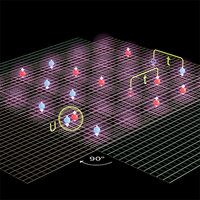
Rotating rectangular 2D materials by 90 degrees creates square moiré patterns with flat electronic bands, offering a simple, tunable platform for exploring cuprate-like magnetism and superconductivity in stacked materials.

Unveiling the Amorphous Ice Layer during Premelting Using AFM Integrating Machine Learning

Binze Tang, Chon-Hei Lo, Tiancheng Liang, Jiani Hong, Mian Qin, Yizhi Song, Duanyun Cao, Ying Jiang, and Limei Xu

Phys. Rev. X 15, 041048 (2025) - Published 11 December, 2025

A combination of AI-assisted high-resolution AFM and simulations expose an amorphous ice layer, revealing how ice transforms before melting.

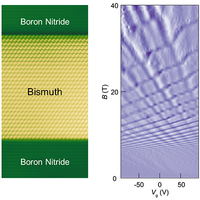
Quantum Transport in Bismuth Two-Dimensional Electron System

Di Yue, Hongya Wang, Guangyi Huang, Yadong Jiang, Zhiwei Huang, Pengyu Zheng, Yichen Song, Shuaifei Guo, Ning Tian, Mingyan Luo, Zhongxun Guo, Hengsheng Luo, Chuanying Xi, Guangli Kuang, Kenji Watanabe, Takashi Taniguchi, Zhimou Chen, Xi Lin, Jing Wang, Changlin Zheng, Xiaofeng Jin, Wei Ruan, and Yuanbo Zhang

Phys. Rev. X 15, 041047 (2025) - Published 9 December, 2025

Ultrathin bismuth films grown on boron nitride host a high-mobility two-dimensional electron system dominated by spin-split surface states, revealing strong spin-orbit effects that could potentially enable stable, spin-based quantum behaviors at elevated temperatures.

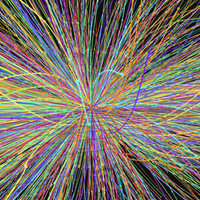
Transformers for Charged Particle Track Reconstruction in High-Energy Physics

Samuel Van Stroud, Philippa Duckett, Max Hart, Nikita Pond, Sébastien Rettie, Gabriel Facini, and Tim Scanlon

Phys. Rev. X 15, 041046 (2025) - Published 9 December, 2025

A unified transformer-based model accurately and efficiently reconstructs particle tracks in collider experiments, outperforming traditional methods and offering scalable solutions for handling the massive data of next-generation high-energy physics.

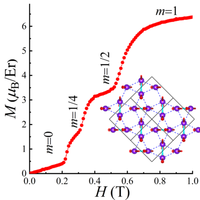
Observation of Unprecedented Fractional Magnetization Plateaus in a New Shastry-Sutherland Ising Compound

Lalit Yadav, Afonso Rufino, Rabindranath Bag, Matthew Ennis, Jan Alexander Koziol, Clarina dela Cruz, Alexander I. Kolesnikov, V. Ovidiu Garlea, Keith M. Taddei, David Graf, Kai Phillip Schmidt, Frédéric Mila, and Sara Haravifard

Phys. Rev. X 15, 041045 (2025) - Published 8 December, 2025

The frustrated magnet Er2Be2GeO7 exhibits two unexpected magnetization plateaus, revealing that subtle lattice distortions can dramatically alter spin order and offering a platform to study geometry driven magnetic behavior.

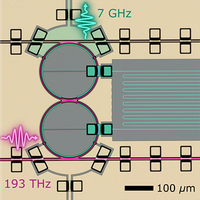
Bidirectional Microwave-Optical Conversion with an Integrated Soft-Ferroelectric Barium Titanate Transducer

Charles Möhl, Annina Riedhauser, Max Glantschnig, Daniele Caimi, Ute Drechsler, Antonis Olziersky, Deividas Sabonis, David I. Indolese, Thomas M. Karg, and Paul Seidler

Phys. Rev. X 15, 041044 (2025) - Published 8 December, 2025

A new on-chip microwave-to-optical converter built from soft-ferroelectric barium titanate achieves bidirectional signal conversion, offering a promising path toward long-range interconnects for superconducting quantum computers.

Nonmonotonic Band Flattening near the Magic Angle of Twisted Bilayer MoTe2

Yujun Deng, William Holtzmann, Ziyan Zhu, Timothy Zaklama, Paulina Majchrzak, Takashi Taniguchi, Kenji Watanabe, Makoto Hashimoto, Donghui Lu, Chris Jozwiak, Aaron Bostwick, Eli Rotenberg, Liang Fu, Thomas P. Devereaux, Xiaodong Xu, and Zhi-Xun Shen

Phys. Rev. X 15, 041043 (2025) - Published 5 December, 2025

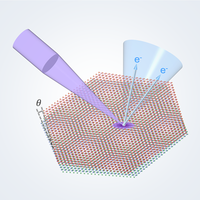
Angle-resolved photoemission measurements reveal that twisting bilayer MoTe2 to about 2∘ flattens its valence band and enhances electron localization, pinpointing the “magic angle” where correlated quantum phases are most likely to emerge.

From Strong to Weak Correlations in Breathing-Mode Kagome van der Waals Materials: Nb3(F,Cl,Br,I)8 as a Robust and Versatile Platform for Many-Body Engineering

Joost Aretz, Sergii Grytsiuk, Xiaojing Liu, Giovanna Feraco, Chrystalla Knekna, Muhammad Waseem, Zhiying Dan, Marco Bianchi, Philip Hofmann, Mazhar N. Ali, Mikhail I. Katsnelson, Antonija Grubišić-Čabo, Hugo U. R. Strand, Erik G. C. P. van Loon, and Malte Rösner

Phys. Rev. X 15, 041042 (2025) - Published 5 December, 2025

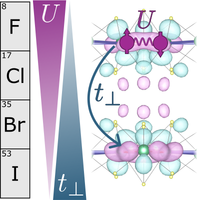
Calculations and experiments show that in layered Nb3X8 compounds, changing the halogen element or thickness continuously tunes electron correlations, transforming the materials from weakly correlated band insulators to strongly correlated Mott insulators.

Bond-Network Entropy Governs Heat Transport in Coordination-Disordered Solids

Kamil Iwanowski, Gábor Csányi, and Michele Simoncelli

Phys. Rev. X 15, 041041 (2025) - Published 4 December, 2025

A new framework linking atomic disorder to thermal conductivity shows how variations in atomic bonding networks control heat flow in materials that are partly crystalline and partly glassy.

Repeated Ancilla Reuse for Logical Computation on a Neutral Atom Quantum Computer

J. A. Muniz et al.

Phys. Rev. X 15, 041040 (2025) - Published 4 December, 2025

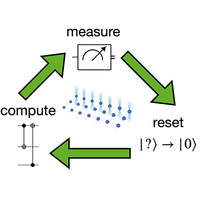
A neutral-atom quantum computing system that can repeatedly measure, reuse, and replace ancilla qubits without disrupting others enables longer computations and advances scalable, fault-tolerant operation.

Electron-Correlation-Assisted Charge Stripe Order in a Kagome Superconductor

Linwei Huai, Zhuying Wang, Huachen Rao, Yulei Han, Bo Liu, Shuikang Yu, Yunmei Zhang, Ruiqing Zang, Runqing Luan, Shuting Peng, Zhenhua Qiao, Zhenyu Wang, Junfeng He, Tao Wu, and Xianhui Chen

Phys. Rev. X 15, 041039 (2025) - Published 1 December, 2025

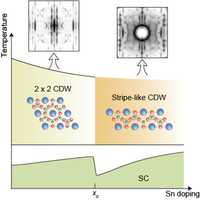
Tin doping in the superconductor CsV3Sb5 suppresses its usual charge-density-wave pattern, revealing a hidden stripe order that highlights how lattice instabilities and electronic correlations can control competing phases in quantum materials.

Self-Organized Homogenization of Flow Networks

Julien Bouvard, Swarnavo Basu, Charlott Leu, Onurcan Bektas, Joachim O. Rädler, Gabriel Amselem, and Karen Alim

Phys. Rev. X 15, 041038 (2025) - Published 26 November, 2025

Pulsing an erosive chemical through artificial flow networks allows them to self-organize for uniform flow, revealing a simple rule for achieving balanced transport and guiding the design of more efficient porous materials and devices.

Sign In to Your Journals Account

Filter

Subject

Filter

Article Lookup

Enter a citation