Browse by Subject

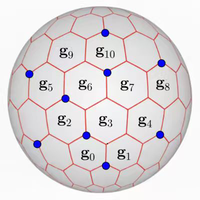
Exactly Solvable Models for Fermionic Symmetry-Enriched Topological Phases and Fermionic ’t Hooft Anomaly

Jing-Ren Zhou and Zheng-Cheng Gu

Phys. Rev. X 16, 011019 (2026) - Published 5 February, 2026

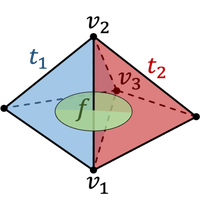
Research provides a class of exactly solvable lattice models to describe a diverse array of 2 + 1D fermionic symmetry-enriched topological phases, including those featuring the important ’t Hooft anomaly.

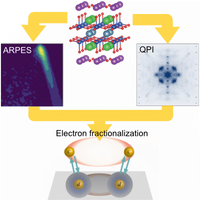
Unified Description of Cuprate Superconductors by Fractionalized Electrons Emerging from Integrated Analyses of Photoemission Spectra and Quasiparticle Interference

Shiro Sakai, Youhei Yamaji, Fumihiro Imoto, Tsuyoshi Tamegai, Adam Kaminski, Takeshi Kondo, Yuhki Kohsaka, Tetsuo Hanaguri, and Masatoshi Imada

Phys. Rev. X 16, 011018 (2026) - Published 4 February, 2026

An analysis of photoemission and scanning tunneling microscopy data reveals a possible novel type of electron fractionalization in cuprates based on a unified theoretical framework to address the unresolved mechanism of high-temperature superconductivity.

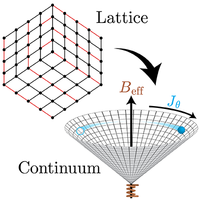
Disclinations, Dislocations, and Emanant Flux at Dirac Criticality

Maissam Barkeshli, Christopher Fechisin, Zohar Komargodski, and Siwei Zhong

Phys. Rev. X 16, 011017 (2026) - Published 3 February, 2026

Topological quantization of artificial magnetic flux at lattice defects in gapless crystals provides a measurable mechanism for generating electrical currents and observing new topological invariants.

Powering Quantum Computation with Quantum Batteries

Yaniv Kurman, Kieran Hymas, Arkady Fedorov, William J. Munro, and James Quach

Phys. Rev. X 16, 011016 (2026) - Published 26 January, 2026

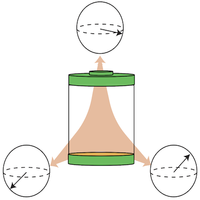
A framework is introduced to power universal quantum computation with internal quantum batteries, reducing heat load and wiring overhead to potentially increase qubit density fourfold.

Programmable Quantum Anomalous Hall Insulator in Twisted Crystalline Flatbands

Wenxuan Wang, Yijie Wang, Zaizhe Zhang, Zihao Huo, Gengdong Zhou, Shu Zhang, Kenji Watanabe, Takashi Taniguchi, Xiaoxia Yang, Qing Dai, X. C. Xie, Kaihui Liu, Zhida Song, and Xiaobo Lu

Phys. Rev. X 16, 011015 (2026) - Published 26 January, 2026

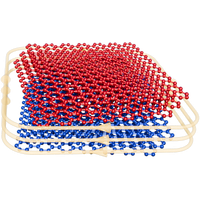
Twisted rhombohedral trilayer graphene hosts programmable quantum anomalous Hall insulators, enabling electrical switching between topological states with integer Chern numbers at both integer and fractional moiré fillings.

Deep Elastic Strain Engineering of Free-Standing GaN Microbridge

Sufeng Fan, Heyi Wang, Chang-Ti Chou, Juzheng Chen, Ying Han, Jingzhuo Zhou, Xiaocui Li, Jyh-Pin Chou, Ju Li, and Yang Lu

Phys. Rev. X 16, 011014 (2026) - Published 23 January, 2026

Mechanical bandgap tuning of GaN presents a flexible alternative to chemical doping.

Lattice-Charge Coupling in a Trilayer Nickelate with Intertwined Density Wave Order

Xun Jia, Yao Shen, Harrison LaBollita, Xinglong Chen, Junjie Zhang, Yu Li, Hengdi Zhao, Mercouri G. Kanatzidis, Matthew Krogstad, Hong Zheng, Ayman H. Said, Ahmet Alatas, Stephan Rosenkranz, Daniel Phelan, Mark P. M. Dean, M. R. Norman, J. F. Mitchell, Antia S. Botana, and Yue Cao

Phys. Rev. X 16, 011013 (2026) - Published 23 January, 2026

A combined high-resolution x-ray scattering and theoretical study of trilayer nickelate superconductors reveals an intertwined charge and spin order driven by the spin degree of freedom, challenging existing paradigms that emphasized the role of the lattice.

Large Language Model-Type Architecture for High-Dimensional Molecular Potential Energy Surfaces

Xiao Zhu and Srinivasan S. Iyengar

Phys. Rev. X 16, 011012 (2026) - Published 22 January, 2026

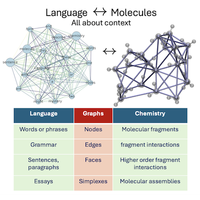
Bridging language model architectures and graph-theory-based molecular fragmentation achieves a sub-kilocalorie-per-mole-accurate potential energy surface for a 186-dimensional water cluster.

Erratum: Unitary k-Designs from Random Number-Conserving Quantum Circuits [Phys. Rev. X 15, 021022 (2025)]

Sumner N. Hearth, Michael O. Flynn, Anushya Chandran, and Chris R. Laumann

Phys. Rev. X 16, 019901 (2026) - Published 20 January, 2026

Characterization of Drive-Induced Unwanted State Transitions in Superconducting Circuits

W. Dai, S. Hazra, D. K. Weiss, P. D. Kurilovich, T. Connolly, H. K. Babla, S. Singh, V. R. Joshi, A. Z. Ding, P. D. Parakh, J. Venkatraman, X. Xiao, L. Frunzio, and M. H. Devoret

Phys. Rev. X 16, 011011 (2026) - Published 15 January, 2026

A systematic framework is developed to identify and categorize three distinct mechanisms of drive-induced unwanted state transitions in superconducting circuits, enabling predictable mitigation of errors to advance high-fidelity quantum operations.

Generalized Statistics on Lattices

Ryohei Kobayashi (小林良平), Yuyang Li (李雨阳), Hanyu Xue (薛寒玉), Po-Shen Hsin (辛柏伸), and Yu-An Chen (陳昱安)

Phys. Rev. X 16, 011010 (2026) - Published 14 January, 2026

The notion of statistics is generalized from particles to loops and membranes using Berry phases of microscopic unitary processes on lattices.

Nematic Order and Orbital Selective Mott State in a Partially Filled Kagome Flat Band

Caiyun Chen, Jiangchang Zheng, Yuman He, Siqi Wu, Xuzhe Ying, Soumya Sankar, Luanjing Li, Yizhou Wei, Xi Dai, Hoi Chun Po, and Berthold Jäck

Phys. Rev. X 16, 011009 (2026) - Published 13 January, 2026

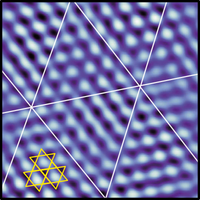
This scanning tunneling microscopy study of kagome flat bands in Fe-doped CoSn identifies orbital-selective Mott states and nematic order, revealing how geometric frustration and Coulomb interactions drive exotic quantum phases.

Beyond-Quasiparticle Transport with Vertex Correction: Self-Consistent Ladder Formalism for Electron-Phonon Interactions

Jae-Mo Lihm and Samuel Poncé

Phys. Rev. X 16, 011008 (2026) - Published 13 January, 2026

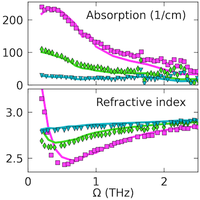
A theoretical framework simultaneously captures quasiparticle breakdown and conservation laws, achieving high accuracy in modeling electron transport in materials with strong electron-phonon interactions.

Time Irreversibility, Entropy Production, and Effective Temperature Are Independently Regulated in the Actin Cortex of Living Cells

N Narinder and Elisabeth Fischer-Friedrich

Phys. Rev. X 16, 011007 (2026) - Published 8 January, 2026

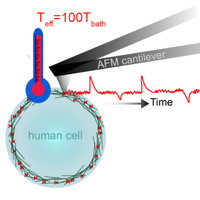
Atomic force microscope observations of dividing human cells suggest that effective temperature alone cannot reliably gauge how far a living system is from equilibrium.

Second-Order Microscopic Nonlinear Optical Susceptibility in a Centrosymmetric Material: Application to Imaging Valence Electron Motion

Chance Ornelas-Skarin, Tatiana Bezriadina, Matthias Fuchs, Shambhu Ghimire, J. B. Hastings, Quynh L. Nguyen, Gilberto de la Peña, Takahiro Sato, Sharon Shwartz, Mariano Trigo, Diling Zhu, Daria Popova-Gorelova, and David A. Reis

Phys. Rev. X 16, 011006 (2026) - Published 7 January, 2026

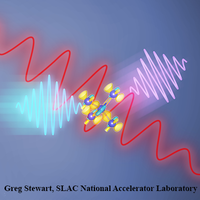
Nonlinear x-ray diffraction is used to isolate the valence electron density in silicon, demonstrating a powerful imaging technique useful across a range of complex materials.

Pseudogap with Fermi Arcs and Fermi Pockets in Half-Filled Twisted Transition Metal Dichalcogenides

Yong-Yue Zong, Zhao-Long Gu, and Jian-Xin Li

Phys. Rev. X 16, 011005 (2026) - Published 6 January, 2026

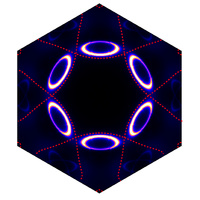
A theoretical work on twisted bilayer tungsten diselenide reveals how tuning the electron bandwidth drives a complex sequence of electronic phases, including Mott insulator, pseudogap states, and strange metal.

Rapid Quantum Ground State Preparation via Dissipative Dynamics

Yongtao Zhan, Zhiyan Ding, Jakob Huhn, Johnnie Gray, John Preskill, Garnet Kin-Lic Chan, and Lin Lin

Phys. Rev. X 16, 011004 (2026) - Published 6 January, 2026

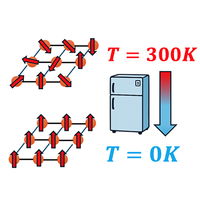
Dissipative algorithms offer an efficient and robust route to preparing ground states of complex quantum systems.

Particle Sweeping and Collection by Active and Living Filaments

R. Sinaasappel, K. R. Prathyusha, H. Tuazon, E. Mirzahossein, P. Illien, S. Bhamla, and A. Deblais

Phys. Rev. X 16, 011003 (2026) - Published 5 January, 2026

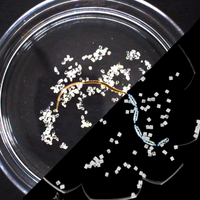
Active filaments collect nearby particles through sweeping motions driven by body bending. The size of the resulting clusters follows a simple geometric rule set by filament length and flexibility that unifies living, robotic, and simulated systems.

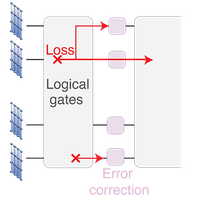
Leveraging Qubit Loss Detection in Fault-Tolerant Quantum Algorithms

Gefen Baranes, Madelyn Cain, J. Pablo Bonilla Ataides, Dolev Bluvstein, Josiah Sinclair, Vladan Vuletić, Hengyun Zhou, and Mikhail D. Lukin

Phys. Rev. X 16, 011002 (2026) - Published 2 January, 2026

Many quantum algorithms naturally detect and tolerate qubit loss. Combining them with a delayed-erasure decoding method that corrects missing qubits offers a simpler path toward scalable, fault-tolerant quantum computing.

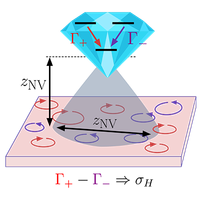
Nanoscale Defects as Probes of Time-Reversal Symmetry Breaking

Suman Jyoti De, T. Pereg-Barnea, and Kartiek Agarwal

Phys. Rev. X 16, 011001 (2026) - Published 2 January, 2026
A new technique using diamond NV centers detects time-reversal symmetry breaking in 2D materials by comparing spin relaxation due to opposite circular magnetic polarizations, enabling nanoscale probes of Hall conductivity and other chiral quantum effects.

Sign In to Your Journals Account

Filter

Subject

Filter

Article Lookup

Enter a citation