Browse Issues:

HIGHLIGHTED ARTICLES

Experimental three-dimensional dendrite tip shape characterization by interferometry and phase-field comparison during columnar directional solidification

Mehdi Medjkoune, Trevor Lyons, Fatima L. Mota, Jiefu Tian, Kaihua Ji, Louise Littles, Alain Karma, and Nathalie Bergeon

Phys. Rev. Materials 10, 093401 (2026) - Published 4 September, 2026

How SISSO-derived materials genes shape materials properties: An analytical sensitivity analysis

Lucas Foppa and Matthias Scheffler

Phys. Rev. Materials 10, 093601 (2026) - Published 8 September, 2026

Symbolic regression tools like SISSO can model materials properties as compact analytical formulas depending on key physical parameters. In this contribution, a derivative-based sensitivity analysis is used to quantify how strongly each selected physical parameter drives a SISSO model’s predictions. Applied to the equilibrium lattice constant of perovskites, this approach pinpoints valence orbital radii, nuclear charges, and their products as the most important governing quantities. The partial-effects method offers a computationally efficient, physically intuitive alternative to techniques like SHAP for interpreting symbolic-regression models.

Machine learning interatomic potentials for solid-state precipitation

Lorenzo Piersante and Anirudh Raju Natarajan

Phys. Rev. Materials 10, 093802 (2026) - Published 4 September, 2026

Machine-learning interatomic potentials now model complex alloys with near ab initio precision, but two challenges persist. Researchers must generate training data tailored to the physical process of interest, and they need validation metrics that go beyond simple statistical errors. Here the authors introduce a crystal-symmetry-based enumeration scheme for structural phase transformations in multicomponent alloys and a semi-grand-canonical Kendall-τ that quantifies thermodynamic accuracy across composition. These tools yield a general-purpose Mg-Nd potential. Simulations reveal a subtle interplay between chemical ordering and structural rearrangement and elucidate the continuous hcp-to-bcc transition underlying precipitation in this alloy.

Contrasting structural reversibility and magnetic correlations in isostructural honeycomb magnets CrCl3 and α−RuCl3

Zachary Morgan, Iris Ye, Jiasen Guo, Michael A. McGuire, and Jiaqiang Yan

Phys. Rev. Materials 10, 094001 (2026) - Published 3 September, 2026

The layered honeycomb antiferromagnets CrCl₃ and α-RuCl₃ undergo similar first-order, temperature-driven layer-stacking rearrangements, yet respond remarkably differently to thermal cycling. CrCl₃ evolves smoothly through the transition and remains largely reversible, whereas α-RuCl₃ shows an abrupt in-plane lattice discontinuity and accumulates structural disorder upon repeated cycling. Their magnetic correlations are also distinct, with diffuse magnetic scattering in CrCl₃ persisting to ~40 K, well above its ordering temperature, while no comparable quasi-static correlations are observed in α-RuCl₃. These contrasts point to markedly different coupling between layer stacking, strain, and magnetism.

Spin Hall effect in van der Waals ferromagnet Fe5GeTe2

T. Ohta, Y. Samukawa, N. Jiang, Y. Niimi, K. Yamagami, Y. Okada, Y. Otani, and K. Kondou

Phys. Rev. Materials 10, 094002 (2026) - Published 8 September, 2026

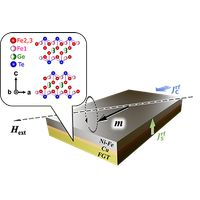
We investigate the spin Hall effect (SHE) in a van der Waals (vdW) ferromagnet Fe5GeTe2 (FGT) with a Curie temperature TC of 310 K utilizing the spin-torque ferromagnetic resonance method. The effective spin Hall conductivity is clearly enhanced with decreasing temperature, unlike the anomalous Hall conductivity, reflecting the variation in the band structure accompanied by the complicated magnetic ordering of the FGT. The results provide a deep understanding of the SHE in magnetic materials to open a new route for novel functionalities in vdW materials-based spintronic devices.

Direct observation of nanoindentation-induced punching-out of prismatic dislocation loops in tungsten

Florian Tropper and Takahito Ohmura

Phys. Rev. Materials 10, L090601 (2026) - Published 14 September, 2026

The authors have successfully induced and characterized a channel-like deformation mechanism in pure tungsten, providing a new experimental pathway to evaluate irradiation damage in future nuclear fusion reactors. While this phenomenon, where atomic layers slide rigidly like a solid cylinder being forced through a tight tube, is known to occur as a destructive byproduct of intense radiation inside fusion environments, it has previously been highly difficult to isolate and study in a controlled manner. In this work, they overcame this challenge by precisely pressing a microscopic tip into a specifically oriented tungsten single-crystal. Using advanced electron microscopy techniques, they studied the resulting atomic displacements and determined the channel-like deformation for the first time in this crystal structure. This opens a new avenue to study defect formation and propagation, critical for understanding fundamental plastic yielding and analyzing structurally identical irradiation-induced defects.
Element- and atomic-layer-resolved detection of surface magnetism via x-ray-excited tunneling

Sineth Premarathna, Kyaw Zin Latt, Nozomi Shirato, Sarah Wieghold, Daniel Rosenmann, Alex Taekyung Lee, Anh T. Ngo, Volker Rose, and Saw Wai Hla

Phys. Rev. Materials 10, L091401 (2026) - Published 1 September, 2026

Magnetism sensitive only to the outermost atomic layer of a material is difficult to detect by x-rays. This is demonstrated using synchrotron x-ray scanning tunneling microscopy in spectroscopic mode, which simultaneously measures ensemble-averaged and surface-atomic-layer magnetism in an ultrathin Ni film. X-ray magnetic circular dichroism reveals an enhancement of orbital and spin magnetic moments in the outermost layer relative to the film average. This work opens a new experimental route for quantitative, element-specific magnetometry with atomic-layer sensitivity.

Sluggish phase-transition kinetics and extended critical correlations in relaxor ferroelectrics

Masato Matsuura, Kenji Ohwada, Shinya Tsukada, Akihiko Machida, Tatsuya Kikuchi, and Young-Soo Han

Phys. Rev. Materials 10, L091402 (2026) - Published 8 September, 2026

Why do relaxor ferroelectrics exhibit giant dielectric and piezoelectric responses over such a broad temperature range? By combining rapid-cooling synchrotron x-ray diffraction with neutron scattering, this work shows that phase transitions in PMN-xPT are remarkably sluggish and can even be bypassed by fast cooling. At the same time, the polar nanoregions display scale-free critical correlations in both space and time over the temperature range where the giant response appears. These results suggest that slow phase-transition kinetics sustain an extended critical state, providing a new physical picture for the origin of giant relaxor responses.

LETTERS

Structural and mechanical properties

Direct observation of nanoindentation-induced punching-out of prismatic dislocation loops in tungsten

Florian Tropper and Takahito Ohmura

Phys. Rev. Materials 10, L090601 (2026) - Published 14 September, 2026

The authors have successfully induced and characterized a channel-like deformation mechanism in pure tungsten, providing a new experimental pathway to evaluate irradiation damage in future nuclear fusion reactors. While this phenomenon, where atomic layers slide rigidly like a solid cylinder being forced through a tight tube, is known to occur as a destructive byproduct of intense radiation inside fusion environments, it has previously been highly difficult to isolate and study in a controlled manner. In this work, they overcame this challenge by precisely pressing a microscopic tip into a specifically oriented tungsten single-crystal. Using advanced electron microscopy techniques, they studied the resulting atomic displacements and determined the channel-like deformation for the first time in this crystal structure. This opens a new avenue to study defect formation and propagation, critical for understanding fundamental plastic yielding and analyzing structurally identical irradiation-induced defects.

Topological and Dirac materials

EuIn2Sb2: Epitaxially stabilized axion insulator candidate with strong spin-orbit coupling

Hsiang Lee, Shinichi Nishihaya, Markus Kriener, Ayano Nakamura, Tadashi Yoneda, Yuki Deguchi, Makuro Goto, and Masaki Uchida

Phys. Rev. Materials 10, L091201 (2026) - Published 28 September, 2026

Magnetic, ferroelectric, and multiferroic materials

Element- and atomic-layer-resolved detection of surface magnetism via x-ray-excited tunneling

Sineth Premarathna, Kyaw Zin Latt, Nozomi Shirato, Sarah Wieghold, Daniel Rosenmann, Alex Taekyung Lee, Anh T. Ngo, Volker Rose, and Saw Wai Hla

Phys. Rev. Materials 10, L091401 (2026) - Published 1 September, 2026

Magnetism sensitive only to the outermost atomic layer of a material is difficult to detect by x-rays. This is demonstrated using synchrotron x-ray scanning tunneling microscopy in spectroscopic mode, which simultaneously measures ensemble-averaged and surface-atomic-layer magnetism in an ultrathin Ni film. X-ray magnetic circular dichroism reveals an enhancement of orbital and spin magnetic moments in the outermost layer relative to the film average. This work opens a new experimental route for quantitative, element-specific magnetometry with atomic-layer sensitivity.

Sluggish phase-transition kinetics and extended critical correlations in relaxor ferroelectrics

Masato Matsuura, Kenji Ohwada, Shinya Tsukada, Akihiko Machida, Tatsuya Kikuchi, and Young-Soo Han

Phys. Rev. Materials 10, L091402 (2026) - Published 8 September, 2026

Why do relaxor ferroelectrics exhibit giant dielectric and piezoelectric responses over such a broad temperature range? By combining rapid-cooling synchrotron x-ray diffraction with neutron scattering, this work shows that phase transitions in PMN-xPT are remarkably sluggish and can even be bypassed by fast cooling. At the same time, the polar nanoregions display scale-free critical correlations in both space and time over the temperature range where the giant response appears. These results suggest that slow phase-transition kinetics sustain an extended critical state, providing a new physical picture for the origin of giant relaxor responses.

Observation of dipole gap solitons and coherent phase modulation of magnetostatic surface spin waves

Simin Pang, Zhengyi Li, Ziyu Wang, Renkang Fan, Yanpei Lv, Yue Wu, Feilong Song, Peng Yan, and Jun Zhang

Phys. Rev. Materials 10, L091403 (2026) - Published 8 September, 2026

Decoupling the high-temperature spin-state and insulator-metal transitions in LaCoO3 via heteroepitaxial strain

Jierui Liang, Vipul Chaturvedi, Nileena Nandakumaran, Paromita Dutta, Lucca Figari, Turan Birol, and Chris Leighton

Phys. Rev. Materials 10, L091404 (2026) - Published 23 September, 2026

Semiconducting materials

Origin of shallow hole traps at GaN/SiO2 interface studied from density functional theory

Yuansheng Zhao, Atsushi Oshiyama, and Kenji Shiraishi

Phys. Rev. Materials 10, L091601 (2026) - Published 3 September, 2026

Superconducting materials

Interlayer-engineering of charge order wavevector in kagome metals

Muntafa M. Mahi, Quazi D. M. Khosru, M. Zahid Hasan, Mahbub Alam, and Md Shafayat Hossain

Phys. Rev. Materials 10, L091801 (2026) - Published 18 September, 2026

Binary kagome superconducting candidates hosting topological electronic states

Xin-Wei Yi, Jing-Yang You, and Gang Su

Phys. Rev. Materials 10, L091802 (2026) - Published 28 September, 2026

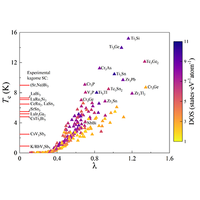
Binary kagome compounds emerge as an unexpectedly rich frontier for topological superconductivity. Through a high-throughput first-principles search spanning three structural families, the authors identify 84 phonon-mediated superconducting candidates with estimated Tc above 3K; seven surpass the approximately 9K benchmark for ambient-pressure kagome superconductors. The leading candidate, Ti3Si, reaches an estimated Tc of 15.2K and hosts nodal-line-derived drumhead surface states, while NbBi (Tc = 4.0K) combines a kagome flat band with Z2-derived Dirac-cone surface states near the Fermi level. This map establishes chemically simple, tunable platforms where superconductivity and diverse topological states converge, offering especially compelling targets for synthesis and experimental discovery.

ARTICLES

Crystal growth, crystallization, and kinetics

Experimental three-dimensional dendrite tip shape characterization by interferometry and phase-field comparison during columnar directional solidification

Mehdi Medjkoune, Trevor Lyons, Fatima L. Mota, Jiefu Tian, Kaihua Ji, Louise Littles, Alain Karma, and Nathalie Bergeon

Phys. Rev. Materials 10, 093401 (2026) - Published 4 September, 2026

Microstructure-dependent Cu-Sb-Te phase formation during Cu-induced structural evolution of Sb2Te3 thin films

Nils Braun, Sonja Cremer, Hagen Bryja, Vladimir Roddatis, Lennart Voß, Lorenz Kienle, and Andriy Lotnyk

Phys. Rev. Materials 10, 093402 (2026) - Published 30 September, 2026

Structural and mechanical properties

How SISSO-derived materials genes shape materials properties: An analytical sensitivity analysis

Lucas Foppa and Matthias Scheffler

Phys. Rev. Materials 10, 093601 (2026) - Published 8 September, 2026

Symbolic regression tools like SISSO can model materials properties as compact analytical formulas depending on key physical parameters. In this contribution, a derivative-based sensitivity analysis is used to quantify how strongly each selected physical parameter drives a SISSO model’s predictions. Applied to the equilibrium lattice constant of perovskites, this approach pinpoints valence orbital radii, nuclear charges, and their products as the most important governing quantities. The partial-effects method offers a computationally efficient, physically intuitive alternative to techniques like SHAP for interpreting symbolic-regression models.

Nitrogen-motif evolution and f-electron-mediated stabilization in high-pressure europium nitrides

Lv Yan, Hao Chen, Hongbo Wang, Guangtao Liu, Wenhui Mi, Mi Zhou, Xin Li, and Quan Li

Phys. Rev. Materials 10, 093602 (2026) - Published 8 September, 2026

Room-temperature shape-memory effect in Sr(Ni1−xCux)2P2

Juan Schmidt, Alexander Horvath, Seok-Woo Lee, Sergey L. Bud'ko, and Paul C. Canfield

Phys. Rev. Materials 10, 093603 (2026) - Published 9 September, 2026

First-principles insights into the effect of Zr doping on defect energetics, stacking-fault behavior, and vacancy-mediated diffusion in CoCrFeNi high-entropy alloys

Tushar Kanti Bhowmik, Santu Dey, and N. Gayathri

Phys. Rev. Materials 10, 093604 (2026) - Published 11 September, 2026

Athermal atomistic modeling of irradiation-induced microstructure evolution in Ni-based solid-solution alloys

Ebrahim Mansouri, Javad Shirani, Laurent Karim Béland, Pär Olsson, and Yanwen Zhang

Phys. Rev. Materials 10, 093605 (2026) - Published 22 September, 2026

Tracking microscopic inter-cycle irreversibility across the yielding transition through constant-amplitude oscillatory fatigue experiments in a colloidal fractal gel with Rheo-Echo-XPCS

William Chèvremont, Julien Bauland, Emmeline Brassac, Gonzalo Sanchez Vera, Stefano Aime, Frédéric Pignon, and Thomas Gibaud

Phys. Rev. Materials 10, 093606 (2026) - Published 22 September, 2026

{110} 〈111〉 and {112} 〈111〉 dislocation behavior in W-Re alloys

Patrick F. McNutt, Pulkit Garg, Morgan R. Jones, Tresa M. Pollock, and Irene J. Beyerlein

Phys. Rev. Materials 10, 093607 (2026) - Published 24 September, 2026

Assessing foundational atomistic models for iron alloys under Earth's core conditions

Tianqi Wan, Liangrui Wei, Zepeng Wu, Renata M. Wentzcovitch, and Yang Sun

Phys. Rev. Materials 10, 093608 (2026) - Published 24 September, 2026

Interpretable machine learning reveals a structure-property trade-off between negative thermal expansion magnitude and temperature range in framework materials

Yu Cai, Xiaoyu Zhao, Rui Zhu, Yongqiang Qiao, Liangliang Liu, Liying Zhang, Xianran Xing, and Yu Jia

Phys. Rev. Materials 10, 093609 (2026) - Published 28 September, 2026

Development of new methods for materials

Systematic global structure search of bismuth-based binary systems under pressure using machine learning potentials

Hayato Wakai, Shintaro Ishiwata, and Atsuto Seko

Phys. Rev. Materials 10, 093801 (2026) - Published 2 September, 2026

Machine learning interatomic potentials for solid-state precipitation

Lorenzo Piersante and Anirudh Raju Natarajan

Phys. Rev. Materials 10, 093802 (2026) - Published 4 September, 2026

Machine-learning interatomic potentials now model complex alloys with near ab initio precision, but two challenges persist. Researchers must generate training data tailored to the physical process of interest, and they need validation metrics that go beyond simple statistical errors. Here the authors introduce a crystal-symmetry-based enumeration scheme for structural phase transformations in multicomponent alloys and a semi-grand-canonical Kendall-τ that quantifies thermodynamic accuracy across composition. These tools yield a general-purpose Mg-Nd potential. Simulations reveal a subtle interplay between chemical ordering and structural rearrangement and elucidate the continuous hcp-to-bcc transition underlying precipitation in this alloy.

Loop-level surrogate modeling of dopant-distribution effects in Ba(Zr,Ti)O3

Heiko Röthl, Elke Kraker, Julien Magnien, Manfred Mücke, and Florian Mayer

Phys. Rev. Materials 10, 093803 (2026) - Published 10 September, 2026

Heterogeneous transfer of thin film BaTiO3 onto silicon

Temazulu S. Zulu, Larissa B. Little, Aaron M. Day, Chaoshen Zhang, Keith Powell, Kyeong-Yoon Baek, Benazir Fazlioglu-Yalcin, Neil Sinclair, Charles M. Brooks, David R. Barton, Marko Lončar, and Julia A. Mundy

Phys. Rev. Materials 10, 093804 (2026) - Published 22 September, 2026

Two-dimensional materials

Contrasting structural reversibility and magnetic correlations in isostructural honeycomb magnets CrCl3 and α−RuCl3

Zachary Morgan, Iris Ye, Jiasen Guo, Michael A. McGuire, and Jiaqiang Yan

Phys. Rev. Materials 10, 094001 (2026) - Published 3 September, 2026

The layered honeycomb antiferromagnets CrCl₃ and α-RuCl₃ undergo similar first-order, temperature-driven layer-stacking rearrangements, yet respond remarkably differently to thermal cycling. CrCl₃ evolves smoothly through the transition and remains largely reversible, whereas α-RuCl₃ shows an abrupt in-plane lattice discontinuity and accumulates structural disorder upon repeated cycling. Their magnetic correlations are also distinct, with diffuse magnetic scattering in CrCl₃ persisting to ~40 K, well above its ordering temperature, while no comparable quasi-static correlations are observed in α-RuCl₃. These contrasts point to markedly different coupling between layer stacking, strain, and magnetism.

Spin Hall effect in van der Waals ferromagnet Fe5GeTe2

T. Ohta, Y. Samukawa, N. Jiang, Y. Niimi, K. Yamagami, Y. Okada, Y. Otani, and K. Kondou

Phys. Rev. Materials 10, 094002 (2026) - Published 8 September, 2026

We investigate the spin Hall effect (SHE) in a van der Waals (vdW) ferromagnet Fe5GeTe2 (FGT) with a Curie temperature TC of 310 K utilizing the spin-torque ferromagnetic resonance method. The effective spin Hall conductivity is clearly enhanced with decreasing temperature, unlike the anomalous Hall conductivity, reflecting the variation in the band structure accompanied by the complicated magnetic ordering of the FGT. The results provide a deep understanding of the SHE in magnetic materials to open a new route for novel functionalities in vdW materials-based spintronic devices.

Thermodynamic stability of twisted domains in AgCrSe2 thin films grown on lattice-matched YSZ(111) substrate

Haruto Sato, Kota Mihara, Kenshin Inamura, Yusuke Tajima, Kazutaka Kudo, Jobu Matsuno, and Junichi Shiogai

Phys. Rev. Materials 10, 094003 (2026) - Published 8 September, 2026

Novel inorganic graphenylene based on scandium nitride: Stability, mechanical, and electronic properties

José A. S. Laranjeira, Nicolas F. Martins, Luis A. Cabral, Julio R. Sambrano, Carlos M. O. Bastos, Alexandre C. Dias, Elie A. Moujaes, and Luiz A. Ribeiro Junior

Phys. Rev. Materials 10, 094004 (2026) - Published 9 September, 2026

Optimizing high-temperature electron mobility in single-crystal Bi2O2Se based on its unconventional dependence on carrier concentration

Antonín Sojka, Petr Knotek, Jan Zich, Martin Míšek, Roman Tesař, Kyo-Hoon Ahn, Petr Levinský, Jiří Navrátil, Pavlína Ruleová, Jiří Hejtmánek, Karel Knížek, Václav Holý, and Čestmír Drašar

Phys. Rev. Materials 10, 094005 (2026) - Published 14 September, 2026

Epitaxial growth of β-bismuthene on Sb2Te3

Giorgia Sementilli, Arslan Masood, Fabio Ronci, Stefano Colonna, Marilena Carbone, Marco Papagno, Ziya S. Aliev, Evgueni V. Chulkov, Sergey V. Eremeev, and Roberto Flammini

Phys. Rev. Materials 10, 094006 (2026) - Published 21 September, 2026

Topological and Dirac materials

Strain-tunable nodal lines inducing large anomalous Nernst effect in topological magnet Co3Sn2S2

Kojun Nishimura, Susumu Minami, Sota Hogaki, and Takahiro Shimada

Phys. Rev. Materials 10, 094201 (2026) - Published 10 September, 2026

Doping dependence of the structural evolution in square net PrSbxTe2−x−δ

Josh Leeman, Scott B. Lee, Gabrielle Carrel, Kenneth Burch, and Leslie M. Schoop

Phys. Rev. Materials 10, 094202 (2026) - Published 17 September, 2026

Topological states, Fermi-surface nesting, and possible charge-density-wave tendencies in MoNiP and WNiP

Nishi P. Hazarika, Sonali S. Pradhan, and V. Kanchana

Phys. Rev. Materials 10, 094203 (2026) - Published 23 September, 2026

Magnetic, ferroelectric, and multiferroic materials

Magnetic and crystal electric field studies of a spin-orbit coupled hyperkagome compound Yb3Ga2Al3O12

R. Kolay, S. Samanta, Sangeeta, M. P. Saravanan, and R. Nath

Phys. Rev. Materials 10, 094401 (2026) - Published 9 September, 2026

Magnetic reversal behavior and domain morphology in low-damping CoFeB/Ni multilayers

Raphael Kohlstedt, Peter Heinig, Fabian Samad, René Hübner, Gauravkumar Patel, Rico Ehrler, Kilian Lenz, Jürgen Lindner, and Olav Hellwig

Phys. Rev. Materials 10, 094402 (2026) - Published 10 September, 2026

Effective Gilbert damping in EuS thin films by ferromagnetic resonance spectroscopy

M. Xochitl Aguilar-Pujol, Sara Catalano, David Caldevilla-Asenjo, Samuel Kerschbaumer, Kamil Staszek, Maxim Ilyn, Marco Gobbi, Celia Rogero, Luis E. Hueso, Witold Skowroński, and Fèlix Casanova

Phys. Rev. Materials 10, 094403 (2026) - Published 10 September, 2026

Magnetoelectric hysteresis in van der Waals antiferromagnetic insulator MnPS3 single crystals

Yongsen Tang, Juan Wang, Hanyan Wang, Bing Yu, Yakui Weng, Shuang Zhou, Hao Chen, Hongguang Zhang, and Xing'ao Li

Phys. Rev. Materials 10, 094404 (2026) - Published 14 September, 2026

Origins of ferromagnetism in helium-implanted PdCoO2

Sangsoo Kim, Bipasa Samanta, Carina Jacobson, An-Hsi Chen, Jack C. Lasseter, Debarghya Mallick, Jacob Cook, Xiaoyu Yuan, Seongshik Oh, Gyula Eres, Robert G. Moore, Thomas Prokscha, Andreas Suter, Steven Randolph, Jason S. Gardner, Philip D. Rack, T. Zac Ward, Zaher Salman, Alexandru Georgescu, and Matthew Brahlek

Phys. Rev. Materials 10, 094405 (2026) - Published 15 September, 2026

Optimization of epitaxial Mn4N thin films grown by sputtering for spintronic applications

Teodor Apetrei, Emre Demiroglu, Caner Deger, Can Onur Avci, and Silvia Damerio

Phys. Rev. Materials 10, 094406 (2026) - Published 17 September, 2026

Perpendicular magnetic anisotropy of MgO/CoFeB on GaAs(110)

Hikaru Sakata, Taro Aizawa, Satoshi Iba, and Yuzo Ohno

Phys. Rev. Materials 10, 094407 (2026) - Published 21 September, 2026

Magnetic anisotropy related to hybridization between Fe 3d and As 4p orbitals in a bcc Fe-As thin film

Takahito Takeda, Karumuri Sriharsha, Seiji Aota, Ryo Okano, Le Duc Anh, Yukiharu Takeda, Akira Yasui, Miho Kitamura, Yuki K. Wakabayashi, Atsushi Fujimori, Masaaki Tanaka, and Masaki Kobayashi

Phys. Rev. Materials 10, 094408 (2026) - Published 21 September, 2026

Crystal structure and basic properties of dirhenate quantum materials

Danrui Ni, Xianghan Xu, Stephen Zhang, N. P. Ong, Sanfeng Wu, and R. J. Cava

Phys. Rev. Materials 10, 094409 (2026) - Published 22 September, 2026

K2Co2(TeO3)3·2.5H2O: A zemannite-type dimer antiferromagnet

Austin M. Ferrenti, Maxime A. Siegler, Yiqing Hao, Chris Lygouras, Tong Chen, Tiffany A. Soetojo, Megan R. Rutherford, Natalia Drichko, Huibo Cao, Kenji M. Kojima, Alannah M. Hallas, and Tyrel M. McQueen

Phys. Rev. Materials 10, 094410 (2026) - Published 22 September, 2026

Combining quasiparticle self-consistent GW and machine-learned DFT+U to assess half-metallicity in Co- and Ni-based Heuslers

Zefeng Cai, Malcolm J. A. Jardine, Maituo Yu, Chenbo Min, Jiatian Wu, Hantian Liu, Derek Dardzinski, Christopher J. Palmstrøm, and Noa Marom

Phys. Rev. Materials 10, 094411 (2026) - Published 24 September, 2026

Insights into the magneto-structural phase transitions in AlxCoCrFeNi

Cameron S. Jorgensen, Ray Unocic, Xuesong Fan, Lou Santodonato, Peter K. Liaw, Dustin A. Gilbert, and Lisa DeBeer-Schmitt

Phys. Rev. Materials 10, 094412 (2026) - Published 30 September, 2026

Semiconducting materials

Symmetry breaking structural relaxation and optical transitions of native defects and carbon impurities in LiGa5O8

Klichchupong Dabsamut, Kaitian Zhang, Dong Su Yu, Carlos DeLeon, Adisak Boonchun, Hongping Zhao, Leonard J. Brillson, and Walter R. L. Lambrecht

Phys. Rev. Materials 10, 094601 (2026) - Published 2 September, 2026

Comprehensive study of exciton luminescence in AlN stacking faults

C. Guérin, J. Cañas, A. Revilla-Martin, F. Jourdan, J. Lähnemann, J. L. Rouvière, B. Daudin, and G. Jacopin

Phys. Rev. Materials 10, 094602 (2026) - Published 3 September, 2026

Dynamic polarity-induced phonon scattering and rattler-like vibrations enable ultralow thermal conductivity and high thermoelectric performance in NaInTe2

Yunfei Wang, Yinchang Zhao, Junping Wang, Jun Ni, and Zhenhong Dai

Phys. Rev. Materials 10, 094603 (2026) - Published 3 September, 2026

Lattice dynamics and complete polarization analysis of Raman-active modes in LaInO3

Jonas Rose, Hai Nguyen, Moritz Meißner, Zbigniew Galazka, Roland Gillen, Georg Hoffmann, Oliver Brandt, Manfred Ramsteiner, Markus R. Wagner, and Hans Tornatzky

Phys. Rev. Materials 10, 094604 (2026) - Published 9 September, 2026

Effect of alloy on thermal transport in AlxGa1−xN/GaN superlattices

Guotai Li, Haiyi Sun, Meixin Feng, Shuming Zhang, Qian Sun, and Hui Yang

Phys. Rev. Materials 10, 094605 (2026) - Published 11 September, 2026

Vacuum ultraviolet dielectric function of cubic InGaN for the entire composition range

Elias Baron, Rüdiger Goldhahn, Mario F. Zscherp, Silas A. Jentsch, Sangam Chatterjee, Jörg Schörmann, Natalia Nepomniashchaia, Alexandr Dejneka, and Martin Feneberg

Phys. Rev. Materials 10, 094606 (2026) - Published 14 September, 2026

Intrinsically low thermal conductivity of stoichiometric lithium niobate: Experimental measurement and microscopic origin

Wenjiang Zhou, Fuwei Yang, Yuxi Wang, Weiheng Li, Wujuan Yan, Kexin Zhang, and Bai Song

Phys. Rev. Materials 10, 094607 (2026) - Published 15 September, 2026

Superconducting materials

Superconductivity in epitaxial PtSb(0001) thin films

C. Müller, S. P. Bommanaboyena, A. Badura, T. Uchimura, F. Husstedt, B. V. Schwarze, S. Banerjee, M. Ledinský, J. Michalicka, M. Míšek, P. Proschek, M. Šindler, C. Timm, T. Helm, S. Fukami, F. Krizek, and D. Kriegner

Phys. Rev. Materials 10, 094801 (2026) - Published 4 September, 2026

Superconductivity in the noncentrosymmetric Fe2P-type compound Sc6RuSb2

Jiasheng Liu (刘嘉昇), Zhengxin Lin (林正心), Lewei Chen (陈乐为), Yunqing Shi (石运清), Junkun Yi (易俊锟), Haoyu He (何皓宇), Jihai Yuan (袁济海), Qingsong Liu (刘青松), Meng Wang (王孟), Mingwei Ma (马明伟), and Zhian Ren (任治安)

Phys. Rev. Materials 10, 094802 (2026) - Published 14 September, 2026

Signatures of quasi-two-dimensional superconductivity with in-plane anisotropy in nonsymmorphic PtPb4

Senhao Lv, Hui Guo, Tianqi Gao, Ke Zhu, Guojing Hu, Ruwen Wang, Chenyu Bai, Yechao Han, Haisen Liu, Zhen Zhao, Jianchen Lu, Lihong Bao, Wu Zhou, Haitao Yang, and Hong-Jun Gao

Phys. Rev. Materials 10, 094803 (2026) - Published 23 September, 2026

High-pressure structures of Bi0.5Sb1.5Te3 at room temperature and in its superconducting states

C. Halbert, A. Lamichhane, B. Wang, S. Racioppi, N. P. Salke, R. Kumar, A. H. Manayil Marathamkottil, H. Farraj, K. Wang, E. H. T. Poldi, M. Ahart, Z. Liu, D. J. Schulze, Shaowei Song, X. Shi, Zhifeng Ren, Y. Meng, G. Konstantin, R. D. dos Reis, R. Tartaglia, L. Z. Deng, C. W. Chu, E. Zurek, and R. J. Hemley

Phys. Rev. Materials 10, 094804 (2026) - Published 25 September, 2026

Other electronic materials

Evidence for rare-region physics in the structural and electronic degrees of freedom of the nickelate La2−xSrxNiO4

R. J. Spieker, B. Krohnke, D. Zhai, A. Lopez Benet, M. Spaić, X. He, C. Y. Tan, Z. W. Anderson, F. Ye, H. Cao, M. J. Krogstad, R. Osborn, D. Pelc, and M. Greven

Phys. Rev. Materials 10, 095001 (2026) - Published 8 September, 2026

Effect of Co doping on structural and magnetic order in kagome magnet TbFe6−xCoxGe6 (nominal x=0−6)

Noah J. Fau, Rahul Meduri, Atreyee Das, Ryan E. Baumbach, Gregory T. McCandless, and Julia Y. Chan

Phys. Rev. Materials 10, 095002 (2026) - Published 10 September, 2026

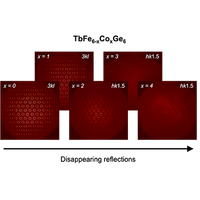
Co substitution in the kagome magnet TbFe6−xCoxGe6 drives a remarkable evolution of both crystal structure and magnetic behavior. Through combined diffraction and magnetization studies, the series transitions from an ordered orthorhombic phase to a hexagonal Yb0.5Co3Ge3-type structure as Co content increases. The gradual disappearance of superstructure reflections reveals suppression of short-range structural order, while magnetic measurements demonstrate significant modification of transition-metal sublattice magnetism. These results establish chemical substitution as an effective route for tuning the interplay between structural ordering and magnetic interactions in rare-earth kagome materials, providing new insight into composition-driven phase evolution.

Solid-phase epitaxial synthesis of V2O3 films with robust metal-insulator transition under H2 atmosphere

K. Yoshimatsu, D. Shiga, and H. Kumigashira

Phys. Rev. Materials 10, 095003 (2026) - Published 14 September, 2026

Polaron and strain effects on ion migration in WO3

Matthäus Siebenhofer, Pjotrs Žguns, and Bilge Yildiz

Phys. Rev. Materials 10, 095004 (2026) - Published 29 September, 2026

Metamaterials, optical, photonic, and plasmonic materials

Origin of negative Kerr nonlinearity of monolayer bismuthene: Dominance of two-level interband transitions

Bo Zhang, Yujun Yang, and Hui Wang

Phys. Rev. Materials 10, 095201 (2026) - Published 1 September, 2026

Anisotropic dielectric function of X-, Y-128∘, and Z-Cut LiNbO3 crystals from combined infrared ellipsometry, Raman, and reflectance spectroscopy

A. Santos-Amador, J. Puebla, O. Del Pozo-Zamudio, and R. E. Balderas-Navarro

Phys. Rev. Materials 10, 095202 (2026) - Published 15 September, 2026

Structure-mediated electromagnetic parameter modulation in magnetic composite absorbers

Chuanfei Li, Xiaolong Lv, Xiaojuan Hou, and Yunsheng Guo

Phys. Rev. Materials 10, 095203 (2026) - Published 15 September, 2026

Materials for energy harvesting, storage, and generation

Role of local disorder in surface properties of inorganic halide perovskites

Jasurbek Gulomov, Guido Roma, Marios Zacharias, Jacky Even, and Claudine Katan

Phys. Rev. Materials 10, 095401 (2026) - Published 11 September, 2026

Bridging atomistic and continuum descriptions of nanoscale dislocation loops in tungsten

Joseph Duque, Sergei Dudarev, James Kermode, and Thomas Hudson

Phys. Rev. Materials 10, 095402 (2026) - Published 21 September, 2026

Soft, molecular, and amorphous materials

Vibrational spectra of a−Ta2O5: A first-principles investigation

Luigi Giacomazzi and Paolo Umari

Phys. Rev. Materials 10, 095601 (2026) - Published 17 September, 2026

Nanomaterials

Suppression of sputtering in tungsten fuzz: Interplay of porosity and surface roughness

Johannes Brötzner, Duoduo Ye, Felix Korbei, Benjamin Burazor-Domazet, Raphael Gurschl, Andreas Mutzke, Richard A. Wilhelm, and Friedrich Aumayr

Phys. Rev. Materials 10, 096001 (2026) - Published 2 September, 2026

Surface excitons in ZnO nanowires grown by chemical bath deposition following hydrogen passivation

Emilien Lefebvre, Fabrice Donatini, Saïd Hassani, Sonia Ortega Murillo, Isabelle Gélard, Vincent Sallet, Estelle Appert, and Vincent Consonni

Phys. Rev. Materials 10, 096002 (2026) - Published 8 September, 2026

Continuum theory of negative surface energy: Resolving the paradox in quantum dots and nanostructures

Pradeep Sharma

Phys. Rev. Materials 10, 096003 (2026) - Published 11 September, 2026

Materials for Quantum Technologies

Engineering van der Waals heterostructures for dispersion-selective meV-scale quantum sensing

Elizabeth A. Peterson

Phys. Rev. Materials 10, 096201 (2026) - Published 4 September, 2026

Sign In to Your Journals Account

Filter

Filter

Article Lookup

Enter a citation