Highlights

Alloy engineering of excitonic properties in TMD monolayers

Eirini Katsipoulaki, Adlen Smiri, Panagiotis Spiliotakis, Konstantinos Mourzidis, Danae Katrisioti, Takashi Taniguchi, Kenji Watanabe, Georgios Kopidakis, Zdeněk Sofer, Gang Wang, Emmanuel Stratakis, George Kioseoglou, Iann C. Gerber, Xavier Marie, and Ioannis Paradisanos

Phys. Rev. Materials 10, 104010 (2026) - Published 26 October, 2026

Changing the atomic composition of a semiconductor offers a powerful way to tailor its properties. This study explores atomically thin alloys of molybdenum, sulfur, and selenium by probing their excitons, Coulomb-bound electron-hole pairs. By gradually replacing selenium with sulfur, the study reveals how alloying modifies exciton emission energies, atomic lattice vibrations, spin-orbit coupling and polarization of emitted light. Combining complementary optical spectroscopy techniques with first-principles calculations, the work provides a more comprehensive understanding of how alloy composition influences excitonic behavior and its connection to electronic, vibrational, and spin-valley properties.

Rise, fall, and rebirth of an oxide: Growth and evolution of bismuth oxide on Au(111)

Alberto Turoldo, Marco Bianchi, Deborah Perco, Andrea Berti, Philip Hofmann, Alessandro Baraldi, and Silvano Lizzit

Phys. Rev. Materials 10, 104008 (2026) - Published 21 October, 2026

The authors report a comprehensive, multitechnique study of bismuth oxide growth on Au(111) under varying temperatures and oxygen exposures. Combining synchrotron-based spectroscopy, diffraction, and scanning tunneling microscopy, they elucidate the structural evolution during oxidation and annealing. Oxidation produces multiple oxide domains, including a structure consistent with the (201) surface of β-Bi2O3, while annealing drives phase separation and Au redistribution to the oxide surface. These processes induce substantial electronic modifications and lower the work function to 3.4 eV, highlighting the potential of Bi2O3 as a low-work-function interlayer for contact engineering in two-dimensional semiconductor devices.

Structural dynamics in the organic conductor κ−(BETS)2Mn[N(CN)2]3

Owen Ganter, Tatjana Henrichs, Yassine Agarmani, Steffi Hartmann, Mark Kartsovnik, Stephen Winter, Michael Lang, and Jens Müller

Phys. Rev. Materials 10, 104416 (2026) - Published 20 October, 2026

Uncovering hidden structural dynamics in an organic conductor Organic conductors host a remarkable interplay between molecular structure and electronic properties. In \kappa-(BETS)2Mn(N(CN)2)3, a multiferroic candidate exhibiting electronic ferroelectricity below the metal-to-insulator transition at 25 K, we identify the microscopic origin of a long-standing anomaly near 100 K. Resistance noise spectroscopy, thermal expansion, and computational modeling reveal compelling evidence for a glass-like freezing of dicyanamide ligands in the anion layer. Despite occurring outside the conducting layer, this structural transition leaves a pronounced fingerprint on the charge-carrier dynamics. Our results demonstrate that slow structural fluctuations in the anion network can strongly influence electronic behavior, providing new insight into the role of donor-anion coupling and disorder in organic quantum materials.

Universal electron diffuse scattering in FCC alloys: A kinematic thermal diffuse-scattering analysis

Po-Cheng Kung, Tianyu Su, Elif Ertekin, Jian-Min Zuo, and Jessica Krogstad

Phys. Rev. Materials 10, 103605 (2026) - Published 13 October, 2026

Chemical short-range order (CSRO) could be contributing significantly to properties of complex FCC alloys, but signals from thermal diffuse scattering (TDS) make its measurement challenging. Here, the authors establish a generalizable connection between characteristic TDS features and phonon dispersion relations in FCC materials. Simulations in pure FCC metals are consistent with features in medium-entropy and stainless steel experimental observations confirmed with temperature dependent measurements. As a result, they can identify scenarios in which TDS interferes with CSRO characterization via electron scattering techniques, and provide several strategies to enable robust identification of CSRO.

Hidden magnetic complexity in the simple van der Waals ferromagnet Ce2Te5

Rajesh Tripathi, D. T. Adroja, C. Ritter, Leandro Liborio, Manuel dos Santos Dias, Leon Petit, D. Khalyavin, Yu Liu, T. Shiroka, M. Aouane, S. Langridge, S. Patil, and Eric D. Bauer

Phys. Rev. Materials 10, 104407 (2026) - Published 13 October, 2026

Van der Waals magnets provide a platform for exploring how reduced dimensionality, competing interactions, and local electronic degrees of freedom shape magnetic order. Here, the authors uncover hidden complexity in Ce2Te5, a layered f-electron ferromagnet whose apparently simple magnetic ground state masks a richer microscopic landscape. Although the system develops a single long-range ferromagnetic structure, the two inequivalent Ce sites play markedly different roles in the ordered state, and subtle magnetic changes persist well below the ordering temperature. The combination of site-selective magnetism and strong single-ion anisotropy highlights how competing interactions can produce complex low-temperature behavior without generating additional long-range magnetic phases.

Geometry-enforced topological chiral fermions in amorphous chiral metals

Justin Schirmann, Adolfo G. Grushin, and Benjamin J. Wieder

Phys. Rev. Materials 10, 104201 (2026) - Published 7 October, 2026

Chiral topological semimetals are phases of matter that host robust band crossings and topologically protected surface states. So far, their interesting properties have been believed to be restricted to the realm of perfect crystals. In this work, the authors show how they can survive strong structural disorder, challenging the view that disorder inevitably destroys this topological state. Using analytical theory, symmetry-group methods, numerical calculations, and a novel amorphous Wilson-loop technique, they demonstrate that Weyl and higher-charge chiral fermions can persist even in amorphous metals. Long-range order in local structural chirality stabilizes these phases. This understanding suggests pathways for engineering such geometry-enforced topological behavior in strongly disordered systems, opening up new possibilities for investigating these phases of matter and exploring their potential applications.

Emergence of multiple relaxation processes during low to high density transition in Au49Cu26.9Si16.3Ag5.5Pd2.3 metallic glass

Alberto Ronca, Antoine Cornet, Jie Shen, Thierry Deschamps, Eloi Pineda, Yuriy Chushkin, Federico Zontone, Mohamed Mezouar, Isabella Gallino, Gaston Garbarino, and Beatrice Ruta

Phys. Rev. Materials 10, 105601 (2026) - Published 5 October, 2026

Using high-pressure X-ray diffraction and X-ray photon correlation spectroscopy, the authors uncover a subtle structural crossover near 3 GPa in an Au-based metallic glass, accompanied by dramatic avalanche-like atomic rearrangements. Above this pressure, a second, slower relaxation process emerges, revealing distinct dynamical environments within the glass. The simultaneous structural and dynamical signatures point to the nucleation and coexistence of two amorphous states, providing new insight into the microscopic nature of polyamorphism in metallic glasses.

Suppression of superconductivity and electrostatic side gate tuning in high mobility SrTiO3 surface electron gas

Dickson Boahen, Sushant Padhye, Gayan De Silva, Eshanvi Rao, and Evgeny Mikheev

Phys. Rev. Materials 10, 106201 (2026) - Published 2 October, 2026

Two-dimensional systems in which electrons travel long distances without colliding (scattering) with defects are important for building quantum devices and circuits with interesting emergent physics. Such a system would be especially valuable if it were also superconducting and could be cleanly patterned into devices smaller than the average distance between electron scattering events. Combining all the above in a single material is difficult, and strontium titanate is one of the few material platforms where this could plausibly be achieved. In this work, the authors explored a promising approach to pattern and tune electron density on strontium titanate surfaces using hydrogen plasma and side gate voltages. They observed clean electron transport, with scattering lengths near 1-2 microns. But surprisingly, superconductivity was completely suppressed, even in the electron density range where it is typically robust in similar systems with stronger scattering. These results raise an important open question: why do clean electron transport and superconductivity in this material appear to be working against each other?

Complex magnetic phase diagrams in Tb2IrAl4Ge2 and Er2IrAl4Ge2

Karolina Gornicka, Matthew S. Cook, Brenden R. Ortiz, Andrew D. Christianson, and Andrew F. May

Phys. Rev. Materials 10, 104401 (2026) - Published 1 October, 2026

Rare-earth intermetallics provide fertile ground for discovering complex magnetic states arising from the interplay of competing interactions and magnetic anisotropy. Here, the authors demonstrate remarkably diverse magnetism in Tb2IrAl4Ge2 and Er2IrAl4Ge2, the first Ir-based members of the Ln2MAl4Ge2 family. Despite sharing the same tetragonal structure, the two compounds display strikingly different H–T phase diagrams. The Tb compound orders antiferromagnetically at 25 K and undergoes field-induced metamagnetic transitions accompanied by pronounced magnetotransport signatures. Its Er counterpart exhibits three zero-field transitions and at least seven closely competing magnetic regions below 20 kOe. These findings establish Ir-based aluminogermanides as a promising platform for exploring field-induced phenomena and their coupling to electronic transport.

Direct observation of nanoindentation-induced punching-out of prismatic dislocation loops in tungsten

Florian Tropper and Takahito Ohmura

Phys. Rev. Materials 10, L090601 (2026) - Published 14 September, 2026

The authors have successfully induced and characterized a channel-like deformation mechanism in pure tungsten, providing a new experimental pathway to evaluate irradiation damage in future nuclear fusion reactors. While this phenomenon, where atomic layers slide rigidly like a solid cylinder being forced through a tight tube, is known to occur as a destructive byproduct of intense radiation inside fusion environments, it has previously been highly difficult to isolate and study in a controlled manner. In this work, they overcame this challenge by precisely pressing a microscopic tip into a specifically oriented tungsten single-crystal. Using advanced electron microscopy techniques, they studied the resulting atomic displacements and determined the channel-like deformation for the first time in this crystal structure. This opens a new avenue to study defect formation and propagation, critical for understanding fundamental plastic yielding and analyzing structurally identical irradiation-induced defects.

How SISSO-derived materials genes shape materials properties: An analytical sensitivity analysis

Lucas Foppa and Matthias Scheffler

Phys. Rev. Materials 10, 093601 (2026) - Published 8 September, 2026

Symbolic regression tools like SISSO can model materials properties as compact analytical formulas depending on key physical parameters. In this contribution, a derivative-based sensitivity analysis is used to quantify how strongly each selected physical parameter drives a SISSO model’s predictions. Applied to the equilibrium lattice constant of perovskites, this approach pinpoints valence orbital radii, nuclear charges, and their products as the most important governing quantities. The partial-effects method offers a computationally efficient, physically intuitive alternative to techniques like SHAP for interpreting symbolic-regression models.

Spin Hall effect in van der Waals ferromagnet Fe5GeTe2

T. Ohta, Y. Samukawa, N. Jiang, Y. Niimi, K. Yamagami, Y. Okada, Y. Otani, and K. Kondou

Phys. Rev. Materials 10, 094002 (2026) - Published 8 September, 2026

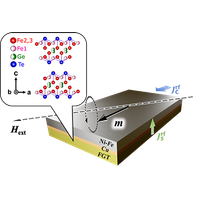
We investigate the spin Hall effect (SHE) in a van der Waals (vdW) ferromagnet Fe5GeTe2 (FGT) with a Curie temperature TC of 310 K utilizing the spin-torque ferromagnetic resonance method. The effective spin Hall conductivity is clearly enhanced with decreasing temperature, unlike the anomalous Hall conductivity, reflecting the variation in the band structure accompanied by the complicated magnetic ordering of the FGT. The results provide a deep understanding of the SHE in magnetic materials to open a new route for novel functionalities in vdW materials-based spintronic devices.

Sluggish phase-transition kinetics and extended critical correlations in relaxor ferroelectrics

Masato Matsuura, Kenji Ohwada, Shinya Tsukada, Akihiko Machida, Tatsuya Kikuchi, and Young-Soo Han

Phys. Rev. Materials 10, L091402 (2026) - Published 8 September, 2026

Why do relaxor ferroelectrics exhibit giant dielectric and piezoelectric responses over such a broad temperature range? By combining rapid-cooling synchrotron x-ray diffraction with neutron scattering, this work shows that phase transitions in PMN-xPT are remarkably sluggish and can even be bypassed by fast cooling. At the same time, the polar nanoregions display scale-free critical correlations in both space and time over the temperature range where the giant response appears. These results suggest that slow phase-transition kinetics sustain an extended critical state, providing a new physical picture for the origin of giant relaxor responses.

Experimental three-dimensional dendrite tip shape characterization by interferometry and phase-field comparison during columnar directional solidification

Mehdi Medjkoune, Trevor Lyons, Fatima L. Mota, Jiefu Tian, Kaihua Ji, Louise Littles, Alain Karma, and Nathalie Bergeon

Phys. Rev. Materials 10, 093401 (2026) - Published 4 September, 2026

Machine learning interatomic potentials for solid-state precipitation

Lorenzo Piersante and Anirudh Raju Natarajan

Phys. Rev. Materials 10, 093802 (2026) - Published 4 September, 2026

Machine-learning interatomic potentials now model complex alloys with near ab initio precision, but two challenges persist. Researchers must generate training data tailored to the physical process of interest, and they need validation metrics that go beyond simple statistical errors. Here the authors introduce a crystal-symmetry-based enumeration scheme for structural phase transformations in multicomponent alloys and a semi-grand-canonical Kendall-τ that quantifies thermodynamic accuracy across composition. These tools yield a general-purpose Mg-Nd potential. Simulations reveal a subtle interplay between chemical ordering and structural rearrangement and elucidate the continuous hcp-to-bcc transition underlying precipitation in this alloy.

Contrasting structural reversibility and magnetic correlations in isostructural honeycomb magnets CrCl3 and α−RuCl3

Zachary Morgan, Iris Ye, Jiasen Guo, Michael A. McGuire, and Jiaqiang Yan

Phys. Rev. Materials 10, 094001 (2026) - Published 3 September, 2026

The layered honeycomb antiferromagnets CrCl₃ and α-RuCl₃ undergo similar first-order, temperature-driven layer-stacking rearrangements, yet respond remarkably differently to thermal cycling. CrCl₃ evolves smoothly through the transition and remains largely reversible, whereas α-RuCl₃ shows an abrupt in-plane lattice discontinuity and accumulates structural disorder upon repeated cycling. Their magnetic correlations are also distinct, with diffuse magnetic scattering in CrCl₃ persisting to ~40 K, well above its ordering temperature, while no comparable quasi-static correlations are observed in α-RuCl₃. These contrasts point to markedly different coupling between layer stacking, strain, and magnetism.

Element- and atomic-layer-resolved detection of surface magnetism via x-ray-excited tunneling

Sineth Premarathna, Kyaw Zin Latt, Nozomi Shirato, Sarah Wieghold, Daniel Rosenmann, Alex Taekyung Lee, Anh T. Ngo, Volker Rose, and Saw Wai Hla

Phys. Rev. Materials 10, L091401 (2026) - Published 1 September, 2026

Magnetism sensitive only to the outermost atomic layer of a material is difficult to detect by x-rays. This is demonstrated using synchrotron x-ray scanning tunneling microscopy in spectroscopic mode, which simultaneously measures ensemble-averaged and surface-atomic-layer magnetism in an ultrathin Ni film. X-ray magnetic circular dichroism reveals an enhancement of orbital and spin magnetic moments in the outermost layer relative to the film average. This work opens a new experimental route for quantitative, element-specific magnetometry with atomic-layer sensitivity.

Efficient creation of shallow NV− ensembles by high-angle ion implantation

Kento Sasaki, Hideyuki Watanabe, Tokuyuki Teraji, Takashi Taniguchi, Kenji Watanabe, and Kensuke Kobayashi

Phys. Rev. Materials 10, 086202 (2026) - Published 11 August, 2026

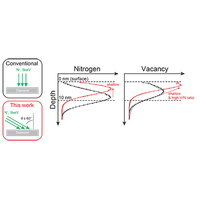
Nitrogen-vacancy centers in diamond are widely used as quantum sensors, but creating shallow ensembles with high yield and reasonable spin coherence remains challenging. We show that high-angle nitrogen ion implantation efficiently forms shallow NV ensembles. Implanting ions at angles above 60° gives NV yields approaching 10% with effective depths below 10 nm. The oblique geometry enhances near-surface vacancy generation while keeping nitrogen close to the surface, improving the conditions for NV formation. The resulting ensembles retain stable charge states and useful spin coherence, offering a practical platform for nanoscale NMR and NQR sensing.

Charge-to-spin conversion in epitaxial and polycrystalline Bi and Bi/Ag layers

Federica Nasr, Emir Karadža, Santos F. Alvarado, Federico Binda, Tobias Goldenberger, Carlo Zucchetti, Myriam H. Aguirre, Paolo Moras, Andrey V. Matetskiy, Polina M. Sheverdyaeva, Paul Noël, and Pietro Gambardella

Phys. Rev. Materials 10, 074406 (2026) - Published 9 July, 2026

Bismuth is a promising spin current generator owing to its strong spin–orbit coupling, spin-polarized surface states, and large intrinsic spin Hall conductivity predicted by theory. Yet experimental reports of spin–charge interconversion efficiencies remain remarkably inconsistent. The authors compare structural, spectroscopic, and spin–orbit torque measurements of epitaxial and polycrystalline Bi layers in combination with different metal spacers and ferromagnets. The results reveal extensive interdiffusion and dewetting unless Ag overlayers are used to preserve the structural and chemical integrity of Bi, unlocking a giant bulk spin Hall angle exceeding unity and highlighting the potential of Bi for spintronic applications.

Facilitating electrical and laser-induced skyrmion nucleation with a dipolar-field-enhanced effective Dzyaloshinskii-Moriya interaction

Mark C. H. de Jong, Dinar Khusyainov, Julian Hintermayr, Bart Sanders, Dmitry Kozodaev, Aleksei V. Kimel, Bert Koopmans, Theo H. M. Rasing, and Reinoud Lavrijsen

Phys. Rev. Materials 10, 064415 (2026) - Published 29 June, 2026

Magnetic skyrmions are promising nanoscale information carriers, but creating them efficiently remains a central challenge. Here the authors show that a multilayer’s own dipolar field can be turned from a complication into a design tool. By reversing the Ir/Co/Pt stacking order in half of the film, the layer-resolved Dzyaloshinskii–Moriya interaction is made to work with, rather than against, the dipolar field. This dipolar-field-enhanced effective DMI enables both nanosecond current pulses and femtosecond laser pulses to generate up to twenty times denser, more stable skyrmion populations—without substantially changing the nucleation threshold.

Sign In to Your Journals Account

Filter

Section

Filter

Article Lookup

Enter a citation