Highlights

Influence of solute induced memory on interface migration

Chad W. Sinclair and Joerg Rottler

Phys. Rev. Materials 9, 123402 (2025) - Published 16 December, 2025

This work offers a new perspective on the kinetic properties of interfaces in crystalline materials, showing that linear-response theory fails at low temperatures and low driving forces in the presence of solute atoms where memory effects cannot be ignored. A time-local (TCL) propagator approach is developed to extrapolate from short, memory-containing trajectories to the long-time diffusive behavior of the interface. This provides a method to overcome time-scale limitations in atomistic simulations and obtain the coarse-grained information needed for continuum models.

New family of square net materials: Rare-earth diantimonides

Matteo Michiardi, Fabian Arnold, Ganapathy Vaitheeswaran, Ryan P. Day, Karl Fischer, Gummula Shwetha, Venkatakrishnan Kanchana, Davide Curcio, Klara Volckaert, Marco Bianchi, Ilya S. Elfimov, Bo Brummerstedt Iversen, Andrea Damascelli, and Philip Hofmann

Phys. Rev. Materials 9, 124201 (2025) - Published 9 December, 2025

Square-net Dirac semimetals like ZrSiS and SrMnBi₂ have attracted intense interest for their topologically protected electronic states and exceptional transport properties. The authors introduce rare-earth diantimonides (RSb₂) as a distinct new family that breaks new ground in this evolving field. Unlike the well studied tetragonal P4/nmm and I4/mmm families, RSb₂ compounds crystallize in an orthorhombic Cmca structure featuring staggered antimony square nets. Through comprehensive spectroscopic studies of LaSb₂, they reveal how this unique structure generates a double nodal-line topology with graphene-comparable Fermi velocities. The broken local symmetry further enables a Rashba-2 effect, providing layer-dependent spin polarization within a centrosymmetric bulk. This discovery significantly expands the square-net materials landscape, establishing RSb₂ as a versatile platform for exploring novel topological phenomena and potential spintronic applications.

Concurrence of large anomalous Hall and topological Hall effects in ferromagnet Mn5Ge3

Junfa Lin, Jianfeng Guo, Huan Wang, Xiaoyan Wang, Sheng Xu, Xiangyu Zeng, Yu Zhang, Zhihai Cheng, and Tian-Long Xia

Phys. Rev. Materials 9, 124403 (2025) - Published 5 December, 2025

Novel Hall phenomena are observed in centrosymmetric Mn5Ge3 ferromagnet. Contrary to the typical behavior observed in most ferromagnets, the large anomalous Hall effect is strongly suppressed at low temperatures, giving way to a dominant ordinary Hall effect that is well described by a two-band model. This unique temperature dependence suggests a competition between intrinsic and skew-scattering mechanisms. Furthermore, this work identifies two distinct origins of the topological Hall effect: one arising from non-collinear spin textures and the other from skyrmion bubbles. These findings offer new insights into both the anomalous and topological Hall effects.

Depletion region width of a ferroelectric heterostructure interface by surface potential measurements under illumination

A. Bagard, C. Hu, X. Henning, T. Fix, M. Lenertz, A. Dinia, S. Colis, and M. V. Rastei

Phys. Rev. Materials 9, 123801 (2025) - Published 1 December, 2025

A method for measuring the depletion region width at oxide heterostructure interfaces is developed. It is demonstrated on bismuth ferrite–chromite thin films that exhibit p-type behavior and form a p–n-like junction when grown on a Nb-doped strontium titanate substrate. Using surface photovoltage measurements with Kelvin probe force microscopy under illumination on films of different thicknesses, a maximum SPV response is identified, revealing the depletion region width. This width also enables estimation of the acceptor concentration in the film, providing a non-destructive approach to probing ferroelectric heterostructures.

Room temperature magnetic vortices in the van der Waals magnet Fe5GeTe2

Elias Sfeir, Carolin Schrader, Florentin Fabre, Jules Courtin, Céline Vergnaud, Alain Marty, Matthieu Jamet, Frédéric Bonell, Isabelle Robert-Philip, Vincent Jacques, and Aurore Finco

Phys. Rev. Materials 9, 114003 (2025) - Published 21 November, 2025

Confinement is an efficient approach to manipulate magnetic materials in order to stabilize complex states. In this work, the authors demonstrate its effect on a room-temperature van der Waals ferromagnet, Fe5GeTe2 using scanning NV center microscopy. They locally measure the magnetization in microstructures and reveal the presence of vortices as their ground state. The stray field images also highlight the effect of the size of the patterned structures on the stabilization of the vortices, in agreement with micromagnetic simulations, thus proposing a way to control noncollinear textures in van der Waals magnets.

Giant current-direction dependence of anisotropic magnetoresistance and ultralow damping in single-crystal FeNi(001) alloy films

Yuanfei Fan, Haoran Chen, Hongyue Xu, Tong Wu, Yunzhuo Wu, Yizi Feng, Yue Chen, Zhe Yuan, and Yizheng Wu

Phys. Rev. Materials 9, 114411 (2025) - Published 14 November, 2025

This work reveals a giant, current-direction-dependent anisotropic magnetoresistance (AMR) in single-crystal bcc FeNi alloys. The authors demonstrate that the AMR ratio for current along the [100] versus [110] crystal directions reaches a record 87 at 5 K. This effect exhibits a dramatic, nearly tenfold enhancement upon cooling—unlike the temperature-stable AMR observed in CoFe alloys. They further show that this material concurrently exhibits ultralow Gilbert damping (~2.3×10⁻³) with negligible dependence on magnetization orientation. The unique combination of a giant, tunable magnetoresistance and low damping establishes bcc FeNi as a promising candidate for advanced magnetic memory and sensing technologies.

Interplay of S=5/2 spin-tetramer cluster magnetism and magnetodielectric effect in polar Ba6Nd2Fe4O15

Y. K. Lin, Ajay Tiwari, C. W. Wang, J.-Y. Lin, M.-J. Hsieh, T. W. Yen, Y. C. Chuang, Y. C. Lai, Arkadeb Pal, H. D. Yang, and D. Chandrasekhar Kakarla

Phys. Rev. Materials 9, 114407 (2025) - Published 12 November, 2025

Cluster magnetism has emerged as a fertile platform for exploring unconventional magnetic and dielectric phenomena in complex oxides. In the polar compound Ba6Nd2Fe4O15, a detailed examination of temperature- and field-dependent magnetic, thermal, and dielectric properties reveals a distinct field-induced transition from an antiferromagnetic to a ferrimagnetic phase, accompanied by pronounced magnetodielectric coupling. The study establishes a direct connection between spin tetramer interactions and lattice polarization, demonstrating how localized spin clusters mediate strong cross-correlations between electric and magnetic orders. These results deepen the understanding of cluster-based magnetodielectric phenomena and their microscopic origins in polar magnetic oxides.

Computational search for materials having a giant anomalous Hall effect in the pyrochlore and spinel crystal structures

Sean Sullivan, Seungjun Lee, Nathan J. Szymanski, Amil Merchant, Ekin Dogus Cubuk, Tony Low, and Christopher J. Bartel

Phys. Rev. Materials 9, 114409 (2025) - Published 12 November, 2025

Oxides in the pyrochlore and spinel crystal structures have the potential to host topological flat bands and exhibit the anomalous Hall effect. This work uses high-throughput density functional theory calculations to search for new magnetic oxides in these structures. The results indicate several new candidates for synthesis and reveal new understanding about the crystal chemistry of this class of materials.

Linking acoustic emission signals to deformation mechanisms in magnesium

Shimon Bettan, Emil Bronstein, Hanus Seiner, Petr Sedlak, Martin Koller, Doron Shilo, and Eilon Faran

Phys. Rev. Materials 9, 103805 (2025) - Published 31 October, 2025

Understanding a material’s behavior requires insight into how microscopic deformation mechanisms evolve, but identifying these processes at the level of individual microscopic events is a major challenge. Here, the authors present a physics-guided, data-driven spectral analysis of acoustic emission (AE) signals to classify individual deformation events in a magnesium single crystal. The analysis links AE frequency signatures to twinning and slip mechanisms and validates them through resonance ultrasound spectroscopy and modal calculations. Thus, the study achieves unsupervised classification of deformation events, uncovering the transition from twinning-dominant to slip-dominant behavior. This approach offers a new pathway for mechanism-specific monitoring of damage evolution.

Determining exciton binding energy and reduced effective mass in metal tri-halide perovskites from optical and impedance spectroscopy measurements

K. Lizárraga, J. A. Guerra, L. A. Enrique-Moran, E. Serquen, E. Ventura, Cesar E. P. Villegas, A. R. Rocha, and P. Venezuela

Phys. Rev. Materials 9, 103806 (2025) - Published 31 October, 2025

This work presents a new method to accurately determine exciton binding energy and reduced effective mass in bulk halide perovskites by accounting for polarization effects from carrier-phonon interactions. The exciton-polaron binding energy is estimated using optical absorption measurements and the Elliott-based Band Fluctuations (EBF) model. The reduced effective mass is then derived by combining the results from the EBF model with the Pollmann-Buettner exciton-polaron theory, which incorporates electron-phonon coupling by leaving in consideration the ionic and electronic dielectric responses, as well as the LO phonon energy. When applied to ABX3 perovskites (A = MA, FA, Cs; B = Pb; X = I, Br, Cl), this approach shows excellent agreement with magnetoabsorption and other optical-resolved methods, confirming its accuracy and broad applicability which could be extended to other polar systems.

Tuning magnetic ground states of RMn6Sn6 (R = Lu, Mg) kagome metals by dimensionality reduction: Route to ferromagnetism and large anomalous Hall effect

Rajdeep Biswas, Jyoti Sharma, Aftab Alam, and Tanusri Saha Dasgupta

Phys. Rev. Materials 9, 104205 (2025) - Published 30 October, 2025

By employing computational methods, the authors have demonstrated that dimensionality reduction provides an effective strategy for engineering electronic and magnetic structures. Specifically, starting from the bulk Kagome parent compound RMn6Sn6 (R = Lu, Mg), this approach has led to the design of ferromagnetic thin films RMn6Sn8, where the RKKY interaction stabilizes robust ferromagnetism. These films exhibit Weyl states, nontrivial band crossings, large Berry curvature, and a pronounced anomalous Hall effect. As Kagome metallic Weyl ferromagnets, these 2D structures combine strong magnetism with nontrivial topology, offering pathways for spintronics, low-power memory, Hall sensors, and energy-efficient device engineering.

Detachment-limited interlayer transport processes during SrTiO3 pulsed laser epitaxy

Jeffrey G. Ulbrandt, Xiaozhi Zhang, and Randall L. Headrick

Phys. Rev. Materials 9, 103405 (2025) - Published 29 October, 2025

Understanding atomistic transport mechanisms during pulsed laser deposition (PLD) remains a central challenge for the synthesis of complex oxide thin films. This study combines time-resolved X-ray scattering and kinetic Monte Carlo simulations to reveal the dynamics of a two-stage relaxation process following each laser pulse. Fast nonthermal transport is followed by slower detachment-limited ripening of transient islands, showing how local coordination-dependent energy barriers govern interlayer mass transport. These findings provide new insight into PLD growth dynamics and demonstrate how the specular and diffuse scattering captures both vertical and lateral surface evolution on submonolayer length and time scales.

Accelerating the development of oxynitride thin films: A combinatorial investigation of the Al-Si-O-N system

Stefanie Frick, Oleksandr Pshyk, Arnold Müller, Alexander Wieczorek, Kerstin Thorwarth, and Sebastian Siol

Phys. Rev. Materials 9, 103803 (2025) - Published 24 October, 2025

The material class of oxynitrides shows remarkable versatility due to the substantial tuneability of their functional properties via the O/N-ratio. To accelerate oxynitride coating development, three different approaches are investigated in this study targeting the fabrication of orthogonal anion and cation gradients on a single substrate using combinatorial magnetron sputtering. To demonstrate the potential of the most effective approach, a proof-of-concept study on the quaternary Al-Si-O-N system was conducted, performing a comprehensive screening of mechanical and optical properties relevant for protective anti-reflection coatings.

Depth-resolved magnetic order in superconducting topological insulator/FeTe thin film heterostructures

Purnima P. Balakrishnan, Hemian Yi, Zi-Jie Yan, Wei Yuan, Andreas Suter, Christopher J. Jensen, Pascal Manuel, Fabio Orlandi, Takayasu Hanashima, Christy J. Kinane, Andrew J. Caruana, Dirk Backes, Padraic Shafer, Brian B. Maranville, Zaher Salman, Thomas Prokscha, Cui-Zu Chang, and Alexander J. Grutter

Phys. Rev. Materials 9, 104203 (2025) - Published 14 October, 2025

Despite being structurally and chemically similar to the prominent superconductor FeSe, FeTe is antiferromagnetic and non-superconducting in the bulk. While it has often been presumed that the magnetism and lack of superconductivity in this material are linked, findings relating the two yield conflicting results and are complicated by phase separation. Using a range of topologically nontrivial capping layers to stabilize interfacial FeTe superconductivity, the authors show that the suppression of the antiferromagnetic state in FeTe is unlikely to be the primary factor driving superconductivity. Instead, They find evidence that subtle changes in Fe content likely drive the transition.

Magnetic polaron formation in EuZn2P2

Matthew S. Cook, Elizabeth A. Peterson, Caitlin S. Kengle, E. R. Kennedy, J. Sheeran, Clément Girod, G. S. Freitas, Samuel M. Greer, Peter Abbamonte, P. G. Pagliuso, J. D. Thompson, Sean M. Thomas, and P. F. S. Rosa

Phys. Rev. Materials 9, 104403 (2025) - Published 2 October, 2025

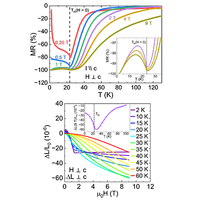
Colossal magnetoresistance (CMR) is widely observed in Eu-based semiconductors, despite the absence of the conventional mechanisms that drive CMR in the perovskite manganites. In this work, the authors demonstrate compelling evidence for magnetic polaron formation as the origin of CMR in antiferromagnetic EuZn2P2 using comprehensive analysis of electrical transport, magnetization, dilatometry, and electron spin resonance (ESR) measurements. A peak in the CMR response near the antiferromagnetic ordering temperature is accompanied by a field-induced lattice strain, while ESR analysis suggests strong ferromagnetic exchange interactions between Eu2+ moments and conduction electrons. The authors’ collective observations in EuZn2P2 support the view that magnetic polaron formation is central to the emergence of CMR in Eu2+-based compounds.

Optical properties of vacancies in aluminum oxide (α−Al2O3) from first principles

Christoph Wilhelmer, Mark E. Turiansky, Dominic Waldhör, Lukas Cvitkovich, Chris G. Van de Walle, and Tibor Grasser

Phys. Rev. Materials 9, 096202 (2025) - Published 30 September, 2025

Alumina (Al2O3) is widely used as a dielectric, in applications ranging from transistors to qubits. Defects can affect the functionality of such devices. In this work, the authors characterize optical transitions at vacancies in alumina from first principles. The results allow the attribution of experimental absorption and luminescence spectra to specific electronic transitions at the oxygen vacancy. The authors identify the origin of spectra related to the F and F+ centers, which have been debated for decades. They also analyze the stability of the aluminum vacancy in different configurations.

Nanoindentation simulations for copper and tungsten with adaptive-precision potentials

David Immel, Matous Mrovec, Ralf Drautz, and Godehard Sutmann

Phys. Rev. Materials 9, 093805 (2025) - Published 26 September, 2025

Modern machine learning (ML) potentials provide quantum accurate models of atomic interactions. They are, however, significantly more computationally expensive than much simpler empirical potentials, which limits applicability for large simulations. The authors show that adaptive-precision interatomic potentials (APIP) overcome the performance gap between accurate ML and fast empirical potentials by using the computationally less efficient ML potential only for specific, automatically detected atoms of interest. In nanoindentation simulations all observations obtained with an all ML-potential are reproduced by APIP, but with a 20-30 times speedup, while simulations with empirical potentials show qualitatively different results. Therefore, APIPs are beneficial for materials where simple empirical potentials are not appropriate.

Unraveling the role of disorder in the electronic structure of high entropy alloys

Neeraj Bhatt, Deepali Sharma, Asif Ali, Kapil Motla, Sonika Jangid, Ravi Prakash Singh, and Ravi Shankar Singh

Phys. Rev. Materials 9, L092001 (2025) - Published 26 September, 2025

The authors investigate the role of compositional and structural disorder on the transport, electronic and superconducting properties of osmium-based high entropy alloys. High resolution photoemission spectroscopic results reveal a suppression of electronic states at the Fermi energy, indicating localization of charge carriers in the presence of strong intrinsic disorder. Experimental results combined with theoretically computed electron-phonon coupling strength and superconducting transition temperatures suggest that disorder, crystal structure, and valence electron count collectively influence superconducting properties. This study provides a foundation for understanding disordered superconductors through strategic control of disorder and crystal structure.

Strong magneto-optical enhancement and magnetic anisotropy tuning in Ce-substituted yttrium iron garnet films grown in argon and oxygen

Junyoung Hyun, Lukáš Flajšman, Julius Hohlfeld, Lide Yao, Jani Sainio, and Sebastiaan van Dijken

Phys. Rev. Materials 9, 094405 (2025) - Published 8 September, 2025

Magneto-optical materials with low absorption enable nonreciprocal light propagation in photonic circuits. Cerium-substituted yttrium iron garnet (Ce:YIG) is particularly attractive due to its high Faraday rotation. In this paper, the effect of thickness and deposition atmosphere on the properties of Ce:YIG films is investigated. Pulsed laser deposition on (111) gadolinium gallium garnet substrates yields smooth, coherently strained films up to 220 nm thick. Growth in argon expands the out-of-plane lattice parameter, inducing perpendicular magnetic anisotropy, while oxygen-grown films exhibit in-plane magnetization. Argon-grown films show a twofold enhancement of Faraday rotation, reaching 5.0°/μm at 780 nm, linked to longer electronic relaxation times in the strained lattice.

Analysis of real-space transport channels for electrons and holes in halide perovskites

Frederik Vonhoff, Maximilian J. Schilcher, David R. Reichman, and David A. Egger

Phys. Rev. Materials 9, 094601 (2025) - Published 2 September, 2025

Carrier transport in halide perovskite semiconductors is difficult to predict computationally because these systems show unusual vibrational and electron-phonon coupling mechanism. The authors used a dynamic disorder model that was parameterized from first-principles to analyze temporal orbital occupations and investigate how material-specific on-site energy levels and spin-orbit coupling strengths influence carrier mobilities. They find that both on-site energy gaps and halide spin-orbit coupling significantly affect carrier dynamics driven by three transport channels, which helps explain the differing behaviors of electron and hole mobility across different halide perovskites.

Sign In to Your Journals Account

Filter

Section

Filter

Article Lookup

Enter a citation