Highlights

Long-range magnetic perturbations at Bi2Te3/Cr2Te3 interfaces induced by chemical diffusion and proximity effects

Markel Pardo-Almanza, Yuita Fujisawa, Takatsugu Onishi, Chia Hsiu Hsu, Alec P. LaGrow, and Yoshinori Okada

Phys. Rev. Materials 9, 034203 (2025) - Published 21 March, 2025

Designing emergent phenomena at heterointerfaces is highly appealing, yet understanding and controlling the length scales of underlying interactions and broken symmetries across the interface remains a ubiquitous challenge. This study reveals a realization of unexpectedly long-range magnetic perturbation extending up to the 5th quintuple layer in the Z2 topological insulator Bi2Te3 grown on a ferromagnetic Cr2Te3. This extended perturbation arises from the cooperative effects of Cr diffusion and the magnetic proximity effect. The findings offer a promising pathway for engineering topologically nontrivial electronic and magnetic states, broadly applicable to heterostructures integrating magnetic materials with distinct materials possessing strong spin-orbit coupling.

Atomic dynamics in MCrX2 (M=Ag,Cu;X=S,Se) across magnetic and superionic transitions

Jingxuan Ding, Md Towhidur Rahman, Chengjie Mao, Jennifer L. Niedziela, Dipanshu Bansal, Andrew F. May, Douglas L. Abernathy, Yang Ren, Alexandra Zevalkink, and Olivier Delaire

Phys. Rev. Materials 9, 035402 (2025) - Published 17 March, 2025

This work explores the atomic dynamics in layered chalcogenides (Ag,Cu)Cr(S,Se)2 across magnetic and superionic transitions. Combining neutron and x-ray scattering with first-principles simulations, the authors find low-energy vibration modes (phonons) with very strong anharmonicity, reflecting the weak bonding of the intercalated Cu or Ag ions vibrating in shallow potential energy wells. Upon warming, the Cu or Ag ions easily hop between two sublattices and the associated phonon modes break down into a quasielastic response. Because the Cr-Se crystalline framework remains robust, however, the long-wavelength transverse and longitudinal acoustic phonons do persist in the superionic phase. This work also examines the coupling between lattice dynamics and antiferromagnetic ordering in AgCrS2, and finds that magnetic quasielastic scattering in the paramagnetic phase is well separated from nuclear quasielastic associated with fast ionic diffusion. This work offers insights to guide the design of thermoelectric and electrolyte materials.

Altermagnetic behavior in OsO2: Parallels with RuO2

Parul R. Raghuvanshi, Tom Berlijn, David S. Parker, Shaofei Wang, Michael E. Manley, Raphaël P. Hermann, Lucas Lindsay, and Valentino R. Cooper

Phys. Rev. Materials 9, 034407 (2025) - Published 11 March, 2025

OsO2 is identified as mirroring RuO2 in its calculated antiferromagnetic behavior and momentum-dependent spin splitting, making it an altermagnetic material candidate. First-principles calculations reveal a crucial trade-off: OsO2’s lower Fermi velocities, while potentially limiting charge mobility, suggest enhanced stability for spintronic applications. Combined electronic and vibrational analyses, supported by Raman and neutron scattering data, highlight the intricate interplay of structure, magnetism, and lattice dynamics in both materials. While RuO2 is a well-established platform, this work positions OsO2 as a compelling, yet under-explored, candidate for future spintronic technologies, warranting further experimental investigation.

Microstructural and rheological training and memory of nanocolloidal soft glasses under cyclic shear

Yihao Chen, Simon A. Rogers, Suresh Narayanan, James L. Harden, and Robert L. Leheny

Phys. Rev. Materials 9, 025601 (2025) - Published 28 February, 2025

The ability to alter the properties of amorphous solids through mechanical deformation is an important engineering strategy and provides an insightful perspective into the nature of their out-of-equilibrium states. This study utilizes simultaneous rheology and coherent x-ray scattering to gain understanding of how repeated cyclic shear modifies a thermal, bulk (3D) nanocolloidal glass and further how a memory of this mechanical history becomes encoded such that it can be subsequently probed through mechanical and microstructural characterization. Connections are thereby established between rheological memory of soft glassy materials at microscopic and macroscopic scales.

Resolving local structural motifs across the phase evolution of zinc titanates with computational x-ray absorption spectroscopy

Xuance Jiang, Ruoshui Li, Dario J Stacchiola, Eli Stavitski, Xiaohui Qu, Mark S. Hybertsen, Mingzhao Liu, and Deyu Lu

Phys. Rev. Materials 9, 023802 (2025) - Published 21 February, 2025

Resolving the local structure motifs that characterize phase evolution is a key challenge in structure characterization of complex materials. The authors combined first-principles simulations with x-ray absorption near-edge structure (XANES) analysis to investigate phase evolution across a combinatorial zinc titanate thin film across a broad Ti:Zn composition range. They developed a cluster blind-signal-separation method to construct the XANES spectral basis from representative structural motifs, enabling the interpretation of the non-monotonic trend in optical gap and its underlying local structure changes. The workflow of the multimodal dataset analysis developed in this work can be generalized to construct the structure-property relationship across diverse material systems.

Physical properties of intergrowth compound Eu2CuZn2P3

Andrew F. May, Chihiro Tabata, Satoshi Okamoto, Brenden R. Ortiz, Andrew D. Christianson, Jiaqiang Yan, Koji Kaneko, and Michael A. McGuire

Phys. Rev. Materials 9, 024406 (2025) - Published 14 February, 2025

This study examines the coupling of magnetism and electrical transport in a quaternary material that is a natural heterostructure of ternary Zintl phases EuCuP and EuZn2P2. Neutron diffraction reveals a collinear antiferromagnetic structure composed of ferromagnetic EuCuP and antiferromagnetic EuZn2P2 motifs. Coupled to the onset of magnetic order is an unconventional Hall effect, which is observed as a broad maximum below the critical field. Theoretical calculations suggest an increase in the density of states upon magnetic polarization, indicating that the magnetic structure may modify the Fermi surface. The extent to which this behavior impacts the Hall effect in this and related Zintl phases needs further exploration.

Interfacial photovoltaic effects in ferroelectric Bi2FeCrO6 thin films

X. Henning, L. Schlur, L. Wendling, T. Fix, S. Colis, A. Dinia, M. Alexe, and M. V. Rastei

Phys. Rev. Materials 9, 024403 (2025) - Published 11 February, 2025

Ferroelectric Bi2FeCrO6 thin films on Nb-doped SrTiO3 substrates exhibit a pronounced photovoltaic effect provided by the space charge region of the interface, which can be modulated by the ferroelectric polarization direction. An upward polarization direction lowers the potential barrier of the interface, increasing the photovoltaic current, while a downward polarization increases the potential barrier, declining the photovoltaic current. Furthermore, in the absence of a significant space charge region, as is the case of Bi2FeCrO6 thin films on La2/3Sr1/3MnO3 substrates, the bulk photovoltaic effect, originating from the pristine symmetry breaking, dominates. This shows that the particular interfacial boundary conditions can select the type of the photovoltaic effect.

Controlling structural phases of Sn through lattice engineering

Chandima Kasun Edirisinghe, Anjali Rathore, Taegeon Lee, Daekwon Lee, An-Hsi Chen, Garrett Baucom, Eitan Hershkovitz, Anuradha Wijesinghe, Pradip Adhikari, Sinchul Yeom, Hong Seok Lee, Hyung-Kook Choi, Hyunsoo Kim, Mina Yoon, Honggyu Kim, Matthew Brahlek, Heesuk Rho, and Joon Sue Lee

Phys. Rev. Materials 9, 024202 (2025) - Published 10 February, 2025

Tin (Sn) stands out as a key quantum material due to its dual phases: α-Sn, with topological properties, and β-Sn, a superconductor. By precise tuning of the buffer layer lattice constant from 6.10 Å to 6.48 Å using molecular beam epitaxy, the authors achieve precise controlled growth of phase-pure Sn films. The experimental results, validated by theory, demonstrate unprecedented phase control over α-Sn and β-Sn. This work establishes a versatile platform for exploring topological phenomena and developing next-generation Sn-based quantum devices, unlocking possibilities in quantum materials and semiconductor technologies.

Exploring the energy landscape of aluminas through machine learning interatomic potential

Lei Zhang, Wenhao Luo, Renxi Liu, Mohan Chen, Zhongbo Yan, and Kun Cao

Phys. Rev. Materials 9, 023801 (2025) - Published 7 February, 2025

Despite the widespread applications of alumina due to its rich polymorphism, the structures of many transitional aluminas remain unresolved. This work employs the neuroevolution potential (NEP) approach to accurately describe polymorphic aluminas. Its accuracy and generality are validated through molecular dynamics simulations under diverse thermodynamic and structural conditions. A structural search workflow has also been developed based on NEP, which, in conjunction with spectroscopic data and structural stability considerations, supports the energetic preference of the Smrčok model over the Luo model for γ-Al2O3. This methodological framework provides a systematic approach for exploring polymorphic materials with intrinsic defects, such as Ga2O3.

Electronic structure and topology in gulf-edged zigzag graphene nanoribbons

Tsai-Jung Liu, Florian M. Arnold, Alireza Ghasemifard, Qing-Long Liu, Dorothea Golze, Agnieszka Kuc, and Thomas Heine

Phys. Rev. Materials 9, 014203 (2025) - Published 30 January, 2025

This study explores a unique class of graphene nanoribbons, the gulf-edged zigzag graphene nanoribbons (ZGNR-Gs), created by introducing bite-like patterns along the zigzag edges. The authors demonstrate a strong relationship between geometric structure and electronic properties, including magnetism and topological properties. They present simple rules to predict these properties based on four geometric parameters that fully characterize the structure. Using advanced computational models, they find that these nanoribbons act as semiconductors and exhibit spin-polarized, antiferromagnetically coupled edge states. Their discoveries facilitate the rational design of planar carbon nanostructures for nanoelectronics and potentially for applications in quantum computing.

Adaptive energy reference for machine-learning models of the electronic density of states

Wei Bin How, Sanggyu Chong, Federico Grasselli, Kevin K. Huguenin-Dumittan, and Michele Ceriotti

Phys. Rev. Materials 9, 013802 (2025) - Published 22 January, 2025

Machine learning methods for predicting electronic density of states often assume that the model predictions and targets share the same absolute energy reference. However, this overlooks a subtle point, that the absolute energy reference cannot be defined for infinite bulk systems due to the conditionally convergent nature of electrostatic potentials. This paper introduces a training framework that uses a self-aligning loss function to provide an adaptive energy reference during training. Models trained using this framework outperform those relying on fixed conventional internal energy references, like the Fermi level or average Hartree potential. The paper also sheds insights on how the adaptive reference enhances model performance and identifies the conditions under which they are the most effective.

Spectrally resolved far-field emission pattern of single photon emitters in MoS2

Katja Barthelmi, Tomer Amit, Lukas Sigl, Mirco Troue, Thomas Klokkers, Anna Herrmann, Takashi Taniguchi, Kenji Watanabe, Jonathan Finley, Christoph Kastl, Sivan Refaely-Abramson, and Alexander Holleitner

Phys. Rev. Materials 9, 016201 (2025) - Published 8 January, 2025

Single-sulfur vacancies in monolayer MoS2 can act as single photon emitters. Ab initio theory predicts sub-bandgap emission lines, which have never been resolved in corresponding luminescence experiments because of their small amplitude. The demonstrated experimental results reveal the lines of the single photon emitters by their dependence as a function of the photon energy and momentum as measured in the back focal plane of the optical circuitry. The agreement between theory and experiment suggests that the defect states interact strongly within the Brillouin zone.

Evidence of antiferromagnetism in ultrathin metallic (111)-oriented LaNiO3 films

Margaret Kane, Purnima P. Balakrishnan, Okan Köksal, Megan Holtz, Andreas Suter, Michael R. Fitzsimmons, Chao-Yao Yang, Christoph Klewe, Paige Quarterman, Timothy R. Charlton, Andrew A. Herzing, Zaher Salman, Thomas Prokscha, Rossitza Pentcheva, Alexander J. Grutter, and Yuri Suzuki

Phys. Rev. Materials 8, 124406 (2024) - Published 11 December, 2024

Ultrathin (111)-oriented epitaxial LaNiO3 films stabilize an antiferromagnetic ground state in contrast to bulk LaNiO3, which is acknowledged to be a paramagnetic metal. This emergent ground state is governed by a symmetry-breaking interface that places the (111) LaNiO3 film under extremely high epitaxial strain. The stabilization of thickness-dependent antiferromagnetic metallic and insulating states highlights the role of crystal symmetry in tuning the quantum states in complex oxides.

Origins of background signal effects in all-metallic non-local spin valves

A. J. Wright, D. Bromley, J. Watts, J. Ramberger, B. Kaiser, M. J. Erickson, P. A. Crowell, C. Leighton, and L. O’Brien

Phys. Rev. Materials 8, 124402 (2024) - Published 3 December, 2024

Background signals in non-local spin valves can hinder the interpretation of spin signals and could compromise performance in future devices. This work comprehensively investigates these background signals across a variety of ferromagnetic (Ni80Fe20, Fe, Co) and non-magnetic (Al, Cu) metals, using experimental measurements paired with three-dimensional finite element method simulations. The authors reveal the complex dependence of current spreading and thermoelectric effects on temperature, device dimensions and material pairings, giving rise to non-trivial background signals. They find excellent agreement between experiment and simulations across broad phase space, providing an insight into charge and heat transport in nanoscopic spintronic devices

Threshold displacement energies in refractory high-entropy alloys

J. Byggmästar, F. Djurabekova, and K. Nordlund

Phys. Rev. Materials 8, 115406 (2024) - Published 21 November, 2024

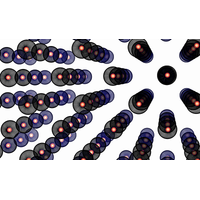
Atomic simulations deepen the mystery of how engineered materials known as refractory high-entropy alloys can suffer so little damage by radiation.

Atomistic modeling of bulk and grain boundary diffusion in solid electrolyte Li6PS5Cl using machine-learning interatomic potentials

Yongliang Ou, Yuji Ikeda, Lena Scholz, Sergiy Divinski, Felix Fritzen, and Blazej Grabowski

Phys. Rev. Materials 8, 115407 (2024) - Published 21 November, 2024

Harnessing the potential of solid-state electrolytes is crucial for advancing all-solid-state lithium-ion batteries, yet the role of grain boundaries (GBs) in ionic conductivity remains poorly understood. The authors present an active learning approach to develop machine-learning interatomic potentials with high accuracy, enabling large-scale, long-term simulations of complex GBs in polycrystalline Li6PS5Cl. Intercage diffusion of Li ions near GBs, triggered by the “cage-opening effect” of GBs, is notably observed. These findings offer key insights into optimizing ionic transport in solid electrolytes, paving the way for improved performance in next-generation battery technologies.

Migration and clustering of early-stage irradiation damage in vanadium

Anna Liski, Eryang Lu, Ilja Makkonen, Zhehao Chen, Kenichiro Mizohata, and Filip Tuomisto

Phys. Rev. Materials 8, 113602 (2024) - Published 15 November, 2024

The early stages of irradiation damage are characterized by the formation of monovacancy defects and self-interstitial atoms (SIAs). With increasing damage levels, these point defects migrate and eventually cluster to form larger structures such as voids or dislocation loops. Temperature-activated migration of these elementary point defects controls the self-healing processes. In this work, the authors use positron annihilation spectroscopy to monitor the defect evolution in vanadium from 35 K until the full recovery of the irradiation-induced defects at 500 K. They identify recovery stages each related to the migration of a separate defect species: SIAs, mono-vacancies, vacancy clusters, and multivacancy-hydrogen complexes.

Defect energy formalism for CALPHAD thermodynamics of dilute point defects: Theory

Amir M. Orvati Movaffagh, Adetoye Adekoya, and Sara Kadkhodaei

Phys. Rev. Materials 8, 113802 (2024) - Published 8 November, 2024

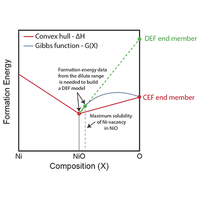
Defects in semiconducting compounds regulate charge carrier density and, consequently, the electrical properties, directly impacting the performance of electronic devices such as thermoelectrics, transistors, and solar cells. While traditionally, the Gibbs energy for defective compounds has been developed empirically, this study introduces a theoretical framework that directly connects defect energetics at electronic and atomic levels to a universally parameterized Gibbs energy function in the dilute range. This universal parameterization enables a consistent description of Gibbs energy across varying coexistence conditions, accommodating different chemical potentials and Fermi levels. This formalism for defect energy represents a significant advancement in the first-principles parameterization of the thermodynamics of defective compounds.

Anomalous proximitized transport in metal/quantum magnet heterostructure Bi2Ir2O7/Yb2Ti2O7

Chengkun Xing, Shu Zhang, Weiliang Yao, Dapeng Cui, Qing Huang, Junyi Yang, Shashi Pandey, Dongliang Gong, Lukas Horák, Yan Xin, Eun Sang Choi, Yang Zhang, Haidong Zhou, and Jian Liu

Phys. Rev. Materials 8, 114407 (2024) - Published 5 November, 2024

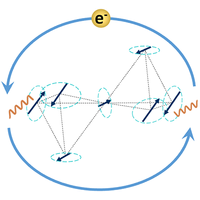
Quantum mechanics permits entanglement and state-tunneling of spins, enabling magnetic materials to rapidly alter configurations without energy expenditure. However, strong quantum spin fluctuations typically arise in nonconductive frustrated magnets, limiting their technological application. The authors demonstrate that an epitaxial conductive film grown on an insulating magnetic substrate exhibits resistance behaviors reflective of the substrate’s quantum spin fluctuations. This correlation is evident across various temperatures and magnetic fields, showcasing excellent controls. Their findings suggest a novel proximitized transport approach to mediating electronic behaviors by quantum spin fluctuations and harnessing insulating quantum magnets for advanced spin electronics.

Size-dependent fracture in elastomers: Experiments and continuum modeling

Jaehee Lee, Jeongun Lee, Seounghee Yun, Sanha Kim, Howon Lee, Shawn A. Chester, and Hansohl Cho

Phys. Rev. Materials 8, 115602 (2024) - Published 5 November, 2024

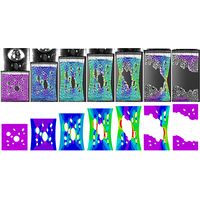
Highly stretchable elastomeric materials often exhibit size-dependent, nonlocal features in damage and fracture processes. This study investigates the nonlocal fracture behavior in a broad variety of elastomers which display moderate to extreme stretchability by means of experiments and numerical simulations. The authors highlight that the experimentally observed size-dependent fracture is accurately described by a nonlocal continuum model that makes use of an intrinsic length scale associated with a finite fracture process zone in diverse synthetic elastomers.

Sign In to Your Journals Account

Filter

Section

Filter

Article Lookup

Enter a citation