Browse by Subject

Traveling-Wave Parametric Amplifier with Passive Reverse Isolation

C. S. Kow and M. T. Bell

Phys. Rev. X 16, 021003 (2026) - Published 3 April, 2026

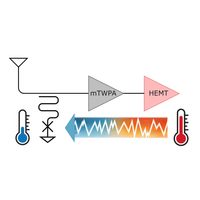
By integrating passive reverse isolation into a multistage architecture, a new traveling-wave parametric amplifier with near-quantum-limited performance protects sensitive qubits from thermal backaction, enabling a scalable isolator-free readout architecture for superconducting quantum computers.

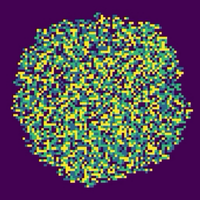
Fermion Quantum Criticality far from Equilibrium

Rohan Mittal, Tom Zander, Johannes Lang, and Sebastian Diehl

Phys. Rev. X 16, 011069 (2026) - Published 30 March, 2026

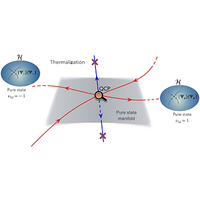
A new nonequilibrium universality class for fermions is identified. It displays an emergent “dark state symmetry” that protects quantum criticality, requiring only a single tuning parameter.

Fast Scrambling at the Boundary

Ancel Larzul, Anirvan M. Sengupta, Antoine Georges, and Marco Schirò

Phys. Rev. X 16, 011067 (2026) - Published 26 March, 2026

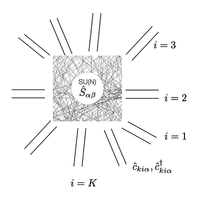
Researchers find that a simple boundary quantum spin in the multichannel Kondo model can scramble information as fast as the most complex random systems, revealing a link between impurity physics and fast scramblers.

Resource-Theoretical Unification of Mpemba Effects: Classical and Quantum

Alessandro Summer, Mattia Moroder, Laetitia P. Bettmann, Xhek Turkeshi, Iman Marvian, and John Goold

Phys. Rev. X 16, 011065 (2026) - Published 25 March, 2026

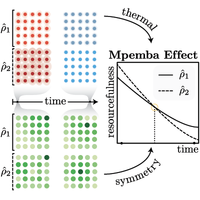
A unified theory of Mpemba effects across a variety of contexts is provided using resource theories. Faster relaxation occurs when states with a larger amount of resources have a smaller overlap with the slowest resourceful relaxation channel.

Slow Quasiparticle Dynamics and Anyonic Statistics in a Fractional Quantum Hall Fabry-Pérot Interferometer

Noah L. Samuelson, Liam A. Cohen, Will Wang, Simon Blanch, Takashi Taniguchi, Kenji Watanabe, Michael P. Zaletel, and Andrea F. Young

Phys. Rev. X 16, 011062 (2026) - Published 23 March, 2026

Anyons, collective excitations of fractional quantum Hall systems, are shown to exhibit unprecedented stability in graphene heterostructures, enabling their practical manipulation for use in fault-tolerant quantum computing.

High-Fidelity Control of a C13 Nuclear Spin Coupled to a Tin-Vacancy Center in Diamond

Jeremias Resch, Ioannis Karapatzakis, Mohamed Elshorbagy, Marcel Schrodin, Philipp Fuchs, Philipp Graßhoff, Luis Kussi, Christoph Sürgers, Cyril Popov, Christoph Becher, Wolfgang Wernsdorfer, and David Hunger

Phys. Rev. X 16, 011060 (2026) - Published 19 March, 2026

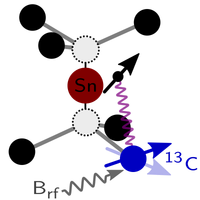
High-fidelity control of a 13C nuclear spin coupled to a tin-vacancy center yields coherence times exceeding 1.35 s using a superconducting waveguide, highlighting the potential of the tin-vacancy center as a coherent spin-photon interface for future quantum network applications.

Fast Sideband Control of a Multimode Cavity Memory with Weak Dispersive Coupling to a Transmon

Jordan Huang, Thomas J. DiNapoli, Gavin Rockwood, Ming Yuan, Prathyankara Narasimhan, Eesh Gupta, Mustafa Bal, Francesco Crisa, Sabrina Garattoni, Yao Lu, Liang Jiang, and Srivatsan Chakram

Phys. Rev. X 16, 011058 (2026) - Published 17 March, 2026

Researchers use fast “sideband control” to swap quantum information between a processor and a superconducting-cavity memory far faster than traditional dispersive methods, even when the two are only weakly coupled. This enables robust encoding gates and reliable quantum storage in high-quality superconducting cavities.

Stabilization of Cat-State Manifolds Using Nonlinear Reservoir Engineering

Ivan Rojkov, Matteo Simoni, Elias Zapusek, Florentin Reiter, and Jonathan Home

Phys. Rev. X 16, 011056 (2026) - Published 13 March, 2026

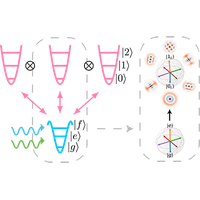
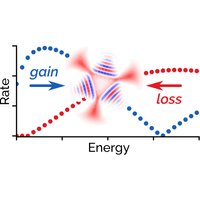
A nonlinear reservoir engineering approach is proposed, enabling the stabilization and error correction of multicomponent Schrödinger cat manifolds through the destructive interference of nonlinear gain and loss processes.

Floquet Thermalization via Instantons near Dynamical Freezing

Rohit Mukherjee, Haoyu Guo, and Debanjan Chowdhury

Phys. Rev. X 16, 011041 (2026) - Published 27 February, 2026

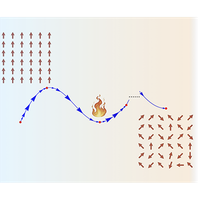
Researchers use flow renormalization to reveal that rare, sudden events called instantons puncture frozen states blocking the dynamics in periodically driven systems, triggering slow thermalization.

Thermalization in Open Many-Body Systems and KMS Detailed Balance

Matteo Scandi and Álvaro M. Alhambra

Phys. Rev. X 16, 011040 (2026) - Published 27 February, 2026

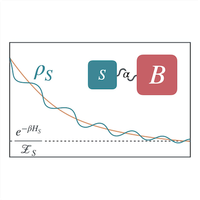
A new many-body thermalization model is derived using KMS detailed balance that avoids the rotating wave approximation, enabling more accurate tracking of quantum dynamics and efficient simulation on quantum computers.

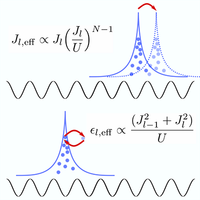
Quantum Theory of Fractional Topological Pumping of Lattice Solitons

Julius Bohm, Hugo Gerlitz, Christina Jörg, and Michael Fleischhauer

Phys. Rev. X 16, 011038 (2026) - Published 26 February, 2026

Self-bound many-particle objects (solitons) in topological pumps exhibit transitions between integer and fractional transport phases, controlled by interaction strength.

Emergent Random Matrix Universality in Quantum Operator Dynamics

Oliver Lunt, Thomas Kriecherbauer, Kenneth T-R McLaughlin, and Curt von Keyserlingk

Phys. Rev. X 16, 011033 (2026) - Published 23 February, 2026

Researchers prove that the dynamics of complex quantum operators has a universal random matrix description, enabling a new “spectral bootstrap” algorithm to accurately calculate physical properties like conductivities.

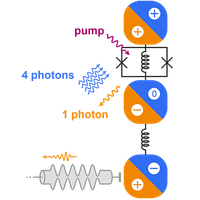
Dissipating Quartets of Excitations in a Superconducting Circuit

A. Vanselow, B. Beauseigneur, L. Lattier, M. Villiers, A. Denis, P. Morfin, Z. Leghtas, and P. Campagne-Ibarcq

Phys. Rev. X 16, 011032 (2026) - Published 23 February, 2026

Four-photon dissipation in superconducting circuits moves quantum hardware toward stronger error protection.

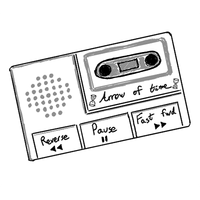
Reshaping the Quantum Arrow of Time

Luis Pedro García-Pintos, Yi-Kai Liu, and Alexey V. Gorshkov

Phys. Rev. X 16, 011028 (2026) - Published 19 February, 2026

A quantum control Hamiltonian is developed that can blur or even reverse the perceived arrow of time in monitored systems, enabling new ways to emulate backward-in-time dynamics and extract energy to power measurement-driven engines.

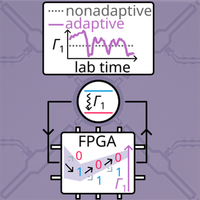
Real-Time Adaptive Tracking of Fluctuating Relaxation Rates in Superconducting Qubits

Fabrizio Berritta, Jacob Benestad, Jan A. Krzywda, Oswin Krause, Malthe A. Marciniak, Svend Krøjer, Christopher W. Warren, Emil Hogedal, Andreas Nylander, Irshad Ahmad, Amr Osman, Janka Biznárová, Marcus Rommel, Anita Fadavi Roudsari, Jonas Bylander, Giovanna Tancredi, Jeroen Danon, Jacob Hastrup, Ferdinand Kuemmeth, and Morten Kjaergaard

Phys. Rev. X 16, 011025 (2026) - Published 13 February, 2026

A field-programmable-gate-array-based Bayesian protocol is developed to track qubit relaxation fluctuations in real time, revealing environmental noise dynamics 10 000 times faster than previously reported.

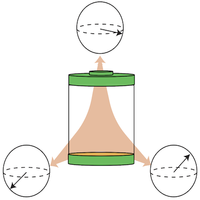
Powering Quantum Computation with Quantum Batteries

Yaniv Kurman, Kieran Hymas, Arkady Fedorov, William J. Munro, and James Quach

Phys. Rev. X 16, 011016 (2026) - Published 26 January, 2026

A framework is introduced to power universal quantum computation with internal quantum batteries, reducing heat load and wiring overhead to potentially increase qubit density fourfold.

Characterization of Drive-Induced Unwanted State Transitions in Superconducting Circuits

W. Dai, S. Hazra, D. K. Weiss, P. D. Kurilovich, T. Connolly, H. K. Babla, S. Singh, V. R. Joshi, A. Z. Ding, P. D. Parakh, J. Venkatraman, X. Xiao, L. Frunzio, and M. H. Devoret

Phys. Rev. X 16, 011011 (2026) - Published 15 January, 2026

A systematic framework is developed to identify and categorize three distinct mechanisms of drive-induced unwanted state transitions in superconducting circuits, enabling predictable mitigation of errors to advance high-fidelity quantum operations.

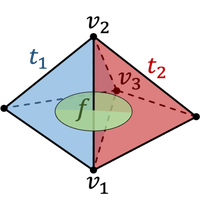
Generalized Statistics on Lattices

Ryohei Kobayashi (小林良平), Yuyang Li (李雨阳), Hanyu Xue (薛寒玉), Po-Shen Hsin (辛柏伸), and Yu-An Chen (陳昱安)

Phys. Rev. X 16, 011010 (2026) - Published 14 January, 2026

The notion of statistics is generalized from particles to loops and membranes using Berry phases of microscopic unitary processes on lattices.

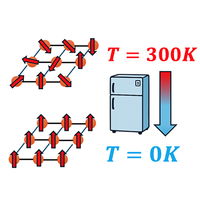
Rapid Quantum Ground State Preparation via Dissipative Dynamics

Yongtao Zhan, Zhiyan Ding, Jakob Huhn, Johnnie Gray, John Preskill, Garnet Kin-Lic Chan, and Lin Lin

Phys. Rev. X 16, 011004 (2026) - Published 6 January, 2026

Dissipative algorithms offer an efficient and robust route to preparing ground states of complex quantum systems.

Leveraging Qubit Loss Detection in Fault-Tolerant Quantum Algorithms

Gefen Baranes, Madelyn Cain, J. Pablo Bonilla Ataides, Dolev Bluvstein, Josiah Sinclair, Vladan Vuletić, Hengyun Zhou, and Mikhail D. Lukin

Phys. Rev. X 16, 011002 (2026) - Published 2 January, 2026
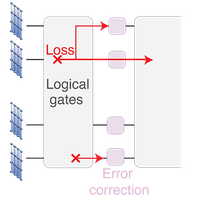
Many quantum algorithms naturally detect and tolerate qubit loss. Combining them with a delayed-erasure decoding method that corrects missing qubits offers a simpler path toward scalable, fault-tolerant quantum computing.

Sign In to Your Journals Account

Filter

Filter

Article Lookup

Enter a citation