Browse by Subject

Long-Lived Mechanically Detected Molecular Spins for Quantum Sensing

Sahand Tabatabaei, Pritam Priyadarsi, Daniel Tay, Namanish Singh, Pardis Sahafi, Andrew Jordan, and Raffi Budakian

Phys. Rev. X 16, 031018 (2026) - Published 27 July, 2026

Researchers integrate molecular spins with mechanical readout to detect nanotesla magnetic fields and resolve local nuclear spectra.

Engineered Molecular Clock Transitions for Precision Measurements

Yuiki Takahashi, Harish D. Ramachandran, Arian Jadbabaie, Yi Zeng, Chi Zhang, and Nicholas R. Hutzler

Phys. Rev. X 16, 031011 (2026) - Published 20 July, 2026

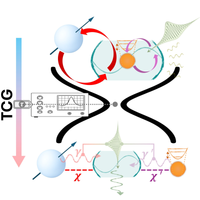
Special clock transitions in heavy polar molecules have been engineered to probe physics beyond the standard model, suppressing disruptive electromagnetic noise by orders of magnitude while preserving high sensitivity.

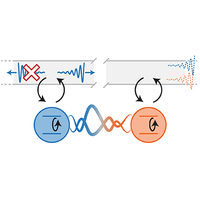
Autonomous Stabilization of Remote Entanglement in a Cascaded Quantum Network

Abdullah Irfan, Kaushik Singirikonda, Mingxing Yao, Andrew Lingenfelter, Michael Mollenhauer, Xi Cao, Aashish A. Clerk, and Wolfgang Pfaff

Phys. Rev. X 16, 031004 (2026) - Published 13 July, 2026

Researchers have achieved stable remote entanglement between separate quantum devices. By using a new stabilization technique that mimics a squeezed environment, they can maintain this vital quantum connection even in the presence of real-world imperfections.

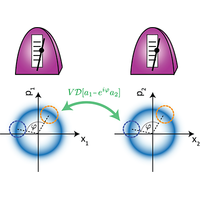
Observation of Synchronization between Two Quantum van der Pol Oscillators in Trapped Ions

Jiarui Liu, Qiming Wu, Joel E. Moore, Hartmut Haeffner, and Christopher W. Wächtler

Phys. Rev. X 16, 021062 (2026) - Published 29 June, 2026

Synchronization between two quantum van der Pol oscillators is achieved by engineering dissipation in a trapped-ion quantum simulator, where the synchronized state is encoded in a fixed relative phase accessible only through joint measurement.

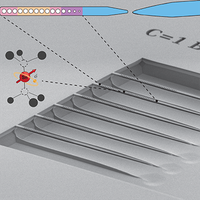
Above-Unity Coherent Cooperativity of Tin-Vacancy Centers in Diamond Photonic Crystal Cavities

Nina Codreanu, Tim Turan, Daniel Bedialauneta Rodriguez, Matteo Pasini, Lorenzo de Santis, Maximilian Ruf, Christian F. Primavera, Leonardo G. C. Wienhoven, Caroline E. Smulders, Simon Gröblacher, and Ronald Hanson

Phys. Rev. X 16, 021060 (2026) - Published 25 June, 2026

Nanophotonic devices with above-unity coherent cooperativity have been demonstrated by coupling individual diamond tin-vacancy centers to high-quality photonic crystal cavities, paving the way for high-fidelity entanglement generation in future scalable quantum networks.

Process Tensor Approaches to Non-Markovian Quantum Dynamics

Jonathan Keeling, E. Miles Stoudenmire, Mari-Carmen Bañuls, and David R. Reichman

Phys. Rev. X 16, 020502 (2026) - Published 22 June, 2026

Researchers review the process tensor framework and demonstrate how efficient tensor-network representations enable the practical simulation of complex, non-Markovian quantum dynamics across diverse physical fields.

Quantifying Quantum Computational Advantage on a Processor of Ultracold Atoms

Yong-Guang Zheng, Ying-Chao Shen, Wei-Yong Zhang, An Luo, Ying Liu, Ming-Gen He, Hao-Ran Zhang, Wan Lin, Han-Yi Wang, Zi-Hang Zhu, Pei-Yue Qiu, Tian-Yi Wang, Ming-Cheng Chen, Chao-Yang Lu, Supanut Thanasilp, Dimitris G. Angelakis, Zhen-Sheng Yuan, and Jian-Wei Pan

Phys. Rev. X 16, 021057 (2026) - Published 18 June, 2026

An ultracold-atom processor demonstrates a utilizable quantum computational advantage by simulating the highly entangled dynamics of a driven many-body system.

Lieb-Mattis States for Robust Entangled Differential Phase Sensing

Raphael Kaubruegger, Diego Fallas Padilla, Athreya Shankar, Christoph Hotter, Sean R. Muleady, Jacob Bringewatt, Youcef Baamara, Erfan Abbasgholinejad, Alexey V. Gorshkov, Klaus Mølmer, James K. Thompson, and Ana Maria Rey

Phys. Rev. X 16, 021052 (2026) - Published 9 June, 2026

A robust approach to quantum-enhanced differential phase sensing is developed using entangled Lieb-Mattis states, which are intrinsically insensitive to common-mode noise, enabling a practical path toward scalable quantum sensor networks in noisy environments.

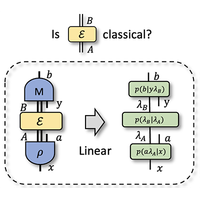
Reassessing the Boundary between Classical and Nonclassical for Individual Quantum Processes

Yujie Zhang, David Schmid, Yìlè Yīng, and Robert W. Spekkens

Phys. Rev. X 16, 021050 (2026) - Published 4 June, 2026

Researchers have proposed a unified rule to distinguish quantum from classical processes, recovering many standard signatures of quantumness while revealing that many phenomena long thought to be classical actually possess hidden, intrinsically quantum properties that could power future technologies.

Generating Arbitrary Superpositions of Nonclassical Quantum Harmonic Oscillator States

S. Saner, O. Băzăvan, D. J. Webb, G. Araneda, D. M. Lucas, C. J. Ballance, and R. Srinivas

Phys. Rev. X 16, 021049 (2026) - Published 3 June, 2026

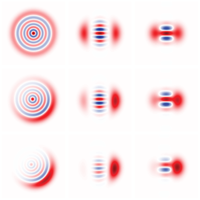
Researchers have developed a method to generate arbitrary superpositions of non-Gaussian states in trapped-ion systems and applied it to realize superpositions of squeezed, trisqueezed, and higher-order squeezed states, with applications in quantum sensing and error correction.

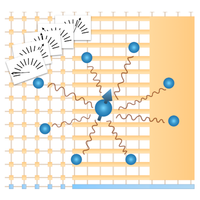
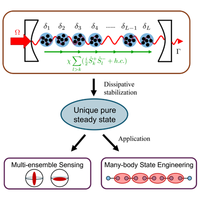
Reconfigurable Dissipative Entanglement between Many Spin Ensembles: From Robust Quantum Sensing to Many-Body State Engineering

Anjun Chu, Mikhail Mamaev, Martin Koppenhöfer, Ming Yuan, and Aashish A. Clerk

Phys. Rev. X 16, 021047 (2026) - Published 1 June, 2026

Researchers transform common cavity noise into a powerful tool to stabilize reconfigurable entangled states for ultraprecise sensing and topological matter.

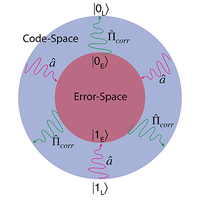
Passive Quantum Error Correction of Photon Loss at Breakeven

Shruti Shirol, Sean van Geldern, Hanzhe Xi, and Chen Wang

Phys. Rev. X 16, 021042 (2026) - Published 22 May, 2026

Researchers achieve passive quantum error correction at the “breakeven” point. Using continuous drives instead of active measurements, they extended a qubit’s lifetime past its physical limits.

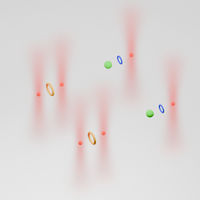
Nondestructive Optical Readout and Manipulation of Circular Rydberg Atoms

Y. Machu, A. Durán-Hernández, G. Creutzer, A. A. Young, J. M. Raimond, M. Brune, and C. Sayrin

Phys. Rev. X 16, 021040 (2026) - Published 20 May, 2026

Local quantum nondemolition measurements and optical manipulation of long-lived circular Rydberg atoms are demonstrated by coupling them to an auxiliary array of low-angular-momentum Rydberg atoms.

Beyond Stellar Rank: Control Parameters for Scalable Optical Non-Gaussian State Generation

Fumiya Hanamura, Kan Takase, Hironari Nagayoshi, Ryuhoh Ide, Warit Asavanant, Kosuke Fukui, Petr Marek, Radim Filip, and Akira Furusawa

Phys. Rev. X 16, 021034 (2026) - Published 13 May, 2026

Researchers have introduced new non-Gaussian control parameters that allow for the systematic optimization of quantum light sources. This breakthrough can increase the success rate of generating essential quantum states by orders of magnitude.

Scaling Laws of Quantum Information Lifetime in Monitored Quantum Dynamics

Bingzhi Zhang, Fangjun Hu, Runzhe Mo, Tianyang Chen, Hakan E. Türeci, and Quntao Zhuang

Phys. Rev. X 16, 021027 (2026) - Published 6 May, 2026

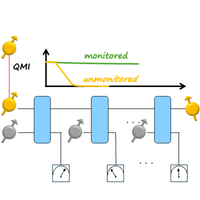
Researchers have discovered that recording data from midcircuit measurements can preserve quantum information for an exponentially long time. This finding offers a strategy to preserve fragile data and improve the performance of near-term quantum computers and algorithms.

Breakdown of the Thermodynamic Limit in Quantum Spin and Dimer Models

Jeet Shah, Laura Shou, Jeremy Shuler, and Victor Galitski

Phys. Rev. X 16, 021020 (2026) - Published 27 April, 2026

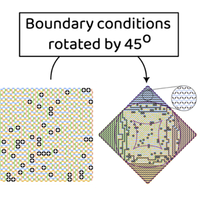
Geometry-induced quantum phase separation in quantum dimer models demonstrates that domain shape can fundamentally alter macroscopic ground states, challenging traditional assumptions about the thermodynamic limit.

Prethermalization, Shadowing Breakdown, and the Absence of Trotterization Transition in Quantum Circuits

Marko Žnidarič

Phys. Rev. X 16, 021017 (2026) - Published 22 April, 2026

New research uses truncated propagators to show that shadowing time in many-body chaotic systems is finite. It also offers a method to calculate thermalization time, finding that the “Trotterization transition” is generically a finite-size effect.

Model Order Reduction for Open Quantum Systems Based on Measurement-Adapted Time-Coarse Graining

Wentao Fan and Hakan E. Türeci

Phys. Rev. X 16, 021015 (2026) - Published 16 April, 2026

Researchers introduce measurement-adapted time-coarse graining, a model reduction technique that uses the time resolution of measurement channels to capture the observable dynamics of a complex quantum system.

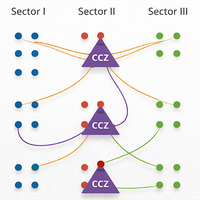
Magic Tricycles: Efficient Magic-State Generation with Finite Block-Length Quantum LDPC Codes

Varun Menon, J. Pablo Bonilla Ataides, Rohan Mehta, Andi Gu, Daniel Bochen Tan, and Mikhail D. Lukin

Phys. Rev. X 16, 021014 (2026) - Published 15 April, 2026

Quantum computing needs “magic states” for universality, but they are costly to make. New research introduces tricycle codes: high-rate QLDPC codes that can be used to generate CCZ magic states in constant depth with high noise resilience.

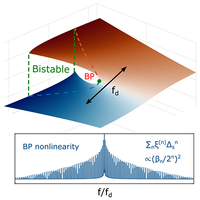
Ultralow-Power Microwave Frequency Comb at a Bistable Phase Transition

Hanfeng Wang, Kurt Jacobs, Dirk R. Englund, and Matthew E. Trusheim

Phys. Rev. X 16, 021005 (2026) - Published 6 April, 2026

Leveraging a bistable phase transition in a hybrid quantum system enables the generation of a microwave frequency comb with 193 spectral teeth at unprecedentedly low driving power.

Sign In to Your Journals Account

Filter

Filter

Article Lookup

Enter a citation