Browse by Subject

Nature Is Stingy: Universality of Scrooge Ensembles in Quantum Many-Body Systems

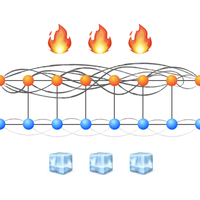
Wai-Keong Mok, Tobias Haug, Wen Wei Ho, and John Preskill

Phys. Rev. X 16, 041003 (2026) - Published 2 October, 2026

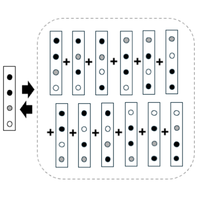
Researchers introduce Scrooge k-designs to quantify how constrained quantum systems achieve universal randomness and deep thermalization.

Topological Mixed States: Phases of Matter from Axiomatic Approaches

Tai-Hsuan Yang, Bowen Shi, and Jong Yeon Lee

Phys. Rev. X 16, 041002 (2026) - Published 2 October, 2026

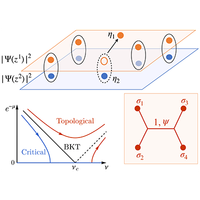
A quantum information framework classifies mixed-state topological phases for open quantum systems, introducing phase invariants based on an information convex set, memory capacity, and secret sharing.

Variational Multi-Gaussian Phase-Space Bosonic Dynamics via Automatic Differentiation

Jacopo Tosca, Francesco Carnazza, Luca Giacomelli, and Cristiano Ciuti

Phys. Rev. X 16, 031077 (2026) - Published 24 September, 2026

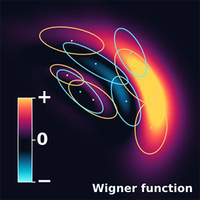
Researchers introduce a variational multi-Gaussian phase-space method combining analytical techniques with automatic differentiation to reveal the critical dynamics of large open quantum bosonic lattices.

Fractional Quantum Hall States under Density Decoherence

Zijian Wang, Ruihua Fan, Tianle Wang, Samuel J. Garratt, and Ehud Altman

Phys. Rev. X 16, 031074 (2026) - Published 21 September, 2026

Statistical mechanics mappings reveal that quantum information stored in the non-Abelian anyons of Moore-Read states resists arbitrary density dephasing, whereas that stored in the Laughlin states has an infinite robustness only above a critical filling factor.

Entanglement Certification Using Noncontextuality Inequalities

Yujie Zhang, Jonah Spodek, David Schmid, Carter Reid, Liam J. Morrison, Thomas Jennewein, Kevin J. Resch, and Robert W. Spekkens

Phys. Rev. X 16, 031057 (2026) - Published 1 September, 2026

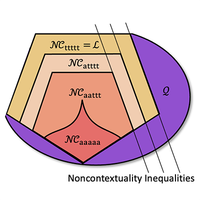
Researchers demonstrate a gauge-independent entanglement certification method based on noncontextuality inequalities that detects entangled states without requiring prior measurement device characterization.

Low-Depth Quantum Symmetrization

Zhenning Liu, Andrew M. Childs, and Daniel Gottesman

Phys. Rev. X 16, 031056 (2026) - Published 31 August, 2026

Researchers develop low-depth quantum symmetrization algorithms that enable efficient bosonic simulations, low-depth Dicke state preparation, and multiphoton interferometric imaging.

Demonstrating Coherent Quantum Routers for Bucket-Brigade Quantum Random Access Memory on a Superconducting Processor

Sheng Zhang, Yun-Jie Wang, Peng Wang, Ren-Ze Zhao, Xiao-Yan Yang, Ze-An Zhao, Tian-Le Wang, Hai-Feng Zhang, Zhi-Fei Li, Yuan Wu, Hao-Ran Tao, Liang-Liang Guo, Lei Du, Chi Zhang, Zhi-Long Jia, Wei-Cheng Kong, Zhuo-Zhi Zhang, Xiang-Xiang Song, Yu-Chun Wu, Zhao-Yun Chen, Peng Duan, and Guo-Ping Guo

Phys. Rev. X 16, 031051 (2026) - Published 25 August, 2026

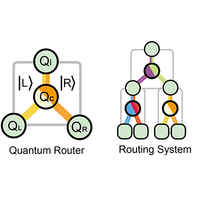
Researchers demonstrate coherent quantum routers on a superconducting processor to realize resilient routing for quantum memories.

Semidefinite Block-Matrix Relaxations for Computing Quantum Correlations

Nicola D’Alessandro, Carles Roch i Carceller, and Armin Tavakoli

Phys. Rev. X 16, 031050 (2026) - Published 25 August, 2026

Researchers provide a computational method for bounding the correlations arising in a multitude of quantum information problems.

Generation of Large Coherent-State Superpositions in Free-Space Optical Pulses

Lucas Caron, Hector Simon, Hugo Basset, Romaric Journet, and Rosa Tualle-Brouri

Phys. Rev. X 16, 031047 (2026) - Published 21 August, 2026

Researchers generate large-amplitude optical cat states in free space, establishing a vital building block for fault-tolerant quantum computing.

Bounded-Error Quantum Simulation via Hamiltonian and Lindbladian Learning

Tristan Kraft, Manoj K. Joshi, William T. Lam, Tobias Olsacher, Florian Kranzl, Johannes Franke, Lata Kh Joshi, Rainer Blatt, Augusto Smerzi, Daniel Stilck França, Benoît Vermersch, Barbara Kraus, Christian F. Roos, and Peter Zoller

Phys. Rev. X 16, 031037 (2026) - Published 13 August, 2026

Researchers introduce a framework that infers quantum dynamics and error bounds from experimental data to validate large-scale quantum simulations.

Infinite Temperature at Zero Energy

Matteo Ippoliti and David M. Long

Phys. Rev. X 16, 031030 (2026) - Published 7 August, 2026

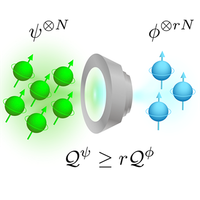
Researchers construct local Hamiltonians whose eigenstates inherit infinite-temperature properties, producing ground states with extensive entanglement.

Quantum Geometric Tensor Determines the Pure-State I.I.D. Conversion Rate in the Resource Theory of Asymmetry for Any Compact Lie Group

Koji Yamaguchi, Yosuke Mitsuhashi, Tomohiro Shitara, and Hiroyasu Tajima

Phys. Rev. X 16, 031028 (2026) - Published 5 August, 2026

Researchers prove that the quantum geometric tensor completely dictates pure-state asymptotic conversion rates under any compact Lie group symmetry.

Covariant Path Integrals for Quantum Fields Backreacting on Classical Space-Time

Jonathan Oppenheim and Zachary Weller-Davies

Phys. Rev. X 16, 031007 (2026) - Published 15 July, 2026

Researchers have developed a mathematical framework to bridge the gap between Einstein’s classical gravity and quantum mechanics. Their theory allows matter to remain quantum while space-time stays classical, offering a way to test if space and time truly require a quantum explanation.

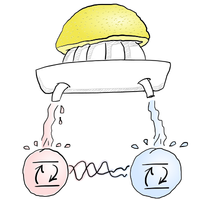
Distributing Stationary Qubit Entanglement through a Nonlocal Squeezed Reservoir

A. Andrés-Juanes, J. Agustí, R. Sett, E. S. Redchenko, L. N. Kapoor, S. Hawaldar, P. Rabl, and J. M. Fink

Phys. Rev. X 16, 031005 (2026) - Published 13 July, 2026

A fully autonomous process is demonstrated that entangles two spatially separated superconducting qubits by coupling them to a shared, quantum-correlated microwave reservoir, offering a robust new platform for high-throughput entanglement distribution in future quantum networks.

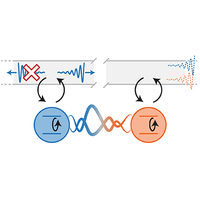
Autonomous Stabilization of Remote Entanglement in a Cascaded Quantum Network

Abdullah Irfan, Kaushik Singirikonda, Mingxing Yao, Andrew Lingenfelter, Michael Mollenhauer, Xi Cao, Aashish A. Clerk, and Wolfgang Pfaff

Phys. Rev. X 16, 031004 (2026) - Published 13 July, 2026

Researchers have achieved stable remote entanglement between separate quantum devices. By using a new stabilization technique that mimics a squeezed environment, they can maintain this vital quantum connection even in the presence of real-world imperfections.

Vast World of Quantum Advantage

Hsin-Yuan Huang, Soonwon Choi, Jarrod R. McClean, and John Preskill

Phys. Rev. X 16, 030501 (2026) - Published 9 July, 2026

Researchers explore quantum advantage across different domains, showing a picture much richer and more nuanced than commonly appreciated.

Universal Fault-Tolerant Quantum Computation in 2D without Getting Tied in Knots

Margarita Davydova, Andreas Bauer, Julio C. Magdalena de la Fuente, Mark Webster, Dominic J. Williamson, and Benjamin J. Brown

Phys. Rev. X 16, 031001 (2026) - Published 7 July, 2026

Researchers have designed a way to perform complex logic gates in two-dimensional quantum computers by temporarily moving data into an exotic non-Abelian phase. This method provides a path toward large-scale, fault-tolerant quantum computation.

Complexity-Theoretic Foundations of BosonSampling with a Linear Number of Modes

Adam Bouland, Daniel Brod, Ishaun Datta, Bill Fefferman, Daniel Grier, Felipe Hernández, and Michał Oszmaniec

Phys. Rev. X 16, 021059 (2026) - Published 24 June, 2026

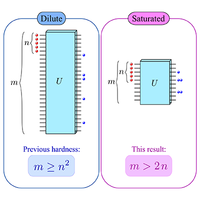
Experimental demonstrations of quantum advantage in photonic systems operate in the “saturated regime” of optics, whereas until now the complexity theory underpinning them has pertained only to the “dilute regime”—researchers bridge the gap.

Quantifying Quantum Computational Advantage on a Processor of Ultracold Atoms

Yong-Guang Zheng, Ying-Chao Shen, Wei-Yong Zhang, An Luo, Ying Liu, Ming-Gen He, Hao-Ran Zhang, Wan Lin, Han-Yi Wang, Zi-Hang Zhu, Pei-Yue Qiu, Tian-Yi Wang, Ming-Cheng Chen, Chao-Yang Lu, Supanut Thanasilp, Dimitris G. Angelakis, Zhen-Sheng Yuan, and Jian-Wei Pan

Phys. Rev. X 16, 021057 (2026) - Published 18 June, 2026

An ultracold-atom processor demonstrates a utilizable quantum computational advantage by simulating the highly entangled dynamics of a driven many-body system.

Reassessing the Boundary between Classical and Nonclassical for Individual Quantum Processes

Yujie Zhang, David Schmid, Yìlè Yīng, and Robert W. Spekkens

Phys. Rev. X 16, 021050 (2026) - Published 4 June, 2026

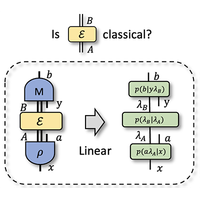
Researchers have proposed a unified rule to distinguish quantum from classical processes, recovering many standard signatures of quantumness while revealing that many phenomena long thought to be classical actually possess hidden, intrinsically quantum properties that could power future technologies.

Sign In to Your Journals Account

Filter

Filter

Article Lookup

Enter a citation