Browse by Subject

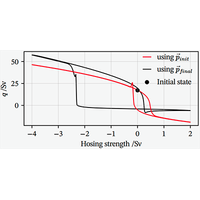
Targeted Calibration to Adjust Stability Biases in Complex Dynamical System Models

Daniel Pals, Sebastian Bathiany, Joel Kuettel, Richard A. Wood, and Niklas Boers

Phys. Rev. X 16, 021007 (2026) - Published 7 April, 2026

A method is introduced for systematic calibration of complex dynamical system models, targeted at adjusting system stability, with applications to climate models.

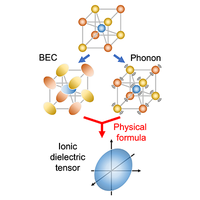
Physics-Based Factorized Machine Learning for Predicting Ionic Dielectric Tensors

Atsushi Takigawa, Shin Kiyohara, and Yu Kumagai

Phys. Rev. X 16, 021006 (2026) - Published 7 April, 2026

A machine-learning methodology helps screen thousands of candidate oxides to identify materials with excellent dielectric properties.

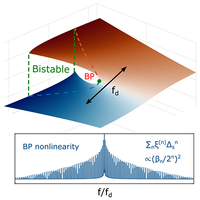
Ultralow-Power Microwave Frequency Comb at a Bistable Phase Transition

Hanfeng Wang, Kurt Jacobs, Dirk R. Englund, and Matthew E. Trusheim

Phys. Rev. X 16, 021005 (2026) - Published 6 April, 2026

Leveraging a bistable phase transition in a hybrid quantum system enables the generation of a microwave frequency comb with 193 spectral teeth at unprecedentedly low driving power.

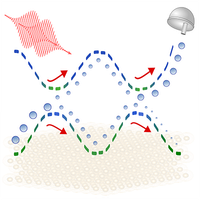
Observation of Nonadiabatic Landau-Zener Tunneling among Floquet States

Yun Yen, Marcel Reutzel, Andi Li, Zehua Wang, Hrvoje Petek, and Michael Schüler

Phys. Rev. X 16, 021004 (2026) - Published 3 April, 2026

Spectroscopic data reveal copper electronic states transitioning to nonadiabatic Landau-Zener tunneling among Floquet states under intense light.

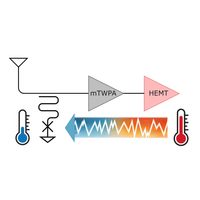
Traveling-Wave Parametric Amplifier with Passive Reverse Isolation

C. S. Kow and M. T. Bell

Phys. Rev. X 16, 021003 (2026) - Published 3 April, 2026

By integrating passive reverse isolation into a multistage architecture, a new traveling-wave parametric amplifier with near-quantum-limited performance protects sensitive qubits from thermal backaction, enabling a scalable isolator-free readout architecture for superconducting quantum computers.

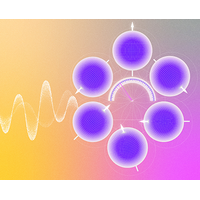
Harnessing Quantum Backaction for Time-Series Processing

Giacomo Franceschetto, Marcin Płodzień, Maciej Lewenstein, Antonio Acín, and Pere Mujal

Phys. Rev. X 16, 021002 (2026) - Published 2 April, 2026

Tuning the strength of indirect measurements in quantum reservoir computing is shown to enhance memory and performance for processing time-series data, providing a way to turn quantum backaction into a resource.

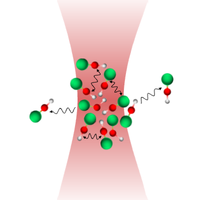
Quantum-State-Controlled Collisions of Ultracold Polyatomic Molecules

Nathaniel B. Vilas, Paige Robichaud, Christian Hallas, Junheng Tao, Loïc Anderegg, Grace K. Li, Hana Lampson, Lucie D. Augustovičová, John L. Bohn, and John M. Doyle

Phys. Rev. X 16, 021001 (2026) - Published 1 April, 2026

Ultracold collisions between polyatomic molecules are observed and characterized, revealing how their unique internal structure can be used to shield them from loss.

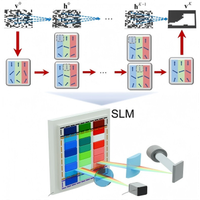
Photonic Restricted Boltzmann Machine for Content Generation Tasks

Li Luo, Yisheng Fang, Wanyi Zhang, and Zhichao Ruan

Phys. Rev. X 16, 011071 (2026) - Published 31 March, 2026

A newly developed photonic restricted Boltzmann machine accelerates generative artificial intelligence by executing complex Gibbs sampling optically, overcoming traditional electronic computing bottlenecks.

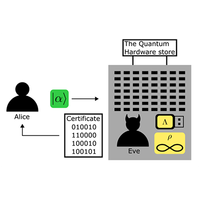
Continuous Variable Measurement-Device-Independent Quantum Certification

B. L. Larsen, A. A. E. Hajomer, P. Abiuso, S. Izumi, T. Gehring, J. S. Neergaard-Nielsen, A. Acín, and U. L. Andersen

Phys. Rev. X 16, 011070 (2026) - Published 30 March, 2026

Researchers demonstrate a measurement-device-independent certification for continuous-variable systems. By using coherent states, they show that entanglement and memory can be verified even with untrusted hardware.

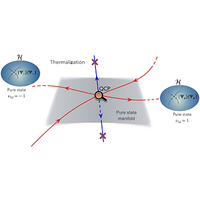
Fermion Quantum Criticality far from Equilibrium

Rohan Mittal, Tom Zander, Johannes Lang, and Sebastian Diehl

Phys. Rev. X 16, 011069 (2026) - Published 30 March, 2026

A new nonequilibrium universality class for fermions is identified. It displays an emergent “dark state symmetry” that protects quantum criticality, requiring only a single tuning parameter.

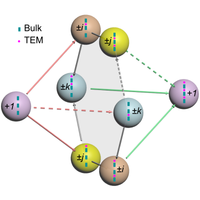
Hydrostatic Pressure-Enhanced Correlated Magnetism and Chern Insulator in Moiré WSe2

Pengfei Jiao et al.

Phys. Rev. X 16, 011068 (2026) - Published 27 March, 2026

Hydrostatic pressure acts as a reversible control knob in twisted WSe2 to enhance ferromagnetism and drive topological phase transitions between Chern and Mott insulating states.

Fast Scrambling at the Boundary

Ancel Larzul, Anirvan M. Sengupta, Antoine Georges, and Marco Schirò

Phys. Rev. X 16, 011067 (2026) - Published 26 March, 2026

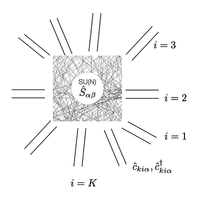
Researchers find that a simple boundary quantum spin in the multichannel Kondo model can scramble information as fast as the most complex random systems, revealing a link between impurity physics and fast scramblers.

Deterministic 1D Domain Wall Motion with Nucleation-Free Nature in Sliding Ferroelectric Switching

Jiangang Chen, Changming Ke, Renji Bian, Er Pan, Peter Kun, Zefen Li, Biao Dong, Fan Yang, Qing Liu, Levente Tapaszto, Xiao Luo, Shi Liu, and Fucai Liu

Phys. Rev. X 16, 011066 (2026) - Published 26 March, 2026

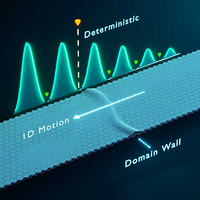
Sliding ferroelectrics possess a nucleation-free nature, where collective and constrained domain wall motion enables deterministic polarization control far beyond conventional ferroelectrics.

Resource-Theoretical Unification of Mpemba Effects: Classical and Quantum

Alessandro Summer, Mattia Moroder, Laetitia P. Bettmann, Xhek Turkeshi, Iman Marvian, and John Goold

Phys. Rev. X 16, 011065 (2026) - Published 25 March, 2026

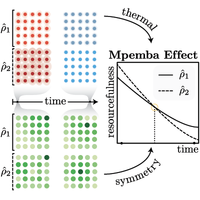
A unified theory of Mpemba effects across a variety of contexts is provided using resource theories. Faster relaxation occurs when states with a larger amount of resources have a smaller overlap with the slowest resourceful relaxation channel.

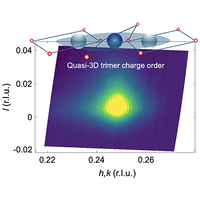
Cooperative Charge Ordering Signature of Trimer Molecules in Infinite-Layer CaCoO2

J.-S. Lee, W. J. Kim, A. Khandelwal, K.-T. Ko, H. Lee, C.-T. Kuo, S. Song, C. Song, D. Jang, H. Choi, G. Park, S.-Y. Park, G. Kang, H. Jang, P. Abdollahi, A. Seo, C.-C. Kao, and H. Y. Hwang

Phys. Rev. X 16, 011064 (2026) - Published 24 March, 2026

Resonant x-ray scattering in CaCoO2 reveals a quasi-three-dimensional trimer charge order linked to interlayer orbital hybridization, establishing molecular units as key organizers for macroscopic electronic states.

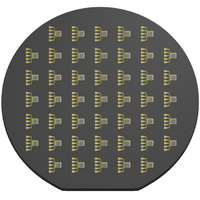
Scalable Photonic Quantum Interconnect Platform

Daniel Riedel, Teodoro Graziosi, Zhuoxian Wang, Chawina De-Eknamkul, Alex Abulnaga, Jonathan Dietz, Andrea Mucchietto, Michael Haas, Madison Sutula, Pierre Barral, Matteo Pompili, Mouktik Raha, Carsten Robens, Jeonghoon Ha, Denis Sukachev, David Levonian, Mihir Bhaskar, Matthew Markham, and Bartholomeus Machielse

Phys. Rev. X 16, 011063 (2026) - Published 24 March, 2026

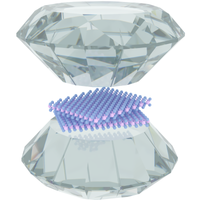
A wafer-scale platform integrating high-quality diamond membranes with functionalized silicon substrates enables the parallel fabrication of quantum memory arrays with near-unity yield, paving the way for the mass production of modular quantum interconnects.

Slow Quasiparticle Dynamics and Anyonic Statistics in a Fractional Quantum Hall Fabry-Pérot Interferometer

Noah L. Samuelson, Liam A. Cohen, Will Wang, Simon Blanch, Takashi Taniguchi, Kenji Watanabe, Michael P. Zaletel, and Andrea F. Young

Phys. Rev. X 16, 011062 (2026) - Published 23 March, 2026

Anyons, collective excitations of fractional quantum Hall systems, are shown to exhibit unprecedented stability in graphene heterostructures, enabling their practical manipulation for use in fault-tolerant quantum computing.

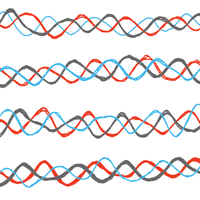
Observation of Anomalous Floquet Non-Abelian Topological Insulators

Huahui Qiu, Shuaishuai Tong, Qicheng Zhang, Kun Zhang, and Chunyin Qiu

Phys. Rev. X 16, 011061 (2026) - Published 20 March, 2026

An anomalous Floquet non-Abelian topological insulator is realized in an acoustic system, exhibiting robust edge states across all band gaps, despite a trivial bulk charge, and unique topological interface modes arising from noncommutative dynamics.

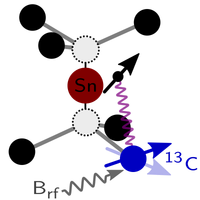
High-Fidelity Control of a C13 Nuclear Spin Coupled to a Tin-Vacancy Center in Diamond

Jeremias Resch, Ioannis Karapatzakis, Mohamed Elshorbagy, Marcel Schrodin, Philipp Fuchs, Philipp Graßhoff, Luis Kussi, Christoph Sürgers, Cyril Popov, Christoph Becher, Wolfgang Wernsdorfer, and David Hunger

Phys. Rev. X 16, 011060 (2026) - Published 19 March, 2026

High-fidelity control of a 13C nuclear spin coupled to a tin-vacancy center yields coherence times exceeding 1.35 s using a superconducting waveguide, highlighting the potential of the tin-vacancy center as a coherent spin-photon interface for future quantum network applications.

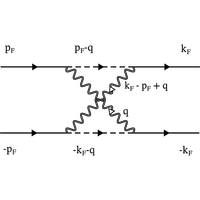
Superconductivity via Paramagnon and Magnon Exchange in a 2D Near-Ferromagnetic Full Metal and Ferromagnetic Half-Metal

Zachary M. Raines and Andrey V. Chubukov

Phys. Rev. X 16, 011059 (2026) - Published 18 March, 2026
Theoretical analysis of two-dimensional electron systems shows that magnon-mediated interactions drive robust p-wave superconductivity within a ferromagnetically order state at a temperature significantly higher than in a paramagnetic state.

Sign In to Your Journals Account

Filter

Subject

Filter

Article Lookup

Enter a citation