Browse by Subject

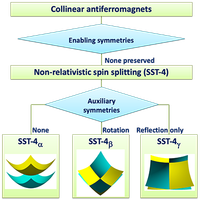
Prototypes of Nonrelativistic Spin Splitting and Polarization in Symmetry Broken Antiferromagnets

Xiuwen Zhang, Jia-Xin Xiong, Lin-Ding Yuan, and Alex Zunger

Phys. Rev. X 15, 031076 (2025) - Published 25 September, 2025

Breaking key symmetries in antiferromagnets enables nonrelativistic spin splitting without spin-orbit coupling, with auxiliary symmetries guiding a classification that predicts distinct spin polarization patterns for spintronic materials design.

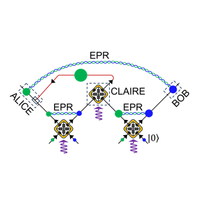
Teleportation and Entanglement Swapping of Continuous Quantum Variables of Microwave Radiation

Baleegh Abdo, William Shanks, Oblesh Jinka, J. R. Rozen, and Jason Orcutt

Phys. Rev. X 15, 031075 (2025) - Published 25 September, 2025

A superconducting Josephson mixer generates continuous-variable entanglement between microwave modes, enabling teleportation and entanglement swapping with fidelities beyond classical limits—key steps toward scalable quantum networks.

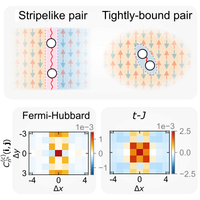
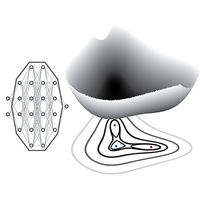
Two-Dopant Origin of Competing Stripe and Pair Formation in Hubbard and t−J Models

Tizian Blatz, Ulrich Schollwöck, Fabian Grusdt, and Annabelle Bohrdt

Phys. Rev. X 15, 031074 (2025) - Published 24 September, 2025

A single pair of charge carriers can reveal the competition between superconducting and insulating phases in the microscopic models describing high-temperature superconductors.

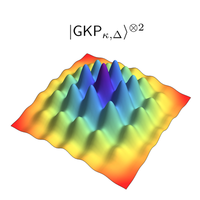
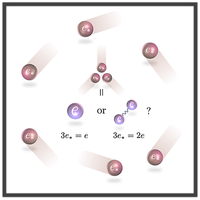
Complexity of Gottesman-Kitaev-Preskill States

Lukas Brenner, Libor Caha, Xavier Coiteux-Roy, and Robert Koenig

Phys. Rev. X 15, 031073 (2025) - Published 19 September, 2025

A proposed protocol efficiently prepares high-quality Gottesman-Kitaev-Preskill (GKP) quantum states with rigorous accuracy guarantees. Since GKP states are central to quantum error correction, this paves the way for more robust quantum computing.

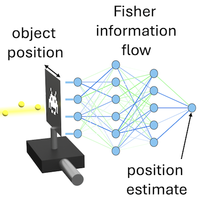
Fisher Information Flow in Artificial Neural Networks

Maximilian Weimar, Lukas M. Rachbauer, Ilya Starshynov, Daniele Faccio, Linara Adilova, Dorian Bouchet, and Stefan Rotter

Phys. Rev. X 15, 031072 (2025) - Published 16 September, 2025

A new algorithm tracks Fisher information through a neural network, revealing how information flows and transforms and offering guidance for designing more efficient networks.

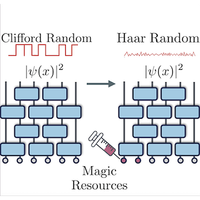
Anticoncentration in Clifford Circuits and Beyond: From Random Tensor Networks to Pseudomagic States

Beatrice Magni, Alexios Christopoulos, Andrea De Luca, and Xhek Turkeshi

Phys. Rev. X 15, 031071 (2025) - Published 15 September, 2025

An analysis of how evenly quantum states spread out in Clifford circuits and tensor networks provides new insights for quantum sampling, benchmarking, and computational quantum advantage.

Learning Geometric Models for Developmental Dynamics

Addison Howe and Madhav Mani

Phys. Rev. X 15, 031070 (2025) - Published 15 September, 2025

A neural network model that learns a “developmental landscape” linked to underlying genes provides a framework for understanding tissue formation and differentiation.

Doping a Fractional Quantum Anomalous Hall Insulator

Zhengyan Darius Shi and T. Senthil

Phys. Rev. X 15, 031069 (2025) - Published 11 September, 2025

A universal field-theoretic framework to describe the doping of fractional quantum anomalous Hall insulators predicts that a nonzero density of mobile anyons form exotic metals and superconductors.

Optimal Time Estimation and the Clock Uncertainty Relation for Stochastic Processes

Kacper Prech, Gabriel T. Landi, Florian Meier, Nuriya Nurgalieva, Patrick P. Potts, Ralph Silva, and Mark T. Mitchison

Phys. Rev. X 15, 031068 (2025) - Published 11 September, 2025

A sequence of random events can act as a clock, and its accuracy is fundamentally limited by how often those events occur, as shown by a new bound linking timekeeping precision to the statistics of waiting times.

Středa Formula for Floquet Systems: Topological Invariants and Quantized Anomalies from Cesàro Summation

Lucila Peralta Gavensky, Gonzalo Usaj, and Nathan Goldman

Phys. Rev. X 15, 031067 (2025) - Published 10 September, 2025

A nonequilibrium extension of the Středa formula provides a physical framework for the topological classification of Floquet systems, revealing universal quantized magnetic responses in driven settings.

Exploring the Energy Spectrum of a Four-Terminal Josephson Junction: Toward Topological Andreev Band Structures

Tommaso Antonelli, Marco Coraiola, David Christian Ohnmacht, Aleksandr E. Svetogorov, Deividas Sabonis, Sofieke C. ten Kate, Erik Cheah, Filip Krizek, Rüdiger Schott, Juan Carlos Cuevas, Wolfgang Belzig, Werner Wegscheider, and Fabrizio Nichele

Phys. Rev. X 15, 031066 (2025) - Published 9 September, 2025

A four-terminal superconducting device that simulates a 3D band structure offers the first step toward realizing Weyl states that could provide topological protection to future quantum devices.

Efficient Finite-Resource Formulation of Non-Abelian Lattice Gauge Theories beyond One Dimension

Pierpaolo Fontana, Marc Miranda-Riaza, and Alessio Celi

Phys. Rev. X 15, 031065 (2025) - Published 9 September, 2025

A new quantum-compatible method simplifies non-Abelian gauge theory simulations by compressing gauge field data, enabling accurate predictions across interaction strengths with limited quantum resources.

Strange Metals and Planckian Transport in a Gapless Phase from Spatially Random Interactions

Aavishkar A. Patel, Peter Lunts, and Michael S. Albergo

Phys. Rev. X 15, 031064 (2025) - Published 8 September, 2025

A simple, realistic model shows that electrons scattering off localized magnetic modes created by heterogeneous interactions explains strange metals’ linear resistance and universal scattering rate in high-temperature superconductors.

Quantum Effects in Gravity Beyond the Newton Potential from a Delocalized Quantum Source

Lin-Qing Chen and Flaminia Giacomini

Phys. Rev. X 15, 031063 (2025) - Published 4 September, 2025

New predictions from linearized quantum gravity show that delocalized sources and gravitational-field commutators could offer stronger evidence for future experiments that gravity is inherently quantum.

Single-Shot Reconstruction of Electron Beam Longitudinal Phase Space in a Laser Wakefield Accelerator

Y. Ma et al.

Phys. Rev. X 15, 031062 (2025) - Published 2 September, 2025

A technique for fully mapping the ultrashort electron beams for laser wakefield acceleration eases the path to creating compact next-generation x-ray free-electron lasers.

Criticality Enhances the Reinforcement of Disordered Networks by Rigid Inclusions

Jordan L. Shivers, Jingchen Feng, and Fred C. MacKintosh

Phys. Rev. X 15, 031061 (2025) - Published 2 September, 2025

Near a mechanical critical point, adding even a small amount of rigid material to soft fiber networks causes unexpectedly large stiffness increases, revealing new ways to design tunable, responsive materials.

Efficient Preparation of Solvable Anyons with Adaptive Quantum Circuits

Yuanjie Ren, Nathanan Tantivasadakarn, and Dominic J. Williamson

Phys. Rev. X 15, 031060 (2025) - Published 29 August, 2025

Adaptive quantum circuits can efficiently generate and control solvable anyons—including complex non-Abelian types—offering a comprehensive, constant-time method for preparing topological phases on quantum devices.

Berry Phase Dynamics of Sliding Electron Crystals

Yongxin Zeng and Andrew J. Millis

Phys. Rev. X 15, 031059 (2025) - Published 28 August, 2025

Sliding electron crystals acquire a transverse velocity under an electric field because of nontrivial quantum geometry, breaking Galilean invariance and altering Hall conductance in materials like rhombohedral graphene.

Dynamical Scaling Reveals Topological Defects and Anomalous Evolution of a Photoinduced Phase Transition

Gal Orenstein, Ryan A. Duncan, Gilberto A. de la Peña Muñoz, Yijing Huang, Viktor Krapivin, Quynh Le Nguyen, Samuel Teitelbaum, Anisha G. Singh, Roman Mankowsky, Henrik Lemke, Mathias Sander, Yunpei Deng, Christopher Arrell, Ian R. Fisher, David A. Reis, and Mariano Trigo

Phys. Rev. X 15, 031058 (2025) - Published 28 August, 2025

Ultrafast x-ray scattering reveals that light-excited charge density waves in LaTe3 relax slowly due to vortexlike topological defects, showing glasslike behavior and subdiffusive dynamics at the nanoscale.

Magnetoelectric Control of Helical Light Emission in a Moiré Chern Magnet

Eric Anderson, Heonjoon Park, Kaijie Yang, Jiaqi Cai, Takashi Taniguchi, Kenji Watanabe, Liang Fu, Ting Cao, Di Xiao, and Xiaodong Xu

Phys. Rev. X 15, 031057 (2025) - Published 27 August, 2025
Efficient, all-electrical control of magnetism and light polarization in twisted bilayer MoTe2 demonstrates a way to link magnetic memory and optical communication in one device and offers a new tuning knob for manipulating zero-field anyons.

Sign In to Your Journals Account

Filter

Subject

Filter

Article Lookup

Enter a citation