Recent Articles

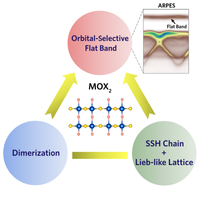
Robust Orbital-Selective Flat Bands in Layered Transition-Metal Oxyhalides at Room Temperature

Xiangyu Luo, Ludovica Zullo, Sahaj Patel, Dongjin Oh, Willa Mihalyi-Koch, Emma Lian, Jiaruo Li, Qian Song, Asish K. Kundu, Anil Rajapitamahuni, Elio Vescovo, Natalia Olszowska, Rafał Kurleto, Dawid Wutke, Xavier Roy, Giorgio Sangiovanni, and Riccardo Comin

Phys. Rev. X 16, 021041 (2026) - Published 21 May, 2026

Angle-resolved photoemission spectroscopy of layered transition-metal oxyhalides reveals intrinsic flat bands that remain stable at room temperature, providing a tunable platform for investigating strongly correlated electron states.

Erratum: Opposite Effects of the Rotational and Translational Energy on the Rates of Ion-Molecule Reactions near 0 K: The D2++NH3 and D2++ND3 Reactions [Phys. Rev. X 14, 011034 (2024)]

Raphaël Hahn, David Schlander, Valentina Zhelyazkova, and Frédéric Merkt

Phys. Rev. X 16, 029901 (2026) - Published 20 May, 2026

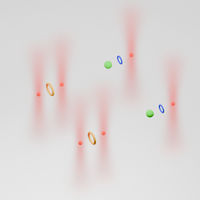
Nondestructive Optical Readout and Manipulation of Circular Rydberg Atoms

Y. Machu, A. Durán-Hernández, G. Creutzer, A. A. Young, J. M. Raimond, M. Brune, and C. Sayrin

Phys. Rev. X 16, 021040 (2026) - Published 20 May, 2026

Local quantum nondemolition measurements and optical manipulation of long-lived circular Rydberg atoms are demonstrated by coupling them to an auxiliary array of low-angular-momentum Rydberg atoms.

High-Rate Discrete-Modulated Continuous-Variable Quantum Key Distribution with Composable Security

Mingze Wu, Yan Pan, Junhui Li, Heng Wang, Lu Fan, Yun Shao, Yang Li, Wei Huang, Song Yu, Bingjie Xu, and Yichen Zhang

Phys. Rev. X 16, 021039 (2026) - Published 20 May, 2026

Researchers achieve a high secret key rate for quantum communication over fiber optics. By combining advanced signal modulation with new security analysis tools, they have made highly secure, high-speed quantum networks closer to practical implementation.

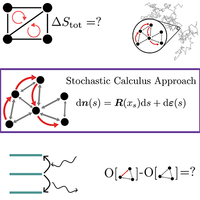
Stochastic Calculus for Pathwise Observables of Markov-Jump Processes: Unification of Diffusion and Jump Dynamics

Lars Torbjørn Stutzer, Cai Dieball, and Aljaž Godec

Phys. Rev. X 16, 021038 (2026) - Published 19 May, 2026

A complete stochastic calculus for pathwise observables of Markov-jump processes is developed, unifying, in the continuum limit, the previously disjoint theories of diffusion and jump processes.

Probing Quantum Anomalous Hall States in Twisted Bilayer WSe2 via Attractive Polaron Spectroscopy

Beini Gao, Mahdi Ghafariasl, Mahmoud Jalali Mehrabad, Tsung-Sheng Huang, Lifu Zhang, Deric Session, Pranshoo Upadhyay, Rundong Ma, Ghadah Alshalan, Daniel Suarez, Supratik Sarkar, Suji Park, Houk Jang, Kenji Watanabe, Takashi Taniguchi, Ming Xie, You Zhou, and Mohammad Hafezi

Phys. Rev. X 16, 021037 (2026) - Published 18 May, 2026

Magneto-optical spectroscopy of twisted WSe2 reveals a spontaneous quantum anomalous Hall phase and demonstrates electric-field control over transitions between ferromagnetic and antiferromagnetic orders.

Elastic and Structural Anisotropy in Silica Thin Films for Gravitational-Wave Detectors

Brenda Bracco, Michele Magnozzi, Stefano Colace, Maurizio Canepa, Giulio Favaro, Marco Bazzan, Massimo Granata, David Hofman, Alessandro Di Michele, Laura Silenzi, Gianpietro Cagnoli, Giovanni Carlotti, Paola Sassi, and Silvia Corezzi

Phys. Rev. X 16, 021036 (2026) - Published 15 May, 2026

Researchers find that silica films in mirror coatings of gravitational-wave detectors have hidden anisotropy that resists standard heat treatment. This discovery informs coating design and deposition and postprocessing strategies aimed at reducing thermal noise.

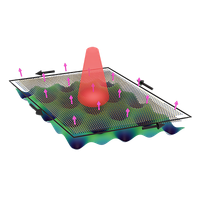
Stretching Theory of Hookean Metashells

Luca Giomi

Phys. Rev. X 16, 021035 (2026) - Published 14 May, 2026

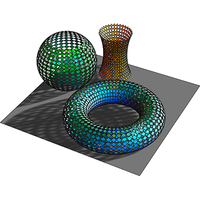
A continuum theory that describes how mechanical metamaterials deform on surfaces takes the form of the Schrödinger equation and provides a different path for materials design.

Beyond Stellar Rank: Control Parameters for Scalable Optical Non-Gaussian State Generation

Fumiya Hanamura, Kan Takase, Hironari Nagayoshi, Ryuhoh Ide, Warit Asavanant, Kosuke Fukui, Petr Marek, Radim Filip, and Akira Furusawa

Phys. Rev. X 16, 021034 (2026) - Published 13 May, 2026

Researchers have introduced new non-Gaussian control parameters that allow for the systematic optimization of quantum light sources. This breakthrough can increase the success rate of generating essential quantum states by orders of magnitude.

Probing Excited-State Dynamics of Transmon Ionization

Zihao Wang, Benjamin D’Anjou, Philippe Gigon, Alexandre Blais, and Machiel S. Blok

Phys. Rev. X 16, 021033 (2026) - Published 12 May, 2026

Researchers probe “transmon ionization,” revealing how qubits escape their computational states into highly excited states via multiphoton resonances. Understanding these Landau-Zener transitions is an important step toward developing better readout schemes.

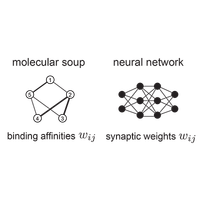
Could Living Cells Use Phase Transitions to Process Information?

Arvind Murugan, David Zwicker, Charlotta Lorenz, and Eric R. Dufresne

Phys. Rev. X 16, 020501 (2026) - Published 12 May, 2026

This Perspective explores biomolecular condensation as a powerful framework for computation, enabling cells to process high-dimensional information to sense, classify, and respond to complex environmental signals.

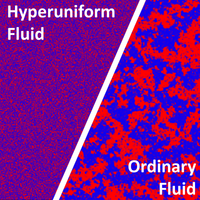
Liquid-Gas Criticality of Hyperuniform Fluids

Shang Gao, Hao Shang, Hao Hu, Yu-Qiang Ma, and Qun-Li Lei

Phys. Rev. X 16, 021032 (2026) - Published 11 May, 2026

Where ordinary fluids show wild fluctuations and critical opalescence, hyperuniform fluids of spinning particles stay unusually calm yet highly susceptible at the liquid–vapor critical point.

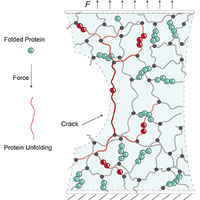
Using Folded Proteins as Mechanically Well-Defined Units to Understand Fatigue Fracture in Hydrogels: Bridging Single Molecule and Bulk Studies

Liang Dong, Puyu Cao, Huiyan Chen, Yu Zhang, Ying Li, Bin Chen, Yi Cao, and Hai Lei

Phys. Rev. X 16, 021031 (2026) - Published 11 May, 2026

A force-response model helps understand fatigue behavior and provides a design strategy for fatigue resistant hydrogels and soft materials.

Intertwined Polar, Chiral, and Ferro-Rotational Orders in a Homo-Ferro-Rotational Insulator

Weizhe Zhang, June Ho Yeo, Xiaoyu Guo, Tony Chiang, Nishkarsh Agarwal, John T. Heron, Kai Sun, Junjie Yang, Sang-Wook Cheong, Youngjun Ahn, and Liuyan Zhao

Phys. Rev. X 16, 021030 (2026) - Published 8 May, 2026

Multimodal optical characterization of Ni3TeO6 identifies a uniform ferro-rotational state that couples polarity and chirality, leading to the formation of complex mixed-type domain walls.

Ballistic Spin Valve in Graphene Realized via Electron Optics

Daniel Burrow, Oktay Deveci, Rares Dragomir, Thomas Thomson, and Ivan J. Vera-Marun

Phys. Rev. X 16, 021029 (2026) - Published 7 May, 2026

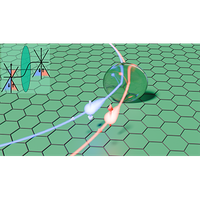
Transverse magnetic focusing in encapsulated graphene reveals gate-tunable ballistic spin transport, providing a mechanism for coherent spin control through spin-dependent electron optics.

Stealthy-Hyperuniform Wave Dynamics in Two-Dimensional Photonic Crystals

Maria Barsukova, Zeyu Zhang, Brian Gould, Koorosh Sadri, Christian Rosiek, Søren Stobbe, Jonas Karcher, and Mikael C. Rechtsman

Phys. Rev. X 16, 021028 (2026) - Published 7 May, 2026

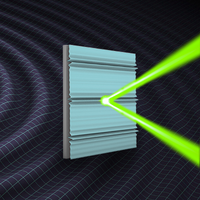
While disordered stealthy hyperuniform materials are expected to be largely transparent within a particular range of wavelengths, new experiments on large-scale silicon photonic crystals reveal unexpected residual scattering driven by radiative loss.

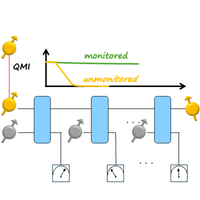
Scaling Laws of Quantum Information Lifetime in Monitored Quantum Dynamics

Bingzhi Zhang, Fangjun Hu, Runzhe Mo, Tianyang Chen, Hakan E. Türeci, and Quntao Zhuang

Phys. Rev. X 16, 021027 (2026) - Published 6 May, 2026

Researchers have discovered that recording data from midcircuit measurements can preserve quantum information for an exponentially long time. This finding offers a strategy to preserve fragile data and improve the performance of near-term quantum computers and algorithms.

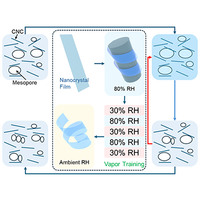
Hydroplasticity of Nanocrystal Films Induced by Mesopore Change

Siyuan Liu, Yonggui Wang, Yu Yin, Xintong Meng, Zhen Lang, and Kai Zhang

Phys. Rev. X 16, 021026 (2026) - Published 5 May, 2026

A vapor training process allows for improved plasticity and better shaping of wood-derived films.

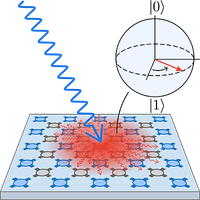
Correlated Phase Error Bursts in a Gap-Engineered Superconducting Qubit Array

Vladislav D. Kurilovich, Gabrielle Roberts, Leigh S. Martin, Matt McEwen, Alec Eickbusch, Lara Faoro, Lev B. Ioffe, Juan Atalaya, Alexander Bilmes, John Mark Kreikebaum, Andreas Bengtsson, Paul Klimov, Matthew Neeley, Wojciech Mruczkiewicz, Kevin Miao, Igor L. Aleiner, Julian Kelly, Yu Chen, Kevin Satzinger, and Alex Opremcak

Phys. Rev. X 16, 021025 (2026) - Published 4 May, 2026

Ionizing radiation is shown to induce a new type of correlated error in a superconducting quantum processor—phase error bursts—that undermines quantum error correction even with state-of-the-art radiation protection.

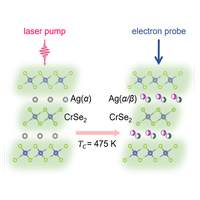
Tracking Ultrafast Ion Diffusion Dynamics in AgCrSe2 Superionic Conductor

Jianmin Yang, Lin Xie, Mingyuan Hu, Yingpeng Qi, Jun Li, Baohai Jia, Jianghe Feng, Zijing Chen, Michel Bosman, Dao Xiang, and Jiaqing He

Phys. Rev. X 16, 021024 (2026) - Published 1 May, 2026

Direct spatial and temporal characterization of ion diffusion in superionic conductors provides a better link to macroscopic properties and high-performance material design.

Sign In to Your Journals Account

Filter

Recent Issues

Vol. 16, Iss. 4
October - December 2026
Vol. 16, Iss. 3
July - September 2026
Vol. 16, Iss. 2
April - June 2026
Vol. 16, Iss. 1
January - March 2026
Category
Article Type

Filter

Article Lookup

Enter a citation