Recent Articles

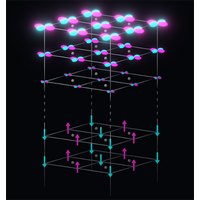
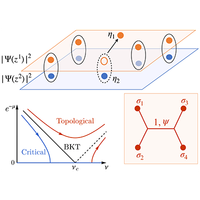
Fractional Quantum Hall States under Density Decoherence

Zijian Wang, Ruihua Fan, Tianle Wang, Samuel J. Garratt, and Ehud Altman

Phys. Rev. X 16, 031074 (2026) - Published 21 September, 2026

Statistical mechanics mappings reveal that quantum information stored in the non-Abelian anyons of Moore-Read states resists arbitrary density dephasing, whereas that stored in the Laughlin states has an infinite robustness only above a critical filling factor.

Enduring Mechanical Memory from the Constitutive Response of Elastically Recoverable Nanostructured Materials

Abhishek Gupta, Bhanugoban Maheswaran, Nicholas Jaegersberg, Komal Chawla, and Ramathasan Thevamaran

Phys. Rev. X 16, 031073 (2026) - Published 18 September, 2026

Vertically aligned carbon nanotube foams exhibit return point memory, opening new opportunities for mechanical computing applications.

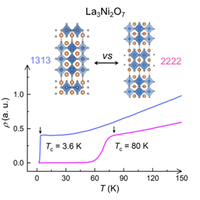
Superconductivity in Monolayer-Trilayer Phase of La3Ni2O7 under High Pressure

Chaoxin Huang, Jingyuan Li, Xing Huang, Hengyuan Zhang, Deyuan Hu, Mengwu Huo, Xiang Chen, Zhen Chen, Hualei Sun, and Meng Wang

Phys. Rev. X 16, 031072 (2026) - Published 17 September, 2026

High-pressure studies on the 1313 monolayer-trilayer polymorph of La3Ni2O7 reveal a dramatically reduced Tc of 3.6 K, proving that coupled bilayer motifs are essential for 80 K superconductivity.

Genuine and Spurious (Non-)Ergodicity in Single Particle Tracking

Wei Wang, Qing Wei, Igor M. Sokolov, Ralf Metzler, and Aleksei Chechkin

Phys. Rev. X 16, 031071 (2026) - Published 17 September, 2026

The mean-squared increment is introduced as a new statistic to characterize single-particle positional time series data, providing a more precise and unambiguous method than previous approaches to evaluating ergodicity and helping to discriminate between different classes of stochastic processes.

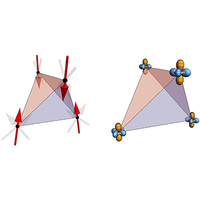
Exact Nematic and Mixed Magnetic Phases Driven by Competing Orders on the Pyrochlore Lattice

Niccolò Francini, Lukas Schmidt, Lukas Janssen, and Daniel Lozano-Gómez

Phys. Rev. X 16, 031070 (2026) - Published 16 September, 2026

Analysis of a frustrated pyrochlore spin model demonstrates that thermal fluctuations and parameter-dependent symmetries suppress conventional order to stabilize a magnetic nematic phase.

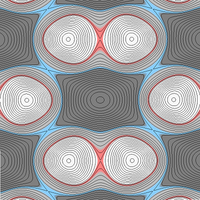
Pomeranchuk Instability Induced by an Emergent Higher-Order Van Hove Singularity on the Distorted Kagome Surface of Co3Sn2S2

Pranab Kumar Nag, Rajib Batabyal, Julian Ingham, Noam Morali, Hengxin Tan, Jahyun Koo, Jean Souza, Moshe Haim, Armando Consiglio, Enke Liu, Raquel Queiroz, Ronny Thomale, Binghai Yan, Claudia Felser, Nurit Avraham, and Haim Beidenkopf

Phys. Rev. X 16, 031069 (2026) - Published 15 September, 2026

Surface deformation of the kagome lattice in Co3Sn2S2 flattens saddle points into a higher-order Van Hove singularity, triggering a d-wave Pomeranchuk instability and nematic states.

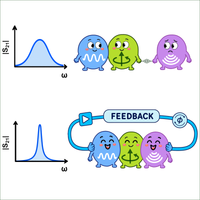
Overcoming Intrinsic Material Limitations through Cavity Feedback

M. Ebrahimi, Y. Huang, V. A. S. V. Bittencourt, A. Rashedi, A. Metelmann, and J. P. Davis

Phys. Rev. X 16, 031068 (2026) - Published 14 September, 2026

Active dissipation control via a feedback loop overcomes intrinsic magnetic losses, achieving strong coupling among photons, magnons, and phonons in cavity magnomechanics.

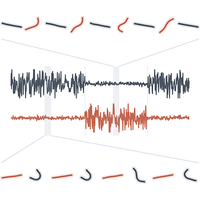
Reversibility, Chaos, and Attractors in Periodically Sheared Elastic Filaments

Francesco Bonacci, Brato Chakrabarti, Olivia du Roure, Anke Lindner, and David Saintillan

Phys. Rev. X 16, 031067 (2026) - Published 14 September, 2026

Combining experiments on actin filaments with numerical simulations, a previously unknown transition from reversible motion to intermittent, noise-driven chaos in single semiflexible filaments under periodic shear is unveiled.

Emergent Altermagnetism at Surfaces of Antiferromagnets: Full Symmetry Classification and Material Identification

Colin Lange, Rodrigo Jaeschke-Ubiergo, Atasi Chakraborty, Xanthe H. Verbeek, Libor Šmejkal, Jairo Sinova, and Alexander Mook

Phys. Rev. X 16, 031066 (2026) - Published 11 September, 2026

A theoretical surface spin-group framework demonstrates that surface symmetry breaking in conventional antiferromagnets naturally induces two-dimensional altermagnetism across more than 150 candidate materials.

Geometrically Frustrated Quadrupoles on the Pyrochlore Lattice and Generalized Spin Liquids

Kristian Tyn Kai Chung, Sylvain Petit, Julien Robert, and Paul McClarty

Phys. Rev. X 16, 031065 (2026) - Published 11 September, 2026

A semiclassical framework models quantum quadrupoles as biaxial tensors, showing how angular-momentum-dependent geometries dictate generalized nematic phases and quadrupolar spin liquids in frustrated magnets.

Effective Ionic Valence and Local Magnetic Moment in Kagome Superconductors

Ruoshi Jiang, Zi-Jian Lang, Yuzki Oey, Andrea Capa Salinas, Stephen D. Wilson, Yongwei Li, Ilya Shipulin, Yiwen Zhang, Deng Hu, Zhiwei Wang, Hans-Henning Klauss, Zurab Guguchia, Vadim Grinenko, and Wei Ku

Phys. Rev. X 16, 031064 (2026) - Published 10 September, 2026

Revealing concealed ionic local moments in kagome superconductors reflects strong local correlations.

Quantum Birthmarks: Ergodicity Breaking Beyond Scarring

Anton M. Graf, Saul Atwood, Mingxuan Xiao, Roland Ketzmerick, Eric J. Heller, and Joonas Keski-Rahkonen

Phys. Rev. X 16, 031063 (2026) - Published 10 September, 2026

Researchers develop a theoretical framework showing that quantum systems permanently retain a memory of their initial state and early dynamics, in defiance of classical expectations.

General Quantum Circuit Framework for Extended Wigner’s Friend Scenarios: Logically and Causally Consistent Reasoning without Absolute Measurement Events

V. Vilasini and Mischa P. Woods

Phys. Rev. X 16, 031062 (2026) - Published 9 September, 2026

Researchers develop a quantum circuit framework for extended Wigner’s friend scenarios, resolving logical paradoxes by tracking Heisenberg cuts.

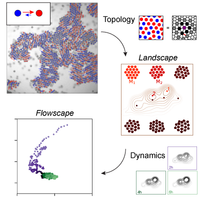
Topological Flowscape Reveals State Transitions in Nonreciprocal Living Matter

Hyunseok Lee, EliseAnne Koskelo, Shreyas Gokhale, Junang Li, Chenyi Fei, Chih-Wei Joshua Liu, Lisa Lin, Jörn Dunkel, Dominic J. Skinner, and Nikta Fakhri

Phys. Rev. X 16, 031061 (2026) - Published 8 September, 2026

Characterizing living systems far from the thermodynamic limit can yield insight into the physics of nonreciprocity and biological self-organization.

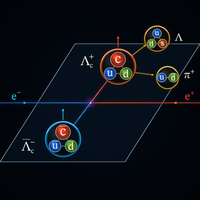
Production and Decay Dynamics of the Charmed Baryon Λc+ in e+e− Annihilations near Threshold

M. Ablikim et al. (BESIII Collaboration)

Phys. Rev. X 16, 031058 (2026) - Published 4 September, 2026

Researchers observe the transverse polarization of the charmed baryon Λc+ in electron-positron annihilations using the BESIII detector.

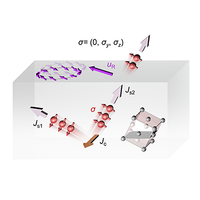
Ultrastrong Unconventional Spin Current via Noncollinear Spin-Orbit Filtering

Hongliang Chen, Zi-An Wang, Xingguo Gao, Hang Zhou, Jiaxin Chen, Chang Pan, Lizhu Ren, Qia Shen, Zhenyi Zheng, Dandan Guan, Xiaoxue Liu, Shiyong Wang, Yaoyi Li, Hao Zheng, Canhua Liu, Yumeng Yang, Xuepeng Qiu, Guowei Zhou, Jingsheng Chen, Jinfeng Jia, Ding-Fu Shao, and Liang Liu

Phys. Rev. X 16, 031060 (2026) - Published 3 September, 2026

An asymmetric platinum interface enables noncollinear spin-orbit filtering, breaking bulk symmetry constraints to generate out-of-plane spin currents for field-free magnetization switching.

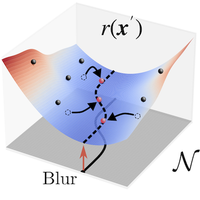
Removing Nodal and Support-Mismatch Pathologies in Variational Monte Carlo via Blurred Sampling

Zhou-Quan Wan, Roeland Wiersema, and Shiwei Zhang

Phys. Rev. X 16, 031059 (2026) - Published 2 September, 2026

A Monte Carlo postprocessing method called blurred sampling eliminates infinite variance and systematic bias in variational quantum many-body simulations.

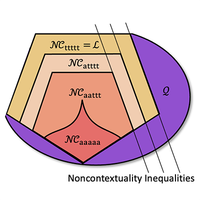
Entanglement Certification Using Noncontextuality Inequalities

Yujie Zhang, Jonah Spodek, David Schmid, Carter Reid, Liam J. Morrison, Thomas Jennewein, Kevin J. Resch, and Robert W. Spekkens

Phys. Rev. X 16, 031057 (2026) - Published 1 September, 2026

Researchers demonstrate a gauge-independent entanglement certification method based on noncontextuality inequalities that detects entangled states without requiring prior measurement device characterization.

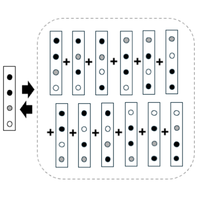
Low-Depth Quantum Symmetrization

Zhenning Liu, Andrew M. Childs, and Daniel Gottesman

Phys. Rev. X 16, 031056 (2026) - Published 31 August, 2026

Researchers develop low-depth quantum symmetrization algorithms that enable efficient bosonic simulations, low-depth Dicke state preparation, and multiphoton interferometric imaging.

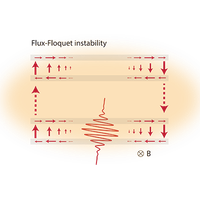
Flux-Floquet Instability in Fluctuating Superconductors

Marios H. Michael, Duilio De Santis, Eugene A. Demler, and Patrick A. Lee

Phys. Rev. X 16, 031055 (2026) - Published 31 August, 2026

Intense terahertz light triggers a flux-Floquet instability in high-temperature superconductors, generating a giant magnetic response that reveals bound electron pairs survive well above the superconducting transition temperature.

Sign In to Your Journals Account

Filter

Recent Issues

Vol. 16, Iss. 4
October - December 2026
Vol. 16, Iss. 3
July - September 2026
Vol. 16, Iss. 2
April - June 2026
Vol. 16, Iss. 1
January - March 2026
Category
Article Type

Filter

Article Lookup

Enter a citation