Recent Articles

Limits of Inference in Complex Systems: When Stochastic Models Become Indistinguishable

Javier Aguilar, Miguel A. Muñoz, and Sandro Azaele

Phys. Rev. X 16, 031015 (2026) - Published 23 July, 2026

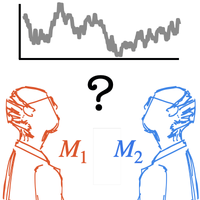
A path-inference framework quantifies data resolution limits that render distinct stochastic models empirically indistinguishable and offers guidelines for designing experimental measurements that maximize information extraction.

Statistical Physics of Deep Learning: Optimal Learning of a Multilayer Perceptron near Interpolation

Jean Barbier, Francesco Camilli, Minh-Toan Nguyen, Mauro Pastore, and Rudy Skerk

Phys. Rev. X 16, 031014 (2026) - Published 22 July, 2026

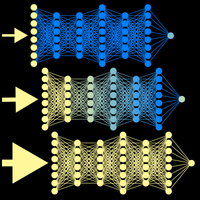
Using statistical physics and random matrix theory, researchers derive the generalization error of a deep fully connected neural network and uncover the mechanisms governing its behavior as feature learning progressively propagates across layers.

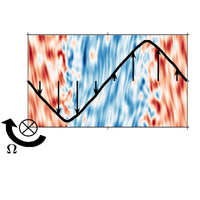
Waves Maintain Large-Scale 2D Flows in Rotating Turbulence and Cause Their Demise

Sébastien Gomé and Anna Frishman

Phys. Rev. X 16, 031013 (2026) - Published 21 July, 2026

A first-principles approach helps explain energy transfer from 3D wave excitation to 2D structures in rotating turbulent flow.

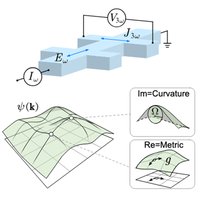
Identifying Geometric Third-Order Nonlinear Transport in Disordered Materials

Zhen-Hao Gong, Zhi-Hao Wei, Hai-Zhou Lu, and X. C. Xie

Phys. Rev. X 16, 031012 (2026) - Published 21 July, 2026

A theoretical data-analysis tool resolves the chaotic interpretation of nonlinear electronic transport data, providing a structured method to extract quantum geometric properties from realistic materials.

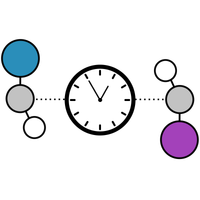
Engineered Molecular Clock Transitions for Precision Measurements

Yuiki Takahashi, Harish D. Ramachandran, Arian Jadbabaie, Yi Zeng, Chi Zhang, and Nicholas R. Hutzler

Phys. Rev. X 16, 031011 (2026) - Published 20 July, 2026

Special clock transitions in heavy polar molecules have been engineered to probe physics beyond the standard model, suppressing disruptive electromagnetic noise by orders of magnitude while preserving high sensitivity.

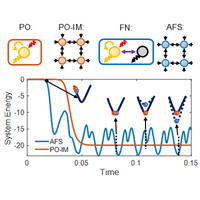
Floquet-Based Ising Machines Escape Local Minima in QUBO Problems

Nicolas Casilli, Seunghwi Kim, Sunil Mittal, Marvin Onabajo, Andrea Alù, and Cristian Cassella

Phys. Rev. X 16, 031010 (2026) - Published 17 July, 2026

The analog Floquet solver incorporates Floquet amplitude modulations to help it escape local minima, significantly improving the accuracy of parametric oscillator-based Ising machines in solving optimization problems.

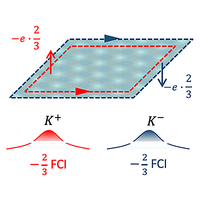
Candidate for a Fractional Topological Insulator in Twisted MoTe2

Yiping Wang, Gillian E. Minarik, Weijie Li, Yves Kwan, Shuai Yuan, Eric Anderson, Chaowei Hu, Julian Ingham, Jeongheon Choe, Takashi Taniguchi, Kenji Watanabe, Xavier Roy, Jiun-Haw Chu, Raquel Queiroz, James C. Hone, N. Regnault, Xiaodong Xu, and Xiaoyang Zhu

Phys. Rev. X 16, 031009 (2026) - Published 16 July, 2026

Pump-probe modulation spectroscopy of a MoTe2 bilayer superlattice reveals an out-of-plane antiferromagnetic response, providing experimental signatures of a putative fractional topological insulator state.

Electronic Structure of Compressively Strained Bilayer Nickelate Thin Film

Bai Yang Wang, Sebastien N. Abadi, Yidi Liu, Yu Zhang, Yong Zhong, Yijun Yu, Berit H. Goodge, Xiaoliang Zhang, Yi-Ming Wu, Ruohan Wang, Jiarui Li, Yaoju Tarn, Eun Kyo Ko, Vivek Thampy, Chun Lin, Makoto Hashimoto, Donghui Lu, Young S. Lee, Thomas P. Devereaux, Chunjing Jia, Harold Y. Hwang, and Zhi-Xun Shen

Phys. Rev. X 16, 031008 (2026) - Published 15 July, 2026

Angle-resolved photoemission spectroscopy of bilayer nickelate thin films reveals that the out-of-plane nickel orbital band shifts with strain and doping but is not required at the Fermi level for superconductivity.

Covariant Path Integrals for Quantum Fields Backreacting on Classical Space-Time

Jonathan Oppenheim and Zachary Weller-Davies

Phys. Rev. X 16, 031007 (2026) - Published 15 July, 2026

Researchers have developed a mathematical framework to bridge the gap between Einstein’s classical gravity and quantum mechanics. Their theory allows matter to remain quantum while space-time stays classical, offering a way to test if space and time truly require a quantum explanation.

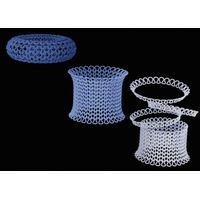
Topological Defect Propagation to Classify Knitted Fabrics

Daisuke S. Shimamoto, Keiko Shimamoto, Sonia Mahmoudi, and Samuel Poincloux

Phys. Rev. X 16, 031006 (2026) - Published 14 July, 2026

The ability of a fabric to be knitted into a textile can be determined on the basis of the topology of its pattern.

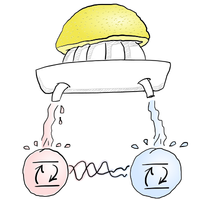
Distributing Stationary Qubit Entanglement through a Nonlocal Squeezed Reservoir

A. Andrés-Juanes, J. Agustí, R. Sett, E. S. Redchenko, L. N. Kapoor, S. Hawaldar, P. Rabl, and J. M. Fink

Phys. Rev. X 16, 031005 (2026) - Published 13 July, 2026

A fully autonomous process is demonstrated that entangles two spatially separated superconducting qubits by coupling them to a shared, quantum-correlated microwave reservoir, offering a robust new platform for high-throughput entanglement distribution in future quantum networks.

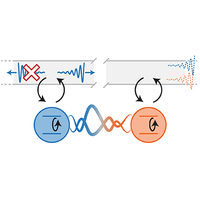
Autonomous Stabilization of Remote Entanglement in a Cascaded Quantum Network

Abdullah Irfan, Kaushik Singirikonda, Mingxing Yao, Andrew Lingenfelter, Michael Mollenhauer, Xi Cao, Aashish A. Clerk, and Wolfgang Pfaff

Phys. Rev. X 16, 031004 (2026) - Published 13 July, 2026

Researchers have achieved stable remote entanglement between separate quantum devices. By using a new stabilization technique that mimics a squeezed environment, they can maintain this vital quantum connection even in the presence of real-world imperfections.

Electric-Field Control of Interlayer Binding and Friction in h-BN Contacts

Penghua Ying, Michael Urbakh, and Oded Hod

Phys. Rev. X 16, 031003 (2026) - Published 10 July, 2026

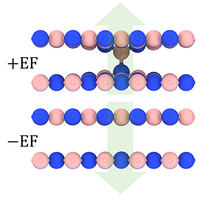
External electric fields can be used to control sliding resistance in layered materials, providing a way to control friction in some systems.

Vast World of Quantum Advantage

Hsin-Yuan Huang, Soonwon Choi, Jarrod R. McClean, and John Preskill

Phys. Rev. X 16, 030501 (2026) - Published 9 July, 2026

Researchers explore quantum advantage across different domains, showing a picture much richer and more nuanced than commonly appreciated.

Agentic Exploration of Physics Models

Maximilian Nägele and Florian Marquardt

Phys. Rev. X 16, 031002 (2026) - Published 8 July, 2026

ꜱᴄɪᴇxᴘʟᴏʀᴇʀ, a generalist artificial scientist agent based on a large-language model, automates the process of scientific research and discovery and uncovers underlying models of diverse physical systems without task-specific fine-tuning.

Universal Fault-Tolerant Quantum Computation in 2D without Getting Tied in Knots

Margarita Davydova, Andreas Bauer, Julio C. Magdalena de la Fuente, Mark Webster, Dominic J. Williamson, and Benjamin J. Brown

Phys. Rev. X 16, 031001 (2026) - Published 7 July, 2026

Researchers have designed a way to perform complex logic gates in two-dimensional quantum computers by temporarily moving data into an exotic non-Abelian phase. This method provides a path toward large-scale, fault-tolerant quantum computation.

Editorial: Physical Review X at Fifteen

Denis Bartolo and Brent Grocholski

Phys. Rev. X 16, 030001 (2026) - Published 1 July, 2026

Multiscale Interfacial Mechanics of Soft Solids

Nicolas Bain, Lawrence A. Wilen, Dominic Gerber, Mengjie Zu, Carl P. Goodrich, Senthilkumar Duraivel, Kaarthik Varma, Harsha Koganti, Robert W. Style, and Eric R. Dufresne

Phys. Rev. X 16, 021063 (2026) - Published 30 June, 2026

Using high-precision 3D location and tracking of nanotracers, this work investigates interfacial properties and mechanical response of soft polymer solids, revealing the multiscale nature of soft solid interfaces.

Observation of Synchronization between Two Quantum van der Pol Oscillators in Trapped Ions

Jiarui Liu, Qiming Wu, Joel E. Moore, Hartmut Haeffner, and Christopher W. Wächtler

Phys. Rev. X 16, 021062 (2026) - Published 29 June, 2026

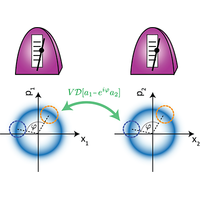
Synchronization between two quantum van der Pol oscillators is achieved by engineering dissipation in a trapped-ion quantum simulator, where the synchronized state is encoded in a fixed relative phase accessible only through joint measurement.

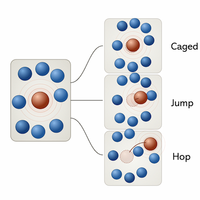
Rare Cage Escapes Drive Relaxation in Deeply Supercooled Liquids

Francesco Rusciano, Raffaele Pastore, Francesco Greco, and Walter Kob

Phys. Rev. X 16, 021061 (2026) - Published 26 June, 2026
Simulations conducted significantly below the mode coupling temperature allow dynamic properties of glass forming systems to be uncovered.

Sign In to Your Journals Account

Filter

Recent Issues

Vol. 16, Iss. 4
October - December 2026
Vol. 16, Iss. 3
July - September 2026
Vol. 16, Iss. 2
April - June 2026
Vol. 16, Iss. 1
January - March 2026
Category
Article Type

Filter

Article Lookup

Enter a citation