Recent Articles

Design study of a high-brightness high-repetition rate thermionic injector for free-electron laser application: The architecture

Vitaliy Goryashko, Kazuaki Togawa, Peter Salén, and Anatoliy Opanasenko

Phys. Rev. Accel. Beams 28, 091601 (2025) - Published 11 September, 2025

An upgrade of the SACLA linear accelerator is planned to achieve a kHz-level repetition rate and increased beam brightness. A key component of this upgrade is a new injector based on the existing pulsed DC gun with a thermionic cathode, featuring a novel architecture that combines multistage velocity bunching with a single stage of magnetic compression. Through genetic algorithms-based optimization, the system achieves up to three orders of magnitude in bunch compression while maintaining sub-micrometer emittance levels. The performance of the proposed injector is comparable to that of the state-of-the-art C-band injector based on an RF photocathode gun

Balance of bunch compression and emittance preservation for high-brightness x-ray free electron laser injectors

C. Davut, O. Apsimon, B. R. Hounsell, B. L. Militsyn, L. S. Cowie, F. Yaman, A. D. Brynes, and P. H. Williams

Phys. Rev. Accel. Beams 28, 091602 (2025) - Published 11 September, 2025

Achieving high peak current without degrading beam quality is a challenge for modern XFELs. Bunch compression in the injector stage is required to provide enhanced downstream brightness. However, the process can introduce emittance growth, energy spread, and asymmetries in the longitudinal phase space and charge distribution, which can critically limit FEL performance. This work presents two XFEL injector designs that balance compression with emittance preservation, account for these effects, and provide a pathway toward brighter XFEL operation.

Impedance characterization and optimization of the High Energy Photon Source in-vacuum undulator

Na Wang, Sen Yue, Jintao Li, Saike Tian, Lei Zhang, Shuchen Sun, Yi Jiao, Huihua Lu, and Yuhui Li

Phys. Rev. Accel. Beams 28, 094401 (2025) - Published 11 September, 2025

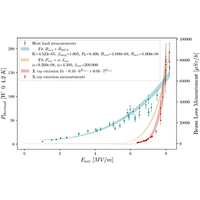
The impedance characteristics of the in-vacuum undulators (IVUs) and associated heat load deposition during beam passage constitute critical considerations in IVU design and operation. This study focuses on the transverse and longitudinal trapped modes and their mitigations, and explores the impedance enhancement introduced by the bulge flexible taper transitions. Laboratory bench measurements are performed to identify the longitudinal and transverse impedance of the IVU experimentally.

Investigation of beam loss mechanism by parasitic H− in high-power proton linac

Duanyang Jia, Zhijun Wang, Huan Jia, Bingyan Liu, Man Yi, Dalong Guo, Hanjie Cai, Weilong Chen, Shuhui Liu, Tielong Wang, Tao Zhang, and Yuan He

Phys. Rev. Accel. Beams 28, 090101 (2025) - Published 10 September, 2025

Beam loss is critical in high-power accelerators. During CAFe’s high-power proton beam commissioning, unexpected irradiation opposite the deflection direction revealed parasitic H− particles—first observed in a linac. H− particles were mainly generated by the electron capture reaction between the proton beam and the background gas (H2). This study uses nuclide analysis, molecular science, and beam experiments to verify this loss mechanism, with key implications for future high-intensity proton accelerator designs.

In-vacuum thin eddy-current septum magnet for innovative off-axis beam injection in next-generation light source

Shiro Takano, Kenji Fukami, Takahiro Inagaki, Taiki Iwashita, Chikara Kondo, Mitsuhiro Masaki, Kanichiro Ogata, Masaya Oishi, Yoshiyuki Saito, Masazumi Shoji, Minori Tajima, Kazuhiro Tamura, Tsutomu Taniuchi, Takahiro Watanabe, Hiroshi Yamaguchi, and Hitoshi Tanaka

Phys. Rev. Accel. Beams 28, 092401 (2025) - Published 10 September, 2025

There has been a continuous effort to improve the performance of light sources by pursuing higher photon brilliance and coherence. This trend has been driving the lattice design of storage rings toward a diffraction-limited emittance, which in turn results in a tighter acceptance for the injected beam. Beam injection is one of the most crucial issues for the development of future light sources based on diffraction-limited storage rings. To address the beam injection requirements of next-generation light sources, we have developed an in-vacuum thin eddy-current septum magnet.

Detailed design and optimization of ferroelectric tuners

Ilan Ben-Zvi, Alick Macpherson, and Samuel Smith

Phys. Rev. Accel. Beams 28, 093502 (2025) - Published 10 September, 2025

Ferroelectric devices have progressed to the point that megawatt-class phase shifters and associated cavity tuners are feasible. The design methodology presented for a Ferroelectric Fast Reactive Tuner enables modulation of Mega VAR reactive powers on a sub-microsecond timescale by offering detailed, closed-form component calculations. Performance optimization is addressed through a Figure of Merit, which allows assessment of tuner effectiveness and applicability across a wide range of RF frequencies and reactive power levels. This approach supports rapid feasibility analysis and parameter selection for scenarios defined by required tuning range, cavity frequency, and stored energy.

Enhanced laser-driven radioisotope production using a helical coil target with tube

C. L. C. Lacoste, T. Carrière, H. Larreur, D. Batani, D. Raffestin, P. Antici, E. D’Humières, P. Nicolaï, and M. Bardon

Phys. Rev. Accel. Beams 28, 093401 (2025) - Published 9 September, 2025

Building on previous experimental and theoretical work, in this article we investigate potential applications of helical targets for medical radioisotope production. Specifically, this study focuses on energy bunching, thanks to the helical coil, of alpha particles generated through proton-boron fusion reactions. By selecting particles with specific energies, it becomes possible to optimize the reaction cross-section for producing desired radioisotopes, demonstrating a promising application of helical targets in nuclear medicine.

Effects of curved superconducting magnets on beam stability in a compact ion therapy synchrotron

H. X. Q. Norman, R. B. Appleby, E. Benedetto, and S. L. Sheehy

Phys. Rev. Accel. Beams 28, 094701 (2025) - Published 8 September, 2025

This article presents the first detailed study of synchrotron beam dynamics incorporating strongly curved canted-cosine-theta (CCT) superconducting magnets. We develop a method to characterize the 3D curved fields of a CCT model developed for a compact carbon ion therapy synchrotron, designed within the HITRI+ project and NIMMS (CERN). Beam dynamics studies are carried out in MAD-X/PTC to ascertain the effects of magnet nonlinearities on long-term beam stability. Insights gained provide new techniques to characterize and correct for the effect of curved magnets, allowing the optimization of both magnet and synchrotron designs, with applications extending to particle physics.

Cryogenic permanent magnet undulator by evaporative cooling of liquid nitrogen

Jui-Che Huang, Hideo Kitamura, Ping-Shun Chuang, Hsing-Chieh Li, Chih-Sheng Yang, Chun-Yi Wu, Chih-Yu Liao, Huang-Hsiu Tsai, Chih-Wei Chen, Wun-Rong Liao, and Chin-Kang Yang

Phys. Rev. Accel. Beams 28, 093501 (2025) - Published 5 September, 2025

The newly developed cryogenic permanent magnet undulator (CUT18) at Taiwan Photon Source employs liquid nitrogen tank cooling to deliver sustainable, vibration-free operation. Using high-remanence Tb-diffused NdFeB magnets and optimized magnetization tilt, CUT18 achieves a deflection parameter (K) above 2. This paper highlights its robust performance under high beam currents and presents a design optimized for magnetic field strength, energy efficiency, and long-term reliability in modern synchrotron light sources.

Symplectic tracking through curved three-dimensional fields by a method of generating functions

Jie Li, Kedong Wang, Jinloong Lee, Kai Wang, Xu Zhang, Xueqing Yan, and Kun Zhu

Phys. Rev. Accel. Beams 28, 094001 (2025) - Published 2 September, 2025

Accurate long-term particle tracking in modern accelerators with curved, three-dimensional magnetic fields requires robust symplectic methods, which preserve the physical structure of the system’s dynamics. This paper presents a novel algorithm that extends the powerful generating function method—previously limited to straight systems—to arbitrary curved reference trajectories. By combining analytical harmonic field representations with a perturbative solution to the Hamilton-Jacobi equation, our method yields a direct, high-resolution map of the particle dynamics, providing a crucial and efficient tool for designing next-generation circular accelerators with complex magnet configurations.

Cryogenics of a superconducting LINAC: SPIRAL2 from commissioning to operation

Adnan Ghribi, Muhammad Aburas, Pierre-Emmanuel Bernaudin, Patrick Bonnay, François Bonne, Frédéric Bouly, Marco Di Giacomo, Charly Lassalle, David Longuevergne, François Millet, Jean-Pierre Thermeau, Arnaud Trudel, Quentin Tura, and Adrien Vassal

Phys. Rev. Accel. Beams 28, 081601 (2025) - Published 29 August, 2025

The reliable operation of superconducting LINACs hinges on robust cryogenic systems, yet commissioning often reveals complex dynamics such as thermoacoustic oscillations, cavity instabilities, and nonuniform heat loads. This work presents a detailed account of SPIRAL2 cryogenics from initial commissioning to routine beam delivery, highlighting advances in thermodynamic modelling, linear-quadratic control, and physics-informed state observers. By coupling these approaches with machine learning diagnostics, the study establishes new methods for stabilizing superconducting cavities and enhancing long-term accelerator performance.

Precision beam diagnostics at the NuMI facility using muon monitor observations

Katsuya Yonehara, Sudeshna Ganguly, Don Athula Wickremasinghe, Pavel Snopok, and Yiding Yu

Phys. Rev. Accel. Beams 28, 082804 (2025) - Published 25 August, 2025

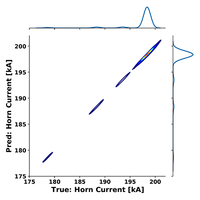
This study demonstrates that the magnetic horn employed in the NuMI beamline functions predominantly as a linear focusing element. This characteristic is verified through analytical modeling and numerical simulations, and further validated using muon‑monitor measurements. Moreover, it is shown that the horn current can be reconstructed from muon monitor signals with an accuracy of 0.05%, highlighting the potential of this technique for non-invasive, real-time beam diagnostics with high precision for future long baseline neutrino experiments.

Decommissioning and post-irradiation examination of the LHC beam dumps

N. Solieri, A. Lund, A.-P. Bernardes, L. R. Buonocore, A. Cherif, S. De Man, M. Di Castro, S. Di Giovannantonio, G. Dumont, S. El-Idrissi, E. Farina, D. Grenier, E. Grenier-Boley, M. Himmerlich, A. Infantino, A. Lechner, R. Mouret, D. Pazem, A. T. Perez-Fontenla, E. Romagnoli, S. Sgobba, C. Tromel, C. Veiga Almagro, and M. Calviani

Phys. Rev. Accel. Beams 28, 083001 (2025) - Published 25 August, 2025

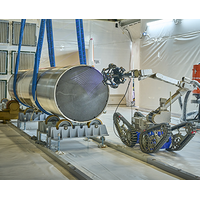
After nearly a decade of operation under high-intensity proton beams, the LHC beam dumps - measuring 8.5 m in length, 720 mm in diameter, and weighing over 6 t - were dismantled and examined in an unprecedented operation at CERN. The installation of a dedicated facility with remote handling systems, along with the development of a custom cutting strategy, enabled the safe opening of the highly activated duplex stainless-steel vessel to access and inspect the carbon-based core. The results assess the viability of the absorber materials under long-term exposure to high energy densities and demonstrate how large radioactive accelerator components can be safely decommissioned.

Application of deep learning methods for online beam optics and coupling feedback in synchrotron light sources

Liyuan Tan, Shouzhi Xuan, Yihao Gong, Xinzhong Liu, Xu Wu, Shunqiang Tian, and Wenzhi Zhang

Phys. Rev. Accel. Beams 28, 084601 (2025) - Published 25 August, 2025

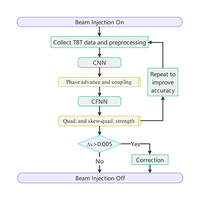
Maintaining stable, high-quality electron beams is critical for synchrotron light sources, but beam optics and coupling are constantly disturbed by insertion device movements during operation. This study introduces a novel real-time feedback system that tackles this challenge. By applying deep learning directly to turn-by-turn beam position data, the system rapidly extracts key optics parameters and predicts necessary corrections. Successfully demonstrated at the Shanghai Synchrotron Radiation Facility (SSRF), this approach reduces optics distortion and suppresses emittance coupling variations, enabling continuous monitoring and correction within each injection cycle.

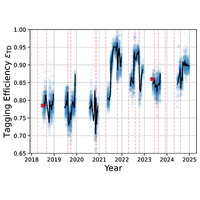
Monitoring the tagging efficiency of the low-energy muon beamline through background analysis: Insights into the long-term performance of ultrathin carbon foils

Gianluca Janka, Herman Ishchenko, Zaher Salman, Andreas Suter, and Thomas Prokscha

Phys. Rev. Accel. Beams 28, 082802 (2025) - Published 22 August, 2025

The unique LEM beamline at PSI delivers low-energy muons for studying the magnetic and electronic properties of thin films, surfaces, and multilayers. Its ultrathin carbon foil, essential for muon tagging, can degrade silently, and changes in tagging efficiency directly reflect variations in beam quality. We present a noninvasive method to monitor the foil condition in real time by extracting the tagging efficiency from standard low-energy muSR decay histograms.

Methods for full coupling operation in a synchrotron light source

Michele Carlà, Gabriele Benedetti, Ubaldo Iriso, Zeus Martí, and Laura Torino

Phys. Rev. Accel. Beams 28, 082803 (2025) - Published 22 August, 2025

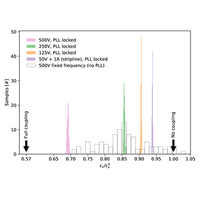
Beam experiments were carried out on the ALBA synchrotron to evaluate different methods to introduce coupling with special attention to the compatibility with operations. The first experiments intend to achieve full coupling by tuning the working point onto the coupling resonance. Our second attempt is based on the excitation of the resonance with an A.C. skew quadrupole driven at a frequency equal to the difference of the tunes. Unfortunately the unavoidable small fluctuation of the tunes, did not allow to keep a stable beam size. A stable excitation was finally achieved using a phase-locked loop system which generates a reference of the tunes to drive the A.C. skew quadrupole.

Beam optics ramping in underconstrained lattice design: Application to Electron-Ion Collider hadron storage ring cooling section

Derong Xu

Phys. Rev. Accel. Beams 28, 084002 (2025) - Published 22 August, 2025

This paper presents two general methods for beam optics ramping in under-constrained systems, motivated by the Electron-Ion Collider Hadron Storage Ring cooling section design. Direct interpolation between matched optics at injection and top energy often fails due to large separations in knob space. An intermediate-penalty method maintains ramp continuity when identical constraints are enforced along the path, while a continuation-based scheme with adaptive weighting constructs feasible ramps under strict, differing constraints at both ends. These approaches provide broadly applicable strategies for lattice design where endpoint optics differ significantly.

Focusing of relativistic electron beams with permanent magnetic solenoid

T. Xu, C. J. R. Duncan, P. Denham, B. H. Schaap, A. Kulkarni, D. Garcia, S. D. Anderson, P. Musumeci, and R. J. England

Phys. Rev. Accel. Beams 28, 082401 (2025) - Published 20 August, 2025

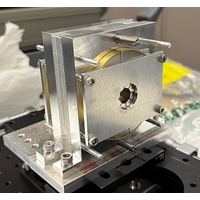
A compact radially magnetized permanent magnetic solenoid (PMS) delivering a 1 T peak field has been designed, fabricated, and experimentally validated. Beam tests with 7 MeV electrons confirm a focal length of less than 10 cm, demonstrating the PMS’s potential for high-brightness MeV-scale applications. This power-free, compact solution offers a practical and cost-effective alternative to electromagnetic solenoids, with applications ranging from ultrafast electron diffraction to inverse Compton sources.

Controlling the transverse multipole components in rf cavity modes using the azimuthal modulation method

L. M. Wroe, W. Wuensch, and R. J. Apsimon

Phys. Rev. Accel. Beams 28, 082002 (2025) - Published 19 August, 2025

We developed the Azimuthal Modulation Method to precisely sculpt the electromagnetic fields inside radiofrequency (rf) cavities used for accelerating, deflecting, or focusing particle beams. By azimuthally modifying the cavity wall geometry, this technique enables precise control of the multipole components in the longitudinal electric field. It can be used to remove undesired multipoles introduced by features such as power couplers, yielding multipole free accelerating structures that reduce beam degradation, or to add desired multipoles for beam shaping applications. As an example, we demonstrate an rf cavity that transforms a transverse Gaussian beam distribution into uniform.

Simulation studies of a high-repetition-rate electron-driven surface muon beamline at SHINE

Fangchao Liu, Yusuke Takeuchi, Si Chen, Siyuan Chen, Kim Siang Khaw, Meng Lyu, Ziwen Pan, Dong Wang, Jiangtao Wang, Liang Wang, and Wenzhen Xu

Phys. Rev. Accel. Beams 28, 083401 (2025) - Published 18 August, 2025

This work proposes a novel high-repetition-rate pulsed surface muon source driven by the 8 GeV electron beam at the SHINE facility. Unlike conventional proton-based sources operating at low repetition rates or in continuous mode, the proposed design achieves 50 kHz pulsed operation with a surface muon intensity of 3×10⁶ μ⁺/s, which is comparable to existing facilities. The resulting time structure is ideal for μSR and several fundamental muon experiments. This study demonstrates how existing GeV electron beamlines can be cost-effectively leveraged to generate intense muon beams.

Sign In to Your Journals Account

Filter

Recent Issues

Vol. 29, Iss. 10
October 2026
Vol. 29, Iss. 9
September 2026
Vol. 29, Iss. 8
August 2026
Vol. 29, Iss. 7
July 2026
Category
Article Type
Section

Filter

Article Lookup

Enter a citation