Recent Articles

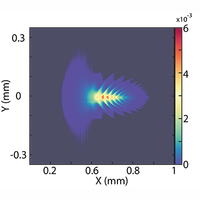
First steps on plasma beam prebuncher for free electron lasers through more suitable relativistic reference-frame-based particle-in-cell tools

Driss Oumbarek Espinos, Alexei Zhidkov, Alexandre Rondepierre, Masafumi Tawada, and Mika Masuzawa

Phys. Rev. Accel. Beams 28, 060702 (2025) - Published 27 June, 2025

Plasma devices for beam transport are slowly being accepted as an alternative due to their potential for keeping or even reducing particle beam emittance, but also for compactness which supplements recent advances in compact laser plasma acceleration systems. Here we utilize a low-density plasma device to micro-bunch electron beams through a “cascade back focusing” caused by beam generated wake inside the plasma. Specialized particle-in-cell tools to study such phenomena over long distance (>cm), taking advantage of relativistic reference frames, is presented. Such devices have significant potential for shortening future FEL facilities and increasing current efficiency.

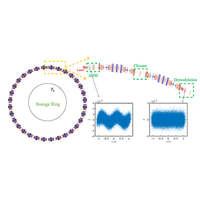
Method for reversing the laser modulation in a storage ring

Weihang Liu, Yu Zhao, Xiao Li, Sheng Wang, Yi Jiao, and Chao Feng

Phys. Rev. Accel. Beams 28, 060703 (2025) - Published 27 June, 2025

In storage ring-based light sources, laser modulation methods can enhance radiation output. However, this improvement is typically accompanied by degradation in beam quality and a reduction in radiation repetition rate. This work presents a demodulation method designed to mitigate these adverse effects and recover beam quality. Numerical simulations show that the proposed method preserves beam quality while enabling notable performance enhancements in the light source.

High-power radiofrequency quadrupoles: Review of recent developments, common problems, and solutions

Yuan He, Wei-ping Dou, Chen-xing Li, Zhi-jun Wang, Tian-cai Jiang, Zhou-li Zhang, Lie-peng Sun, Zheng Gao, Xiao-feng Jin, Gui-rong Huang, Ran Huang, Feng-feng Wang, Ling-yun Gong, Bin Zhang, Sheng-hu Zhang, and Hong-Wei Zhao

Phys. Rev. Accel. Beams 28, 064801 (2025) - Published 18 June, 2025

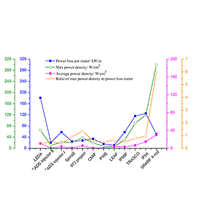
Radio frequency quadrupole (RFQ) accelerators, critical RF components in hadron accelerators, focus, bunch, and accelerate beams from tens of keV to several MeV. The growing demand for high-power RFQ implementations, particularly those operating in continuous-wave mode, has driven substantial expanded research. This review examines global advancements in addressing thermal issues, multipacting, operational stability, and frequency detuning. The paper synthesizes recent breakthroughs across the complete development cycle encompassing electromagnetic design, precision manufacturing, RF conditioning, and beam commissioning. Through systematic analysis of proposed engineering solutions, this work aims to establish a technical framework for guiding future innovations in high-power RFQ accelerator technology.

Electron beam profile: Experiment, simulation configuration, and application for ETS-10 zeolite irradiated simulation

Cao Van Chung, La Ly Nguyen, Lo Thai Son, Anh-Tuan Vo, Van-Hien Pham, Phan Trong Phuc, and Van-Phuc Dinh

Phys. Rev. Accel. Beams 28, 064501 (2025) - Published 12 June, 2025

We present a simulation configuration for the electron beam profile consistent with experiments on the linac UERL-10-15S2. Using this configuration, we have simulated the irradiation of ETS-10 zeolite. This simulation was set up with various electron energy distributions, yielding results on the dose rate distribution (2D dose map) and the mean absolute percentage deviation of the absorbed dose rate within the irradiated titanosilicate. Notably, we introduce a new mathematical function by modifying the approximated Landau distribution. The function offers a better fit and, more importantly, accurately reflects the physical nature of the energy spectrum of electrons passing through a thin layer of matter.

Development of a fast rise time air-insulated linear transformer driver for use in high energy density physics

C. Evans, T. Rocha, W. Warner, J. S. Werdin-Kennicott, S. Palko, M. Brito, J. Chen, R. Beattie-Rossberg, J. Schumer, R. Allen, and S. Portillo

Phys. Rev. Accel. Beams 28, 060402 (2025) - Published 9 June, 2025

We have developed an air insulated-fast rise time pulsed power Linear Transformer Driver (LTD) accelerator for use in driving High Energy Density Physics (HEDP) and High Power Microwave (HPM) sources. Our characterization of the device has yielded individual brick, wing, and full load currents as well as short circuit currents. The accelerator has been shown to operate successfully at various charge voltages.

Maintaining a resonance condition of an rf spin rotator through a feedback loop in a storage ring

V. Hejny et al. (JEDI Collaboration)

Phys. Rev. Accel. Beams 28, 062801 (2025) - Published 3 June, 2025

Radio frequency (RF) spin rotators are essential devices in storage rings for manipulating the spin orientation of particles, vital for precision experiments like e.g. the search for electric dipole moments (EDM). Maintaining the resonance condition between a 120 kHz spin precession and the RF device’s frequency is challenging because frequency variations of the order of a few mHz have to be controlled in order to maintain stable conditions for a few hundred seconds. Adjusting a RF Wien filter’s frequency and phase in the Cooloer Synchrotron (COSY) to stabilize the relative phase with the 120 kHz spin precession, we achieved a standard deviation of approximately 0.2 rad.

Design, fabrication, and test of a parallel-coupled slow-wave high-gradient structure for short input power pulses

Weihang Gu, Hao Zha, Jiaru Shi, Yuliang Jiang, Xiancai Lin, Focheng Liu, Jian Gao, An Li, Fangjun Hu, Qingzhu Li, Qiang Gao, and Huaibi Chen

Phys. Rev. Accel. Beams 28, 060401 (2025) - Published 2 June, 2025

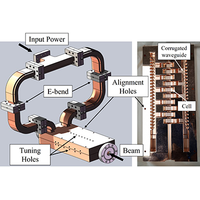
Tsinghua University has designed an X-band (11.424 GHz) slow-wave parallel-coupled 10-cell standing-wave accelerator structure and operated it at high gradient with 40-ns-long RF pulses. High-power testing was conducted on the TPOT-X platform, and the highest gradient achieved was 130 MV/m after 1.1 × 10⁷ conditioning pulses. Results show that the parallel-coupled structure is a promising choice for multi-cavity short-pulse accelerators and provides an effective solution for future high-gradient short-pulse applications.

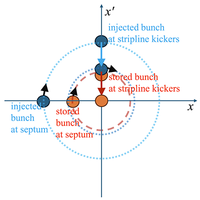
Kick-and-cancel injection scheme for the Diamond-II storage ring

A. Lueangaramwong, R. T. Fielder, A. Morgan, J. Kallestrup, I. P. S. Martin, J. D. Hares, A. K. L. Dymoke-Bradshaw, and P. A. Kellett

Phys. Rev. Accel. Beams 28, 060701 (2025) - Published 2 June, 2025

A novel quasitransparent top-up injection scheme is expected to significantly improve the transparency of the injection process and reduce the recovery time for the targeted bunch, along with minimizing transverse wakefield effects and any interactions with the transverse multibunch feedback and harmonic cavity. Short stripline kickers and kicker power supplies are thus developed to provide a double pulse with a few-microsecond pulse spacing as the requirement of this scheme.

Stability enhancement of a self-amplified spontaneous emission free-electron laser with bunching containment

Huaiqian Yi, Xiaofan Wang, Li Zeng, Yifan Liang, and Weiqing Zhang

Phys. Rev. Accel. Beams 28, 050703 (2025) - Published 30 May, 2025

Free-electron lasers (FELs) based on self-amplified spontaneous emission (SASE) are key sources of high-power, coherent radiation. However, pulse energy fluctuations during the exponential growth phase can hinder experimental precision. This study presents a stabilization scheme using a magnetic chicane introduced in this regime to exploit the developed energy modulation of the electron beam for controlling bunching factor variations, thereby significantly enhancing pulse energy stability and ensuring more reliable, consistent SASE FEL output.

Analytical theory of the skewed wake effect

A. N. Chuprina and S. S. Baturin

Phys. Rev. Accel. Beams 28, 051301 (2025) - Published 30 May, 2025

The study analyzes recently discovered skewed wake effect in slab structures, focusing on its dependence on beam tilt (α) and ellipticity (κ). For highly elliptical beams (κ≫1), the skew angle ϕ approaches −32α, while the scaling factor λ decreases. Low-κ beams show increased λ and ϕ scaling with κ2 and sin2α. The skew wake arises geometrically from beam asymmetry and misalignment, persisting even when λ is suppressed. Its stochastic nature, tied to random tilt, complicates mitigation strategies used for quadrupole wakes, posing risks of instabilities and emittance growth in colliders and wakefield accelerators. The findings highlight the need for advanced diagnostics and feedback systems to manage this effect in accelerator design and operation.

Visualizing the three-dimensional shape of a high-energy particle beam using a position-sensitive photodiode

M. Yoshino, T. Uchida, Y. Nikkawa, S. Saito, Y. Shiina, and Y. Nakano

Phys. Rev. Accel. Beams 28, 052901 (2025) - Published 30 May, 2025

We introduce a simple yet powerful method for visualizing high-energy ion beams in three dimensions using a general-purpose position-sensitive photodiode. Integrated with an FPGA-based signal processing system, the detector simultaneously records the time and position of incoming particles, allowing for full reconstruction of the beam’s spatiotemporal profile. The technique was demonstrated using 390 MeV/u Ar16+, Ar17+, and Ar18+, beams at the Heavy Ion Medical Accelerator in Chiba (HIMAC). The data reveal the detailed structure of each spill and its shot-to-shot stability.

Incoherent horizontal emittance growth due to the interplay of beam-beam interaction and longitudinal wakefield in crab-waist colliders

Peter Kicsiny, Demin Zhou, Xavier Buffat, Tatiana Pieloni, and Mike Seidel

Phys. Rev. Accel. Beams 28, 051002 (2025) - Published 27 May, 2025

A new theory has been developed to describe incoherent horizontal emittance growth in crab-waist colliders due to the interplay of beam-beam with a large crossing angle and longitudinal wakefield, building upon existing work on synchrobetatron resonances. It has been applied to study incoherent horizontal emittance blowup at the SuperKEKB, where the predictions compare well with results obtained using various numerical tracking codes. Decreasing the horizontal betastar or adjusting the rf system phase which in turn adjusts the arrival time of the beam are proposed as mitigation techniques.

Electron beam source and switchyard design for two-energy operation of x-ray Compton sources

Giovanni Campri, Simone Di Mitri, Anna Giribono, David Alesini, Armando Bazzani, Giorgio Turchetti, and Massimo Placidi

Phys. Rev. Accel. Beams 28, 051601 (2025) - Published 27 May, 2025

We present a feasibility study, providing guidelines for the design of Inverse Compton Source (ICS)-based compact x-ray sources with large operational flexibility and extended energy tunability range. Applications of these sources range from advanced medical imaging to industrial nondestructive tests. Properties of the electron beam accelerated in an All-C-Band RF structure are optimized, introducing a short X-band RF cavity, while a fast-cycling bunch selection module allows for simultaneous three electron beam–two photon beamlines–operation. The x-ray energy can be doubled in one of the two arms, providing a wide range of tunability by adjusting electron energy and interaction angle.

Suppression of a detrimental electromagnetic resonance which affects beam position monitor readings at the European Synchrotron Radiation Facility

L. R. Carver, N. Benoist, P. Brumund, T. Brochard, F. Ewald, H. P. Marques, B. Roche, K. Scheidt, and S. White

Phys. Rev. Accel. Beams 28, 050702 (2025) - Published 21 May, 2025

Systematic errors were observed on some beam position monitor (BPM) readings at the ESRF. All diagnostic measurements were indicating that an electromagnetic resonance with a frequency of 352 MHz was the cause, but the vacuum chamber profile is far too small to support a mode with such a frequency. The mode origin was surprising. During the vacuum bake-out, a small gap on the order of 3 micrometers was formed on the rf gasket next to the BPM. Gaps of this size can create low frequency capacitive modes in small spaces. This can pose major issues for the design of 4th generation light sources, whose magnetic lattices are becoming more compact.

Feasibility study of the GeV-energy muon source based on the High Intensity Heavy-Ion Accelerator Facility

Yu Xu, Xueheng Zhang, Yuhong Yu, Pei Yu, Li Deng, Jiajia Zhai, Liangwen Chen, He Zhao, Lina Sheng, Guodong Shen, Ziwen Pan, Qite Li, Chen Zhou, Qiang Li, Lei Yang, and Zhiyu Sun

Phys. Rev. Accel. Beams 28, 053401 (2025) - Published 20 May, 2025

The High-Intensity Heavy-Ion Accelerator Facility (HIAF) is currently under construction in Huizhou, China. Its high-energy fragment separator beamline will be capable of producing and delivering a high-intensity, GeV-energy muon flux. This muon beam—with its controllable energy and high flux—holds significant potential for rapid, nondestructive testing of large-scale objects. Additionally, it offers a unique platform for exploring new physics, including studies of dark matter interactions, charged lepton flavor violation and so on.

Phase space analysis of incoherent space-charge-driven structural resonances in high-intensity hadron synchrotrons

Xiao-Yu Liu, Hong-Juan Yao, Shu-Xin Zheng, and Yao-Shuo Yuan

Phys. Rev. Accel. Beams 28, 054201 (2025) - Published 19 May, 2025

For high-intensity and low-energy hadron synchrotrons, the resonance driven by the incoherent space charge is one of the main factors of emittance growth. In this paper, we present a novel analytical method to calculate the phase space structure and identify the exact order of space-charge driven structural resonances in alternating gradient focusing channels. The analytical results are compared to particle-in-cell simulations and show good agreement. One potential application of the analytical method is to design of the space-charge compensation scheme for high-intensity hadron synchrotrons. In addition, we discuss beam loss induced by multiple factors including space charge, magnet errors, power supply ripple, and chromatic effects.

Transient study of beam instability due to beam loading in standing-wave low-energy electron linear accelerators

Focheng Liu, Jiaru Shi, Hao Zha, Qiang Gao, Huaibi Chen, and Jiaqi Qiu

Phys. Rev. Accel. Beams 28, 050101 (2025) - Published 14 May, 2025

Our work studies the transient beam instability caused by beam loading within the macropulse in standing-wave (SW) low-energy electron linacs. A general model is presented to predict the transient outcomes of SW linacs by combining the power conversion relationship and beam dynamics simulation results under steady conditions, calculating outcomes of current waveform and energy spectrum with arbitrary inputs. The model was verified by a beam test with an X-band (9.3 GHz) 6 MeV SW electron linac, revealing causes of the observed beam instability. This work could provide guidance on the design, commissioning, and operation in industrial and medical low-energy electron linac applications.

Chicane-based beam loading compensation for high average current electron bunch trains

Xiaoyang Zhang, Pengwei Huang, Yingchao Du, Renkai Li, and Chuanxiang Tang

Phys. Rev. Accel. Beams 28, 053501 (2025) - Published 14 May, 2025

Beam loading compensation in normal-conducting linacs for high-current electron bunch trains is critical for maintaining beam quality. This work proposes a chicane-based method for beam loading compensation by adjusting bunch-RF phase relationships without requiring additional structures or power systems. Simulations show the method achieves a root mean square relative energy spread below 2×10⁻⁴ and normalized emittance under 0.5 mm·mrad for a 1 A bunch train in a 400 MeV injector. This approach simplifies burst-mode operations for facilities with chicanes already installed in the beamline.

Beam dynamics in a storage ring with a free-electron laser

Yunhai Cai and Juhao Wu

Phys. Rev. Accel. Beams 28, 050701 (2025) - Published 12 May, 2025

Simulations are used to investigate electron beam dynamics in a diffraction limited storage ring with a high-gain free electron laser as a combined and coupled system. We found that the exponential radiation power is reduced approximately to linear with respect to the undulator length due to the large increase of the energy spread from the free electron laser, resulting in much less radiative power than the values found in previous works.

Semianalytical algorithms to study longitudinal beam instabilities in double rf systems

A. Gamelin, V. Gubaidulin, M. B. Alves, and T. Olsson

Phys. Rev. Accel. Beams 28, 054401 (2025) - Published 6 May, 2025

This study presents advanced semi-analytical algorithms for predicting and analyzing longitudinal beam instabilities in double rf systems, which are critical for fourth-generation light sources. The algorithms take advantage of recent advances in the field and provide a computationally efficient and accurate complement to multibunch tracking simulations. We demonstrate how these algorithms can optimize rf cavity parameters in high-dimensional parameter spaces, thereby maximizing Touschek lifetime. An open-source Python package, ALBuMS (Algorithms for Longitudinal Multibunch Beam Stability), is provided as an accessible tool for the stability analysis of dual rf systems.

Sign In to Your Journals Account

Filter

Recent Issues

Vol. 29, Iss. 10
October 2026
Vol. 29, Iss. 9
September 2026
Vol. 29, Iss. 8
August 2026
Vol. 29, Iss. 7
July 2026
Category
Article Type
Section

Filter

Article Lookup

Enter a citation