Recent Articles

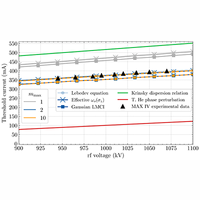
Experimental demonstration of dark current mitigation by an over-inserted plug in a normal conducting very-high-frequency gun

Xing-Heng Wang, Guan Shu, Hou-Jun Qian, Xu-Dong Li, Zi-Peng Liu, Zeng-Gong Jiang, Hao Meng, Cao-Cao Xing, Qin Zhou, and Hai-Xiao Deng

Phys. Rev. Accel. Beams 28, 043401 (2025) - Published 3 April, 2025

Very high frequency (VHF) band normal conducting guns are used as electron sources for high-repetition-rate free electron lasers, including LCLS-II in the US and SHINE in China. Substantial dark current can lead to unwanted radiation losses in these guns. It is demonstrated that by slightly over-inserting a cathode plug into the gun, the dark current can be reduced from the microampere (μA) range to the nanoampere (nA) scale, without impacting beam performance. This straightforward approach could serve as a universal strategy for dark current suppression across various types of RF guns, extending beyond VHF guns.

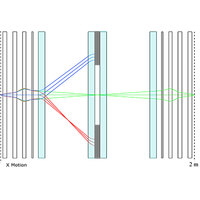
Design and evaluation of a robust carbon-fiber composite beam collimator to protect the machine from accidental injection kicker firing events in the SuperKEKB positron ring

S. Terui, M. Kikuchi, A. Natochii, K. Watanabe, T. Mimashi, T. Ishibashi, M. Shirai, K. Shibata, Y. Suetsugu, K. Iijima, M. Yao, and T. Kurihara

Phys. Rev. Accel. Beams 28, 043001 (2025) - Published 1 April, 2025

We developed a new robust collimator using a carbon fiber composite (CFC) as the head material to receive a beam kicked by the accidental firing of the injection kicker. Simulation results confirmed that the new CFC collimator suppressed temperature rise in the collimator head caused by beam hit through accidental firing of an injection kicker more effectively than the conventional tungsten collimator. We installed a collimator using CFC as the head material within the SuperKEKB. The installed collimators were evaluated for issues resulting from factors such as beam impedance and the ability to protect the particle detectors during accidental fires.

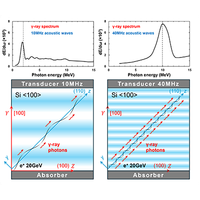
Narrowband γ-ray radiation generation by acoustically driven crystalline undulators

Konstantinos Kaleris, Evaggelos Kaselouris, Vasilis Dimitriou, Emmanouil Kaniolakis-Kaloudis, Makis Bakarezos, Michael Tatarakis, Nektarios A. Papadogiannis, Gennady B. Sushko, Andrei V. Korol, and Andrey V. Solov’yov

Phys. Rev. Accel. Beams 28, 033502 (2025) - Published 31 March, 2025

Acoustically driven crystalline undulators provide a method for generating brilliant, narrowband and tunable γ radiation, allowing for γ-ray sources with applications in nuclear physics, materials science, and biomedicine. Ultrarelativistic positrons channeling through a crystal that is periodically bent by a tens of MHz acoustic wave (AW) follow sinusoidal trajectories imposed by the spatially varying E-field of the bent lattice planes. Undulation results in the emission of directional and narrowband γ-rays, while brilliance and photon energy are controlled by the frequency and intensity of the AW. The demonstrated source can be developed for use at high-energy facilities.

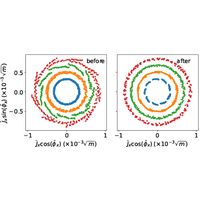
Online regularization of Poincaré map of storage rings with Shannon entropy

Yongjun Li, Kelly Anderson, Derong Xu, Yue Hao, Kiman Ha, Yoshiteru Hidaka, Minghao Song, Robert Rainer, Victor Smaluk, and Timur Shaftan

Phys. Rev. Accel. Beams 28, 034001 (2025) - Published 31 March, 2025

A Shannon entropy analysis in Poincar apose maps was used as a measurable chaos indicator to define the online optimization objective for tuning the nonlinear dynamics of the National Synchrotron Light Source-II storage ring. Regularizing chaotic beam motion in phase space improved the off-axis injection efficiency by enlarging the degraded dynamic aperture.

Detecting anomalous SRF cavity behavior with unsupervised learning

Hal Ferguson, Jiang Li, Adam Carpenter, Chris Tennant, Dillon Thomas, and Dennis Turner

Phys. Rev. Accel. Beams 28, 034602 (2025) - Published 31 March, 2025

Researchers developed an unsupervised machine learning framework to detect anomalies in superconducting RF (SRF) cavities at Jefferson Lab’s CEBAF accelerator. Tested for three months before a shutdown, it identified hardware failures and noise sources affecting performance. Unlike manual review, it detects beam disruptions missed by standard fault alerts. Enabled by fast-sampled RF signals (5,000 Hz vs. 1 Hz), it captures transient effects. Using principal component analysis (PCA), it builds daily, adaptive models without labeled data, automating a tedious process and reducing downtime, ultimately maximizing beam availability for nuclear physics experiments.

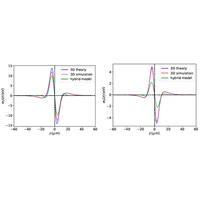
Three-dimensional analysis of microbunched electron cooling

Panagiotis Baxevanis

Phys. Rev. Accel. Beams 28, 031003 (2025) - Published 28 March, 2025

Microbunched electron cooling (MBEC), a type of coherent electron cooling, has been under consideration as a candidate for the strong hadron cooling component of the Electron Ion Collider (EIC). Most treatments of this scheme have been based on simplified models for the space charge effect in which particles are approximated by charged disks. Although such models capture a good portion of the underlying physics, they lack the fidelity of a rigorous analysis that explicitly treats the hadron and electron beams as collections of point charges. In this paper we present such a rigorous, three-dimensional (3D) model, from a theory and a simulation perspective.

Theoretical models for longitudinal coupled-bunch instabilities driven by harmonic cavities in electron storage rings

Murilo B. Alves

Phys. Rev. Accel. Beams 28, 034401 (2025) - Published 26 March, 2025

Coupled-bunch instabilities can limit the performance of electron storage rings with higher harmonic cavities. This work unifies recent theories on longitudinal instabilities in double-rf systems and provides new insights into the periodic transient beam loading (PTBL)/mode-1 instability. The framework explains its dependence on azimuthal mode interactions and resistance to Landau damping, with predictions matching recent experimental data for the first time. The developed models were implemented in the open-source package pycolleff.

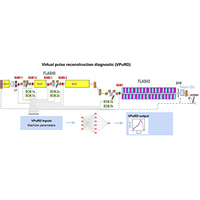
Virtual pulse reconstruction diagnostic for single-shot measurement of free electron laser radiation power

Till Korten, Vladimir Rybnikov, Peter Steinbach, and Najmeh Mirian

Phys. Rev. Accel. Beams 28, 030703 (2025) - Published 25 March, 2025

Machine learning is used to create a virtual pulse reconstruction diagnostic (VPuRD) tool for the analysis of longitudinal phase space electron beam data. The tool can be used as a noninvasive, efficient alternative to currently used single shot methods for free electron laser pulse characterization and can enable precise single shot measurements of pulse power.

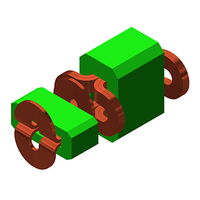
Magnetic design of downstream scanning magnets for a novel hadrontherapy gantry

Enrico Felcini, Philip Schwarz, and Marco Pullia

Phys. Rev. Accel. Beams 28, 032401 (2025) - Published 20 March, 2025

In hadrontherapy, gantries are used to deliver ion beams from different directions, enhancing the treatment quality and robustness. This paper presents the magnetic design of scanning magnets for the EuroSIG project, which aims to develop a novel superconducting gantry for hadrontherapy. The design focuses on optimizing magnet configurations and power converter compatibility. Simulations were conducted to assess field quality and beam deflection, as well as the effects of hysteresis and eddy currents. These studies confirm the feasibility of the design, supporting the development of a prototype scanning magnet.

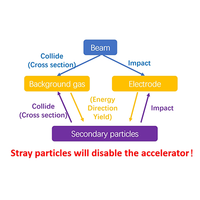
Monte Carlo simulation of ion beam and background gas collisions

Shixian Cai, Kedong Wang, Wei Huang, Jinghui Wang, Kai Wang, Dongpo Fu, Jie Li, Caijie Zhang, Tingru Zhu, Zhiying Xu, and Kun Zhu

Phys. Rev. Accel. Beams 28, 030101 (2025) - Published 18 March, 2025

In accelerators, especially in the low-energy range, stray particles significantly affect the performance parameters of the accelerator. The generation and movement of these stray particles have not been thoroughly studied. This paper introduces a Beam Monte Carlo Collision Code based on SIMION (BMCCS) to address this issue and provides three examples to illustrate its application. This code offers highly effective guidance for ion source and accelerator tube arcing, neutral beam generation, and ion implantation purity.

BAGELS for simultaneous polarization, orbit, and optics control in electron storage rings

M. G. Signorelli and G. H. Hoffstaetter

Phys. Rev. Accel. Beams 28, 031002 (2025) - Published 18 March, 2025

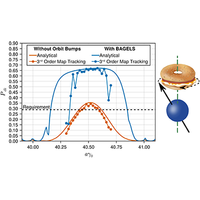
We present a novel method to minimize radiative depolarization in electron storage rings. Groups of vertical orbit bumps are constructed that achieve simultaneous polarization, orbit, and optics control, motivating the name “Best Adjustment Groups for ELectron Spin” (BAGELS). Applied in simulations of the 18 GeV Electron Storage Ring of the Electron-Ion Collider, BAGELS increases the asymptotic polarization by nearly 2x in the 1 interaction point case and over 3x in the 2-IP case. BAGELS is also used to construct knobs for global coupling correction and for generating a vertical beam size match at the IP, with minimal impacts on the polarization, orbit, and optics.

Cavity-based compact light source for extreme ultraviolet lithography

Changchao He, Hanxiang Yang, Nanshun Huang, Bo Liu, and Haixiao Deng

Phys. Rev. Accel. Beams 28, 030702 (2025) - Published 17 March, 2025

Accelerator-based light sources are increasingly recognized as promising candidates for EUV lithography applications. This research proposes a regenerative amplifier free-electron laser EUV source with harmonic lasing, driven by a superconducting energy-recovery linac. In our simulations, this approach achieves an average EUV output power of approximately 2 kW using an electron beam with an energy of ~330 MeV, which significantly reduces the required electron energy and facility size relative to other accelerator-based proposals.

Coaxial cascade-line pulsed-power generator

Liang Zhao and Yue Wu

Phys. Rev. Accel. Beams 28, 031601 (2025) - Published 17 March, 2025

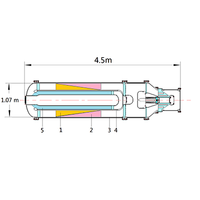
The cascade-line generator is a more compact Tesla-type generator with double pulse width and double stored energy compared with conventional single-line generators. We present a design for a 20-GW 40-ns generator of this type which is only about 4.5 m in length and 1 m in diameter.

Injection optimization at particle accelerators via reinforcement learning: From simulation to real-world application

Awal Awal, Jan Hetzel, Ralf Gebel, and Jörg Pretz

Phys. Rev. Accel. Beams 28, 034601 (2025) - Published 17 March, 2025

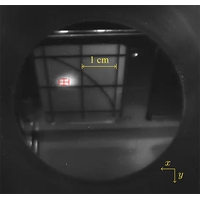
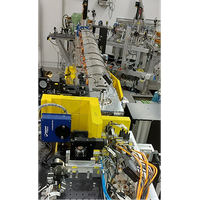
Reinforcement learning was used to optimize the injection of a particle beam into a synchrotron. The aim of the study is that an agent trained on a model adjusts eleven currents in quadrupoles and steerers of the physical injection beam line in such a way that a favorable contour (position and width) for the injection is achieved at the injection site. The contour measured with a luminescent screen and camera (see image) is one of the inputs for the agent.

Toward axial channeling deployment at the Large Hadron Collider

D. Mirarchi, M. D’Andrea, A. Mazzolari, and S. Redaelli

Phys. Rev. Accel. Beams 28, 031001 (2025) - Published 13 March, 2025

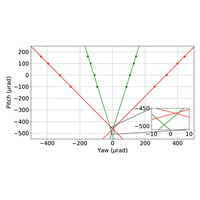
Recent achievements in the operational deployment of efficient particle steering by means of bent crystals via planar channeling in the Large Hadron Collider renewed the interest in their exploitation for advanced accelerator and high-energy physics concepts. The results presented in this work show that incorporating an additional degree of freedom in the design of future goniometers could enable the operational deployment of axial channeling. This breakthrough paves the way for more efficient beam collimation and particle steering applications, with potential benefits for high-energy physics experiments and future accelerator designs.

Modeling and design of compact, permanent-magnet transport systems for highly divergent, broad energy spread laser-driven proton beams

J. De Chant, K. Nakamura, Q. Ji, L. Obst-Huebl, S. Barber, A. M. Snijders, C. G. R. Geddes, J. van Tilborg, A. J. Gonsalves, C. B. Schroeder, and E. Esarey

Phys. Rev. Accel. Beams 28, 033501 (2025) - Published 13 March, 2025

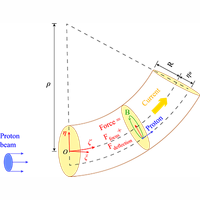
Laser-driven ion accelerators (LDIAs) offer ultra-high accelerating gradients, but their large divergence and broad energy spread pose significant transport challenges to use in applications. This study presents the design and simulation of compact, permanent-magnet beam transport systems to deliver laser-accelerated protons for applications in radiobiology, materials science, and high-energy-density physics. Using high-order particle tracking, we evaluated a number of transport configurations to optimize different parameters such as beam size, intensity, and energy. The tools and designs presented here will enable laser-driven ion accelerator facilities to better serve diverse user needs.

First high peak and average power single-pass THz free-electron laser in operation

Mikhail Krasilnikov et al.

Phys. Rev. Accel. Beams 28, 030701 (2025) - Published 12 March, 2025

At the Photo Injector Test Facility at DESY in Zeuthen (PITZ), proof-of-principle experiments have showcased a high-peak, high-average-power single-pass THz FEL. Using electron beams with 17 MeV/c energy, a bunch charge of up to 2.4 nC and a bunch length much longer than the radiation wavelength, narrowband 3 THz radiation with a pulse energy of more than 0.1 mJ was obtained using an LCLS-I undulator. Unlike the typical XFEL mechanism, the THz FEL is initiated from coherent spontaneous emission rather than shot noise, emphasizing the critical role of the local bunching factor in achieving this performance.

Curved capillary discharge for guiding and focusing laser-accelerated proton beams

Yang Yan, Mingfeng Huang, Yanlv Fang, Chentong Li, Zimin Chen, Tong Yang, Qiangyou He, Yiting Yan, Wei Yan, Kun Zhu, Chen Lin, and Xueqing Yan

Phys. Rev. Accel. Beams 28, 032801 (2025) - Published 10 March, 2025

Plasma can support extremely high-gradient strong electromagnetic fields, making it suitable not only for laser acceleration but also for short-distance manipulation of the charged particle beams. Straight capillary discharge plasma lenses have previously garnered widespread attention from researchers for their excellent focusing capabilities. In this letter, we present the first experimental demonstration of plasma-based deflection and focusing of laser-accelerated proton beams. This work is of great significance for the development of compact beam transport systems.

Vacuum-plasma transition effect on positron acceleration in the bubble regime plasma wakefield accelerators

Jia Wang, Ming Zeng, Dazhang Li, and Jie Gao

Phys. Rev. Accel. Beams 28, 031301 (2025) - Published 7 March, 2025

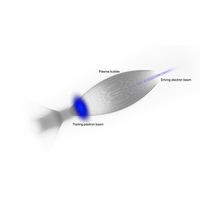
Theory and simulations revealed that low-energy positrons experience transverse expansion and quality degradation in vacuum-plasma transition regions due to the defocusing wakefields. To mitigate this effect, a wide driving electron beam is proposed to reduce the defocusing force in the transition zone. This work highlights critical challenges in nonuniform plasma environments and provides a practical strategy to preserve positron beam quality during acceleration, advancing the feasibility of plasma-based positron accelerators.

Efficient approach for optimizing couplers in traveling-wave accelerating and deflecting structures

Zhicheng Huang, Yelong Wei, Zexin Cao, Li Sun, Yihao Zhang, Chengzhe Wang, Zishuo Zhang, Guangyao Feng, Luigi Faillace, and David Alesini

Phys. Rev. Accel. Beams 28, 032001 (2025) - Published 6 March, 2025

This paper proposes an efficient and universal approach based on an equivalent circuit model for designing couplers in any travelling-wave (TW) structures including accelerating and deflecting structures. By leveraging the local reflection, this approach directly provides the coupling coefficient and frequency deviation, allowing the coupler to be optimized within just a few iterations. It significantly simplifies the overall design process while maintaining a high accuracy for both TW accelerating and deflecting structures.

Sign In to Your Journals Account

Filter

Recent Issues

Vol. 29, Iss. 10
October 2026
Vol. 29, Iss. 9
September 2026
Vol. 29, Iss. 8
August 2026
Vol. 29, Iss. 7
July 2026
Category
Article Type
Section

Filter

Article Lookup

Enter a citation