Browse by Subject

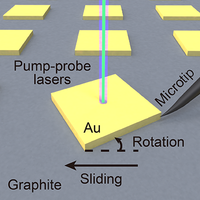
Moving Heterointerface with Robustly High Thermal Conductance

Fuwei Yang, Wenjiang Zhou, Yelingyi Wang, Yuxi Wang, Deli Peng, Quanshui Zheng, and Bai Song

Phys. Rev. X 16, 041005 (2026) - Published 5 October, 2026

Structural superlubricity between gold micromesas and graphite enables high, wear-free interfacial thermal conductance that remains insensitive to sliding and rotation.

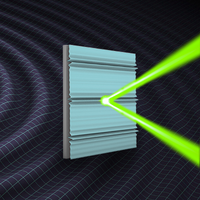
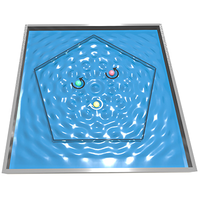
Quasicrystal Topological Hydrodynamics

Jun-liang Duan, Chuanjie Hu, Jiayun Ning, Xu-jie Chai, Li-Wei Wang, Yang Dong, Jianjun Liu, Shan Zhu, Huanyang Chen, Jian-Hua Jiang, and Jin-hui Chen

Phys. Rev. X 16, 031078 (2026) - Published 29 September, 2026

Quasicrystalline water waves allow exquisite insight into topological physics and provides a unique platform for manipulating particle for a wide range of applications.

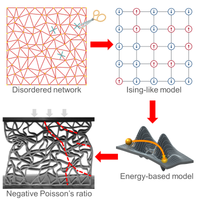
Unlocking Emergent Resilience in Amorphous Metamaterials via a Physics-Constrained Energy-Based Framework

Lingyu Jia, Changliang Zhu, Qiaozhi Lei, Hua Tong, Jinkui Meng, Chengyan Xu, Xiangying Shen, and Lei Xu

Phys. Rev. X 16, 031024 (2026) - Published 31 July, 2026

A physics-constrained design framework may aid the search for lightweight but resilient material.

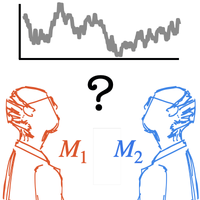
Limits of Inference in Complex Systems: When Stochastic Models Become Indistinguishable

Javier Aguilar, Miguel A. Muñoz, and Sandro Azaele

Phys. Rev. X 16, 031015 (2026) - Published 23 July, 2026

A path-inference framework quantifies data resolution limits that render distinct stochastic models empirically indistinguishable and offers guidelines for designing experimental measurements that maximize information extraction.

Covariant Path Integrals for Quantum Fields Backreacting on Classical Space-Time

Jonathan Oppenheim and Zachary Weller-Davies

Phys. Rev. X 16, 031007 (2026) - Published 15 July, 2026

Researchers have developed a mathematical framework to bridge the gap between Einstein’s classical gravity and quantum mechanics. Their theory allows matter to remain quantum while space-time stays classical, offering a way to test if space and time truly require a quantum explanation.

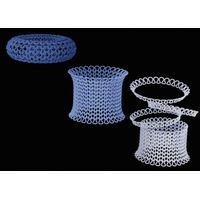
Topological Defect Propagation to Classify Knitted Fabrics

Daisuke S. Shimamoto, Keiko Shimamoto, Sonia Mahmoudi, and Samuel Poincloux

Phys. Rev. X 16, 031006 (2026) - Published 14 July, 2026

The ability of a fabric to be knitted into a textile can be determined on the basis of the topology of its pattern.

Elastic and Structural Anisotropy in Silica Thin Films for Gravitational-Wave Detectors

Brenda Bracco, Michele Magnozzi, Stefano Colace, Maurizio Canepa, Giulio Favaro, Marco Bazzan, Massimo Granata, David Hofman, Alessandro Di Michele, Laura Silenzi, Gianpietro Cagnoli, Giovanni Carlotti, Paola Sassi, and Silvia Corezzi

Phys. Rev. X 16, 021036 (2026) - Published 15 May, 2026

Researchers find that silica films in mirror coatings of gravitational-wave detectors have hidden anisotropy that resists standard heat treatment. This discovery informs coating design and deposition and postprocessing strategies aimed at reducing thermal noise.

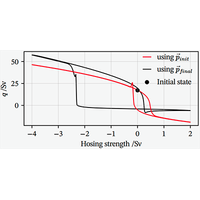
Targeted Calibration to Adjust Stability Biases in Complex Dynamical System Models

Daniel Pals, Sebastian Bathiany, Joel Kuettel, Richard A. Wood, and Niklas Boers

Phys. Rev. X 16, 021007 (2026) - Published 7 April, 2026

A method is introduced for systematic calibration of complex dynamical system models, targeted at adjusting system stability, with applications to climate models.

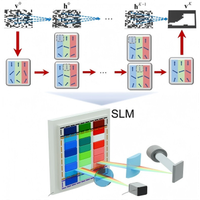
Photonic Restricted Boltzmann Machine for Content Generation Tasks

Li Luo, Yisheng Fang, Wanyi Zhang, and Zhichao Ruan

Phys. Rev. X 16, 011071 (2026) - Published 31 March, 2026

A newly developed photonic restricted Boltzmann machine accelerates generative artificial intelligence by executing complex Gibbs sampling optically, overcoming traditional electronic computing bottlenecks.

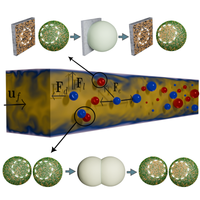
Unifying Same- and Different-Material Particle Charging through Stochastic Scaling

Holger Grosshans, Gizem Ozler, Vyshnavi Veeravalli, and Simon Jantač

Phys. Rev. X 16, 011023 (2026) - Published 11 February, 2026

A model that predicts charging for different types of small particle collisions enables realistic simulations of electrostatic effects.

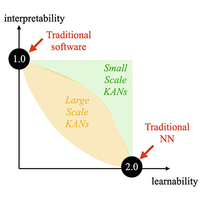
Kolmogorov-Arnold Networks Meet Science

Ziming Liu, Max Tegmark, Pingchuan Ma, Wojciech Matusik, and Yixuan Wang

Phys. Rev. X 15, 041051 (2025) - Published 17 December, 2025

Kolmogorov-Arnold networks combine the predictive strength of deep learning with the interpretability of symbolic formulas, enabling AI systems to both validate physical laws and generate new scientific insights.

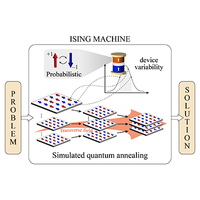
High-Performance and Reliable Probabilistic Ising Machine Based on Simulated Quantum Annealing

Eleonora Raimondo, Esteban Garzón, Yixin Shao, Andrea Grimaldi, Stefano Chiappini, Riccardo Tomasello, Noraica Davila-Melendez, Jordan A. Katine, Mario Carpentieri, Massimo Chiappini, Marco Lanuzza, Pedram Khalili Amiri, and Giovanni Finocchio

Phys. Rev. X 15, 041001 (2025) - Published 1 October, 2025

Simulated quantum annealing enhances probabilistic Ising Machines by enabling faster, more reliable solutions to complex optimization problems using interacting copies of the system guided by a time-dependent field.

Optimal Time Estimation and the Clock Uncertainty Relation for Stochastic Processes

Kacper Prech, Gabriel T. Landi, Florian Meier, Nuriya Nurgalieva, Patrick P. Potts, Ralph Silva, and Mark T. Mitchison

Phys. Rev. X 15, 031068 (2025) - Published 11 September, 2025

A sequence of random events can act as a clock, and its accuracy is fundamentally limited by how often those events occur, as shown by a new bound linking timekeeping precision to the statistics of waiting times.

Effective One-Dimensional Reduction of Multicompartment Complex Systems Dynamics

Giorgio Vittorio Visco, Johannes Nauta, Tomas Scagliarini, Oriol Artime, and Manlio De Domenico

Phys. Rev. X 15, 031017 (2025) - Published 15 July, 2025

A physics-based path-integral method simplifies complex compartmental models, enabling better analysis of phase transitions in systems such as epidemics, ecosystems, and infrastructure networks.

Coherent Structure Interactions in Spatially Extended Systems Driven by Excited Hidden Modes

Alex Round, Te-Sheng Lin, Marc Pradas, Dmitri Tseluiko, and Serafim Kalliadasis

Phys. Rev. X 15, 031010 (2025) - Published 9 July, 2025

Spectral theory reveals a hidden bifurcation driving self-sustained dynamics in falling liquid films, with broad interdisciplinary implications for understanding how coherent structures interact and organize the resulting nonlinear dynamics.

Bilinear Sequence Regression: A Model for Learning from Long Sequences of High-Dimensional Tokens

Vittorio Erba, Emanuele Troiani, Luca Biggio, Antoine Maillard, and Lenka Zdeborová

Phys. Rev. X 15, 021092 (2025) - Published 16 June, 2025

A powerful new model to study learning in neural networks reveals a sharp learning phase transition in sequential data tasks, offering a solvable framework to probe the behavior of transformerlike architectures.

Machine Learning to Select Experiments Driven by Fundamental Science and Applications for Targeted Nuclear Data Improvement

D. Neudecker, T. E. Cutler, M. Devlin, P. Brain, N. Gibson, M. J. Grosskopf, M. W. Herman, J. Hutchinson, T. Kawano, A. Khatiwada, N. Kleedtke, E. Leal-Cidoncha, R. C. Little, A. E. Lovell, A. Stamatopoulos, E. C. Thompson, S. A. Vander Wiel, and E. Williamson (PARADIGM Collaboration)

Phys. Rev. X 15, 021086 (2025) - Published 9 June, 2025

Machine learning identifies the optimal mix of fundamental science and applied experiments to refine nuclear data for plutonium-239, dramatically accelerating progress in basic science and nuclear technology.

Demonstration of Algorithmic Quantum Speedup for an Abelian Hidden Subgroup Problem

Phattharaporn Singkanipa, Victor Kasatkin, Zeyuan Zhou, Gregory Quiroz, and Daniel A. Lidar

Phys. Rev. X 15, 021082 (2025) - Published 5 June, 2025

IBM’s 127-qubit processor solves an adapted version of Simon’s problem with exponential quantum speedup, making significant progress toward demonstrating algorithmic quantum advantage on real hardware.

Multiscale Field Theory for Network Flows

Guram Mikaberidze, Oriol Artime, Albert Díaz-Guilera, and Raissa M. D’Souza

Phys. Rev. X 15, 021044 (2025) - Published 7 May, 2025

A new theoretical framework reveals universal principles governing network flows, predicting a threshold where flow becomes unsustainable and uncovering how dissipation can enhance performance in certain systems.

Topology and Nuclear Size Determine Cell Packing on Growing Lung Spheroids

Wenhui Tang, Jessie Huang, Adrian F. Pegoraro, James H. Zhang, Yiwen Tang, Darrell N. Kotton, Dapeng Bi, and Ming Guo

Phys. Rev. X 15, 011067 (2025) - Published 21 March, 2025
Experiments suggest that cells pack in more ordered patterns as the relative sizes of their nuclei grow.

Sign In to Your Journals Account

Filter

Subject

Filter

Article Lookup

Enter a citation