Browse by Subject

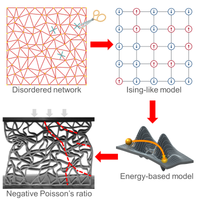
Unlocking Emergent Resilience in Amorphous Metamaterials via a Physics-Constrained Energy-Based Framework

Lingyu Jia, Changliang Zhu, Qiaozhi Lei, Hua Tong, Jinkui Meng, Chengyan Xu, Xiangying Shen, and Lei Xu

Phys. Rev. X 16, 031024 (2026) - Published 31 July, 2026

A physics-constrained design framework may aid the search for lightweight but resilient material.

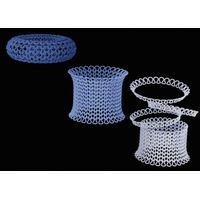
Topological Defect Propagation to Classify Knitted Fabrics

Daisuke S. Shimamoto, Keiko Shimamoto, Sonia Mahmoudi, and Samuel Poincloux

Phys. Rev. X 16, 031006 (2026) - Published 14 July, 2026

The ability of a fabric to be knitted into a textile can be determined on the basis of the topology of its pattern.

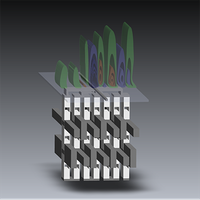
Super-resonance: Breaking the Bandwidth Limit of Resonant Modes and Its Application to Flow Control

Adam R. Harris, Armin Kianfar, David Roca, Daniel Yago, Christoph Brehm, and Mahmoud I. Hussein

Phys. Rev. X 16, 021045 (2026) - Published 28 May, 2026

Super-resonance maintains a broadband out-of-phase response well beyond the characteristic bandwidth of conventional resonance, enabling broadband flow stabilization among other applications.

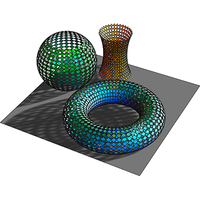
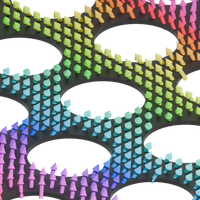
Stretching Theory of Hookean Metashells

Luca Giomi

Phys. Rev. X 16, 021035 (2026) - Published 14 May, 2026

A continuum theory that describes how mechanical metamaterials deform on surfaces takes the form of the Schrödinger equation and provides a different path for materials design.

Stealthy-Hyperuniform Wave Dynamics in Two-Dimensional Photonic Crystals

Maria Barsukova, Zeyu Zhang, Brian Gould, Koorosh Sadri, Christian Rosiek, Søren Stobbe, Jonas Karcher, and Mikael C. Rechtsman

Phys. Rev. X 16, 021028 (2026) - Published 7 May, 2026

While disordered stealthy hyperuniform materials are expected to be largely transparent within a particular range of wavelengths, new experiments on large-scale silicon photonic crystals reveal unexpected residual scattering driven by radiative loss.

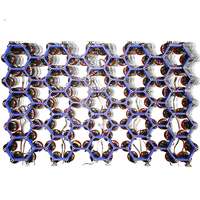
More is Less in Unpercolated Active Solids

Jack Binysh, Guido Baardink, Jonas Veenstra, Corentin Coulais, and Anton Souslov

Phys. Rev. X 16, 021012 (2026) - Published 13 April, 2026

By combining experiments with robotic metamaterials and theory, this work shows that increasing microscopic activity can counterintuitively cause a solid’s macroscale active response to vanish when active units are too sparse for the active forces to percolate through the structure.

Microscale Architected Materials for Elastic Waveguiding: Fabrication and Dynamic Characterization across Length and Time Scales

Vignesh Kannan, Charles Dorn, Ute Drechsler, and Dennis M. Kochmann

Phys. Rev. X 16, 011047 (2026) - Published 5 March, 2026

An experimental protocol for fabricating and characterizing microarchitected materials overcomes prior limitations.

Emulating 2D Materials with Magnons

Bobby Kaman, Jinho Lim, Yingkai Liu, and Axel Hoffmann

Phys. Rev. X 16, 011034 (2026) - Published 24 February, 2026

Patterning holes into magnetic thin films enables the emulation of electrons in 2D quantum materials and the precise control of magnon transport through topological band engineering.

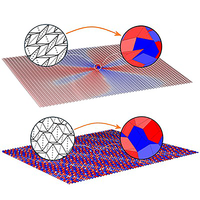
Novel Mechanical Response of Parallelogram-Face Origami Governed by Topological Characteristics

Yanxin Feng, Andrew Wu, James McInerney, Siddhartha Sarkar, Xiaoming Mao, and D. Zeb Rocklin

Phys. Rev. X 15, 041034 (2025) - Published 20 November, 2025

Origami sheets fall into two topological classes: Some crease patterns yield stiff, uniform bending, while others allow soft, irregular motion, offering a robust framework for designing adaptive materials and soft robotics.

Microscopic Imprints of Learned Solutions in Tunable Networks

Marcelo Guzman, Felipe Martins, Menachem Stern, and Andrea J. Liu

Phys. Rev. X 15, 031056 (2025) - Published 27 August, 2025

Physical constraints on networks, such as electrical resistor networks that learn on their own, offer interpretable insights into how learning tasks are performed and suggest a universal framework that extends to mechanical and biological systems.

Nonreciprocal Breathing Solitons

Jonas Veenstra, Oleksandr Gamayun, Martin Brandenbourger, Freek van Gorp, Hans Terwisscha-Dekker, Jean-Sébastien Caux, and Corentin Coulais

Phys. Rev. X 15, 031045 (2025) - Published 18 August, 2025

Breathing solitons can persist in energy-losing systems by leveraging nonreciprocal dynamics, enabling stable wave motion for efficient signaling, energy transport, and adaptive materials.

Scaling Law for Intrinsic Fracture Energy of Diverse Stretchable Networks

Chase Hartquist, Shu Wang, Qiaodong Cui, Wojciech Matusik, Bolei Deng, and Xuanhe Zhao

Phys. Rev. X 15, 011002 (2025) - Published 8 January, 2025

The energy required to fracture a lattice material obeys a scaling law governed by just three parameters, researchers find.

Twist-Induced Hyperbolic Shear Metasurfaces

Simon Yves, Emanuele Galiffi, Xiang Ni, Enrico M. Renzi, and Andrea Alù

Phys. Rev. X 14, 021031 (2024) - Published 24 May, 2024

A combination of twistronics, hyperbolic shear phenomena, and metasurface concepts provides a powerful tool for reconfiguring and steering the propagation of hyperbolic waves.

Amoeba Formulation of Non-Bloch Band Theory in Arbitrary Dimensions

Hong-Yi Wang, Fei Song, and Zhong Wang

Phys. Rev. X 14, 021011 (2024) - Published 16 April, 2024

A new formulation of non-Hermitian band theory is applicable to any number of spatial dimensions, a development useful for the study of physical effects exclusive to open systems.

Loss Compensation and Superresolution in Metamaterials with Excitations at Complex Frequencies

Seunghwi Kim, Yu-Gui Peng, Simon Yves, and Andrea Alù

Phys. Rev. X 13, 041024 (2023) - Published 3 November, 2023

Illuminating a high-resolution lens with waves whose intensity diminishes over time can improve the image quality.

Imaging with an Ultrathin Reciprocal Lens

Wenzhe Liu, Jingguang Chen, Tongyu Li, Zhe Zhang, Fang Guan, Lei Shi, Jian Zi, and C. T. Chan

Phys. Rev. X 13, 031039 (2023) - Published 29 September, 2023

All types of single lenses produce inverted images and must be center-aligned with the object being imaged. A new type of lens circumvents both limitations by shifting light rays rather than bending them.

Non-Abelian Frame Charge Flow in Photonic Media

Dongyang Wang, Ying Wu, Z. Q. Zhang, and C. T. Chan

Phys. Rev. X 13, 021024 (2023) - Published 16 May, 2023

Non-Abelian frame charges—mathematical entities used to describe certain topological properties—can also help understand band degeneracies in ordinary optical media.

Ultracompact Photonic Circuits without Cladding Layers

Tongtong Song, Hongchen Chu, Jie Luo, Zizheng Cao, Meng Xiao, Ruwen Peng, Mu Wang, and Yun Lai

Phys. Rev. X 12, 011053 (2022) - Published 21 March, 2022

A waveguiding mechanism completely removes the cladding layers that are part of today’s photonic circuits, like building highways without median strips for light.

Nonlinear Dynamics and Chaos in Conformational Changes of Mechanical Metamaterials

Jason Z. Kim, Zhixin Lu, Ann S. Blevins, and Dani S. Bassett

Phys. Rev. X 12, 011042 (2022) - Published 4 March, 2022

A new framework for designing precise and dramatic shape changes in networks provides a tool for creating mechanical devices that adapt their shapes in response to a changing environment.

Collapse and Revival of an Artificial Atom Coupled to a Structured Photonic Reservoir

Vinicius S. Ferreira, Jash Banker, Alp Sipahigil, Matthew H. Matheny, Andrew J. Keller, Eunjong Kim, Mohammad Mirhosseini, and Oskar Painter

Phys. Rev. X 11, 041043 (2021) - Published 2 December, 2021

A superconducting quantum circuit coupled to a tailored waveguide reservoir provides a platform for exploring non-Markovian quantum-optical dynamics, in which the reservoir maintains a memory of past events.

Sign In to Your Journals Account

Filter

Filter

Article Lookup

Enter a citation