Highlights

Nonadiabatic dynamics and universal behaviors in non-Hermitian systems under biorthogonal framework

Menghua Deng, Wei Li, Kangyi Hu, Chen Sun, and Fuxiang Li

Phys. Rev. B 112, L020306 (2025) - Published 31 July, 2025

The authors introduce here a novel theoretical framework based on time-dependent biorthogonal quantum formalism to deal with the nonadiabatic dynamics in a driven non-Hermitian quantum system. Applying this framework to a linearly driven system, Kibble-Zurek scaling behavior and defect freezing phenomenon can be observed under different quench paths. These results offer fundamental insights into non-Hermitian dynamics and open new avenues for exploring nonequilibrium quantum phenomena.

In-plane magnetic field induced orbital Fulde-Ferrell-Larkin-Ovchinnikov superconductivity in twisted WSe2 homobilayers

Jihang Zhu, Yang-Zhi Chou, Yi Huang, and Sankar Das Sarma

Phys. Rev. B 112, L020507 (2025) - Published 31 July, 2025

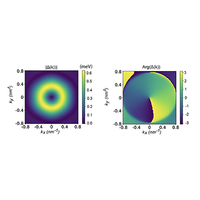
The authors predict here that an in-plane magnetic field drives purely orbital Fulde–Ferrell–Larkin–Ovchinnikov superconductivity in twisted WSe2 homobilayers. They show finite-momentum pairing emerges above a critical field for symmetric layers (Vz = 0) and at any field when layers are polarized (|Vz| > 0), and they identify a sharp phase transition between two distinct FF phases when two moiré pockets coexist (region III). Their work establishes twisted WSe2 as a tunable platform for realizing and controlling FFLO states.

Thermal Hall conductivity in the strongest cuprate superconductor: Estimate of the mean free path in the trilayer cuprate HgBa2Ca2Cu3O8+δ

Munkhtuguldur Altangerel, Quentin Barthélemy, Étienne Lefrançois, Jordan Baglo, Manel Mezidi, Gaël Grissonnanche, Ashvini Vallipuram, Emma Campillo, Anne Forget, Dorothée Colson, Ruixing Liang, D. A. Bonn, W. N. Hardy, Cyril Proust, and Louis Taillefer

Phys. Rev. B 112, 014522 (2025) - Published 30 July, 2025

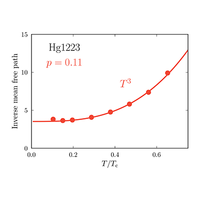
The authors report here a thermal Hall study of the trilayer cuprate HgBa₂Ca₂Cu₃O8+δ, revealing a remarkably long mean free path for nodal quasiparticles that is comparable to or exceeding that of ultraclean YBCO. They show that the inverse mean free path follows a T3 dependence, consistent with theoretical expectations for clean d-wave superconductors. These findings suggest that the strongest cuprate superconductor is also the cleanest.

Anisotropic moiré band flattening in twisted bilayers of M-valley MXenes

Kejie Bao, Huan Wang, Zhaochen Liu, and Jing Wang

Phys. Rev. B 112, L041406 (2025) - Published 29 July, 2025

The authors introduce semiconducting MXenes, such as Ti2CO2, as a new platform for M-valley moiré materials. Large-scale ab initio calculations showed that their twisted homobilayer features three symmetry related M valleys and giant anisotropic band flattening, which serve as a platform to realize higher-dimensional generalization of Luttinger liquid and non-Fermi liquid behavior. This research broadens the scope of moiré materials, where the valley- and spin-degenerate two-dimensional array of quasi-one-dimensional system could serve as a potential platform for realizing interesting correlated phases.

Tuning the magnetic properties of the spin-split antiferromagnet MnTe through pressure

Edison P. Carlisle, George Yumnam, Stuart Calder, Bianca Haberl, Jia-Xin Xiong, Michael A. McGuire, Alex Zunger, Raphaël P. Hermann, and Benjamin A. Frandsen

Phys. Rev. B 112, 014450 (2025) - Published 28 July, 2025

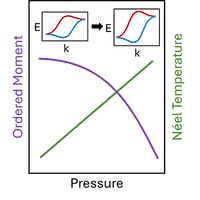
Hexagonal MnTe is a leading example of collinear antiferromagnets with nonrelativistic spin splitting of the electron bands, often called altermagnets. This material also exhibits an exceptionally large magnetovolume effect. Here, the authors investigate the magnetostructural properties of MnTe and their connection to altermagnetism via neutron diffraction with in situ pressure and density functional theory. They find that pressure is an effective tuning knob for MnTe, increasing the Néel temperature but decreasing the magnetic moment, while also modifying the altermagnetic spin splitting.

Probing time-reversal symmetry breaking at microwave frequencies

T. Chouinard and D. M. Broun

Phys. Rev. B 112, 014521 (2025) - Published 28 July, 2025

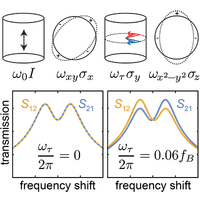
To probe spontaneous time reversal symmetry breaking (TRSB) in superconductors at microwave frequencies, the authors propose here a technique based on a doubly degenerate resonator mode, such as the TE111 mode of a cylindrical cavity. In addition to the frequency splitting induced by TRSB, which can be dwarfed by spurious shape distortions, the authors show that when such a resonator is interrogated by circularly polarized microwaves, the forward and reverse transmission response breaks reciprocity, providing unambiguous evidence that time-reversal symmetry is broken.

Dynamical response theory of interacting Majorana fermions and its application to generic Kitaev quantum spin liquids in a field

Peng Rao, Roderich Moessner, and Johannes Knolle

Phys. Rev. B 112, 024440 (2025) - Published 28 July, 2025

The authors develop here a general theory for calculating experimental signatures of interacting Majorana fermions within the random phase approximation (RPA), which helps to identify their experimental signatures in experiment. As an example, the authors apply it to the seminal Kitaev quantum spin liquid (KQSL) away from the Kitaev limit, and show that, contrary to conventional wisdom, sharp signatures in neutron scattering can arise in KQSL due to Majorana bound states.

T-matrix method for computation of second-harmonic generation upon optical wave scattering from clusters of arbitrary particles: Application to nonlinear optical interaction of bound states in the continuum

Ivan Sekulic, Ji Tong Wang, Jian Wei You, and Nicolae C. Panoiu

Phys. Rev. B 112, 035426 (2025) - Published 28 July, 2025

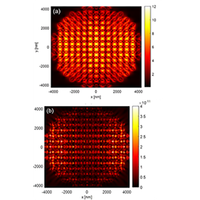
The problem of solving nonlinear scattering of optical waves from arbitrary distributions of particles becomes practically intractable when the number of particles is larger than just a few. Here, the authors introduce an approach based on multiple-scattering matrix theory that solves this problem for clusters of thousands of particles of arbitrary shape made of materials characterized by general frequency-dispersion relations, so that it describes the optical response of metallic, semiconductor, and polaritonic particles. To illustrate the versatility of the method, the enhancement of second-harmonic generation in a cluster of particles that supports bound-states in the continuum at both the fundamental frequency and second harmonic is demonstrated.

Phase transitions in a non-Hermitian Su-Schrieffer-Heeger model via Krylov spread complexity

E. Medina-Guerra, I. V. Gornyi, and Yuval Gefen

Phys. Rev. B 112, 035427 (2025) - Published 28 July, 2025

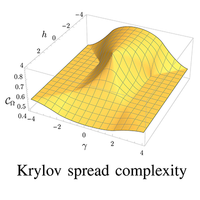
The authors present here a tour de force exploration of phase transitions in a non-Hermitian SSH model using Krylov spread complexity and fidelity. These tools detect the PT symmetry breaking as the spectrum evolves from real to complex and further into the purely imaginary regime. The Krylov spread captures both known and previously overlooked transitions. Notably, the fidelity highlights dynamical transitions in the PT-broken phase, offering a novel probe for understanding non-Hermitian quantum systems and their emergent behavior.

Ultrafast dynamics of chiral spin structures in synthetic antiferromagnets

Zongxia Guo, Raphael Gruber, Dmitriy Ksenzov, Cyril Léveillé, Matteo Pancaldi, Emanuele Pedersoli, Carlo Spezzani, Giovanni De Ninno, Flavio Capotondi, Christian Gutt, Mathias Kläui, Vincent Cros, Nicolas Reyren, and Nicolas Jaouen

Phys. Rev. B 112, L020408 (2025) - Published 28 July, 2025

The authors investigate here the ultrafast magnetic dynamics of a chiral spin structure in fully compensated synthetic antiferromagnetic multilayers. At the Fe L3 edge (707 eV), a series of time-delayed scattering patterns are obtained by time-resolved circular dichroism in x-ray resonant magnetic scattering (CD-XRMS) at the FERMI free-electron laser source. The magnetization and dichroism signals exhibit similar dynamics, with demagnetization in approximately 180 fs followed by rapid remagnetization within 500 fs, reflecting the continuous rotation of magnetization in spin spirals.

Realizing nonreciprocal spin-wave propagation with large tunability in SmCo/Fe bilayers

Mengxue Jiang, Guofu Xu, Liang Sun, Heng Niu, Chaozhong Li, Xi Yang, Tongzhou Ji, Man Yang, Jun Cheng, Junwei Ma, Gong Chen, Guozhi Chai, Bingfeng Miao, and Haifeng Ding

Phys. Rev. B 112, L020409 (2025) - Published 28 July, 2025

A major challenge in magnonic device development is achieving controllable nonreciprocal spin-wave propagation, as conventional methods are limited by fixed material properties. Here, the authors demonstrate continuously tunable nonreciprocity in SmCo/Fe bilayers by modifying their exchange spring, effectively mimicking a system with a widely adjustable Dzyaloshinskii-Moriya interaction constant (−0.36 to −5.43 mJ/m²). Moreover, they reveal a previously unexplored physical mechanism: static dipolar interactions in noncollinear spin structures as a quantitative driver of nonreciprocal spin-wave propagation.

Decoupling of static and dynamic charge correlations revealed by uniaxial strain in a cuprate superconductor

L. Martinelli, I. Biało, X. Hong, J. Oppliger, C. Lin, T. Schaller, J. Küspert, M. H. Fischer, T. Kurosawa, N. Momono, M. Oda, D. V. Novikov, A. Khadiev, E. Weschke, J. Choi, S. Agrestini, M. Garcia-Fernandez, Ke-Jin Zhou, Q. Wang, and J. Chang

Phys. Rev. B 112, L041124 (2025) - Published 28 July, 2025

The anomalous softening of the high-energy phonon modes in cuprate superconductors has remained puzzling for two decades. The authors address the problem here by using uniaxial strain with high-resolution resonant inelastic x-ray scattering on La1.875Sr0.125CuO4. Detwinning stripe order, they demonstrate that the phonon anomalies and the fluctuations of charge order retain an in-plane four-fold symmetry, suggesting a causal relationship between the two. The decoupling of the finite-energy fluctuations from the strength of the static order suggests closeness to a quantum critical point.

Anomalous and topological Hall effects with phase-space Berry curvatures: Electric, thermal, and thermoelectric transport in magnets

Zachariah Addison, Lauren Keyes, and Mohit Randeria

Phys. Rev. B 112, 014446 (2025) - Published 25 July, 2025

Understanding the unusual Hall effects in magnetic materials that harbor spin textures, such as skyrmions, is a problem of both fundamental and practical importance. The authors develop here a comprehensive semiclassical theory of the anomalous and topological transverse electrical, thermal, and thermoelectric responses in the presence of arbitrary phase-space Berry curvatures. The authors also identify a topological phase transition as a function of the ratio of the spin orbit and exchange coupling.

Magnetoelectric coupling and its impact on the multicaloric effect

Kentaro Ino, Keisuke Matsuura, Tetsuya Nomoto, Takashi Kurumaji, Yoshinori Tokura, and Fumitaka Kagawa

Phys. Rev. B 112, 024434 (2025) - Published 24 July, 2025

The multicaloric effect represents a reversible entropy change, induced by multiple external fields. While it has been theoretically proposed that a nontrivial additional entropy change can arise from a cross-correlation, such as a coupling between magnetism and electricity, no quantitative experimental verification has been achieved. Here, the authors develop a thermodynamic framework for the multicaloric effect and provide the first experimental evaluation of the cross-correlation-derived entropy change in the magnetoelectric compound (Fe0.95Zn0.05)2Mo3O8. This study deepens the thermodynamic understanding of multiferroic systems.

Antisymmetric chiral currents at zero magnetic field in some two-dimensional superconductors

Chandra M. Varma

Phys. Rev. B 112, 024513 (2025) - Published 24 July, 2025

Experiments show that the superconducting state of underdoped cuprates, along with some other superconductors, has a nonreciprocal critical current (diode effect) without applying a magnetic field. This paper shows that this requires, in every case, superconductivity inherited from a normal state that breaks time-reversal and chiral symmetries, thereby acquiring a superfluid tensor with a component with the symmetry of the Hall effect (see the image). For the cuprates, this provides, after 35 years of investigations, a macroscopic answer to the unresolved central question of the nature of the pseudogap, from which essentials of the rest of the phase diagram follows.

Topological incommensurate Fulde-Ferrell-Larkin-Ovchinnikov superconductor and Bogoliubov Fermi surface in rhombohedral tetralayer graphene

Hui Yang and Ya-Hui Zhang

Phys. Rev. B 112, L020506 (2025) - Published 24 July, 2025

Based on the random phase approximation, the authors identify here a chiral p-ip superconducting phase in rhombohedral tetralayer graphene. By tuning the displacement field at fixed carrier density, a topological phase transition from a topological superconductor to a trivial superconductor is observed, signaled by a gap closing at the critical point. Near the boundary between the superconducting and Fermi liquid phases, a superconducting state featuring Bogoliubov Fermi surfaces is found. Furthermore, by evaluating the free energy in the superconducting phase, the authors find that an incommensurate Fulde-Ferrell-Larkin-Ovchinnikov (FFLO) state is energetically favored at low temperatures.

Quantum master equation from the eigenstate thermalization hypothesis

Peter O'Donovan, Philipp Strasberg, Kavan Modi, John Goold, and Mark T. Mitchison

Phys. Rev. B 112, 014312 (2025) - Published 22 July, 2025

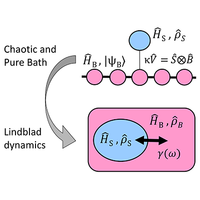
In the theory of open quantum systems, a thermal environment is usually modelled as an infinite, noninteracting system described by an equilibrium Gibbs ensemble. Here, instead, the authors show that chaos – as encoded by the eigenstate thermalisation hypothesis – suffices to derive a quantum master equation, which describes the effect of finite-sized, strongly interacting, nonequilibrium environments without invoking a thermal ensemble. The results are directly relevant to experiments on impurities coupled to isolated quantum many-body systems, e.g., ultracold atomic gases.

Non-Fermi liquid transport and strong mass enhancement near the nematic quantum critical point in FeSexTe1−x thin films

Yuki Sato, Soma Nagahama, Ilya Belopolski, Ryutaro Yoshimi, Minoru Kawamura, Atsushi Tsukazaki, Akiyoshi Yamada, Masashi Tokunaga, Naoya Kanazawa, Kei S. Takahashi, Yoshichika Ōnuki, Masashi Kawasaki, and Yoshinori Tokura

Phys. Rev. B 112, L041121 (2025) - Published 22 July, 2025

The influence of nematic fluctuations on normal-state transport and superconductivity remains a central question in strongly correlated materials. This study investigates electric and thermoelectric transport in Fe(Se,Te) thin films, which host a pure nematic quantum critical point (NQCP). Near the NQCP, the authors observe hallmark non-Fermi liquid behavior alongside a strongly enhanced superconducting Maki parameter, pointing to pronounced mass renormalization. These findings highlight the essential role of nematic fluctuations in both quantum critical and superconducting properties.

Interplay of d- and p-states in RbTi3Bi5 and CsTi3Bi5 flat-band kagome metals

M. Wenzel, E. Uykur, A. A. Tsirlin, A. N. Capa Salinas, B. R. Ortiz, S. D. Wilson, and M. Dressel

Phys. Rev. B 112, L041122 (2025) - Published 22 July, 2025

Broadband infrared spectroscopy and ab initio calculations for RbTi3Bi5 and CsTi3Bi5 offer novel insights into kagome metal physics at low band filling. The study uncovers an intricate interplay between Bi p states, forming a tilted Dirac crossing, enhanced electronic correlations from Ti flat bands near the Fermi level, and anomalies in electron-phonon coupling that can be paralleled to the onset of nematicity.

Soliton-like domain wall motion in sliding ferroelectrics with ultralow damping

Yubai Shi, Yuxiang Gao, Hua Wang, Bingwen Zhang, Zhicheng Zhong, and Ri He

Phys. Rev. B 112, 035421 (2025) - Published 21 July, 2025

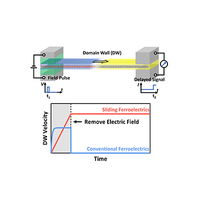
The authors report here soliton-like domain wall motion with ultralow damping in sliding ferroelectrics, leading to inertial motion even after the external field is removed. This behavior, fundamentally distinct from that in conventional ferroelectrics and ferromagnets, highlights the potential of sliding ferroelectrics for applications in racetrack memories and neuromorphic devices.

Sign In to Your Journals Account

Filter

Section

Filter

Article Lookup

Enter a citation