Highlights

Local micromechanics in a mean-field model of glasses reveal key properties of its nonequilibrium replica-symmetry-breaking phase

Makoto Suda, Edan Lerner, and Eran Bouchbinder

Phys. Rev. B 114, 134113 (2026) - Published 30 September, 2026

A recently formulated disordered mean-field model of soft spins features a nonequilibrium Replica Symmetry Breaking (RSB) phase, whose properties closely resemble low-temperature glasses. Here, the authors develop a micromechanical framework, based on the model’s linear response to force monopoles, and derive exact results supported by numerical computations. These allow to identify collective degrees of freedom in the model’s RSB energy landscape, to extract a characteristic frequency and to relate local properties to global susceptibilities, all in relation to realistic glasses.

Spin-orbit-entangled Jeff=12 magnetism and unconventional spin freezing in the bond-disordered pyrochlore antiferromagnet NaCdCo2F7

A. Kancko, H. Sakai, J. Herrero-Martín, A. Berlie, M. Uhlarz, T. Haidamak, M. Klicpera, Y. Tokunaga, and R. H. Colman

Phys. Rev. B 114, 154431 (2026) - Published 30 September, 2026

Here, the authors establish NaCdCo2F7 as a spin-orbit-entangled Jeff=½ pyrochlore antiferromagnet, in which strong geometric frustration and bond disorder drive unconventional spin freezing. Despite the onset of a frozen state, persistent spin dynamics survive to the lowest temperatures, revealing an unusual coexistence of static and dynamic magnetism in a highly frustrated, disordered system.

Magnetic-field-driven phase switching in the antiferromagnetic Mott insulator Ca3(Ru0.99Ti0.01)2O7

Ksenia S. Rabinovich, Tim Priessnitz, Nils Gross, George Jackeli, Maximilian J. Krautloher, Pascal Reiss, Eberhard J. Goering, Jurgen H. Smet, Bernhard Keimer, and Alexander V. Boris

Phys. Rev. B 114, 185134 (2026) - Published 30 September, 2026

Isovalent 1% Ti substitution tunes the polar metal Ca3Ru2O7 to the edge of its Mott transition. While electronic kinetic energy and strong electron-lattice coupling contribute to the system’s free-energy balance, its magnetic H-T phase diagram is remarkably simple, closely resembling that of a canonical anisotropic antiferromagnet, albeit with substantially renormalized critical fields. Along the easy axis, a first-order spin-flop transition near 6 Tesla reorients the Ru moments while the system remains insulating; a forced-ferromagnetic metal emerges above 10.5 Tesla field.

Significant modulation of acoustoelectric current associated with charge density wave transitions

Natsumi Nikaido, Takuya Kawada, Koji Fujiwara, Jihoon Park, Nan Jiang, Kouta Kondou, Shintaro Takada, and Yasuhiro Niimi

Phys. Rev. B 114, 144309 (2026) - Published 29 September, 2026

How collective electronic order responds to strain remains a central question in quantum materials. Here, the authors find that charge density wave (CDW) transitions in NbSe3 and 2H-TaSe2 strongly modulate the acoustoelectric current driven by surface acoustic waves. A simple phenomenological model based on strain-dependent conductivity captures the essential behavior. The work demonstrates acoustoelectric transport as a sensitive probe of CDW physics and opens new avenues for strain-based control of electronic states in van der Waals materials.

Infrared phonon thermoreflectance in polar dielectrics

Saman Zare, William D. Hutchins, Daniel Hirt, Elizabeth Golightly, and Patrick E. Hopkins

Phys. Rev. B 114, 185307 (2026) - Published 29 September, 2026

Optical thermometry often relies on an added metal coating to probe temperature changes. Here, the authors show that polar dielectrics can themselves serve as infrared thermometers, with phonon resonances producing thermoreflectance coefficients up to an order of magnitude larger than those of common metals. Transient measurements on thermally grown silica atop silicon demonstrate wavelength-selective probing of interfacial heat transfer without an added coating. A complementary figure of merit guides material and wavelength selection by combining pump absorption and thermoreflectance coefficient.

Dynamically robust counterdiabatic topological pumping

Joshua Chiel, Christopher Jarzynski, and Jay Sau

Phys. Rev. B 114, 154308 (2026) - Published 28 September, 2026

Adiabatic Thouless pumps, which undergird the modern theory of polarization, have potential applications ranging from metrology to adiabatic quantum computing. Here, the authors use counterdiabatic driving to develop a non-adiabatic Thouless pump. Their analytic model, which has only nearest neighbor interactions, exhibits exactly quantized charge pumping that is topologically robust to disorder, and dynamically robust to disorder and noise for sufficiently rapid driving – which the authors demonstrate is a universal feature of counterdiabatic driving. The fast, robust and locally tuned pump cycle also models qubit flips, which may have quantum hardware applications.

Ab initio quantum embedding description of magic-angle twisted bilayer graphene at even-integer fillings

Raehyun Kim, Woochang Kim, Kevin D. Stubbs, Steven G. Louie, and Lin Lin

Phys. Rev. B 114, 185131 (2026) - Published 28 September, 2026

The correlated phase diagram of magic-angle twisted bilayer graphene (MATBG) is very sensitive to both material parameters and modeling choices. To limit the impact of these factors, here, the authors propose an embedding workflow for modeling MATBG and other moiré materials that incorporates automatic gauge fixing and is consistent with ab initio density functional theory. Using this workflow, the authors find that in MATBG, the Hartree-Fock ground state at ν=−2 is a fragile semimetal with intervalley coherence.

Visualizing vortex cluster dynamics in the weakly type-II superconductor CaSb2

Yusuke Iguchi, Nabhanila Nandi, and Mohamed Oudah

Phys. Rev. B 114, L140504 (2026) - Published 28 September, 2026

Here, the authors use scanning SQUID microscopy to visualize magnetic dynamics within superconducting vortex clusters, revealing suppressed vortex motion in the interior and enhanced response at the boundaries. These spatially inhomogeneous dynamics, hidden from static magnetic imaging, provide a new way to probe the interactions that hold vortices together and distinguish between mechanisms of vortex clustering.

Josephson scanning tunneling spectroscopy in superconducting phases coexisting with pair-, charge-, and spin-density waves

Alyson Laskowski, Jasmin Bedow, and Dirk K. Morr

Phys. Rev. B 114, 154513 (2026) - Published 24 September, 2026

Here, the authors demonstrate that the recent observations in scanning tunneling spectroscopy (STS) experiments of spatial oscillations in the energy position of the superconducting coherence peaks in the cuprate, transition metal dichalcogenide, iron-based, and heavy-fermion superconductors can arise from the possible presence of pair-, charge- or spin-density-wave phases. In all of these phases, the spatial oscillations of the superconducting order parameter can be imaged via the critical Josephson current, measured in Josephson STS experiments.

Andreev bound-state optoelectronics: Absorption spectroscopy and microwave-to-optical transduction

Benjamin Remez, Pouyan Ghaemi, Jay D. Sau, and Mohammad Hafezi

Phys. Rev. B 114, L171302 (2026) - Published 24 September, 2026

Voltage-tunable semiconductor-superconductor qubits and optical connectivity address different bottlenecks to scaling up superconducting quantum computing. Here, the authors show theoretically that these approaches can be combined in one device: semiconductor optical transitions in a hybrid junction directly access its microwave-active Andreev bound states. This light–Andreev interaction enables optical spectroscopy and control of the bound states, while providing a mechanism for coherent microwave-to-optical photon transduction.

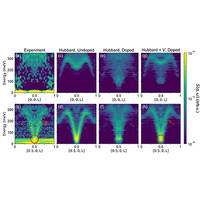
Cooper-pair localization in the magnetic dynamics of a cuprate ladder

A. Scheie, P. Laurell, J. Thomas, V. Sharma, A. I. Kolesnikov, G. E. Granroth, Q. Zhang, B. Lake, M. Mihalik, Jr., R. I. Bewley, R. S. Eccleston, J. Akimitsu, E. Dagotto, C. D. Batista, G. Alvarez, S. Johnston, and D. A. Tennant

Phys. Rev. B 114, 144511 (2026) - Published 23 September, 2026

Localized Cooper pairs in a doped quantum ladder. Inelastic neutron scattering and DMRG calculations show that the magnetic dynamics of Sr2.5Ca11.5Cu24O41 lack the incommensurate signatures expected from doped carriers. The results point to strongly localized hole pairs that preserve commensurate antiferromagnetic correlations, placing new constraints on the low-energy description of cuprate ladders and the mechanisms responsible for pairing in correlated quantum materials.

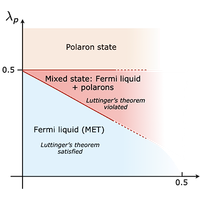
Breakdown of the Migdal-Eliashberg theory for electron-phonon systems: Role of polarons and bipolarons

Andrey Chubukov, Ilya Esterlis, Artem Abanov, and Nikolay Prokof'ev

Phys. Rev. B 114, 185127 (2026) - Published 23 September, 2026

The Migdal-Eliashberg theory (MET) describes electrons interacting with phonons at weak/moderate couplings. A conventional belief is that MET holds even at strong coupling, and, for an interaction with an optical phonon, breaks down only near the point where the dressed phonon softens. Here, the authors analyze numerically and analytically a different option — a collapse to a polaronic/bipolaronic ground state. They show in detail how this happens and demonstrate that away from near-half-filling, a polaron/bipolaron state develops well before a dressed phonon softens.

Polarization-resolved photon statistics of cavity quantum materials

Benjamin Kass, Spenser Talkington, and Martin Claassen

Phys. Rev. B 114, 165130 (2026) - Published 22 September, 2026

Cavity engineering holds promise for manipulating material properties, but measuring induced changes and attributing them to light-matter interactions remains challenging. Here, the authors show that polarization-dependent photon counting measurements of transmitted photons provide a symmetry-sensitive probe of many-body correlations in cavity-embedded systems. Additionally, deviations from Poissonian photon statistics reveal the magnitude of light-induced material changes. The authors demonstrate this approach for the Kitaev-Heisenberg family of two-dimensional magnets, identifying stripy and antiferromagnetic phases and their phase boundary.

Hot carrier localization in continuum states of a quantum dot solid

Ajay K. Poonia, Naresh Aggarwal, Swapnil S. Deshpande, Barnali Mondal, Angshuman Nag, Sudip Chakraborty, and K. V. Adarsh

Phys. Rev. B 114, L171406 (2026) - Published 22 September, 2026

Hot carriers in semiconductors typically cool within a picosecond, dissipating their excess energy as heat. Here, the authors demonstrate that intrinsic positional disorder in a metal halide perovskite quantum dot solid usually treated as a defect of such assemblies, can instead strongly suppress hot-carrier cooling. Ultrafast transient absorption spectroscopy reveals hot carriers localized in continuum states, with cooling times more than an order of magnitude longer than those in uncoupled quantum dots. First-principles density functional theory traces this localization to disorder-induced local potential fluctuations.

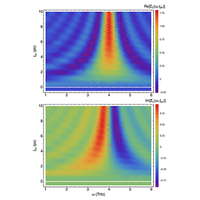
Intrinsic temporal and spectral mixing in time-resolved terahertz spectroscopy

Benjamin J. Dringoli and David G. Cooke

Phys. Rev. B 114, 134308 (2026) - Published 21 September, 2026

Ultrafast studies of photoinduced phase transitions increasingly rely on terahertz probes to track structural reorganization. Here, the authors show that when materials are altered faster than the THz probe duration, measured response functions can generate spurious time-frequency oscillations mimicking coherent dynamics. THz measurements on photoexcited SnSe, FDTD simulations, and an extended nonequilibrium response formalism demonstrate that these artifacts arise from fast photoinduced changes combined with long momentum relaxation times. This result offers a diagnostic for separating genuine signatures of photoinduced transitions from measurement-induced distortions.

Phonon fluctuation diagnostics: Origin of charge order in AV3Sb5 kagome metals

Stefan Enzner, Jan Berges, Arne Schobert, Dongjin Oh, Mingu Kang, Riccardo Comin, Ronny Thomale, Tim Wehling, Domenico Di Sante, and Giorgio Sangiovanni

Phys. Rev. B 114, 144304 (2026) - Published 21 September, 2026

The authors utilize phonon fluctuation diagnostics here to resolve the open question of the microscopic origin of charge density wave order in AV3Sb5 (A=K, Rb, Cs) kagome metals. Here, combining momentum-resolved ab initio calculations with ARPES measurements, they identify electron-phonon coupling as the primary driver of the lattice instability, rather than Van Hove singularities or nesting alone. Remarkably, the strongest contributions arise away from the high-symmetry M points, revealing a common mechanism across the three compounds.

Microscopic magnetic phase evolution in the Weyl semimetal Mn3Sn revealed by μ+SR

U. Miniotaite, O. K. Forslund, H. Luetkens, V. Rai, J. Perßon, G. D. Morris, D. Zuhair, D. W. Tam, S. Nandi, Y. Sassa, and M. Månsson

Phys. Rev. B 114, 144419 (2026) - Published 21 September, 2026

The Weyl semimetal Mn3Sn hosts a rich sequence of magnetic states. Here, the authors combine muon spin relaxation and magnetization measurements to reveal a broad crossover between helical and inverse triangular antiferromagnetic order. At low temperatures, their nearly stoichiometric sample develops a growing ferromagnetic component and slowing spin fluctuations, without evidence of static spin-glass freezing within the experimental time window. These findings suggest that low-temperature ferromagnetism can emerge independently of glassy freezing.

Magnetic diffuse scattering study of the dipolar-octupolar pyrochlore Ce2Sn2O7

B. Yuan, M. Powell, X. Liu, J. Ni, E. M. Smith, R. Schäfer, R. Moessner, F. Ye, J. Dudemaine, A. D. Bianchi, J. W. Kolis, and B. D. Gaulin

Phys. Rev. B 114, 154419 (2026) - Published 21 September, 2026

The Ce pyrochlores Ce2X2O7 (X = Sn, Hf, Zr) have attracted considerable attention as quantum spin ice candidates. So far, much of their physics has been interpreted by considering only nearest-neighbor interactions. Here, diffuse neutron scattering reveals that these interactions fail to explain the dominant spin correlations in Ce2Sn2O7 even qualitatively. Instead, the observed correlations strikingly resemble those of classical dipolar spin ice, demonstrating a nonperturbative role of further-neighbor interactions in controlling its low-energy physics.

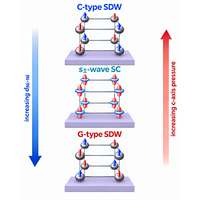
Tunable superconductivity and spin density waves in La3Ni2O7/LaAlO3 thin films

Yu-Han Cao, Kai-Yue Jiang, Hong-Yan Lu, Da Wang, and Qiang-Hua Wang

Phys. Rev. B 114, 154511 (2026) - Published 21 September, 2026

The authors combine first-principles calculations and singular-mode functional renormalization group to show that the interlayer Ni–Ni distance controls competing orders in La3Ni2O7/LaAlO3 thin films. With increasing distance, the ground state evolves from a C-type spin density wave through s±-wave superconductivity, with pairing dominated by Ni 3d3z2−r2 orbitals, to a G-type spin density wave. The predicted pressure suppression of Tc provides a test of itinerant versus local-moment descriptions.

Corbino-enhanced supersonic acoustic-emission threshold in a GaAs two-dimensional electron system

A. D. Levin, A. S. Jaroshevich, Z. D. Kvon, V. A. Chitta, M. S. Aksenov, D. V. Dmitriev, A. K. Bakarov, and G. M. Gusev

Phys. Rev. B 114, 165303 (2026) - Published 21 September, 2026

Here, the authors show that the Corbino geometry strongly enhances alocal threshold for supersonic acoustic-phonon emission in ahigh-mobility GaAs two-dimensional electron system. Radial currentconcentration drives the electron velocity above the sound velocitynear the inner contact, producing a pronounced nonlinear resistanceanomaly. Its polarity dependence is linked to contact Peltier heatingand cooling, highlighting Corbino devices as sensitive probes andpotential localized sources of nonequilibrium acoustic phonons.

Sign In to Your Journals Account

Filter

Section

Filter

Article Lookup

Enter a citation