Highlights

Low-energy optical absorption in correlated insulators: Projected sum rules and the role of quantum geometry

Dan Mao, Juan Felipe Mendez-Valderrama, and Debanjan Chowdhury

Phys. Rev. B 112, 075116 (2025) - Published 8 August, 2025

The authors study here a low‑energy optical absorption sum rule for correlated insulators whose dynamics are governed by interactions projected to isolated (non)topological flat bands. Applying the framework to magic‑angle twisted bilayer graphene and fractional Chern insulators in theoretically solvable limits, they provide a systematic understanding of what microscopic properties control the extent to which the correlated insulators are optically “dark.”

Charge density fluctuations with enhanced superconductivity at the proposed quantum critical point of Sr0.77Ba0.23Ni2As2

Y. Chen, N. Giles-Donovan, J. Guo, R. Chen, Y. Xie, H. Fukui, T. Manjo, D. Ishikawa, A. Q. R. Baron, A. A. Aczel, P. Dai, Y. Song, and R. J. Birgeneau

Phys. Rev. B 112, 075119 (2025) - Published 8 August, 2025

Using inelastic x-ray scattering, the authors discovered enhanced charge density wave fluctuations near a proposed quantum critical point in a nonmagnetic superconductor isostructural to BaFe₂As₂, accompanied by an elevated superconducting transition temperature. This observation underscores the potential role of charge fluctuations in the emergence of superconductivity.

Twist-angle evolution of the intervalley-coherent antiferromagnet in twisted WSe2

Daniel Muñoz-Segovia, Valentin Crépel, Raquel Queiroz, and Andrew J. Millis

Phys. Rev. B 112, 085111 (2025) - Published 8 August, 2025

Twisted WSe2 is an important platform for correlated electron physics and topology, with electronic dispersion, interactions, and carrier density experimentally tunable over wide ranges. It exhibits metallic and insulating antiferromagnetic phases and superconductivity. Here, the authors present a comprehensive theoretical study revealing a dominant intervalley-coherent antiferromagnetic instability driven by tunable band nesting and commensurability consistent with experiments at both weak and strong correlations. They also predict a strong magnetoelectric coupling. The calculated spectral properties explain several subtle experimental transport signatures.

Complex entanglement entropy for complex conformal field theory

Haruki Shimizu and Kohei Kawabata

Phys. Rev. B 112, 085112 (2025) - Published 8 August, 2025

Conformal field theory (CFT) conventionally possesses positive central charges and describes continuous phase transitions in quantum many-body systems. Recently, CFT with complex-valued central charges has been proposed to relate to the discontinuous phase transitions of the Potts models. Here, the authors demonstrate that the scaling of complex-valued entanglement entropy characterizes complex CFT by applying the density matrix renormalization group method to the non-Hermitian five-state Potts model. This study suggests a way to investigate the entanglement properties of complex CFT.

Dichotomy of electron-phonon interactions in the delafossite PdCoO2: From weak bulk to polaronic surface coupling

Gesa-R. Siemann, Philip A. E. Murgatroyd, Tommaso Antonelli, Edgar Abarca Morales, Seunghyun Khim, Helge Rosner, Matthew D. Watson, Andrew P. Mackenzie, and Phil D. C. King

Phys. Rev. B 112, 085113 (2025) - Published 8 August, 2025

The authors demonstrate here the potential of microscopic-area angle-resolved photoemission to separate the electronic structures of distinct polar surface terminations of PdCoO2 - a metallic delafossite oxide. The study reveals how mode- and symmetry-selective couplings can markedly tune many-body interactions in a single host material, opening routes to stabilize surprisingly persistent polaronic quasiparticles despite a pronounced metallicity at the surface.

Insight into spin-to-charge conversion in rutile RuO2

Yanzhang Cao, Da Tian, Lin Huang, Hua Bai, Shixuan Liang, Lei Han, Chong Chen, Yichi Zhang, Lei Wang, Caihong Zhang, Feng Pan, Biaobing Jin, and Cheng Song

Phys. Rev. B 112, 064415 (2025) - Published 7 August, 2025

Spin-to-charge conversion is at the center of spintronics. Here, the authors provide an insight into the dynamical process of spin-to-charge conversion in RuO2 via terahertz emission spectroscopy technique. The dependence of terahertz emission signal on the RuO2 film thickness reveals that the conversion of out-of-plane spin polarization, induced by circularly polarized lasers, occurs simultaneously with the propagation within the film. This study helps advance the understanding of spin-to-charge conversion and the development of z-spin-based ultrafast devices.

Doping dependence of the low-temperature planar carrier density in overdoped YBa2Cu3O7−δ

R. Nicholls, R. D. H. Hinlopen, J. Ayres, T. Kotte, T. Förster, J. Park, J. Sourd, A. Carrington, and N. E. Hussey

Phys. Rev. B 112, 064511 (2025) - Published 7 August, 2025

A sharp rise in the Hall number near the pseudogap critical point in YBa2Cu3O7−δ has often been interpreted as evidence for a quantum critical point (QCP) at a singular doping level p*≈0.19. Here, the authors revisit this result using high-field transport measurements, revealing that once the chain-induced resistivity anisotropy is accounted for, there is no significant feature in the planar carrier density at p*. The observed gradual crossover from ”p” to ”1+p” carriers now aligns with previously conflicting observations of carrier evolution across the overdoped cuprate phase diagram, presenting a challenge to the conventional QCP scenario.

Electron-phonon coupling in correlated metals: A dynamical mean-field theory study

David J. Abramovitch, Jennifer Coulter, Sophie Beck, and Andrew Millis

Phys. Rev. B 112, 075113 (2025) - Published 7 August, 2025

Understanding how phonons affect the properties of correlated quantum materials is a fundamental issue in materials theory. Here, the authors develop a method to calculate the interaction between electrons and lattice vibrations in such materials using computational methods capable of treating entangled electrons in real materials, and apply it to paradigmatic correlated systems SrVO3 and CaCuO2. The couplings are found to differ substantially from those predicted by standard density functional methods, with the differences reflecting the underlying physics of the materials. This work sets the stage for a comprehensive approach beyond density functional theory of electron-phonon interactions in quantum materials.

Interplay of magnetic ordering and charge transport in distorted ScAl3C3-type GdZn3As3

Zhiyu Zhou, Xiyu Chen, Jia-Yi Lu, Junchao Zhang, Xiong Luo, Guang-Han Cao, Shuai Dong, and Zhi-Cheng Wang

Phys. Rev. B 112, 054418 (2025) - Published 6 August, 2025

The authors report here the synthesis and characterization of GdZn3As3, which adopts a distorted Al3C3-type orthorhombic structure (Cmcm space group). Magnetic measurements reveal ferromagnetic ordering below Tc=6.3K, accompanied by a significant negative magnetoresistance reaching (−184)% and a clear nonlinear anomalous Hall effect. This unique crystal structure and ferromagnetism distinguishes GdZn3As3 from other members of the RM3X3 family (R = lanthanides; M = Zn, Cd; X = P, As), which typically crystallize in hexagonal structures and exhibit antiferromagnetic ordering.

Overhauser dynamic nuclear polarization in alkali metals

Bernardine L. D. Rinkel, Katharina Märker, Marie Juramy, Subhradip Paul, Svetlana Menkin, and Clare P. Grey

Phys. Rev. B 112, 054419 (2025) - Published 6 August, 2025

In 1953, A.W. Overhauser predicted that nuclear spin polarization could be enhanced by irradiating a metal’s electron spin resonance. Here, the authors explore the requirements and limitations of the Overhauser effect for alkali metals at the high magnetic field strengths used today, and with samples relevant to rechargeable metal batteries–lithium and sodium-metal dendrites. Lithium’s small spin-orbit coupling yields sufficiently long electron relaxation times, enabling the enhancement of the metal NMR signal and the signals arising from electrolyte degradation products.

Charge density waves and soft phonon evolution in the superconductor BaNi2(As1−xPx)2

Tom Lacmann, Sofia-Michaela Souliou, Fabian Henssler, Mehdi Frachet, Philippa Helen McGuinness, Michael Merz, Björn Wehinger, Daniel A. Chaney, Amir-Abbas Haghighirad, Rolf Heid, and Matthieu Le Tacon

Phys. Rev. B 112, 054101 (2025) - Published 4 August, 2025

The authors investigate here the interplay of incommensurate and commensurate charge density waves (CDWs) in superconducting BaNi2(As1−xPx)2 using thermal diffuse and inelastic x-ray scattering. While phosphorus substitution rapidly suppresses structural transitions, incommensurate CDW fluctuations remain robust. First-principles lattice dynamics capture most of the diffuse scattering, linking it to the soft-phonon-driven incommensurate CDW. In contrast, the commensurate CDW and triclinic phase show no phonon anomalies, indicating that these transitions are not driven by conventional lattice instabilities.

Coexistence of superconductivity and topological band in a van der Waals Sn1−xInxBi2Te4 crystal

Hoyeon Jeon, Saban Hus, Jewook Park, Qiangsheng Lu, Seoung-Hun Kang, Mina Yoon, Robert G. Moore, Jiaqiang Yan, Michael A. McGuire, and An-Ping Li

Phys. Rev. B 112, 064505 (2025) - Published 4 August, 2025

The authors demonstrate here the coexistence of superconductivity and topological surface states in the van der Waals single crystals Sn1−xInxBi2Te4. Indium doping provides tunability of the superconducting gap size and the Dirac point position. These findings establish the material as a promising platform for exploring topological superconductivity and potential Majorana modes, without the need for complex heterostructures.

Spin-charge interplay in the diluted magnetic semiconductor Na(Zn,Mn)Sb studied by multiprobe measurements and simulations

Guoqiang Zhao, Xiang Li, Shuang Yu, Hui Chen, Yong Hu, Yipeng Cai, Shengli Guo, Bo Gu, Fanlong Ning, Kenji M. Kojima, Zheng Deng, Yuqing Xing, Hong-Jun Gao, Xingjiang Zhou, Gang Su, S. Maekawa, Changqing Jin, and Yasutomo J. Uemura

Phys. Rev. B 112, 075104 (2025) - Published 4 August, 2025

Since the mid-1990s, studies of diluted magnetic semiconductors (DMS) focused mainly on ferromagnetic systems, including (Ga,Mn)As and Li(Zn,Mn)As. Here, using multiprobe characterization of transport, magnetization, ARPES, STM, μSR, and simulations, the authors present a new DMS family Na(Zn,Mn)Sb and demonstrate a dynamic spin glass freezing behavior, and colossal magnetoresistance leading to a field-tuned metal insulator transition. Systematic comparisons with other ferromagnetic DMS families shed light on spin charge interplay and doping evolution of many DMS systems.

Revealing Fano resonance in the Dirac material ZrTe5 through Raman scattering

Di Cheng, Tao Jiang, Feng Zhang, Genda Gu, Liang Luo, Chuankun Huang, Boqun Song, Martin Mootz, Avinash Khatri, Joong-Mok Park, Qiang Li, Yongxin Yao, and Jigang Wang

Phys. Rev. B 112, 075108 (2025) - Published 4 August, 2025

The authors uncover a striking Fano resonance in ZrTe5 via Raman spectroscopy, uniquely linked to the B2g I phonon mode near 9 meV. This resonance, driven by strong electron–phonon coupling and quantum interference, is absent in its closely neighboring B2g II mode. First-principles calculations and temperature-dependent data reveal enhanced asymmetry with thermal tuning, offering deep insight into phonon–electron interplay in topological semimetals.

Trivalent network model for d3 transition metal dichalcogenides in the 1T structure: Holography from local constraints

Ashland Knowles and R. Ganesh

Phys. Rev. B 112, 075101 (2025) - Published 1 August, 2025

The authors propose here a network model for a class of two-dimensional materials. The links in the network represent covalent bonds. They must be placed in accordance with local constraints that arise from orbital geometry. This model explains a structural distortion that is seen across multiple materials. Remarkably, the local constraints in this model lead to a bulk-boundary mapping. This opens the door to exploring a holographic principle in real materials.

Nonadiabaticity from first principles: Exact-factorization approach for solids

Galit Cohen, Rachel Steinitz-Eliyahu, E. K. U. Gross, Sivan Refaely-Abramson, and Ryan Requist

Phys. Rev. B 112, 075102 (2025) - Published 1 August, 2025

The authors show here how nonadiabatic coupling “dresses” conventional electron-phonon and electron-multiphonon interactions. The nonadiabatic coupling springs directly from a quantum-geometric potential by applying the variational principle. Treating nonadiabatic effects perturbatively in the electron-to-nucleus mass ratio, the authors derive formulas that explicitly identify nonadiabatic contributions to electronic properties and lay the foundation for calculating them in a practical exact-factorization-based density functional framework.

Aharonov-Bohm and Altshuler-Aronov-Spivak oscillations in the quasiballistic regime in phase-pure GaAs/InAs core/shell nanowires

Farah Basarić, Vladan Brajović, Gerrit Behner, Kristof Moors, William Schaarman, Andrei Manolescu, Raghavendra Juluri, Ana M. Sanchez, Jin Hee Bae, Hans Lüth, Detlev Grützmacher, Alexander Pawlis, and Thomas Schäpers

Phys. Rev. B 112, 075301 (2025) - Published 1 August, 2025

High crystal quality core/shell GaAs/InAs nanowires offer the advantage of confined tubular electronic states and reduced scattering. These properties make them a promising platform for hybrid superconducting quantum devices. To better understand the different transport contributions, gate- and temperature-dependent conductance oscillations are discussed here. Based on these experiments and theoretical transport calculations, the authors conclude that the conducting states in the shell are in the quasiballistic transport regime with few scattering centers. Nevertheless, Altshuler-Aronov-Spivak corrections dominate at small magnetic fields.

Collective excitations and stability of a non-Fermi liquid state near a quantum critical point of a metal

Yasha Gindikin, Dmitrii L. Maslov, and Andrey V. Chubukov

Phys. Rev. B 112, L081101 (2025) - Published 1 August, 2025

At the edge of a phase transition in certain quantum materials, electrons can enter an exotic “strange metal” state, where they cease behaving like well-defined quasiparticles. The authors investigate here whether this state, in an isotropic system, is internally stable against perturbations with different angular momenta. By developing a theoretical framework to trace collective electron oscillations through the crossover from a Fermi liquid to a non-Fermi liquid regime, the authors demonstrate that the system remains stable under perturbations with all angular momenta — including the odd-momentum modes whose stability was previously questioned.

Fano combs in light scattering by dielectric resonators

Mikhail Bochkarev, Nikolay Solodovchenko, Gleb Chekmarev, Anna Ermina, Kirill Samusev, and Mikhail Limonov

Phys. Rev. B 112, L081102 (2025) - Published 1 August, 2025

The authors consider here the evolution of the Fano combs in the light scattering spectra on dielectric resonators under perturbations of the resonator shape (α) and excitation conditions (φ). The precise theory of electromagnetic Fano resonances and microwave experiments demonstrate that in the proximity of special points in the parametric space (α,φ), the Fano asymmetry q of a particular resonant line can reach any value under an appropriate perturbation, providing effective control of light interference in the far field.

Duality via sequential quantum circuit in the topological holography formalism

Robijn Vanhove, Vibhu Ravindran, David T. Stephen, Xiao-Gang Wen, and Xie Chen

Phys. Rev. B 112, 035173 (2025) - Published 31 July, 2025

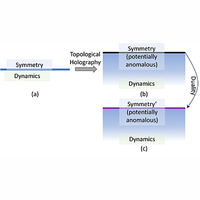
Dualities describe two quantum theories that secretly describe the same low-energy physics. The authors describe here how dualities emerge in the Topological Holography formalism – sometimes aptly called “sandwich – by changing the gapped boundary condition on top of the topological field theory. The authors show how this can be done on the lattice through the application of sequential quantum circuits and give systematic examples both in two and three dimensions.

Sign In to Your Journals Account

Filter

Section

Filter

Article Lookup

Enter a citation