Highlights

Tunneling magnetoresistance effect in altermagnets

Yu-Fei Sun, Yue Mao, Yu-Chen Zhuang, and Qing-Feng Sun

Phys. Rev. B 112, 094411 (2025) - Published 5 September, 2025

Altermagnetism, as a newly identified unconventional magnetic phase, has attracted great interest in condensed matter physics and provides a novel research platform for spintronics. Here, the authors theoretically study the tunneling magnetoresistance (TMR) effect and its transport properties in a universal altermagnetic sandwich device. They systematically investigate how the altermagnetic orientations affect the conductance and TMR ratio, together with the rich and intriguing underlying symmetry relations. This work introduces a new design perspective for the next-generation information and paves the way for the advancement of spintronics technologies.

Identifying switching of antiferromagnets by spin-orbit torques

Martin Jourdan, Jonathan Bläßer, Guzmán Orero Gámez, Sonka Reimers, Lukas Odenbreit, Miriam Fischer, Yuran R. Niu, Evangelos Golias, Francesco Maccherozzi, Armin Kleibert, Hermann Stoll, and Mathias Kläui

Phys. Rev. B 112, 104408 (2025) - Published 4 September, 2025

Antiferromagnets have attracted considerable interest in spintronics for their potential to enable ultrafast, current-driven switching of antiparallel aligned magnetic moments. Here, the authors uncover a thermally induced magnetoelastic switching mechanism that occurs within the duration of current pulses previously employed in the field and can closely mimic spin-orbit torque effects—yet operates on a fundamentally slower timescale. By employing a tailored sample geometry, they disentangle these competing effects and conclusively demonstrate ultrafast Néel spin-orbit torque switching in Mn2Au.

High-throughput screening and theoretical analysis of charge-four Weyl materials

Yong-An Zhong, Lei Jin, Zining Hu, Yefeng Li, Ying Liu, Xuefang Dai, Hongshi Li, Hongli Gao, Xiaoming Zhang, and Guodong Liu

Phys. Rev. B 112, 125113 (2025) - Published 4 September, 2025

Charge-four Weyl points (C4-WPs), possessing the maximal topological charge, remain challenging to realize in real materials, and are largely confined to bosonic, artificial, or nonmagnetic systems. Here, the authors extend the study to ferromagnetic systems and systematically identify all nonmagnetic and ferromagnetic compounds hosting C4-WPs. Results reveal 13 space groups and 40 materials that can host C4-WPs. In the examples of Bi12PO20 and K2CuPbN6O12, four Fermi arcs are clearly observed. Uniaxial strain can also induce a topological phase transition from C4-WPs to C1-WPs.

First-principles computations of the Stark shift of a defect-bound exciton: The case of the T center in silicon

Louis Alaerts, Yihuang Xiong, Sinéad M. Griffin, and Geoffroy Hautier

Phys. Rev. B 112, 125114 (2025) - Published 4 September, 2025

The T center in silicon is a promising defect for quantum information science. Here, the authors use density functional theory to study the Stark shift of its zero-phonon line. Understanding Stark shift effects in quantum defects is important for their spectral diffusion. The work points to the technical challenge of dealing with bound exciton defects with DFT and stresses the importance of beyond first-order effects in these systems with delocalized wave functions.

Elastically buckled film-substrate system as a two-dimensional crystal

Wenqing Zhu (朱文清)

Phys. Rev. B 112, L100101 (2025) - Published 4 September, 2025

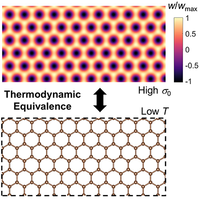
Elastic buckling in soft matter is fundamental to applications from soft robotics to optical metasurfaces. Here, the authors demonstrate that the strain energy functional of a linear elastic film on a nonlinear elastic substrate can be mapped onto the density functional of phase-field crystal theory, with the film’s deflection field corresponding to the atomic density field. This equivalence reveals that the buckled film-substrate system under compression is mathematically analogous to a two-dimensional crystal formed upon cooling, bridging continuum mechanics and crystallization theory.

Superconducting junctions with flat bands

P. Virtanen, R. P. S. Penttilä, P. Törmä, A. Díez-Carlón, D. K. Efetov, and T. T. Heikkilä

Phys. Rev. B 112, L100502 (2025) - Published 4 September, 2025

Materials where single electrons move slowly and form so-called flat electron bands, have been proposed to have theoretical promise in high-temperature superconductivity. Here, the authors predict how such materials would behave when used in superconducting junctions, which play a key role in quantum computers and other quantum technology applications. With flat-band materials, the current through the junction may increase as superconductivity becomes weaker. In extended junctions, quantum geometry of the flat electronic band is also important to allow current to flow through despite the slowness of the electron motion. The differences to conventional junctions are characteristic for the flat-band state, and understanding them is necessary for applications

Dielectric softening in the halide double perovskites A2Au2X6 (A= Cs, Rb; X= Cl, Br, I) via a strain-mediated pseudotriggered mechanism

Urmimala Dey, Jordan A. R. Cowell, and Nicholas C. Bristowe

Phys. Rev. B 112, 094102 (2025) - Published 2 September, 2025

The authors uncover here a previously unreported polar phase in gold halide double perovskites, where the softening of a polar mode arises via an unconventional strain-mediated pseudo-triggered mechanism. This discovery reveals a new class of ferroelectric phase transition and suggests a broadly applicable route to enhance dielectric response in lead-free perovskites, with promising implications for photovoltaic and ultrafast device applications.

Rethinking α−RuCl3: Parameters, models, and phase diagram

Marius Möller, P. A. Maksimov, Shengtao Jiang (蒋晟韬), Steven R. White, Roser Valentí, and A. L. Chernyshev

Phys. Rev. B 112, 104403 (2025) - Published 2 September, 2025

α-RuCl3 promises to harbor an exotic Kitaev spin liquid that could shape the fortunes of the fields of quantum materials and quantum computing. Here, the authors offer a Rosetta Stone for this and other anisotropic-exchange Kitaev materials. The key message is the approach for constraining parameters of their low-energy spin models using experimental observables. This work clears the path to a consistent interpretation of experiments and gives important new insights into the fundamental properties of quantum magnets with spin-orbit coupling.

Symmetry analysis of cross-circular and parallel-circular Raman optical activity

Hikaru Watanabe, Rikuto Oiwa, Gakuto Kusuno, Takuya Satoh, and Ryotaro Arita

Phys. Rev. B 112, 115105 (2025) - Published 2 September, 2025

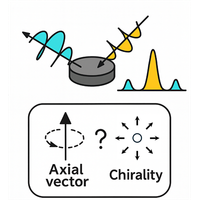
Raman scattering with circular polarization provides a powerful probe of symmetry and exotic orders in quantum materials, including chirality and magnetism. The authors present here a systematic symmetry analysis of cross- and parallel-circular Raman optical activities, which represent circular dichroic responses in Raman scattering. They demonstrate that these activities are intrinsically linked to chiral and axial-vector motifs of materials, thereby establishing a diagnostic framework for identifying space-time symmetries in complex quantum phases.

Topography of Fermi arcs in t−PtBi2 using high-resolution angle-resolved photoemission spectroscopy

Evan O'Leary, Zhuoqi Li, Lin-Lin Wang, Benjamin Schrunk, Andrew Eaton, Paul C. Canfield, and Adam Kaminski

Phys. Rev. B 112, 085154 (2025) - Published 28 August, 2025

Topological semimetals are considered important for future developments of ultralow-power fast electronics that utilize spin rather than charge for storing and processing information. Weyl semimetals are important member of this family, as they host Fermi arcs, along which the spin of electrons is locked to their momenta. In most previously studied materials, the Fermi arcs are in very close proximity to other features of the band structure (e.g., NbAs), which makes it difficult to study these objects. Here, the authors find that in t-PtBi2, the arcs are well separated from other features, which allows a conclusive demonstration that they are indeed disconnected contours in the momentum space, spanning two Weyl points of opposing polarity. Since the Fermi arcs in PtBi2 are the main feature in the Fermi surface, it is likely that it would be easier to harness their unusual spin properties.

Multiple magnetic transitions, anomalous Hall effect, and tunable surface states in Mn(Bi1−xSbx)4Te7

Chandan De, Keisuke Fukutani, Junho Seo, Roland Stania, Koichiro Yaji, Kenta Kuroda, Kenya Shimada, Jun Sung Kim, Han Woong Yeom, and Sang-Wook Cheong

Phys. Rev. B 112, 085151 (2025) - Published 27 August, 2025

Mn(Bi1−xSbx)4Te7 is a layered magnetic topological material that hosts multiple magnetic ground states and tunable surface Dirac states. This system is particularly suited for studying the interplay between magnetism and topology, relevant to quantum anomalous Hall phases. Here, the authors investigate the evolution of surface electronic structure using high-resolution angle-resolved photoemission spectroscopy (ARPES) on high-quality single crystals. They find that Sb doping drives a transition from gapless to gapped Dirac surface states, revealing how subtle chemical tuning controls topological and magnetic properties in this material family.

Atomic-scale phase-field modeling for ferroelectrics

Kairi Masuda and Andrew M. Rappe

Phys. Rev. B 112, 054107 (2025) - Published 26 August, 2025

Phase-field modeling has been used to visualize local thermodynamic states, that is, spatially inhomogeneous free energy, entropy, and stress in ferroelectrics. Here, the authors show that phase-field modeling can be extended to the atomic scale by combining variational Gaussian theory with a bond-valence interatomic potential. Using this approach, they visualize atomic-resolution thermodynamic states in PbTiO3 and find that the ferroelectric–paraelectric transition may be driven by a local increase in the vibrational free energy of Pb atoms.

Robust long-range optical pulling using a single-mode topological chiral edge state

Yaxin Li, Tiantao Qu, Xinning Yu, Lei Zhang, and Jun Chen

Phys. Rev. B 112, 075426 (2025) - Published 26 August, 2025

The authors demonstrate here robust long-range optical pulling via a single-mode topological chiral edge state. A particle-induced local gap produces evanescent modes that confine waves inside the particle, where rapid decay generates a pulling force via negative electric field intensity gradients. Unlike multimode states, the single-mode state can pull multiple particles simultaneously in one transport channel, offering structural simplicity, robustness against disorder, and enhanced potential for integration. This work provides a new mechanism to particle manipulation using topological chiral edge states.

Excitonic and magnetic phases in doped WTe2 monolayers

Guillermo Parra-Martínez, Daniel Muñoz-Segovia, Héctor Ochoa, and Jose Angel Silva-Guillén

Phys. Rev. B 112, 085148 (2025) - Published 26 August, 2025

Monolayer WTe2 has emerged as a tunable platform of correlated and topological electronic phases, hosting exciton insulating states and superconductivity emerging from a topological band structure. Here, the authors carry out extensive Hartree-Fock calculations of the competing broken-symmetry phases appearing upon electron doping and dielectric engineering. They find a new state, an easy plane ferromagnet, which competes with the previously proposed spin spiral excitonic state. The interplay of these competing orders might shed light into the unconventional features of the superconducting transition.

Selected magnetoelectrical phonon stiffening in Cr2O3

Qiyang Sun, Yaokun Su, Douglas L. Abernathy, Wei Tian, and Chen Li

Phys. Rev. B 112, L060303 (2025) - Published 26 August, 2025

Using inelastic neutron scattering and first-principles calculations, the authors investigate here the origin of anomalous phonon stiffening in Cr₂O₃. They challenge the common belief that dynamic spin-phonon interactions are responsible for this behavior. The findings attribute the stiffening to a static effect—the renormalization of electron states owing to the magnetic transition. This work suggests that the proposed static origin may dominate phonon energy shifts, prompting a reevaluation of phonon stiffening in other magnetic materials.

Towards a global phase diagram of Ce-based dipolar-octupolar pyrochlore magnets under magnetic fields

Zhengbang Zhou (周政邦) and Yong Baek Kim

Phys. Rev. B 112, L060407 (2025) - Published 26 August, 2025

Ce-based dipolar-octupolar pyrochlores have emerged as leading candidates for realizing the elusive π-flux quantum spin ice, yet a definitive identification remains unsettled. The authors establish here a global magnetic field tuned phase diagram for Ce2(Zr,Sn,Hf)2O7, using gauge mean-field theory. Distinctive field direction dependent responses—ranging from critical fields differing by an order of magnitude, to split multi-peak dynamical spectra, to contrasting magnetostriction profiles—reveal powerful probes of the system’s underlying multipolar nature. These predictions provide a concrete roadmap for neutron scattering and thermodynamic experiments.

Pressure and strain effects on the ab initio GW electronic structure of La3Ni2O7

Jean-Baptiste de Vaulx, Quintin N. Meier, Pierre Toulemonde, Andrés Cano, and Valerio Olevano

Phys. Rev. B 112, 085143 (2025) - Published 25 August, 2025

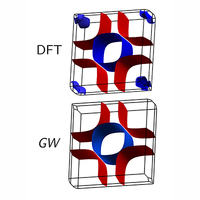
The bilayer compound La3Ni2O7 under high pressure has long held the superconducting Tc record among the nickelates, triggering a considerable amount of experimental and theoretical work to understand its main electronic properties. This work presents an ab initio analysis of these properties within the G0W0 approximation for different pressures and under epitaxial strain, showing features consistent with ARPES data as well as interesting effects. Among these, a strong renormalization of the rare-earth band and a slight deviation from conventional Fermi-liquid behavior stand out.

Effect of disorder on the strain-tuned charge density wave multicriticality in PdxErTe3

Anisha G. Singh, Maja D. Bachmann, Alan Fang, Aharon Kapitulnik, Steven A. Kivelson, Ian R. Fisher, Paul Thompson, Stephan Rosenkranz, Raymond Osborn, Matthew Krogstad, Jong Woo Kim, and Philip J. Ryan

Phys. Rev. B 112, 085146 (2025) - Published 25 August, 2025

Symmetry is a central concept in condensed matter physics. Similarly, disorder is pervasive in real materials and can have important effects on a wide range of physical properties. Here, the authors explore how disorder affects a strain-tuned bicritical point associated with the meeting of two non-symmetry-related continuous phase transitions in an orthorhombic material. They find evidence for an emergent pseudo-tetragonal symmetry proximate to the bicritical point, which, despite negligible changes in the structural orthorhombicity, occurs for a smaller value of the critical strain and extends over a wider range of tuning parameters than for the pristine material.

Initialization of neutral and charged exciton spin states in a telecom-emitting quantum dot

Giora Peniakov, Johannes M. Michl, Mohamed Helal, Raphael Joos, Michael Jetter, Simone L. Portalupi, Peter Michler, Sven Höfling, and Tobias Huber-Loyola

Phys. Rev. B 112, 085422 (2025) - Published 25 August, 2025

It is an ongoing effort to utilize semiconductor quantum dots as quantum light sources directly in the telecom wavelength range. Here, the authors contribute to this effort by establishing a p-shell excitation method for such quantum dots, enabling “writing” of the confined matter spin qubit state via the exciting laser’s polarization. In addition, they report a record-high coherence time for a confined hole, opening up new possibilities for implementing advanced quantum light protocols.

Temperature-dependent study of the spin dynamics of coupled Y3Fe5O12/Gd3Fe5O12/Pt trilayers

Felix Fuhrmann, Sven Becker, Akashdeep Akashdeep, Gerhard Jakob, Qianqian Lan, Nan Wang, Rafal E. Dunin-Borkowski, Romain Lebrun, Mathias Weiler, and Mathias Kläui

Phys. Rev. B 112, 064432 (2025) - Published 22 August, 2025
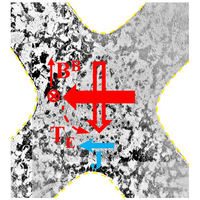
The authors unravel here the coupled spin dynamics in Y3Fe5O12/Gd3Fe5O12/Pt trilayers by combining broadband ferromagnetic resonance and spin pumping measurements, supported by micromagnetic simulations. Their work demonstrates strong interlayer coupling, revealing that the GdIG layer governs spin current generation, near its compensation temperature. The system’s highly tunable spin current and coherent dynamics establish a robust platform for investigating magnonic transport and designing complex spintronic devices, such as all-insulating magnon spin valves, across broad temperature and field regimes.

Sign In to Your Journals Account

Filter

Section

Filter

Article Lookup

Enter a citation