Browse by Subject

Interaction-Assisted Topological Pumping in Few- and Many-Atom Rydberg Arrays

Chenxi Huang, Tao Chen, Qian Liang, Matthew A. Krebs, Ethan Springhorn, Ruiyu Li, Mingsheng Tian, Kaden R. A. Hazzard, Jacob P. Covey, and Bryce Gadway

Phys. Rev. X 16, 031075 (2026) - Published 21 September, 2026

Strong dipolar interactions in Rydberg atom arrays are found to be able to bind particles into correlated pairs and clusters that undergo efficient topological pumping along a synthetic dimension.

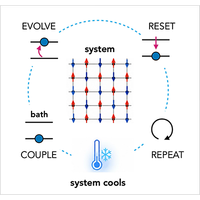
Quantum Thermal State Preparation for Near-Term Quantum Processors

Jerome Lloyd and Dmitry A. Abanin

Phys. Rev. X 16, 031053 (2026) - Published 28 August, 2026

Researchers develop an algorithm that prepares many-body quantum thermal states accurately by combining bath resetting and modulated coupling.

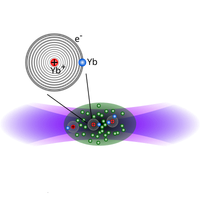
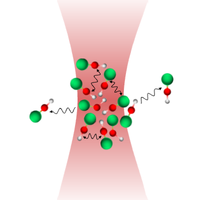
Revealing Electron-Ytterbium Interactions through Rydberg Molecular Spectroscopy

Tangi Legrand, Xin Wang, Florian Pausewang, Wolfgang Alt, Eduardo Uruñuela, Sebastian Hofferberth, Milena Simić, and Matthew T. Eiles

Phys. Rev. X 16, 031045 (2026) - Published 20 August, 2026

Precision spectroscopy of giant ytterbium Rydberg molecules provides a powerful new window into fundamental atomic properties, laying essential groundwork for future experiments with divalent atoms.

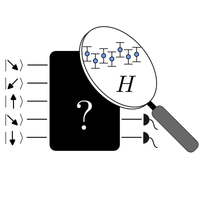
Bounded-Error Quantum Simulation via Hamiltonian and Lindbladian Learning

Tristan Kraft, Manoj K. Joshi, William T. Lam, Tobias Olsacher, Florian Kranzl, Johannes Franke, Lata Kh Joshi, Rainer Blatt, Augusto Smerzi, Daniel Stilck França, Benoît Vermersch, Barbara Kraus, Christian F. Roos, and Peter Zoller

Phys. Rev. X 16, 031037 (2026) - Published 13 August, 2026

Researchers introduce a framework that infers quantum dynamics and error bounds from experimental data to validate large-scale quantum simulations.

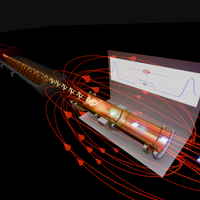
Deceleration of Accelerator-Produced and In-Trap Electron Cooling of Highly Charged Ions

S. Rausch, Z. Andelkovic, S. Fedotova, W. Geithner, F. Herfurth, M. Horst, J. Ködel, K. Mohr, D. Neidherr, W. Nörtershäuser, N. Stallkamp, S. Trotsenko, G. Vorobjev, and D. Zisis

Phys. Rev. X 16, 031022 (2026) - Published 29 July, 2026

The electron cooling of highly charged ions (HCI) in a Penning trap, as well as the deceleration and trapping of accelerator-produced HCI, has been demonstrated at the HITRAP facility, paving the way for unprecedented precision experiments in QED, materials science, and astrophysics.

Engineered Molecular Clock Transitions for Precision Measurements

Yuiki Takahashi, Harish D. Ramachandran, Arian Jadbabaie, Yi Zeng, Chi Zhang, and Nicholas R. Hutzler

Phys. Rev. X 16, 031011 (2026) - Published 20 July, 2026

Special clock transitions in heavy polar molecules have been engineered to probe physics beyond the standard model, suppressing disruptive electromagnetic noise by orders of magnitude while preserving high sensitivity.

Observation of Synchronization between Two Quantum van der Pol Oscillators in Trapped Ions

Jiarui Liu, Qiming Wu, Joel E. Moore, Hartmut Haeffner, and Christopher W. Wächtler

Phys. Rev. X 16, 021062 (2026) - Published 29 June, 2026

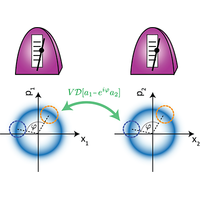
Synchronization between two quantum van der Pol oscillators is achieved by engineering dissipation in a trapped-ion quantum simulator, where the synchronized state is encoded in a fixed relative phase accessible only through joint measurement.

Quantifying Quantum Computational Advantage on a Processor of Ultracold Atoms

Yong-Guang Zheng, Ying-Chao Shen, Wei-Yong Zhang, An Luo, Ying Liu, Ming-Gen He, Hao-Ran Zhang, Wan Lin, Han-Yi Wang, Zi-Hang Zhu, Pei-Yue Qiu, Tian-Yi Wang, Ming-Cheng Chen, Chao-Yang Lu, Supanut Thanasilp, Dimitris G. Angelakis, Zhen-Sheng Yuan, and Jian-Wei Pan

Phys. Rev. X 16, 021057 (2026) - Published 18 June, 2026

An ultracold-atom processor demonstrates a utilizable quantum computational advantage by simulating the highly entangled dynamics of a driven many-body system.

Lieb-Mattis States for Robust Entangled Differential Phase Sensing

Raphael Kaubruegger, Diego Fallas Padilla, Athreya Shankar, Christoph Hotter, Sean R. Muleady, Jacob Bringewatt, Youcef Baamara, Erfan Abbasgholinejad, Alexey V. Gorshkov, Klaus Mølmer, James K. Thompson, and Ana Maria Rey

Phys. Rev. X 16, 021052 (2026) - Published 9 June, 2026

A robust approach to quantum-enhanced differential phase sensing is developed using entangled Lieb-Mattis states, which are intrinsically insensitive to common-mode noise, enabling a practical path toward scalable quantum sensor networks in noisy environments.

Generating Arbitrary Superpositions of Nonclassical Quantum Harmonic Oscillator States

S. Saner, O. Băzăvan, D. J. Webb, G. Araneda, D. M. Lucas, C. J. Ballance, and R. Srinivas

Phys. Rev. X 16, 021049 (2026) - Published 3 June, 2026

Researchers have developed a method to generate arbitrary superpositions of non-Gaussian states in trapped-ion systems and applied it to realize superpositions of squeezed, trisqueezed, and higher-order squeezed states, with applications in quantum sensing and error correction.

Erratum: Opposite Effects of the Rotational and Translational Energy on the Rates of Ion-Molecule Reactions near 0 K: The D2++NH3 and D2++ND3 Reactions [Phys. Rev. X 14, 011034 (2024)]

Raphaël Hahn, David Schlander, Valentina Zhelyazkova, and Frédéric Merkt

Phys. Rev. X 16, 029901 (2026) - Published 20 May, 2026

Nondestructive Optical Readout and Manipulation of Circular Rydberg Atoms

Y. Machu, A. Durán-Hernández, G. Creutzer, A. A. Young, J. M. Raimond, M. Brune, and C. Sayrin

Phys. Rev. X 16, 021040 (2026) - Published 20 May, 2026

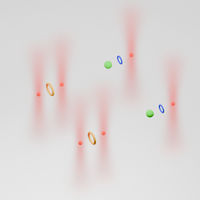
Local quantum nondemolition measurements and optical manipulation of long-lived circular Rydberg atoms are demonstrated by coupling them to an auxiliary array of low-angular-momentum Rydberg atoms.

Probing Excited-State Dynamics of Transmon Ionization

Zihao Wang, Benjamin D’Anjou, Philippe Gigon, Alexandre Blais, and Machiel S. Blok

Phys. Rev. X 16, 021033 (2026) - Published 12 May, 2026

Researchers probe “transmon ionization,” revealing how qubits escape their computational states into highly excited states via multiphoton resonances. Understanding these Landau-Zener transitions is an important step toward developing better readout schemes.

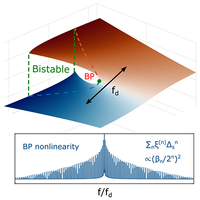
Ultralow-Power Microwave Frequency Comb at a Bistable Phase Transition

Hanfeng Wang, Kurt Jacobs, Dirk R. Englund, and Matthew E. Trusheim

Phys. Rev. X 16, 021005 (2026) - Published 6 April, 2026

Leveraging a bistable phase transition in a hybrid quantum system enables the generation of a microwave frequency comb with 193 spectral teeth at unprecedentedly low driving power.

Quantum-State-Controlled Collisions of Ultracold Polyatomic Molecules

Nathaniel B. Vilas, Paige Robichaud, Christian Hallas, Junheng Tao, Loïc Anderegg, Grace K. Li, Hana Lampson, Lucie D. Augustovičová, John L. Bohn, and John M. Doyle

Phys. Rev. X 16, 021001 (2026) - Published 1 April, 2026

Ultracold collisions between polyatomic molecules are observed and characterized, revealing how their unique internal structure can be used to shield them from loss.

Ultracold High-Spin Σ-State Polar Molecules for New Physics Searches

Alessio Ciamei, Adam Koza, Marcin Gronowski, and Michał Tomza

Phys. Rev. X 16, 011052 (2026) - Published 9 March, 2026

Ultracold YbCr molecules, featuring large internal electric fields and an ideal rotational structure controllable with modest laboratory fields, are proposed as a sensitive platform for probing physics beyond the standard model.

Unraveling Real-Time Chemical Shifts in the Ultrafast Regime

Daniel E. Rivas, Lorenzo Paoloni, Rebecca Boll, Alberto De Fanis, Ana Martínez Gutiérrez, Tommaso Mazza, Solène Oberli, Oliver Alexander, André Al-Haddad, Thomas M. Baumann, Christoph Bostedt, Simon Dold, Gianluca Geloni, Markus Ilchen, Dooshaye Moonshiram, Daniel Rolles, Artem Rudenko, Philipp Schmidt, Svitozar Serkez, Sergey Usenko, Ángel Martín Pendás, Michael Meyer, Jesús González-Vázquez, and Antonio Picón

Phys. Rev. X 16, 011051 (2026) - Published 9 March, 2026

Combining ultrafast x-ray measurements with a theoretical model allows for tracking bond breaking, molecular motion, and chemical reactions.

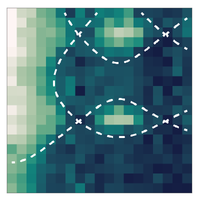
Exploring Light-Induced Phases of 2D Materials in a Modulated 1D Quasicrystal

Yifei Bai, Anna R. Dardia, Toshihiko Shimasaki, and David M. Weld

Phys. Rev. X 16, 011036 (2026) - Published 25 February, 2026

Mapping a one-dimensional quasicrystal to a two-dimensional quantum Hall system allows for the study of light-induced metal-insulator transitions, revealing an exotic multifractal phase stabilized by elliptically polarized driving.

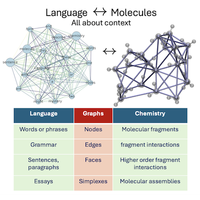
Large Language Model-Type Architecture for High-Dimensional Molecular Potential Energy Surfaces

Xiao Zhu and Srinivasan S. Iyengar

Phys. Rev. X 16, 011012 (2026) - Published 22 January, 2026

Bridging language model architectures and graph-theory-based molecular fragmentation achieves a sub-kilocalorie-per-mole-accurate potential energy surface for a 186-dimensional water cluster.

Second-Order Microscopic Nonlinear Optical Susceptibility in a Centrosymmetric Material: Application to Imaging Valence Electron Motion

Chance Ornelas-Skarin, Tatiana Bezriadina, Matthias Fuchs, Shambhu Ghimire, J. B. Hastings, Quynh L. Nguyen, Gilberto de la Peña, Takahiro Sato, Sharon Shwartz, Mariano Trigo, Diling Zhu, Daria Popova-Gorelova, and David A. Reis

Phys. Rev. X 16, 011006 (2026) - Published 7 January, 2026

Nonlinear x-ray diffraction is used to isolate the valence electron density in silicon, demonstrating a powerful imaging technique useful across a range of complex materials.

Sign In to Your Journals Account

Filter

Filter

Article Lookup

Enter a citation