Highlights

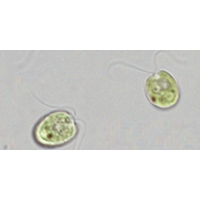
Light-Dependent Switching of Circling Handedness in Microswimmer Navigation

Zhao Wang, Samuel A. Bentley, Jiawei Li, Kirsty Y. Wan, and Alan C. H. Tsang

Phys. Rev. Lett. 136, 078301 (2026) - Published 20 February, 2026

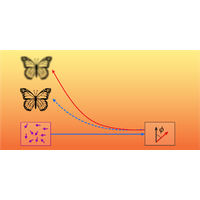
In response to changes in illumination, a swimming microorganism reverses the direction of its circular trajectory by tilting its flagella’s planes of motion.

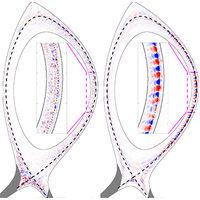
Fast Turbulence Phase Transition in a Flux-Driven Global Edge-SOL Simulation of a Tokamak Plasma

Wladimir Zholobenko, Frank Jenko, Kaiyu Zhang, Philipp Ulbl, Konrad Eder, Andreas Stegmeir, Clemente Angioni, and Peter Manz

Phys. Rev. Lett. 136, 075101 (2026) - Published 19 February, 2026

A global, confinement-time-long, flux-driven turbulence simulation of the tokamak plasma edge region subject to a power ramp reproduces an abrupt turbulence transition.

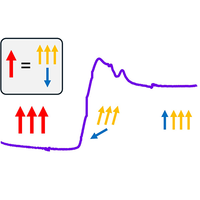
Quintuplet Condensation in the Skyrmionic Insulator Cu2OSeO3 at Ultrahigh Magnetic Fields

T. Nomura, I. Rousochatzakis, O. Janson, M. Gen, X.-G. Zhou, Y. Ishii, S. Seki, Y. Kohama, and Y. H. Matsuda

Phys. Rev. Lett. 136, 076703 (2026) - Published 19 February, 2026

Faraday rotation at ultrahigh magnetic fields uncovers magnon Bose–Einstein condensation in a chiral helimagnet

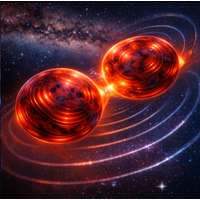
Relativistic and Dynamical Love Numbers

Abhishek Hegade K. R., K. J. Kwon, Tejaswi Venumadhav, Hang Yu, and Nicolas Yunes

Phys. Rev. Lett. 136, 071401 (2026) - Published 18 February, 2026

A model expansion formalism extended to full general relativity describes the dynamical tidal response of an inspiraling neutron star given in terms of its modes of oscillation.

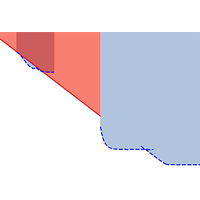
New Upper Bounds on Exotic Neutron-Spin–Electron-Spin Interactions via Neutron-Spin-Rotation Measurements in a Compensated Ferrimagnet

T. Mulkey, K. N. Lopez, C. D. Hughes, B. Hill, M. Van Meter, H. Wijeratne, J. C. Long, M. Sarsour, W. M. Snow, K. Li, R. Parajuli, S. Samiei, D. V. Baxter, M. Luxnat, Y. Zhang, C. Jiang, E. Stringfellow, J. Torres, and R. Hobbs

Phys. Rev. Lett. 136, 071801 (2026) - Published 18 February, 2026

Slow neutrons are used to place new constraints on electron-neutron spin-spin interactions from a hypothetical boson over more than five orders of magnitude in mass.

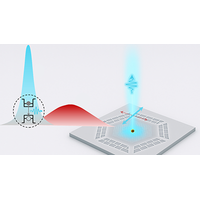
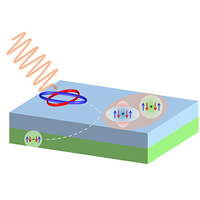
Polarized Single-Photon Emission from an Anisotropic Dirac Cavity

Xin-Rui Mao, Bang Wu, Wei-Jie Ji, Shao-Lei Wang, Wang-Zhe Li, Han-Qing Liu, Haiqiao Ni, Zhichuan Niu, and Zhiliang Yuan

Phys. Rev. Lett. 136, 073603 (2026) - Published 18 February, 2026

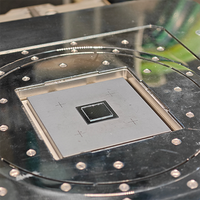
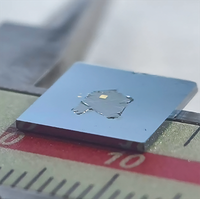
A novel single-photon source made of a quantum dot embedded in a Dirac cavity provides outstanding performance metrics.

Flexible Readout and Unconditional Reset for Superconducting Multiqubit Processors with Tunable Purcell Filters

Yong-Xi Xiao, Da’er Feng, Xu-Yang Gu, Gui-Han Liang, Ming-Chuan Wang, Zhen-Yu Peng, Bing-Jie Chen, Yu Yan, Zheng-Yang Mei, Si-Lu Zhao, Yi-Zhou Bu, Cheng-Lin Deng, Kai Yang, Ye Tian, Xiaohui Song, Dongning Zheng, Yu-Xiang Zhang, Yun-Hao Shi, Zhongcheng Xiang, Kai Xu, and Heng Fan

Phys. Rev. Lett. 136, 070601 (2026) - Published 17 February, 2026

A high fidelity qubit-readout scheme based on Purcell filters allows fast qubit reset in superconducting multiqubit processors.

Entanglement-Enhanced Optical Ion Clock

Kai Dietze, Lennart Pelzer, Ludwig Krinner, Fabian Dawel, Johannes Kramer, Nicolas C. H. Spethmann, Timm Kielinski, Klemens Hammerer, Kilian Stahl, Joshua Klose, Sören Dörscher, Christian Lisdat, Erik Benkler, and Piet O. Schmidt

Phys. Rev. Lett. 136, 073601 (2026) - Published 17 February, 2026

An optical clock based on a pair of calcium ions achieves a given precision more quickly when the ions are entangled.

Observation of Robust Macroscale Structural Superlubricity

Minhao Han, Deli Peng, Dinglin Yang, Jin Wang, Yi Zheng, Guofeng Hu, Yifan Shao, Jiaying Li, Feng Ding, Zhiping Xu, Michael Urbakh, and Quanshui Zheng

Phys. Rev. Lett. 136, 076201 (2026) - Published 17 February, 2026

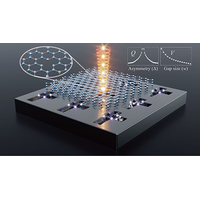
Robust macroscale structural superlubricity is demonstrated within a single submillimeter graphite contact.

Extremely High Excitonic g Factors in 2D Crystals by Alloy-Induced Admixing of Band States

Katarzyna Olkowska-Pucko et al.

Phys. Rev. Lett. 136, 076901 (2026) - Published 17 February, 2026

Semiconducting transition metal dichalcogenide monolayer alloys provide a material platform with remarkable valley-tunable properties that can be manipulated on demand.

Composite Fermion Theory of Fractional Chern Insulator Stability

Xiaodong Hu, Ying Ran, and Di Xiao

Phys. Rev. Lett. 136, 066504 (2026) - Published 13 February, 2026

A mean-field theory of fractional Chern insulators based on the dipole picture of composite fermions extends beyond the ideal-band limit.

Floquet Engineering Spin Triplet States in Unconventional Magnets

Pei-Hao Fu, Sayan Mondal, Jun-Feng Liu, Yukio Tanaka, and Jorge Cayao

Phys. Rev. Lett. 136, 066703 (2026) - Published 13 February, 2026

High-frequency linearly polarized light generates spin-triplet densities and odd-frequency spin-triplet Cooper pairs in d-wave altermagnets, features absent in the static phase.

Radially Locked Sun-Ray Patterns in Reaction-Diffusion-Advection Systems

S. N. Maharana, L. Negrojević, A. Comolli, and A. De Wit

Phys. Rev. Lett. 136, 068001 (2026) - Published 13 February, 2026

A chemical reaction involving a flowing fluid leads to a striking visual pattern—a result that could benefit research on other propagating fronts, such as flames.

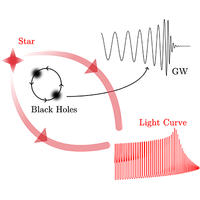
Black Holes as Telescopes: Discovering Supermassive Binaries through Quasiperiodic Lensed Starlight

Hanxi Wang, Miguel Zumalacárregui, and Bence Kocsis

Phys. Rev. Lett. 136, 061403 (2026) - Published 12 February, 2026

The quasiperiodic lensing of starlight by a supermassive black hole binary system can leave imprints on the light curve of the host galaxy, which can help discover and characterize such binaries.

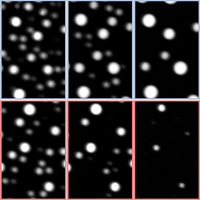
Diffusive and Enzymatic Modulation of the Dynamic Size Distribution of DNA Droplets

Michio Tateno and Omar A. Saleh

Phys. Rev. Lett. 136, 068403 (2026) - Published 11 February, 2026

An experimental model system of DNA nanoparticles shows that the droplet size distribution can be controlled by the droplets’ phase separation ability.

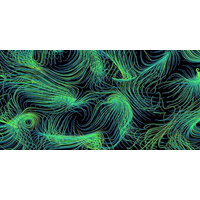
Analytical and AI-Discovered Stable, Accurate, and Generalizable Subgrid-Scale Closure for Geophysical Turbulence

Karan Jakhar, Yifei Guan, and Pedram Hassanzadeh

Phys. Rev. Lett. 136, 064201 (2026) - Published 10 February, 2026

Researchers have used an artificial-intelligence tool to reveal long-sought equations that describe small-scale features in 2D turbulent systems.

Bright Chiral Single-Photon Emission Underpinned by Independent Tailoring of Q and V

Kai Liu, Qi-hang Zhang, Zi-hao Dong, Zhi-xiang Li, Chao Zhang, Shao-jie Fu, Xu-hao Hong, Yan-qing Lu, Yan-feng Chen, Jun Du, Xue-jin Zhang, and Yong-yuan Zhu

Phys. Rev. Lett. 136, 066901 (2026) - Published 10 February, 2026

Independent tuning of cavity lifetime and field confinement enables record-bright, room-temperature chiral single-photon emission, breaking the prevailing Q-V trade-off in quantum emitters.

Determining the Chemical Potential via Universal Density Functional Learning

Florian Sammüller and Matthias Schmidt

Phys. Rev. Lett. 136, 068202 (2026) - Published 10 February, 2026

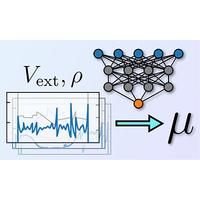
Equilibrium chemical potentials can be determined simultaneously across simulation datasets of inhomogeneous classical fluids by leveraging machine-learned classical density functionals.

Error-Resilient Reversal of Quantum Chaotic Dynamics Enabled by Scramblons

Yu-Chen Li, Tian-Gang Zhou, Shengyu Zhang, Ze Wu, Liqiang Zhao, Haochuan Yin, Xiaoxue An, Hui Zhai, Pengfei Zhang, Xinhua Peng, and Jiangfeng Du

Phys. Rev. Lett. 136, 060403 (2026) - Published 9 February, 2026

A combined experimental and theoretical study reveals the emergence of quantum chaos in a complex system, suggesting that it can be described with a universal theoretical framework.

Superconducting Dome in La3−xSrxNi2O7−δ Thin Films

Maosen Wang, Bo Hao, Wenjie Sun, Shengjun Yan, Shengwang Sun, Hongyi Zhang, Zhengbin Gu, and Yuefeng Nie

Phys. Rev. Lett. 136, 066002 (2026) - Published 9 February, 2026
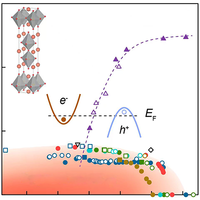
The doping-dependent phase diagram of the bilayer nickelate film, La3−xSrxNi2O7−δ, when compressively strained features a superconducting dome with an electron-hole crossover.

Sign In to Your Journals Account

Filter

Section

Filter

Article Lookup

Enter a citation