Highlights

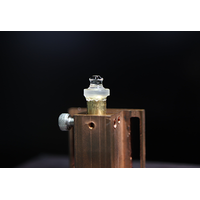
High-Power Picosecond Pulsed Kerr Soliton Microcombs

Liu Yang, Keisuke Ogawa, Ryomei Takabayashi, Yuta Mototani, Tatsuki Murakami, Hajime Kumazaki, Yongyong Zhuang, Xiaoyong Wei, and Shun Fujii

Phys. Rev. Lett. 136, 043802 (2026) - Published 26 January, 2026

Strong mode interactions in ultrahigh-Q crystalline microresonators produce a high-power, high-efficiency dissipative Kerr soliton regime revealing new nonlinear dynamics where localized mode crossings act as effective higher-order dispersion.

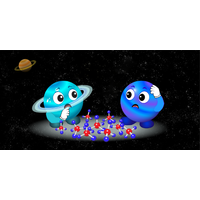
Revisiting the Phase Diagram of Methane

Mengnan Wang, Miriam Peña-Alvarez, Ross T. Howie, and Eugene Gregoryanz

Phys. Rev. Lett. 136, 046101 (2026) - Published 26 January, 2026

A systematic exploration of the phase diagram of methane resolves inconsistencies of earlier studies, with potential ramifications for our understanding of planetary interiors.

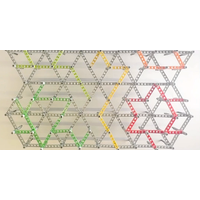
Combinatorial Design of Floppy Modes and Frustrated Loops in Metamaterials

Wenfeng Liu, Tomer A. Sigalov, Corentin Coulais, and Yair Shokef

Phys. Rev. Lett. 136, 038202 (2026) - Published 23 January, 2026

A mechanical network of flexible links can be designed to solve a problem in matrix algebra.

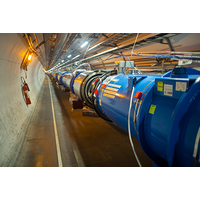
Evidence for the Collective Nature of Radial Flow in Pb+Pb Collisions with the ATLAS Detector

G. Aad et al. (ATLAS Collaboration)

Phys. Rev. Lett. 136, 032301 (2026) - Published 22 January, 2026

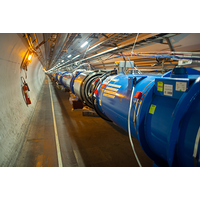
Two different LHC measurements of a novel observable v0(pT) for the radial flow of quark-gluon plasma again confirms the collective hydrodynamic behavior of the plasma.

Long-Range Transverse-Momentum Correlations and Radial Flow in Pb-Pb Collisions at the LHC

S. Acharya et al. (ALICE Collaboration)

Phys. Rev. Lett. 136, 032302 (2026) - Published 22 January, 2026

Two different LHC measurements of a novel observable v0(pT) for the radial flow of quark-gluon plasma again confirms the collective hydrodynamic behavior of the plasma.

Phase-Variation Ramsey Spectroscopy of the 23S1→23P2 Interval in Positronium

D. M. Newson and D. B. Cassidy

Phys. Rev. Lett. 136, 033001 (2026) - Published 22 January, 2026

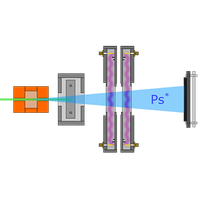
The structure of positronium was measured by using the Ramsey separated oscillatory fields method.

Control of Molecular Rotation in Helium Nanodroplets with an Optical Centrifuge

Ian MacPhail-Bartley, Alexander A. Milner, Frank Stienkemeier, and Valery Milner

Phys. Rev. Lett. 136, 033002 (2026) - Published 22 January, 2026

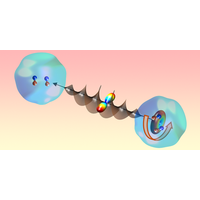
A technique for spinning up molecules in a gas has now been adapted to work with superfluid helium as the host medium.

Localized AdS3×S3× T4 Black Holes

Óscar J. C. Dias and Jorge E. Santos

Phys. Rev. Lett. 136, 031501 (2026) - Published 20 January, 2026

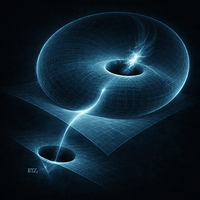
The dual (3D) black holes that were missing in the study of gravity duals of 2D field theories have been found.

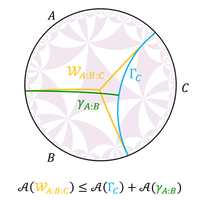
Purely Greenberger-Horne-Zeilinger–like Entanglement is Forbidden in Holography

Vijay Balasubramanian, Monica Jinwoo Kang, Charlie Cummings, Chitraang Murdia, and Simon F. Ross

Phys. Rev. Lett. 136, 031602 (2026) - Published 20 January, 2026

Time-symmetric holographic states may never have purely GHZ-like entanglement.

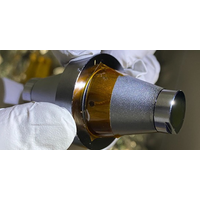
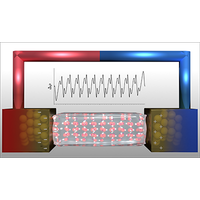
Frequency Stability of 2.5×10⁻¹⁷ from a Si Cavity with AlGaAs Crystalline Mirrors

Dahyeon Lee, Zoey Z. Hu, Ben Lewis, Alexander Aeppli, Kyungtae Kim, Zhibin Yao, Thomas Legero, Daniele Nicolodi, Fritz Riehle, Uwe Sterr, and Jun Ye

Phys. Rev. Lett. 136, 033801 (2026) - Published 20 January, 2026

A crystalline mirror coating significantly reduces fluctuations in the resonant frequency of an optical cavity.

Generative Thermodynamic Computing

Stephen Whitelam

Phys. Rev. Lett. 136, 037101 (2026) - Published 20 January, 2026

A thermodynamic framework for creating an analog version of a neural network diffusion model exhibits eleven orders of magnitude better efficiency than its digital counterpart.

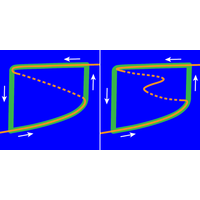
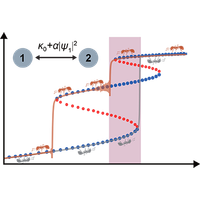
Experimental Observation of Hidden Multistability in Nonlinear Systems

Kun Zhang, Qicheng Zhang, Shuaishuai Tong, Wenquan Wu, Xiling Feng, and Chunyin Qiu

Phys. Rev. Lett. 136, 037201 (2026) - Published 20 January, 2026

Experiments with programmable electroacoustic cavities reveal that a multistable system can be steered into states that are unreachable with conventional control methods.

Nonlinear Coupling Induced Anomalous State Transfer and Complete Multistate Excitation via Adiabatic Control

Zhao-Xian Chen, Yi Ru, Guang-Chen He, Ming-Hui Lu, Yan-Feng Chen, Yan-Qing Lu, and Ze-Guo Chen

Phys. Rev. Lett. 136, 037202 (2026) - Published 20 January, 2026

Nonlinear coupling reshapes attractor landscapes to produce anomalous state transitions and full multistate excitation under adiabatic control.

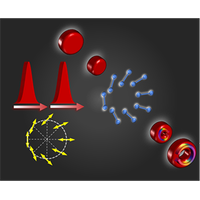
Molecular Alignment Echo for Controlling the Readout Time of Vortex Beams

A. Voisine, P. Béjot, F. Billard, O. Faucher, and E. Hertz

Phys. Rev. Lett. 136, 023202 (2026) - Published 16 January, 2026

Molecular rotational echoes can be selectively retrieved by angular momentum using vortex beams.

Rigorous Theory of Coupled Resonators

E. A. Muljarov

Phys. Rev. Lett. 136, 023801 (2026) - Published 16 January, 2026

A new theory of coupled resonators based on a rigorous framework for mode coupling reveals that the standard tight-binding picture fundamentally breaks down for open resonators.

First-Principles Nanocapacitor Simulations of the Optical Dielectric Constant in Water Ice

Anthony Mannino, Graciele M. Arvelos, Kedarsh Kaushik, Emilio Artacho, Pablo Ordejon, Alexandre R. Rocha, Luana S. Pedroza, and Marivi Fernández-Serra

Phys. Rev. Lett. 136, 026202 (2026) - Published 16 January, 2026

A first-principles framework involving a charge-separation protocol yields unique capacitance-derived polarizability and dielectric constants in nanocapacitors, reliably separating electrode and dielectric charges.

Unified and Consistent Structure Growth Measurements from Joint ACT, SPT, and Planck CMB Lensing

Frank J. Qu et al. (ACT + SPT-3G Collaborations)

Phys. Rev. Lett. 136, 021001 (2026) - Published 14 January, 2026

By combining CMB lensing measurements from three major surveys, the tightest constraint on the structure growth parameter σ8 is obtained and found to be in excellent agreement with ΛCDM expectations.

Rigid-Body Anisotropy in Noncollinear Antiferromagnets

Zheng Liu, Yang Gao, and Qian Niu

Phys. Rev. Lett. 136, 026703 (2026) - Published 14 January, 2026

In Mn3Sn, spin-orbit coupling is linked to both the Dzyaloshinskii–Moriya interaction and biaxial single-ion anisotropy.

Interference-Induced Entanglement Engineering on a Metasurface

Yajun Gao, Rui Zhong, Xianglin Mao, Hulin Zhang, Yue Jiang, Chenyu Bao, Chuanfeng Li, Ruwen Peng, and Mu Wang

Phys. Rev. Lett. 136, 023601 (2026) - Published 13 January, 2026

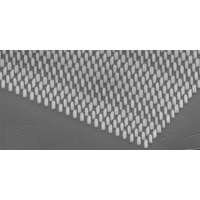
Photons passing through a specially engineered wafer emerge entangled and spread among multiple output channels.

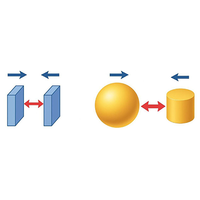
Hydrodynamic Spin-Coupling of Rotors

Jesse Etan Smith, Leif Ristroph, and Jun Zhang

Phys. Rev. Lett. 136, 024001 (2026) - Published 13 January, 2026

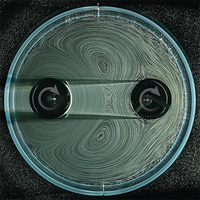
Flow experiments and streamline analysis systematically explore the hydrodynamic spin-coupling of rotors, identifying the conditions in which either corotating or counterrotating modes emerge.

Sign In to Your Journals Account

Filter

Section

Filter

Article Lookup

Enter a citation