Highlights

Evolution of Electron Spin Resonance through a Metallic Quantum Critical Phase Diagram

Marc Scheffler, Jörg Sichelschmidt, Conrad Clauss, Mojtaba Javaheri Rahim, Boris I. Kochelaev, Cornelius Krellner, Christoph Geibel, Frank Steglich, and Martin Dressel

Phys. Rev. Lett. 137, 136506 (2026) - Published 25 September, 2026

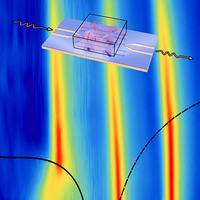
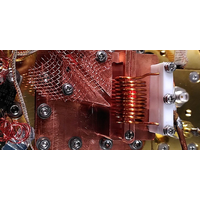
Using multiple antennae and their resonance harmonics, the changes in the electron spin resonance signal across the quantum critical point provide a measurement of the g-factor of the electrons.

Observation of Ring States in a Delicate Topological Insulator

C. Tornow, J. Rupprecht, P. Engeler, U. Drechsler, K.-E. Huhtinen, C. Devescovi, and S. D. Huber

Phys. Rev. Lett. 137, 136603 (2026) - Published 25 September, 2026

A delicate topological insulator realized in a silicon phononic metamaterial shows ring states induced by strong local impurities which are a signature of its underlying topology.

Possible Solution to the Gallium Anomaly Moving beyond the Leptonic Wave-Function Factorization

M. Cadeddu, N. Cargioli, F. Dordei, L. Ferro, C. Giunti, and M. Pitzalis

Phys. Rev. Lett. 137, 131805 (2026) - Published 24 September, 2026

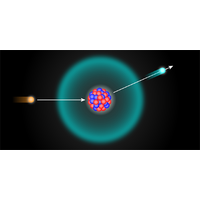
A decades-old neutrino mystery might be solved not by undiscovered physics but by improved calculations.

Algorithmic Quantum Simulations of Quantum Thermodynamics

Yangsen Ye et al.

Phys. Rev. Lett. 137, 130603 (2026) - Published 23 September, 2026

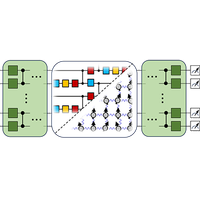
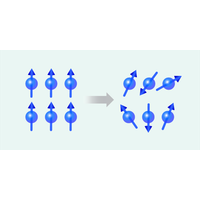
A method to compute thermodynamic properties of spin systems is demonstrated in quantum hardware.

Observation of Time-Reversal Symmetry Breaking in the Type-I Superconductor YbSb2

Anshu Kataria, Shashank Srivastava, Dibyendu Samanta, Pushpendra Yadav, Poulami Manna, Suhani Sharma, Priya Mishra, Joel Barker, Adrian D. Hillier, Amit Agarwal, Sudeep Kumar Ghosh, and Ravi Prakash Singh

Phys. Rev. Lett. 137, 136002 (2026) - Published 23 September, 2026

A hallmark property of unconventional superconductivity has been discovered in a type-I superconductor, whereas it’s normally observed only in type-II materials.

Hidden Zeeman Field in Odd-Parity Magnets: An Ideal Platform for Topological Superconductivity

Xun-Jiang Luo, Zi-Ting Sun, Xilin Feng, Mingliang Tian, and K. T. Law

Phys. Rev. Lett. 137, 136003 (2026) - Published 23 September, 2026

Odd-parity magnets universally harbor a hidden Zeeman field resulting from broken time-reversal symmetry, establishing them as an ideal and highly robust platform for realizing field-free topological superconductivity.

Intertwined Charge Stripes and Majorana Zero Modes in an Iron-Based Superconductor

Yu Liu, Li-Xuan Wei, Qiang-Jun Cheng, Zhenhua Zhu, Xin-Yu Shi, Cong-Cong Lou, Yong-Wei Wang, Ze-Xian Deng, Ming-Qiang Ren, Dong E. Liu, Ziqiang Wang, Xu-Cun Ma, Jin-Feng Jia, Qi-Kun Xue, and Can-Li Song

Phys. Rev. Lett. 137, 136505 (2026) - Published 23 September, 2026

Spectroscopic-imaging scanning tunneling microscopy on epitaxial Ba(Fe1−xCox)2As2 thin films reveals a translational-symmetry-broken charge-stripe order nucleated inside magnetic vortices and aligned with the Fe-Fe bond directions.

Nonreciprocal Perfect Coulomb Drag in Electron-Hole Bilayers: Coherent Exciton Superflow as a Diode

Jun-Xiao Hui (辉隽骁) and Qing-Dong Jiang (蒋庆东)

Phys. Rev. Lett. 137, 136001 (2026) - Published 22 September, 2026

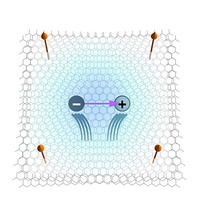
A newly predicted effect should provide a clean way to distinguish between a Bose-Einstein condensate of quasiparticles called excitons and a more mundane collection of these particles.

Observation of e/4 Charge at ν=1/2 in a Wide GaAs Quantum Well

Tomer Alkalay, Emily Hajigeorgiou, Adbhut Gupta, Tapas Senapati, Priya Tiwari, Chia-Tse Tai, Siddharth Kumar Singh, Kirk W. Baldwin, Loren N. Pfeiffer, Mansour Shayegan, Mitali Banerjee, and Moty Heiblum

Phys. Rev. Lett. 137, 136503 (2026) - Published 22 September, 2026

Shot-noise measurements through a quantum point contact reveal e/4-charged quasiparticles in the fractional quantum Hall state at ν=1/2, providing evidence consistent with the non-Abelian topological order sought for topological quantum computing.

Magnetic-Field-Induced Tomonaga-Luttinger Liquid and Bose-Einstein Condensate Phases in an Organic S=1 Haldane Chain

Ivan Jakovac, Mihael S. Grbić, Maxime Dupont, Nicolas Laflorencie, Sylvain Capponi, Yuko Hosokoshi, Steffen Krämer, Yurii Skourski, Sven Luther, Masashi Takigawa, and Mladen Horvatić

Phys. Rev. Lett. 137, 136702 (2026) - Published 22 September, 2026

Researchers have gained access to the rich physics of a landmark model magnet by assembling a crystal out of organic magnetic molecules.

Experimental Evidence of Kelvin-Wave Turbulence along a Vortex Core

Jason Barckicke, Christophe Gissinger, and Eric Falcon

Phys. Rev. Lett. 137, 134001 (2026) - Published 21 September, 2026

A tabletop experiment using a classical water vortex supports a decades-old theory describing the decay of turbulence in quantum fluids.

Anyon Superfluid in Trilayer Quantum Hall Systems

Taige Wang and Ya-Hui Zhang

Phys. Rev. Lett. 137, 136502 (2026) - Published 21 September, 2026

A charge-balanced quantum Hall trilayer at ν = 1/3 per layer could host an anyon-exciton condensate where superfluidity coexists with topological order at intermediate layer separation.

Quantum Sensing of Gravitational Frame Dragging with a Superfluid He4 Gyrometer

Kai-Isaak Ellers, Marios Christodoulou, K. C. Schwab, and K. Birgitta Whaley

Phys. Rev. Lett. 137, 121404 (2026) - Published 17 September, 2026

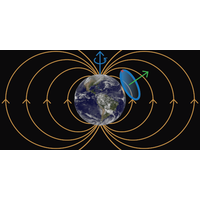
A proposed lab-based quantum sensor could precisely measure within seconds the warping of spacetime caused by Earth’s rotation.

Long-Lived Telecom-Heralded Single-Photon Storage in an Absorptive Spin-Rephased Quantum Memory

Alberto E. Rodríguez-Moldes, Félicien Appas, Jonathan Hänni, Jelena V. Rakonjac, Samuele Grandi, and Hugues de Riedmatten

Phys. Rev. Lett. 137, 120803 (2026) - Published 16 September, 2026

Researchers demonstrate a new quantum memory device that will enable faraway nodes in a network to coordinate in time, a key ingredient for a future quantum Internet.

Ultrafast Demagnetization Governed by Spin Fluctuations in CaRuO3/SrTiO3 Superlattice

Yu-Han Gao, Wen-Xiao Shi, Yuan-Sha Chen, Ji-Rong Sun, Qing-Lin Yang, Xu Yang, Zhuo Deng, Peng-Tao Yang, Zheng Chang, Hong-Mei Feng, Wei He, Xiang-Qun Zhang, and Zhao-Hua Cheng

Phys. Rev. Lett. 137, 126903 (2026) - Published 16 September, 2026

Contrary to expectations, the magnetization dynamics of a ferromagnet can be accelerated by increasing temperature, laser excitation, or magnetic field—a behavior that holds promise for high-speed spintronics.

Relativistic Effects of PSR J1856–0039 Double Neutron Star System in a 2.36-Hour Compact Orbit

Z. L. Yang, J. L. Han, W. Q. Su, P. F. Wang, C. Wang, T. Wang, D. J. Zhou, Yi Yan, J. Xu, W. C. Jing, N. N. Cai, R. X. Xu, H. G. Wang, and X. P. You

Phys. Rev. Lett. 137, 121401 (2026) - Published 15 September, 2026

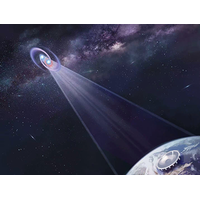
The observation of a binary pulsar system characterized by low neutron star masses with short orbital period enables tests of relativity, and may enable a measurement of Lens-Thirring precession with future observations.

Dual Instability of Superconductivity from Oxygen Defects in La3Ni2O7+δ

Peiheng Jiang, Jie Li, Yu-Han Cao, Xiaodong Cao, Zhicheng Zhong, Yi Lu, and Qiang-Hua Wang

Phys. Rev. Lett. 137, 126002 (2026) - Published 15 September, 2026

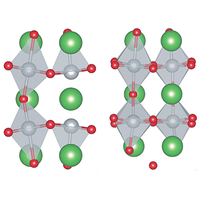
Oxygen defects suppress superconductivity in the bilayer nickelate La3Ni2O7+δ via a dual mechanism, revealed through density functional theory, dynamical mean-field theory, and functional renormalization group analysis.

Giant and Helical Exciton Dipole from Berry Curvature in Flat Chern Bands

Kaijie Yang, Huiyuan Zheng, Xiaodong Xu, Di Xiao, and Ting Cao

Phys. Rev. Lett. 137, 126602 (2026) - Published 15 September, 2026

Berry curvature in twisted molybdenum ditelluride drives the oppositely charged particles in an exciton in opposite transverse directions, producing a dipole moment of approximately 150 Debye.

Fastest First-Passage Time for Multiple Searchers with Finite Speed

Denis S. Grebenkov, Ralf Metzler, and Gleb Oshanin

Phys. Rev. Lett. 137, 127102 (2026) - Published 15 September, 2026

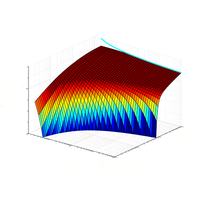
Classical first-passage theory based on Brownian motion predicts that the mean fastest-arrival time decreases only logarithmically with the number of searchers, however this is an artifact of the unphysical infinite-speed assumption of Brownian dynamics.

Active Wave Turbulence in Hexatic Phase

Qianhong Yang, Xinxin Zhang, Maoqiang Jiang, Guangpu Zhu, Zhaohui Liu, Sébastien Galtier, and Lailai Zhu

Phys. Rev. Lett. 137, 128301 (2026) - Published 15 September, 2026

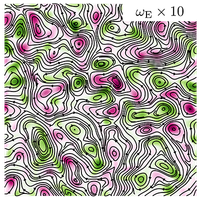
When in dense suspensions, active phoretic disks with physicochemical hydrodynamic interactions remain caged and perform local vibrations, mirroring the weak turbulence of bending waves in vibrating elastic plates.

Sign In to Your Journals Account

Filter

Section

Filter

Article Lookup

Enter a citation