Highlights

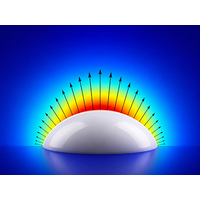
Diffusivity-Free Turbulence in Liquid Metal Rotating Rayleigh-Bénard Convection Experiments

Jewel A. Abbate, Yufan Xu, Tobias Vogt, Susanne Horn, Keith Julien, and Jonathan M. Aurnou

Phys. Rev. Lett. 137, 094101 (2026) - Published 24 August, 2026

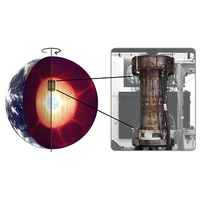
Diffusivity-free rotating convection, long theorized to govern planetary and stellar interiors, is experimentally verified for the first time in traditional laboratory-scale Rayleigh-Bénard convection apparatuses.

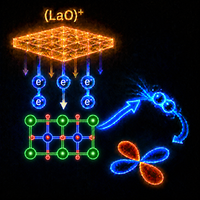
Signature of a Trion in Photoemission

Jinyuan Wu, Zachary H. Withers, Thomas K. Allison, and Diana Y. Qiu

Phys. Rev. Lett. 137, 096401 (2026) - Published 24 August, 2026

A theoretical study reveals that trions can be identified in time-resolved ARPES measurements with distinct signatures for positive and negative trions.

Molecular Insights on the Thermal Welding of Semicrystalline Polymers

Michele Valsecchi, William S. Fall, Hendrik Meyer, Gary S. Grest, and Sanat K. Kumar

Phys. Rev. Lett. 137, 098101 (2026) - Published 24 August, 2026

Unlike glassy plastics, semicrystalline polymers develop higher crystallinity right at the weld line, creating a unique weld that can surprisingly push mechanical failures away from the joint.

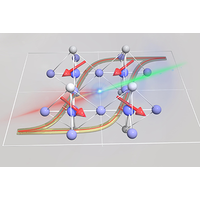
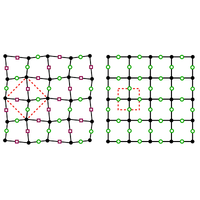
Room-Temperature Noncollinear Ferroelectricity in van der Waals WO2Cl2 with a Wide Bandgap

Yu Xing, Ning Ding, Zhipeng Wang, Zhiwen Pan, Lei Guo, Guowei Du, Yangrui Liu, Xiaoxing Cao, Ran Su, Mengting Jiang, Xuezhi Ma, Xiyu Chen, Junchao Zhang, Xinyu Yang, Haoran Ye, Honghong Yao, Rui Feng, Dexiang Chen, Le-Ping Miao, Yumeng You, Zejun Li, Dongsheng Song, Linglong Li, and Shuai Dong

Phys. Rev. Lett. 137, 086801 (2026) - Published 21 August, 2026

Exotic noncollinear room-temperature ferroelectricity has now been experimentally realized in 2D WO2Cl2, establishing a polar counterpart to noncollinear spin textures.

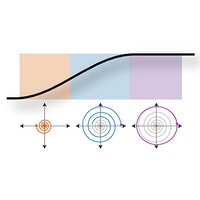
Robust Two-Qubit Geometric Phase Gates Using Amplitude and Frequency Ramping

C. M. Bowers, D. Palani, J. J. Barta, T. H. Guglielmo, S. B. Libby, D. Leibfried, and D. H. Slichter

Phys. Rev. Lett. 137, 080602 (2026) - Published 20 August, 2026

Adiabatic ramping of both state-dependent force amplitude and motional frequency delivers high-fidelity trapped-ion entanglement without ground-state cooling.

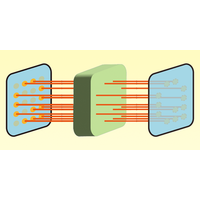
Hundred-Channel Reconfigurable Quantum Teleportation

Yanbo Lou, Jiabin Wang, Yuyan Zou, Lingyue Hou, Shengshuai Liu, and Jietai Jing

Phys. Rev. Lett. 137, 080801 (2026) - Published 20 August, 2026

Researchers have demonstrated the quantum teleportation of a 100-pixel image by a method that could help to scale up quantum networks.

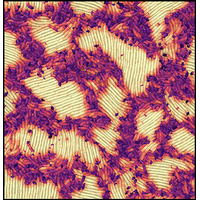
Evaporative Flux Reversal of Binary Droplets: From Edge to Apex

Minhyeok Kuk and Hyoungsoo Kim

Phys. Rev. Lett. 137, 084002 (2026) - Published 20 August, 2026

Experimental studies of multicomponent droplet evaporation reveal distinct stages, with internal flow shifting from multiple vortices within the droplet to a single toroidal vortex dominating the flow dynamic, departing from the classical single-component picture.

Heterostructuring as Gateway to Electron Doping of Nickelate Superconductors

Chao Deng, Motoharu Kitatani, Guiwen Jiang, Siqi Guo, Niklas Witt, Ao Zhang, Wenfeng Wu, Mi Jiang, Karsten Held, and Liang Si

Phys. Rev. Lett. 137, 086004 (2026) - Published 20 August, 2026

Intercalation-driven self-doping is a general mechanism for engineering high-temperature superconductivity and emergent quantum states in Ruddlesden–Popper phase correlated oxides.

Multiple Phases in K2Cr3As3: A Playground for Manipulating Topological Superconductivity

Seigo Ogawa, Tomoki Miyoshi, Saki Uchida, Kazuaki Matano, Shinji Kawasaki, Yoshihiko Inada, and Guo-qing Zheng

Phys. Rev. Lett. 137, 086003 (2026) - Published 19 August, 2026

Researchers have made the first definitive measurements of an elusive superconducting state.

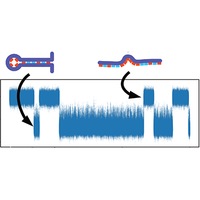
Quantitative and Predictive Folding Models from Limited Single-Molecule Data Using Simulation-Based Inference

Lars Dingeldein, Aaron Lyons, Pilar Cossio, Michael T. Woodside, and Roberto Covino

Phys. Rev. Lett. 137, 088402 (2026) - Published 19 August, 2026

A simulation-based inference framework combines physics-based modeling with deep learning to recover the Bayesian posterior of a biomolecular folding model directly from single-molecule force spectroscopy data.

Spin Stripes and Superconductivity in Bilayer Nickelates

Hao-Xin Wang, Hanbit Oh, Tobias Helbig, Bai Yang Wang, Jiarui Li, Yijun Yu, Harold Y. Hwang, Hong-Chen Jiang, Yi-Ming Wu, and S. Raghu

Phys. Rev. Lett. 137, 086502 (2026) - Published 18 August, 2026

Density matrix renormalization group calculations reveal spin-stripe ordering at large Hund’s coupling, demonstrating that Hund’s coupling and inter-layer coupling are key parameters in magnetic order and pairing.

Complete-Coverage Searches for Lorentz Violation in the Minimal Matter Sector

Marshall J. Basson, Eric Biddulph-West, Caitlyn Holl, Will Lankenau, Facundo Martin Lopez, Bianca Rose Lott, Chihui Shao, Danny P. Shope, Jay D. Tasson, and Zhiyu Zhang

Phys. Rev. Lett. 137, 081601 (2026) - Published 17 August, 2026

All 43 previously unconstrained Lorentz-violating degrees of freedom in the minimal matter sector are constrained for the first time, completing a decades-long program.

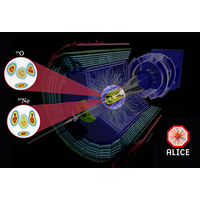
Evidence of Nuclear Geometry-Driven Anisotropic Flow in O+O and Ne+Ne Collisions at sNN=5.36  TeV

I. J. Abualrob et al. (ALICE Collaboration)

Phys. Rev. Lett. 137, 082301 (2026) - Published 17 August, 2026

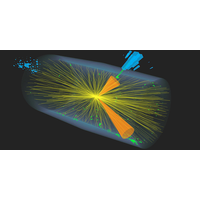
Light-ion collisions at the LHC reveal collective hydrodynamic flow with a larger elliptic flow in central Ne-Ne collisions than in OO collisions that might be due to the bowling-pin nuclear shape of 20Ne.

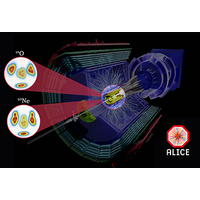
Observation of Long-Range Collective Flow in O+O and Ne+Ne Collisions and Implications for Nuclear Structure Studies

A. Hayrapetyan et al. (CMS Collaboration)

Phys. Rev. Lett. 137, 082302 (2026) - Published 17 August, 2026

Light-ion collisions at the LHC reveal collective hydrodynamic flow with a larger elliptic flow in central Ne-Ne collisions than in OO collisions that might be due to the bowling-pin nuclear shape of 20Ne.

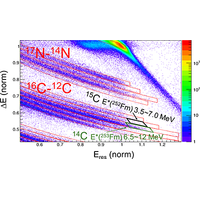
Deformation and Magicity in Heavy Actinides: First Observation of the Ground-State Rotational Band of Fm252

R. Orlandi et al.

Phys. Rev. Lett. 137, 082501 (2026) - Published 17 August, 2026

Observation of the ground-state rotational band in 252Fm provides compelling evidence that Z=100 and N=152 act as a deformed doubly magic shell closure.

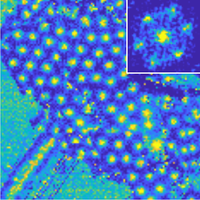
Robust Two-Dimensional Surface Superconductivity and Vortex Lattice in the Weyl Semimetal γ−PtBi2

Jose Antonio Moreno, Pablo García Talavera, Edwin Herrera, Sara López Valle, Zhuoqi Li, Lin-Lin Wang, Sergey Bud’ko, Alexander I. Buzdin, Isabel Guillamón, Paul C. Canfield, and Hermann Suderow

Phys. Rev. Lett. 137, 086001 (2026) - Published 17 August, 2026

Vortex formation from surface superconductivity is observed in the topological semimetal γ-PtBi2, which confirms the robustness of the surface superconductivity at a higher Tc than the bulk.

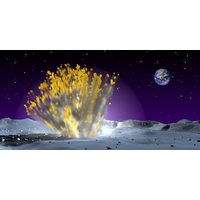
Gardening on the Moon: An Advection-Diffusion Model to Guide the Search for Supernova Debris in the Lunar Regolith

Emily S. Costello, John Ellis, Brian D. Fields, Rebecca Surman, and Xilu Wang

Phys. Rev. Lett. 137, 071005 (2026) - Published 14 August, 2026

A model that captures how crater-forming impacts redistribute lunar dirt will help researchers read the cosmic timeline found in samples returned from the Moon.

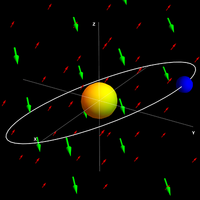
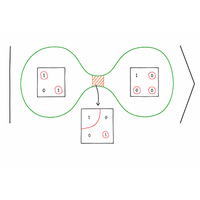
Robust Symmetry Breaking in Gapless Quantum Magnets

Chao Yin and Andrew Lucas

Phys. Rev. Lett. 137, 070405 (2026) - Published 13 August, 2026

Using the two-dimensional random-bond Ising model as a concrete example, certain gapless ground states under quantum perturbations are shown to have a universal structure exhibiting spontaneous symmetry breaking, generalizing the classical Peierls argument for stability against thermal fluctuations.

Running of the Electroweak Gauge Couplings from First Principles

Alessandro Conigli, Dalibor Djukanovic, Georg von Hippel, Simon Kuberski, Harvey B. Meyer, Kohtaroh Miura, Konstantin Ottnad, Andreas Risch, and Hartmut Wittig

Phys. Rev. Lett. 137, 071901 (2026) - Published 13 August, 2026

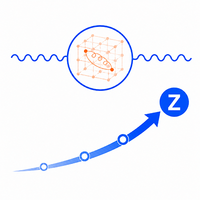
A lattice QCD determination of the hadronic contribution to the running electromagnetic coupling at the Z-pole achieves 1.7% uncertainty, more than doubling phenomenological precision and meeting the FCC-ee target.

Observation of the Jet Diffusion Wake Using Dijets in Heavy-Ion Collisions

A. Hayrapetyan et al. (CMS Collaboration)

Phys. Rev. Lett. 137, 071902 (2026) - Published 13 August, 2026
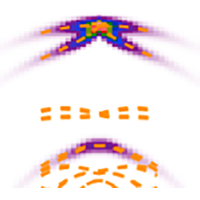
Back-to-back jets produced during heavy-ion collisions reveal a plasma property predicted by quantum chromodynamics.

Sign In to Your Journals Account

Filter

Section

Filter

Article Lookup

Enter a citation