Highlights

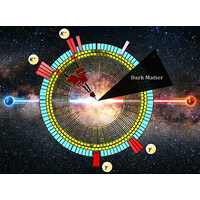
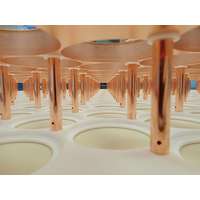
Light Dark Matter Search with 7.8 Tonne-Year of Ionization-Only Data in XENONnT

E. Aprile et al. (XENON Collaboration)

Phys. Rev. Lett. 137, 051003 (2026) - Published 30 July, 2026

World-leading bounds are placed on sub-keV axionlike and dark-photon dark matter using ionization-only data from a liquid xenon detector.

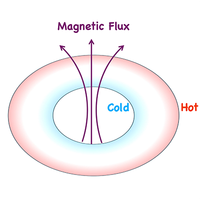
Turbulent Nature of the Quasicontinuous Exhaust Regime for Fusion Plasmas

Kaiyu Zhang, Wladimir Zholobenko, Andreas Stegmeir, Michael Faitsch, Konrad Eder, Christoph Pitzal, Frank Jenko, and ASDEX Upgrade Team

Phys. Rev. Lett. 137, 055102 (2026) - Published 30 July, 2026

Supercomputer simulations reveal how turbulence supports a Goldilocks regime for operating a fusion reactor.

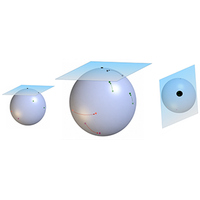
Non-Gaussianity from Superselection Rules

Nicolas Moulonguet, Eloi Descamps, José Lorgeré, Astghik Saharyan, Arne Keller, and Pérola Milman

Phys. Rev. Lett. 137, 050203 (2026) - Published 29 July, 2026

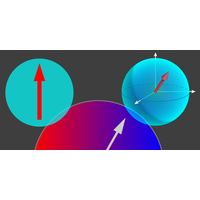
Stellar rank physically emerges from superselection rules and provides an interpretation to non-Gaussianity in terms of intrinsic multimode entanglement.

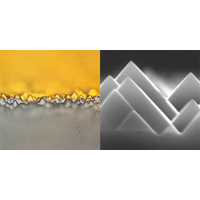
Breakthrough in Short-Wavelength Infrared Quantum Efficiency in Te-Hyperdoped Silicon Photodetectors via Light-Trapping Strategies

E. García-Hemme, R. Benítez-Fernández, S. Duarte-Cano, F. Pérez-Zenteno, S. Algaidy, C. Mata-Alonso, S. de Castro-Romero, R. García-Hernansanz, J. Olea, A. del Prado, E. San Andrés, I. Mártil, and D. Pastor

Phys. Rev. Lett. 137, 057002 (2026) - Published 29 July, 2026

A new light-trapping architecture could lead to CMOS-compatible night-vision technology.

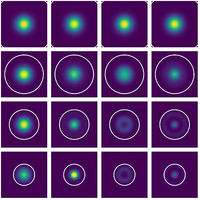
Imperfect Blockade in Rydberg Superatoms

Valentin Magro, Sébastien Garcia, and Alexei Ourjoumtsev

Phys. Rev. Lett. 137, 053605 (2026) - Published 28 July, 2026

A theory of imperfect Rydberg blockade is developed and experimentally verified, promising higher-quality elements for quantum technologies.

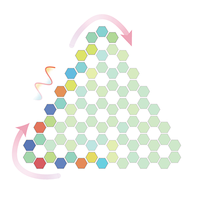
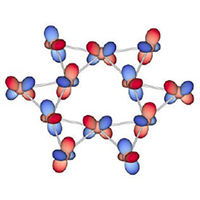
Realization of the Thermal Haldane Lattice

Jiaxin Li, Chengxin Xu, Shuihua Yang, Zifu Xu, Guoqiang Xu, Lizhou Dai, Kaipeng Liu, Jianfeng Chen, Guangming Tao, Ghim Wei Ho, Tianlong Li, and Cheng-Wei Qiu

Phys. Rev. Lett. 137, 056301 (2026) - Published 28 July, 2026

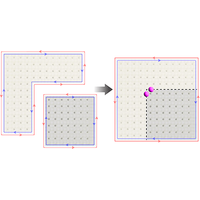
A thermal analogue of the Haldane model supports one-way chiral edge states of heat, extending the framework of Chern insulators to thermal diffusion systems.

Higher-Order Topology Embedded in First-Order Topological Bands

Jiancheng Zheng, Zhenhang Pu, Jiuyang Lu, Weiyin Deng, Manzhu Ke, and Zhengyou Liu

Phys. Rev. Lett. 137, 056605 (2026) - Published 28 July, 2026

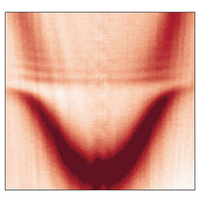
Traveling edge states and trapped corner states coexist within the exact same energy band of an acoustic crystal, overcoming a long-held rule that deemed them mutually exclusive.

Probing Multipolar Order in the Candidate Altermagnet MnF2 through the Elastocaloric Effect under Strain

Rahel Ohlendorf, Luca Buiarelli, Hilary M. L. Noad, Andrew P. Mackenzie, Rafael M. Fernandes, Turan Birol, Jörg Schmalian, and Elena Gati

Phys. Rev. Lett. 137, 056702 (2026) - Published 28 July, 2026

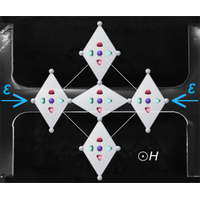
The first unambiguous bulk confirmation of altermagnetism in MnF2 is achieved by combining symmetry-guided strain and magnetic-field tuning with highly sensitive elastocaloric measurements and first-principles theory.

Non-Abelian Electric Field and Zitterbewegung on a Photonic Frequency Chain

Shu Yang (杨树), Bengy Tsz Tsun Wong (黄梓峻), Jinbing Hu (胡金兵), and Yi Yang (杨易)

Phys. Rev. Lett. 137, 056901 (2026) - Published 27 July, 2026

A ring of optical fiber can be made to host phenomena that originated in the realm of high-energy physics.

Rise of Linear Regge Trajectories

Yu-tin Huang, Sara Ricossa, Francesco Riva, and Jie-Da Tsai

Phys. Rev. Lett. 137, 041603 (2026) - Published 24 July, 2026

A bootstrap extremization principle selects the linear Regge spectrum, with the graviton pole uniquely fixing the trajectory in gravitational theories.

Intrinsic Nernst Effect from Berry Curvature in Superconductors

Tzu-Chi Hsieh, Cong Xiao, and Yi-Ting Hsu

Phys. Rev. Lett. 137, 046002 (2026) - Published 24 July, 2026

The Nernst effect acts as direct probe of Berry curvature to test topological superconductivity in 2D material with spin-orbit coupling.

Valley-Engineered Landau Polaritons in a van der Waals Semiconductor Microcavity

Xinyue Zhang, Hongming Zhang, Yaofeng Zhu, Hang Zhou, Song Luo, Long Xu, Xin Li, Yuquan Zhou, Yan Liu, Zheng Lv, Yuxin Duan, Zhao Xu, Haodong Cheng, Long Zhang, and Zhanghai Chen

Phys. Rev. Lett. 137, 046904 (2026) - Published 24 July, 2026

Integrating a WSe2 monolayer into an optical microcavity generates valley-engineered Landau polaritons, enabling light-mediated valley control of quantum many-body states.

Breaking the Speed Limit of Chemical-Structure Imaging with Enhanced Force Sensitivity

Yuuki Yasui and Yoshiaki Sugimoto

Phys. Rev. Lett. 137, 046202 (2026) - Published 23 July, 2026

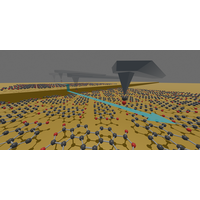
A new atomic force microscope captures the structures of individual molecules and their chemical bonds at record speeds.

Benchmarking a Tunable Quantum Neural Network on Trapped-Ion and Superconducting Hardware

Djamil Lakhdar-Hamina, Xingxin Liu, Richard Barney, Sarah H. Miller, Alaina M. Green, Norbert M. Linke, and Victor Galitski

Phys. Rev. Lett. 137, 040601 (2026) - Published 22 July, 2026

By implementing a quantum neural network using two quantum-computing platforms, researchers have taken steps toward determining whether such systems can reliably fulfill their theoretical promise.

Hidden Dissipation in Topological Insulators: Near-field Radiation from Local Shot Noise

Miaomiao Wei, Bin Wang, Fuming Xu, and Jian Wang

Phys. Rev. Lett. 137, 046303 (2026) - Published 22 July, 2026

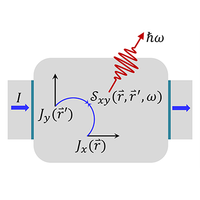
Finite-frequency local shot noise acting as a source of near-field radiation in topological conductors reveals a hidden energy-loss channel that does not rely on backscattering or dephasing and can be detected by near-field microscopy rather than conventional transport measurements.

Finite-Momentum Pairing and Superlattice Superconductivity in Valley-Imbalanced Rhombohedral Graphene

Maine Christos, Pietro M. Bonetti, and Mathias S. Scheurer

Phys. Rev. Lett. 137, 046505 (2026) - Published 22 July, 2026

Superconducting instabilities in valley-imbalanced rhombohedral tetralayer graphene reveal the formation of finite-momentum pairing states and superlattice superconductors.

Sachdev-Ye-Kitaev Physics from the Hubbard Model: A Floquet-Engineering Approach

Charles Creffield, Fernando Sols, Marco Schirò, and Nathan Goldman

Phys. Rev. Lett. 137, 046302 (2026) - Published 21 July, 2026

Ultracold atoms in an optical lattice could emulate a prominent model of quantum matter linked to black holes and high-temperature superconductors.

Scaling of Relaxation and Entropy in Buckled Colloidal Monolayers

Yongming Zhang, Qingyu Qu, Qian-Yuan Tang, and Xiaoguang Ma

Phys. Rev. Lett. 137, 048201 (2026) - Published 21 July, 2026

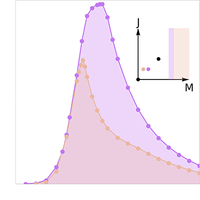
By extracting spin configurations directly from a colloidal monolayer mimicking a 2D Ising lattice, entropy scaling laws for liquids and glasses are extended to the domain of spin systems, revealing a universal exponential relationship between configurational entropy and spin relaxation time.

NMR Evidence for Spontaneous Electronic Chiral Order in URhSn

Y. Tokunaga, T. Ishitobi, H. Sakai, S. Kambe, H. Harima, A. Nakamura, A. Maurya, D. Li, Y. Homma, F. Honda, D. Aoki, and Y. Shimizu

Phys. Rev. Lett. 137, 046501 (2026) - Published 20 July, 2026

The first direct evidence of spontaneous electronic chiral order in URhSn, a strongly correlated material without an inherently chiral lattice structure, fundamentally challenges the prevailing notion that electronic chirality requires a chiral crystal framework.

Search for Sub-GeV Dark Particles in η→π0+Invisible Decay

M. Ablikim et al. (BESIII Collaboration)

Phys. Rev. Lett. 137, 031804 (2026) - Published 16 July, 2026
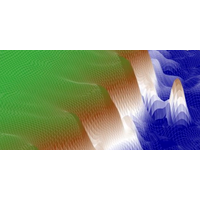
BESIII collaboration performs the first search for a sub-GeV dark scalar in η→π0S decays using over 10 billion J/ψ events, observing no signal.

Sign In to Your Journals Account

Filter

Section

Filter

Article Lookup

Enter a citation