Highlights

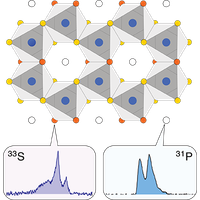
Microscopic Evidence for a Zhang-Rice Triplet State in the van der Waals Antiferromagnet, NiPS3

Beom Hyun Kim, Youjin Lee, Junik Hwang, Junghyun Kim, Je-Geun Park, and Seung-Ho Baek

Phys. Rev. Lett. 137, 036505 (2026) - Published 16 July, 2026

Nuclear magnetic resonance measurements verify the Zhang-Rice triplet ground state in the van der Waals antiferromagnet NiPS3.

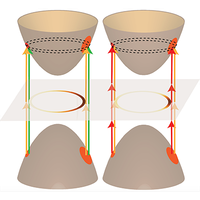
Directional Photocurrent Generated by Quantum Interference Control

Yiming Gong, Kai Wang, and Steven T. Cundiff

Phys. Rev. Lett. 137, 036901 (2026) - Published 16 July, 2026

Using higher-order quantum interference, an “electron lighthouse” is created with the capability of optically steering highly directional 2D beams of photocurrent in semiconductors.

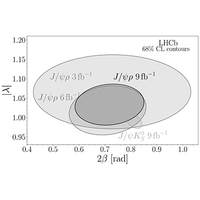
Observation of CP Violation in B0→J/ψρ(770)0 Decays

R. Aaij et al. (LHCb Collaboration)

Phys. Rev. Lett. 137, 031803 (2026) - Published 15 July, 2026

The LHCb collaboration has observed time-dependent CP violation in a new hadronic B meson decay.

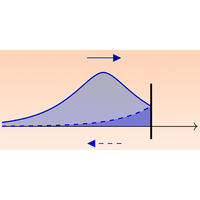
Truncated Photon

Isak Cecil Onsager Rukan, Jan Gulla, and Johannes Skaar

Phys. Rev. Lett. 137, 033601 (2026) - Published 15 July, 2026

Removing a mirror while a single photon is in the process of reflecting creates a quantum state of countless photons, theorists say.

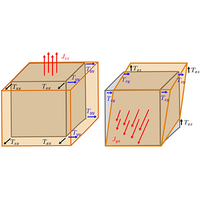
Nonlinear Odd Viscoelastic Effect

Ashwat Jain, Wojciech J. Jankowski, M. Mehraeen, and Robert-Jan Slager

Phys. Rev. Lett. 137, 036302 (2026) - Published 15 July, 2026

Nonlinear odd viscoelastic effects arise from higher-order quantum geometric tensors in magnetic three-dimensional topological phases in response to distortion fields.

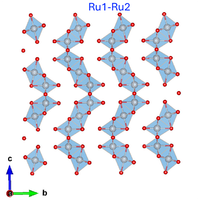
Hidden Density-Wave Instability in the Trimer Ruthenate Ba4Ru3O10

Gang Cao, Hengdi Zhao, Adrienne Bond, Tristan R. Cao, Gabriel Schebel, Arabella Quane, Yifei Ni, Yu Zhang, Logan Wall, Rahul Nandkishore, Pedro Schlottmann, Stephan Rosenkranz, and Feng Ye

Phys. Rev. Lett. 137, 036502 (2026) - Published 13 July, 2026

Simultaneous signatures in structure, thermodynamics, and transport reveal a strongly pinned density-wave in an antiferromagnetic oxide previously regarded as a purely magnetic insulator.

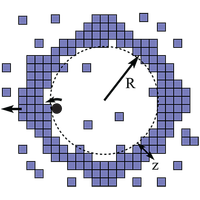
Pushy Random Walk: A Minimal Model for Transport in Deformable Media

Ofek Lauber Bonomo, Itamar Shitrit, Shlomi Reuveni, and Sidney Redner

Phys. Rev. Lett. 137, 037101 (2026) - Published 13 July, 2026

In a minimal model of a pushy random walk, a moving tracer can displace obstacles, giving rise to new diffusive behaviors in both 1D and 2D.

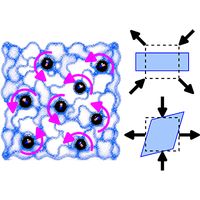
Odd Elasticity in Disordered Chiral Active Materials

Cheng-Tai Lee, Tom C. Lubensky, and Tomer Markovich

Phys. Rev. Lett. 137, 038301 (2026) - Published 13 July, 2026

A new theoretical framework for a chiral active solid allowing local internal rotations due to active torques shows how odd elasticity emerges in structurally-disordered materials relevant to biological and synthetic systems.

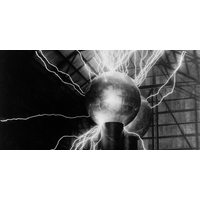
Cavendish Tests of Millicharged Particles

Asher Berlin, Zachary Bogorad, Peter W. Graham, and Harikrishnan Ramani

Phys. Rev. Lett. 137, 021804 (2026) - Published 10 July, 2026

Decades-old experiments have now been enlisted to set new bounds on the properties of a hypothetical particle that bears a tiny fraction of the electron’s charge.

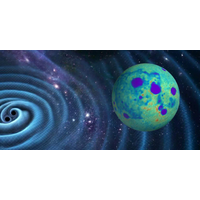
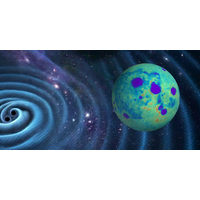
Thick Lunar Crust Amplifies Deci-Hertz Gravitational-Wave Signals

Lei Zhang, Han Yan, Xian Chen, and Jinhai Zhang

Phys. Rev. Lett. 137, 021408 (2026) - Published 9 July, 2026

A proposed gravitational-wave observatory on the Moon might gather more information than previously thought, thanks to geology.

Gravitational-Wave Tomography of the Moon: Constraining Lunar Structure with Calibrated Gravitational Waves

Han Yan and Jan Harms

Phys. Rev. Lett. 137, 021409 (2026) - Published 9 July, 2026

A proposed gravitational-wave observatory on the Moon might gather more information than previously thought, thanks to geology.

Comprehensive Analysis of the B0→K*0μ+μ− Decay

R. Aaij et al. (LHCb Collaboration)

Phys. Rev. Lett. 137, 021802 (2026) - Published 8 July, 2026

Does a new measurement of a rare decay of the neutral B meson portend new physics?

Tailoring Pure Valley-Zeeman Spin-Orbit Coupling in WSe2-Encapsulated Monolayer Graphene

Yaqing Han, Siqi Jiang, Jingkuan Xiao, Jiawei Jiang, Yulu Liu, Jiabei Huang, Yu Du, Di Zhang, Fuzhuo Lian, Wanting Xu, Siqin Wang, Kenji Watanabe, Takashi Taniguchi, Xiaoxiang Xi, Alexander S. Mayorov, Renjun Du, Kai Chang, Hongxin Yang, Lei Wang, and Geliang Yu

Phys. Rev. Lett. 137, 027001 (2026) - Published 8 July, 2026

Clearly resolved Landau levels reveal a symmetry-enforced Landau-level reordering driven by competition between fixed valley–Zeeman splitting and magnetic-field-dependent cyclotron energy.

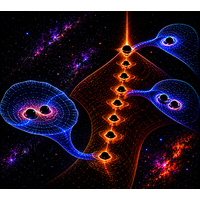
Maximum Entropy Conjecture for Black Hole Mergers

Monica Rincon-Ramirez, Nathan K. Johnson-McDaniel, Eugenio Bianchi, Ish Gupta, Vaishak Prasad, and B. S. Sathyaprakash

Phys. Rev. Lett. 137, 021406 (2026) - Published 7 July, 2026

The remnant properties of black hole mergers may be governed by a maximum entropy bound suggesting that once the black holes become sufficiently close together, the throat around both black holes resembles that of an individual Kerr black hole to a far-away observer, and thus the Kerr entropy computation becomes valid.

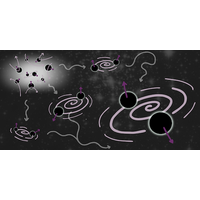
Evidence for Three Subpopulations of Merging Binary Black Holes at Different Primary Masses

Sharan Banagiri, Eric Thrane, and Paul D. Lasky

Phys. Rev. Lett. 137, 021403 (2026) - Published 6 July, 2026

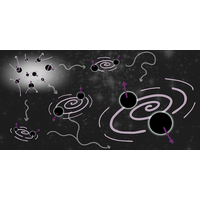
Different analyses of gravitational-wave observations are converging on evidence for a distinct population of massive black hole binaries produced through repeated mergers.

Signatures of a Subpopulation of Hierarchical Mergers in the GWTC-4 Gravitational-Wave Dataset

Cailin Plunkett, Salvatore Vitale, Thomas Callister, and Michael Zevin (Society of Physicists Interested in Non-Aligned Spins (SPINS))

Phys. Rev. Lett. 137, 021404 (2026) - Published 6 July, 2026

Different analyses of gravitational-wave observations are converging on evidence for a distinct population of massive black hole binaries produced through repeated mergers.

Resolving Spin State Discrepancies of Small Cationic Iron Clusters by Far-Infrared Vibrational Spectroscopy

Kevin Anthony Kaw, Ozan Lacinbala, Deepak Pradeep, Joost M. Bakker, Ewald Janssens, Peter Lievens, and Piero Ferrari

Phys. Rev. Lett. 137, 013002 (2026) - Published 1 July, 2026

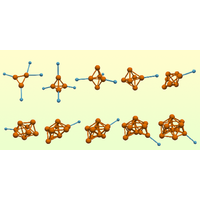
A technique combining spectroscopy and computational simulations allows the geometry and spin magnetic moment of iron nanoclusters to be determined more precisely.

Continuous Ring of Unidirectional Guided Resonances Induced by Isotropic Interband Coupling

Zengping Su, Wei Li, Jue Li, Haoye Qin, Yongkang Wang, Wenjing Lv, Mengyao Li, Bo Li, and Qinghua Song

Phys. Rev. Lett. 137, 016201 (2026) - Published 1 July, 2026

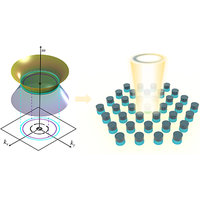
Topologically protected, continuous ring of unidirectional guided resonances that locks vortex laser emission into a single direction is constructed by engineering isotropic interband coupling in a bilayer photonic crystal.

Origin of Misleading Convergence in Self-Consistent Many-Electron Theories: Fundamental Aspects and Practical Implications

Herbert Eßl, Matthias Reitner, Evgeny Kozik, and Alessandro Toschi

Phys. Rev. Lett. 137, 016502 (2026) - Published 1 July, 2026

Formally disentangling the issue of misleading convergence observed in iterative many-body schemes from the branching of the Luttinger-Ward functional provides a rigorous, model-independent procedure converging to a physical solution.

Ab Initio Free-Energy Surfaces for Coupled Ion-Electron Transfer

Ethan Abraham, Martin Z. Bazant, and Troy Van Voorhis

Phys. Rev. Lett. 137, 018001 (2026) - Published 1 July, 2026
A physically consistent formalism provides a first-principles route to electrochemical current-overpotential relations by computing finite-temperature coupled ion-electron transfer free-energy surfaces from constrained ab initio trajectories.

Sign In to Your Journals Account

Filter

Section

Filter

Article Lookup

Enter a citation