Highlights

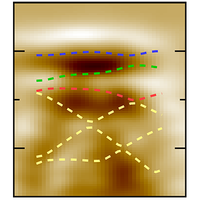
Direct Visualization of Gate-Tunable Flat Bands in Twisted Double Bilayer Graphene

Souvik Sasmal, Ryan Muzzio, Ahmed Khalifa, Paulina Majchrzak, Alfred J. H. Jones, I-Hsuan Kao, Kenji Watanabe, Takashi Taniguchi, Simranjeet Singh, Eli Rotenberg, Aaron Bostwick, Chris Jozwiak, Søren Ulstrup, Shubhayu Chatterjee, and Jyoti Katoch

Phys. Rev. Lett. 137, 016402 (2026) - Published 30 June, 2026

The evolution of moiré minibands under varying carrier density and displacement field may be directly visualized using microfocused angle-resolved photoemission spectroscopy.

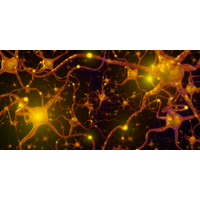
Extended Mean-Field Theories for Networks of Real Neurons

Luca Di Carlo, Francesca Mignacco, Christopher W. Lynn, and William Bialek

Phys. Rev. Lett. 137, 018401 (2026) - Published 30 June, 2026

An extended version of mean-field theory accurately captures activity patterns seen in networks of biological neurons.

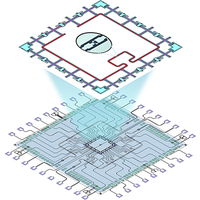
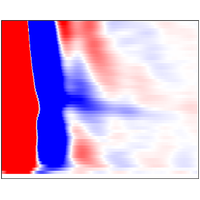
Observation and Modulation of the Quantum Mpemba Effect on a Superconducting Quantum Processor

Yueshan Xu et al.

Phys. Rev. Lett. 137, 010402 (2026) - Published 29 June, 2026

Observation and modulation of the quantum Mpemba effect on an all-to-all connected, tunable-coupling superconducting processor.

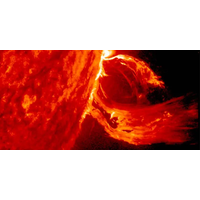
Transient Large-Scale Anisotropy in TeV Cosmic Rays due to an Interplanetary Coronal Mass Ejection

Zhen Cao et al. (LHAASO Collaboration)

Phys. Rev. Lett. 136, 251002 (2026) - Published 26 June, 2026

A solar storm hitting Earth appears to have reduced the amount of incoming high-energy cosmic rays, suggesting a new way of measuring solar activity.

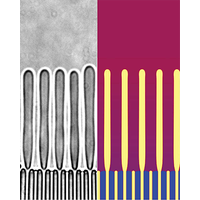
Pattern Formation during Melting of Lamellar Eutectics

Rahul Nellissery Rajan, Rajesh Kumari Rajendran, Guillaume Boussinot, Kamal Sbargoud, Sabine Bottin-Rousseau, and Silvère Akamatsu

Phys. Rev. Lett. 136, 256301 (2026) - Published 26 June, 2026

A rich diversity of patterns emerge during melting of a two-phase eutectic solid.

Real-Space Dynamic Electron Correlation in Beryllium

Rudra B. Bista, Yuya Shinohara, Wojciech Dmowski, Chae Woo Ryu, Jung Ho Kim, Mary Upton, Hlynur Gretarsson, Martin Sundermann, and Takeshi Egami

Phys. Rev. Lett. 136, 256402 (2026) - Published 26 June, 2026

The size of the exchange-correlation hole in beryllium is about 2 Å, but it extends up to about 5 Å at the plasmon excitation energy, demonstrating that electron correlations are affected significantly by electron dynamics.

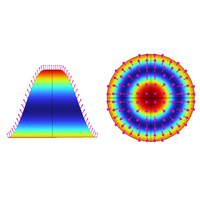
Curvature-Induced Magnon Frequency Combs

Hao Zhao, Qianjun Zheng, and Peng Yan

Phys. Rev. Lett. 136, 256708 (2026) - Published 25 June, 2026

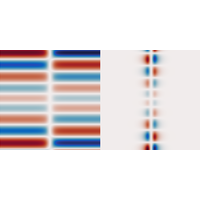
A tiny bump in a magnetic film exposed to microwaves can engender spin waves with precisely spaced frequencies.

Black Hole Mergers beyond General Relativity: A Self-Force Approach

Ayush Roy, Lorenzo Küchler, Adam Pound, and Rodrigo Panosso Macedo

Phys. Rev. Lett. 136, 251404 (2026) - Published 24 June, 2026

A modular framework within the self-force formalism that applies to a large class of effective field theories of gravity in order to perform tests of general relativity with binary black hole mergers is critical for tests of general relativity that make use of the upcoming space-based gravitational wave detectors such as LISA.

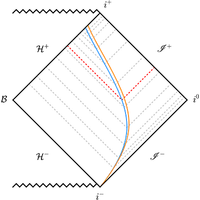
Thermodynamics of Black Holes, Far from Equilibrium

Abhay Ashtekar, Daniel E. Paraizo, and Jonathan Shu

Phys. Rev. Lett. 136, 251405 (2026) - Published 24 June, 2026

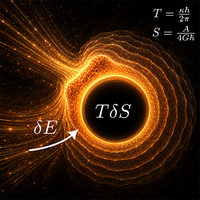
The first law of black hole mechanics has been extended to dynamical horizons so that the law applies to black holes arbitrarily far from equilibrium, a fundamental result that formally shows the thermodynamic description of black holes extends beyond the typical stationary solutions.

Geometric Time-Dependent Density Functional Theory

Éric Cancès, Théo Duez, Jari van Gog, Asbjørn Bækgaard Lauritsen, Mathieu Lewin, and Julien Toulouse

Phys. Rev. Lett. 136, 256401 (2026) - Published 24 June, 2026

A geometric reformulation of time-dependent density-functional theory better describes nonequilibrium systems.

Dissipation due to Bulk Localized Low-Energy Modes in Strongly Disordered Superconductors

Anton V. Khvalyuk and Mikhail V. Feigel’man

Phys. Rev. Lett. 136, 256001 (2026) - Published 23 June, 2026

Microwave dissipation in strongly disordered superconductors is driven by localized collective modes within rare weak spots, a theoretical insight which provides a fresh strategy to enhance coherence times in quantum devices.

Spontaneous Ratchet Currents and Transition Dynamics in Active Wetting

Noah Grodzinski, Robert L. Jack, and Michael E. Cates

Phys. Rev. Lett. 136, 257101 (2026) - Published 23 June, 2026

Active wetting is a true surface phase transition that has remarkable similarities to critical wetting transitions in equilibrium, but it also features important differences, such as dynamical transition pathways that would be forbidden for passive fluids.

Memories of Amplitude and Direction Coexist and Compete in Non-Brownian Suspensions

Surendra Padamata and Nathan C. Keim

Phys. Rev. Lett. 136, 258201 (2026) - Published 23 June, 2026

A new experiment elucidates the ability of some particle–fluid mixtures to behave in ways that depend on their previous flow.

Strings from Almost Nothing

Clifford Cheung, Grant N. Remmen, Francesco Sciotti, and Michele Tarquini

Phys. Rev. Lett. 136, 251601 (2026) - Published 22 June, 2026

Using a “bootstrap” approach, researchers show that a small set of assumptions may naturally lead to a string-theory description of certain high-energy processes.

Quantum Mechanics Based on Real Numbers: A Consistent Description

Pedro Barrios Hita, Anton Trushechkin, Hermann Kampermann, Michael Epping, and Dagmar Bruß

Phys. Rev. Lett. 136, 240202 (2026) - Published 18 June, 2026

By exploiting a physically motivated principle, rather than a mathematical postulate, researchers offer a new perspective on how a real-valued quantum theory can be constructed.

Spectroscopy of He4 at 0.25 ppt Uncertainty and Improved Alpha-Helion Charge-Radius Difference Determination

K. Steinebach, J. C. J. Koelemeij, H. L. Bethlem, and K. S. E. Eikema

Phys. Rev. Lett. 136, 243001 (2026) - Published 18 June, 2026

Improved measurements of an electronic transition in helium-4 atoms constrain the size difference between helium-4 and helium-3 nuclei.

Memory-Assisted Nonlocal Interferometer toward Long-Baseline Telescopes

Bin Wang, Xi-Yu Luo, Bo-Feng Gao, Jian-Long Liu, Chao-Yang Wang, Zi Yan, Qiao-Mu Ke, Da Teng, Ming-Yang Zheng, Yuan Cao, Jun Li, Cheng-Zhi Peng, Qiang Zhang, Xiao-Hui Bao, and Jian-Wei Pan

Phys. Rev. Lett. 136, 240801 (2026) - Published 17 June, 2026

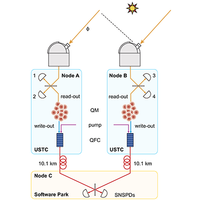
A memory-assisted nonlocal optical interferometer leverages delocalized single-photon entanglement to extend interferometric baselines (up to 20 km) and compensate geometric delay.

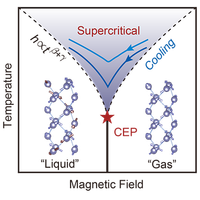
Ising Supercriticality and Universal Magnetocalorics in Spiral Antiferromagnet Nd3BWO9

Xinyang Liu, Enze Lv, Xueling Cui, Han Ge, Fangyuan Song, Zhaoming Tian, Gang Su, Kan Zhao, Junsen Xiang, Peijie Sun, and Wei Li

Phys. Rev. Lett. 136, 246502 (2026) - Published 17 June, 2026

An emergent Ising supercritical regime in Nd3BWO9 with universal thermodynamic behavior extends the liquid-gas analogy to a rare-earth antiferromagnetic compound and shows its potential for sub-Kelvin refrigeration due to critical endpoint and topological excitations.

Observation of the Radiative Decay Ds0*(2317)+→Ds*+γ

M. Abumusabh et al. (Belle and Belle II Collaboration)

Phys. Rev. Lett. 136, 241901 (2026) - Published 16 June, 2026

An exotic meson’s photon-emitting decay opens a window into the particle’s long-debated structure.

Nonlinear Hall Quantum Oscillations to Probe Topological Brown-Zak Fermions in Graphene Moiré Systems

Jinrui Zhong, Huimin Peng, Yuqing Hu, Qi Feng, Qiuli Li, Shihao Zhang, Qinsheng Wang, Jinhai Mao, Junxi Duan, and Yugui Yao

Phys. Rev. Lett. 136, 246301 (2026) - Published 15 June, 2026

A new experiment probes the quantum geometry of electronic wave functions involved in a nonlinear Hall response.

Sign In to Your Journals Account

Filter

Section

Filter

Article Lookup

Enter a citation