Highlights

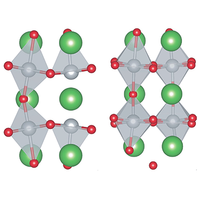
Magnetic-Field-Induced Tomonaga-Luttinger Liquid and Bose-Einstein Condensate Phases in an Organic S=1 Haldane Chain

Ivan Jakovac, Mihael S. Grbić, Maxime Dupont, Nicolas Laflorencie, Sylvain Capponi, Yuko Hosokoshi, Steffen Krämer, Yurii Skourski, Sven Luther, Masashi Takigawa, and Mladen Horvatić

Phys. Rev. Lett. 137, 136702 (2026) - Published 22 September, 2026

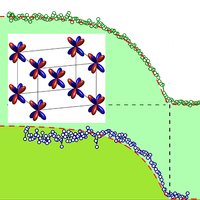
Researchers have gained access to the rich physics of a landmark model magnet by assembling a crystal out of organic magnetic molecules.

Experimental Evidence of Kelvin-Wave Turbulence along a Vortex Core

Jason Barckicke, Christophe Gissinger, and Eric Falcon

Phys. Rev. Lett. 137, 134001 (2026) - Published 21 September, 2026

A tabletop experiment using a classical water vortex supports a decades-old theory describing the decay of turbulence in quantum fluids.

Anyon Superfluid in Trilayer Quantum Hall Systems

Taige Wang and Ya-Hui Zhang

Phys. Rev. Lett. 137, 136502 (2026) - Published 21 September, 2026

A charge-balanced quantum Hall trilayer at ν = 1/3 per layer could host an anyon-exciton condensate where superfluidity coexists with topological order at intermediate layer separation.

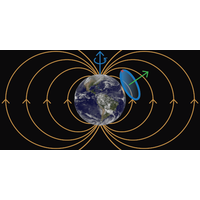
Quantum Sensing of Gravitational Frame Dragging with a Superfluid He4 Gyrometer

Kai-Isaak Ellers, Marios Christodoulou, K. C. Schwab, and K. Birgitta Whaley

Phys. Rev. Lett. 137, 121404 (2026) - Published 17 September, 2026

A proposed lab-based quantum sensor could precisely measure within seconds the warping of spacetime caused by Earth’s rotation.

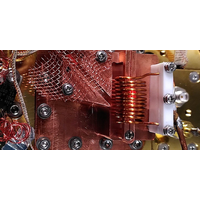
Long-Lived Telecom-Heralded Single-Photon Storage in an Absorptive Spin-Rephased Quantum Memory

Alberto E. Rodríguez-Moldes, Félicien Appas, Jonathan Hänni, Jelena V. Rakonjac, Samuele Grandi, and Hugues de Riedmatten

Phys. Rev. Lett. 137, 120803 (2026) - Published 16 September, 2026

Researchers demonstrate a new quantum memory device that will enable faraway nodes in a network to coordinate in time, a key ingredient for a future quantum Internet.

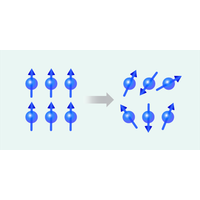
Ultrafast Demagnetization Governed by Spin Fluctuations in CaRuO3/SrTiO3 Superlattice

Yu-Han Gao, Wen-Xiao Shi, Yuan-Sha Chen, Ji-Rong Sun, Qing-Lin Yang, Xu Yang, Zhuo Deng, Peng-Tao Yang, Zheng Chang, Hong-Mei Feng, Wei He, Xiang-Qun Zhang, and Zhao-Hua Cheng

Phys. Rev. Lett. 137, 126903 (2026) - Published 16 September, 2026

Contrary to expectations, the magnetization dynamics of a ferromagnet can be accelerated by increasing temperature, laser excitation, or magnetic field—a behavior that holds promise for high-speed spintronics.

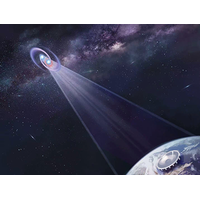
Relativistic Effects of PSR J1856–0039 Double Neutron Star System in a 2.36-Hour Compact Orbit

Z. L. Yang, J. L. Han, W. Q. Su, P. F. Wang, C. Wang, T. Wang, D. J. Zhou, Yi Yan, J. Xu, W. C. Jing, N. N. Cai, R. X. Xu, H. G. Wang, and X. P. You

Phys. Rev. Lett. 137, 121401 (2026) - Published 15 September, 2026

The observation of a binary pulsar system characterized by low neutron star masses with short orbital period enables tests of relativity, and may enable a measurement of Lens-Thirring precession with future observations.

Dual Instability of Superconductivity from Oxygen Defects in La3Ni2O7+δ

Peiheng Jiang, Jie Li, Yu-Han Cao, Xiaodong Cao, Zhicheng Zhong, Yi Lu, and Qiang-Hua Wang

Phys. Rev. Lett. 137, 126002 (2026) - Published 15 September, 2026

Oxygen defects suppress superconductivity in the bilayer nickelate La3Ni2O7+δ via a dual mechanism, revealed through density functional theory, dynamical mean-field theory, and functional renormalization group analysis.

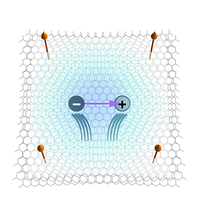
Giant and Helical Exciton Dipole from Berry Curvature in Flat Chern Bands

Kaijie Yang, Huiyuan Zheng, Xiaodong Xu, Di Xiao, and Ting Cao

Phys. Rev. Lett. 137, 126602 (2026) - Published 15 September, 2026

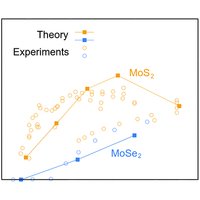
Berry curvature in twisted molybdenum ditelluride drives the oppositely charged particles in an exciton in opposite transverse directions, producing a dipole moment of approximately 150 Debye.

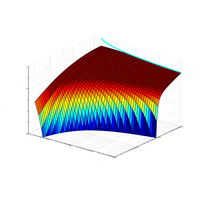
Fastest First-Passage Time for Multiple Searchers with Finite Speed

Denis S. Grebenkov, Ralf Metzler, and Gleb Oshanin

Phys. Rev. Lett. 137, 127102 (2026) - Published 15 September, 2026

Classical first-passage theory based on Brownian motion predicts that the mean fastest-arrival time decreases only logarithmically with the number of searchers, however this is an artifact of the unphysical infinite-speed assumption of Brownian dynamics.

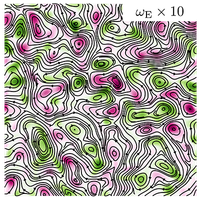
Active Wave Turbulence in Hexatic Phase

Qianhong Yang, Xinxin Zhang, Maoqiang Jiang, Guangpu Zhu, Zhaohui Liu, Sébastien Galtier, and Lailai Zhu

Phys. Rev. Lett. 137, 128301 (2026) - Published 15 September, 2026

When in dense suspensions, active phoretic disks with physicochemical hydrodynamic interactions remain caged and perform local vibrations, mirroring the weak turbulence of bending waves in vibrating elastic plates.

Disorder-Driven Enhancement of Coulomb Repulsion Governs the Superconducting Dome in Ionic-Liquid-Gated Quasi-2D Materials

Giovanni Marini, Pierluigi Cudazzo, and Matteo Calandra

Phys. Rev. Lett. 137, 126001 (2026) - Published 14 September, 2026

Disorder-driven fluctuations enhance repulsive Coulomb interaction and form a superconducting dome in ionic-liquid-gated few-layer transition metal dichalcogenides.

Unconventional Anisotropic Charge Dynamics in Bulk 1T−TaS2 Induced by Interlayer Dimerization

Achyut Tiwari, Maxim Wenzel, R. Mathew Roy, Christian Prange, Bruno Gompf, and Martin Dressel

Phys. Rev. Lett. 137, 126501 (2026) - Published 14 September, 2026

A Peierls-like interlayer instability establishes stacking as a tuning parameter for hidden, metastable phases in van der Waals quantum materials.

Nonlinear Optical Probing of Ferroic Octupolar Order Parameter in Collinear Altermagnet

P. A. Usachev, R. V. Pisarev, and V. V. Pavlov

Phys. Rev. Lett. 137, 126902 (2026) - Published 14 September, 2026

Optical second harmonic generation detects ferroic octupolar order in altermagnetic CoF2, establishing nonlinear interactions as signatures of altermagnetism in experiments.

Balancing Information and Dissipation with Partially Observed Fluctuating Signals

Giorgio Nicoletti, Ivan Di Terlizzi, and Daniel Maria Busiello

Phys. Rev. Lett. 137, 127101 (2026) - Published 14 September, 2026

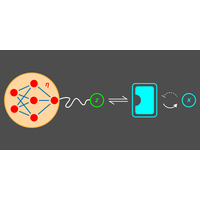
A new model shows how cells could optimize biochemical sensing by balancing information gained against energy spent.

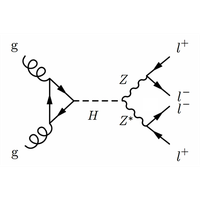
Measurements of Z-Boson Pair Entanglement in Decays of Higgs Bosons at the ATLAS Experiment

G. Aad et al. (ATLAS Collaboration)

Phys. Rev. Lett. 137, 111804 (2026) - Published 11 September, 2026

First measurements of quantum entanglement between two massive vector bosons at the electroweak scale link quantum information concepts with precision measurements.

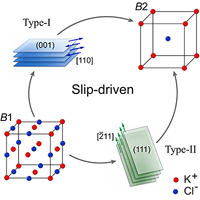
Slip-Driven B1−B2 Phase Transition in Shock-Compressed KCl

Y. Cai, L. Wang, N. B. Zhang, Y. W. Shi, B. X. Bie, M. X. Tang, Y. J. Deng, L. Lu, and S. N. Luo

Phys. Rev. Lett. 137, 116102 (2026) - Published 11 September, 2026

An ultrafast x-ray diffraction measurement establishes a unified model for B1−B2 transition in KCl which can be generalized to other materials.

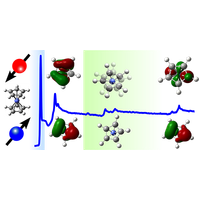
Coexisting Spin, Vibrational, and Orbital Excitations in Conductance Spectra

Arnab Banerjee, Roberto Robles, Nicolás Lorente, Richard Berndt, and Alexander Weismann

Phys. Rev. Lett. 137, 116403 (2026) - Published 11 September, 2026

A simple conductance asymmetry metric helps disentangle coexisting spin, vibrational, and orbital excitations within a single cobaltocene molecule, unlocking new pathways for single-molecule quantum computing.

Anomalous Statistics of Sea Ice Transport are Explained by Collisional Rules

Bryan Shaddy, P. Alex Greaney, and Bhargav Rallabandi

Phys. Rev. Lett. 137, 114201 (2026) - Published 10 September, 2026

How fast Arctic ice spreads out and how quickly the floes travel from coarsely resolved environmental data can be predicted by simulating sea ice as a granular medium driven by stochastic winds and using measurements of the local wind and ice properties as input parameters.

Observation of Individual Vortex Penetration in a Coplanar Superconducting Resonator

Kirill Shulga, Shunsuke Nishimura, Pavel A. Volkov, Miu Hirano, Toshiaki Inada, Ryota Hasegawa, Takeyuki Tsuji, Takayuki Iwasaki, Mutsuko Hatano, Kento Sasaki, and Kensuke Kobayashi

Phys. Rev. Lett. 137, 116001 (2026) - Published 10 September, 2026

A coplanar superconducting resonator makes possible the direct observation of the real-time entry of individual Abrikosov vortices.

Sign In to Your Journals Account

Filter

Section

Filter

Article Lookup

Enter a citation