Highlights

Advanced Torrential Loss Function for Precipitation Forecasting

Jaeho Choi, Hyeri Kim, Kwang-Ho Kim, and Jaesung Lee

Phys. Rev. Lett. 136, 024201 (2026) - Published 13 January, 2026

An advanced torrential loss function for machine-learning-based precipitation forecasting outperforms conventional functions in forecast accuracy.

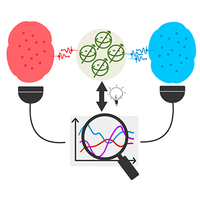
Experimental Phase-Matching Quantum Cryptographic Conferencing in Symmetric and Asymmetric Fiber Channels

Mi Zou, Bin-Chen Li, Shuai Zhao, Yingqiu Mao, Dandan Qin, Xiao Jiang, Teng-Yun Chen, and Jian-Wei Pan

Phys. Rev. Lett. 136, 020801 (2026) - Published 12 January, 2026

Phase-matching quantum cryptographic conferencing can operate over realistic intercity fiber networks, advancing the feasibility of multiparty quantum communication.

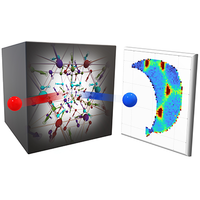
Monte Carlo Simulations of Crystal Defects in Open Ensembles

Flynn Walsh, Babak Sadigh, Joseph T. McKeown, and Timofey Frolov

Phys. Rev. Lett. 136, 026201 (2026) - Published 12 January, 2026

A Monte Carlo approach for open ensembles allows the simulation of variable number of defects in materials.

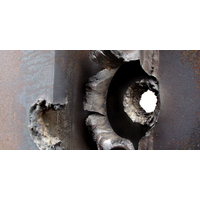
Smaller Grains Are Not Stronger: Microcrystalline Metals at Ultrahigh Strain Rates

Laura Wu, Yuan Yao, Luyan Li, Qi Tang, and Mostafa Hassani

Phys. Rev. Lett. 136, 016104 (2026) - Published 9 January, 2026

A textbook rule for the relationship between the structure and strength of a material breaks down for high-speed deformations, like those caused by strong impacts.

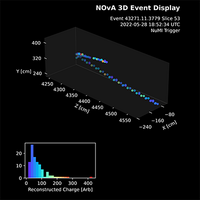
Precision Measurement of Neutrino Oscillation Parameters with 10 Years of Data from the NOvA Experiment

S. Abubakar et al. (The NOvA Collaboration)

Phys. Rev. Lett. 136, 011802 (2026) - Published 8 January, 2026

A decade of neutrino oscillation data leads to the most precise single-experiment measurement of the neutrino mass splitting between eigenstates 3 and 2.

Temperature Dependence of p-Wave Contacts in a Harmonically Trapped Fermi Gas

Kenta Nagase, Hikaru Takahashi, Soki Oshima, and Takashi Mukaiyama

Phys. Rev. Lett. 136, 013402 (2026) - Published 8 January, 2026

The temperature dependence of so-called p-wave interactions in an ultracold atomic gas has been measured for the first time.

Transport Approach to Quantum State Tomography

Jeanne Bourgeois, Gianmichele Blasi, and Géraldine Haack

Phys. Rev. Lett. 136, 010802 (2026) - Published 7 January, 2026

Current measurement in an open quantum system contains enough information to reconstruct the full quantum state.

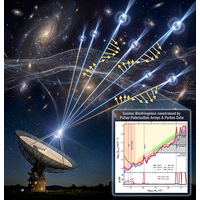
Pulsar Polarization Array Limits on Ultralight Axionlike Dark Matter

Xiao Xue, Shi Dai, Hoang Nhan Luu, Tao Liu, Jing Ren, Jing Shu, Yue Zhao, Andrew Zic, N. D. Ramesh Bhat, Zu-Cheng Chen, Yi Feng, George Hobbs, Agastya Kapur, Richard N. Manchester, Rami Mandow, Saurav Mishra, Daniel J. Reardon, Christopher J. Russell, Ryan M. Shannon, Shuangqiang Wang, Lei Zhang, Songbo Zhang, and Xingjiang Zhu (PPTA Collaboration)

Phys. Rev. Lett. 136, 011001 (2026) - Published 7 January, 2026

By cross-correlating pulsar polarization data within the galaxy, the PPTA collaboration sets the most sensitive limits on how strongly “Fuzzy” axionlike dark matter can interact with Chern-Simons coupling.

From Triangular Correlated Paramagnet to Multi-q Noncoplanar Spin State in Spinel GeFe2O4

L. Chaix, J. Robert, E. Chan, E. Ressouche, S. Petit, C. V. Colin, R. Ballou, J. Ollivier, L.-P. Regnault, E. Lhotel, V. Cathelin, S. Lenne, C. Cavenel, F. Damay, E. Suard, P. Strobel, C. Darie, S. deBrion, and V. Simonet

Phys. Rev. Lett. 136, 016703 (2026) - Published 7 January, 2026

The spin arrangement in the magnetic frustrated spinel GeFe2O4 is stabilized in two steps, first as a triangular correlated paramagnet emerging from the pyrochlore lattice that finally orders as a rare 6-q magnetic structure.

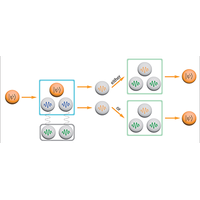
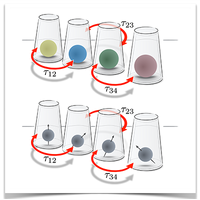
Encrypted Qubits Can Be Cloned

Koji Yamaguchi and Achim Kempf

Phys. Rev. Lett. 136, 010801 (2026) - Published 6 January, 2026

Any number of encrypted clones of a qubit can be created, but the decryption of just one destroys the decryption key, remaining consistent with the no-cloning theorem.

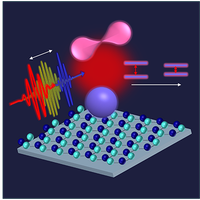
Tracking the Photoinduced Dynamics of a Dark Excitonic State in Single-Layer WS2 via Resonant Autler-Townes Splitting

Angela Montanaro, Francesco Valiera, Francesca Giusti, Francesca Fassioli, Chiara Trovatello, Giacomo Jarc, Enrico Maria Rigoni, Fang Liu, Xiaoyang Zhu, Stefano Dal Conte, Giulio Cerullo, Martin Eckstein, and Daniele Fausti

Phys. Rev. Lett. 136, 016902 (2026) - Published 6 January, 2026

A new three-pulse Autler-Townes technique unveils the ultrafast dynamics of a dark 2p exciton in monolayer WS2, revealing symmetry-dependent many-body screening previously hidden from optical probes.

Extending the Observation Time of Charged Helium Droplets to the Minute Timescale

Matthias Veternik, Tobias Waldhütter, Lutz Schweikhard, Paul Scheier, and Elisabeth Gruber

Phys. Rev. Lett. 136, 013201 (2026) - Published 5 January, 2026

Charged, micron-sized helium droplets can be trapped for minutes in an electrostatic ion beam trap.

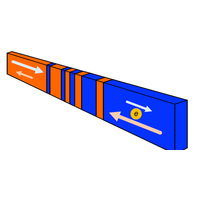
Large Spontaneous Nonreciprocal Charge Transport in a Zero-Magnetization Antiferromagnet

Kenta Sudo, Yuki Yanagi, Mitsuru Akaki, Hiroshi Tanida, and Motoi Kimata

Phys. Rev. Lett. 136, 016503 (2026) - Published 5 January, 2026

An antiferromagnet with a zigzag magnetic structure exhibits a diode effect that has potential applications in spintronics.

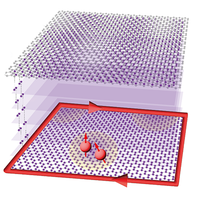
Odd-Chern-Number Quantum Anomalous Hall Effect at Even Filling in Moire Rhombohedral Heptalayer Graphene

Qianling Liu, Zhiyu Wang, Xiangyan Han, Zhuoxian Li, Bohao Li, Sicheng Zhou, Lihong Hu, Zhuangzhuang Qu, Chunrui Han, Kenji Watanabe, Takashi Taniguchi, Zheng Vitto Han, Bingbing Tong, Guangtong Liu, Li Lu, Fengcheng Wu, and Jianming Lu

Phys. Rev. Lett. 136, 016602 (2026) - Published 5 January, 2026

The quantum anomalous Hall effect at even filling has been observed in rhombohedral heptalayer graphene moiré superlattices – previous observations were for odd-integer filling factors.

Transverse Polarization Gradient Entangling Gates for Trapped-Ion Quantum Computation

Jin-Ming Cui, Yan Chen, Yi-Fan Zhou, Quan Long, En-Teng An, Ran He, Yun-Feng Huang, Chuan-Feng Li, and Guang-Can Guo

Phys. Rev. Lett. 135, 260604 (2025) - Published 24 December, 2025

A method leveraging the optical Magnus effect offers an alternative to conventional entanglement schemes for the generation of quantum logic gates.

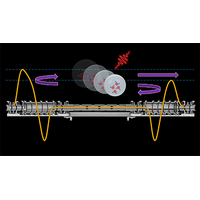
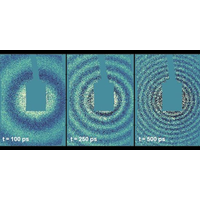
Time-Domain Extreme-Ultraviolet Diffuse Scattering Spectroscopy of Nanoscale Surface Phonons

F. Capotondi, A. A. Maznev, F. Bencivenga, S. Bonetti, D. Engel, D. Fainozzi, D. Fausti, L. Foglia, C. Gutt, N. Jaouen, D. Ksenzov, C. Masciovecchio, Keith A. Nelson, I. Nikolov, M. Pancaldi, E. Pedersoli, B. Pfau, L. Raimondi, F. Romanelli, R. Totani, and M. Trigo

Phys. Rev. Lett. 135, 266101 (2025) - Published 24 December, 2025

Imaging using extreme ultraviolet scattering shows that optical pulses can generate surface excitations with spectra that were previously difficult to achieve.

Quantum Advantage in Identifying the Parity of Permutations with Certainty

A. Diebra, S. Llorens, D. González-Lociga, A. Rico, J. Calsamiglia, M. Hillery, and E. Bagan

Phys. Rev. Lett. 135, 260603 (2025) - Published 23 December, 2025

Simple and genuine quantum advantage in perfect parity identification without oracles is achieved.

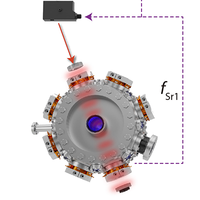
Zero-Dead-Time Strontium Lattice Clock with a Stability at 10−19 Level

Xiao-Yong Liu, Peng Liu, Jie Li, Yu-Chen Zhang, Yuan-Bo Wang, Zhi-Peng Jia, Xiang Zhang, Xian-Qing Zhu, De-Quan Kong, Wen-Lan Song, Guo-Zhen Niu, Yu-Meng Yang, Pei-Jun Feng, Xiang-Pei Liu, Xing-Yang Cui, Ping Xu, Xiao Jiang, Juan Yin, Sheng-Kai Liao, Cheng-Zhi Peng, Han-Ning Dai, Yu-Ao Chen, and Jian-Wei Pan

Phys. Rev. Lett. 135, 263402 (2025) - Published 23 December, 2025

A zero-dead-time optical lattice clock achieves unprecedented stability of 1 part in 1019.

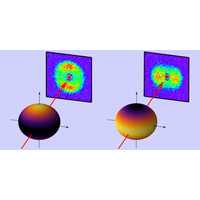
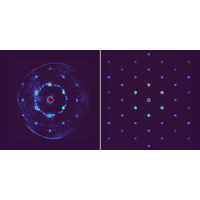
Fast Hydrogen Atom Diffraction through Monocrystalline Graphene

Pierre Guichard, Arnaud Dochain, Raphaël Marion, Pauline de Crombrugghe de Picquendaele, Nicolas Lejeune, Benoît Hackens, Paul-Antoine Hervieux, and Xavier Urbain

Phys. Rev. Lett. 135, 263403 (2025) - Published 23 December, 2025

A fast beam of hydrogen atoms passes through a graphene layer and produces a diffraction pattern, a development that could lead to a new probing technique of surface interactions.

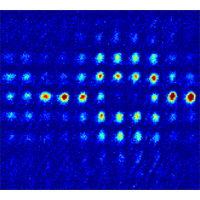
Experimental Observation of Single- and Multisite Matter-Wave Solitons in an Optical Accordion Lattice

Robbie Cruickshank, Francesco Lorenzi, Arthur La Rooij, Ethan F. Kerr, Timon Hilker, Stefan Kuhr, Luca Salasnich, and Elmar Haller

Phys. Rev. Lett. 135, 263404 (2025) - Published 23 December, 2025
The observation of discrete solitons in a Bose-Einstein condensate brings with it the prospect of investigating a general physical phenomenon with the tunability and precision of cold-atom techniques.

Sign In to Your Journals Account

Filter

Section

Filter

Article Lookup

Enter a citation