Highlights

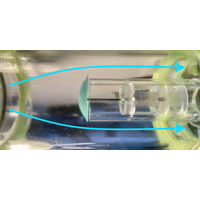
Magneto-Optical Trapping of Aluminum Monofluoride

J. E. Padilla-Castillo, J. Cai, P. Agarwal, P. Kukreja, R. Thomas, B. G. Sartakov, S. Truppe, G. Meijer, and S. C. Wright

Phys. Rev. Lett. 135, 243401 (2025) - Published 10 December, 2025

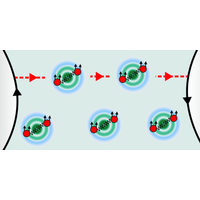
A class of molecules with two valence electrons has been laser cooled and trapped for the first time.

High-Fidelity Quantum State Control of a Polar Molecular Ion in a Cryogenic Environment

Dalton Chaffee, Baruch Margulis, April Sheffield, Julian Schmidt, April Reisenfeld, David R. Leibrandt, Dietrich Leibfried, and Chin-Wen Chou

Phys. Rev. Lett. 135, 240801 (2025) - Published 9 December, 2025

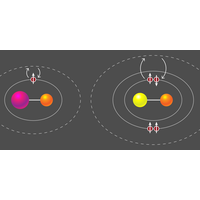
Molecular quantum state preparation, coherent manipulation, and measurement with high fidelity are demonstrated in a polar molecule for the first time.

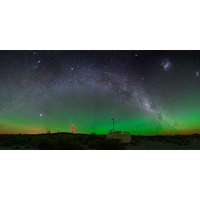
Energy Spectrum of Ultrahigh-Energy Cosmic Rays across Declinations −90° to +44.8° as Measured at the Pierre Auger Observatory

A. Abdul Halim et al. (Pierre Auger Collaboration)

Phys. Rev. Lett. 135, 241002 (2025) - Published 9 December, 2025

New measurements from an observatory in Argentina suggest that all the most energetic cosmic rays arise from the same types of extragalactic accelerators.

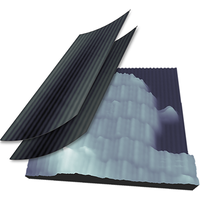
Interplay of Silver-Mean Quasiperiodicity and Weyl Semimetal Phase in WTe2

So-Dam Sohn, Ja-Yong Koo, Chang-Youn Moon, and Daejin Eom

Phys. Rev. Lett. 135, 246601 (2025) - Published 8 December, 2025

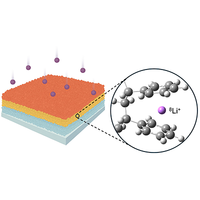
Scanning tunneling microscopy reveals that epoxy resin intercalates into a 3D Weyl semimetal with molecular-scale height modulations that follow the Pell sequence.

Edge-State Selective Measurement of Dispersions in the Quantum Hall Regime

Henok Weldeyesus, T. Patlatiuk, Q. Chen, C. P. Scheller, D. M. Zumbühl, A. Yacoby, L. N. Pfeiffer, and K. W. West

Phys. Rev. Lett. 135, 246602 (2025) - Published 8 December, 2025

A new method utilizes a GaAs 2D electron gas, combined with cleaved-edge overgrowth quantum wires, to accurately map the dispersions and velocities of individual edge states across a wide range of parameters.

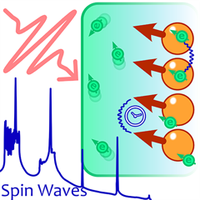
Optically Induced Magnetic Inertia and Magnons from Non-Markovian Extension of the Landau-Lifshitz-Gilbert Equation

Felipe Reyes-Osorio and Branislav K. Nikolić

Phys. Rev. Lett. 135, 246701 (2025) - Published 8 December, 2025

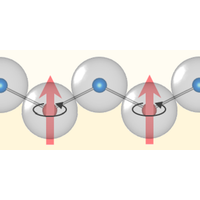
An extension of the Landau–Lifshitz–Gilbert equation for laser-driven magnets yields frequency-dependent damping and a reactive inertial term, predicting coherent, sharp magnon features under ultrafast drive.

Fluid-Induced Snap-Through Instability of Spherical Shells

Pier Giuseppe Ledda, Hemanshul Garg, Vitus Østergaard-Clausen, Lucas Krumenacker Rudzki, Ahmad Madary, and Matteo Pezzulla

Phys. Rev. Lett. 135, 234002 (2025) - Published 5 December, 2025

A phenomenon reminiscent of a common experience with an umbrella inspires the development of a potential microfluidics component.

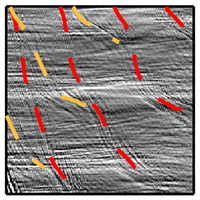
Dynamics from the Surface to the Bulk in Ultrastable and Liquid-Cooled Oligomeric Glasses

Iain McKenzie, Victoria L. Karner, Ruohong Li, W. Andrew MacFarlane, Gerald D. Morris, Michael F. Thees, John O. Ticknor, and James A. Forrest

Phys. Rev. Lett. 135, 238101 (2025) - Published 5 December, 2025

Specific preparation and thermal history lock oligomeric glasses into distinct regions of the potential energy landscape, giving rise to fundamentally different dynamics.

Long-Time Storage of a Qubit Encoded in Decoherence-Free Subspace Using a Dual-Type Quantum Memory

Y.-L. Xu, L. Zhang, C. Zhang, Y.-K. Wu, Y.-Y. Chen, C.-X. Huang, Z.-B. Cui, R. Yao, W.-Q. Lian, J.-Y. Ma, W.-X. Guo, B.-X. Qi, P.-Y. Hou, Y.-F. Pu, Z.-C. Zhou, L. He, and L.-M. Duan

Phys. Rev. Lett. 135, 230803 (2025) - Published 4 December, 2025

Metastable qubits with coherence time over two hours are constructed by encoding into decoherence-free subspace.

Dynamical Generation of Higher-Order Spin-Orbit Coupling, Topology, and Persistent Spin Texture in Light-Irradiated Altermagnets

Sayed Ali Akbar Ghorashi and Qiang Li

Phys. Rev. Lett. 135, 236702 (2025) - Published 4 December, 2025

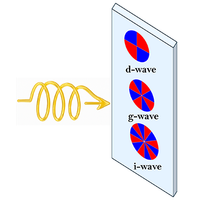
Tuning the nonequilibrium properties of altermagnets with light-matter interactions generates anisotropic and higher-order spin-orbit coupling.

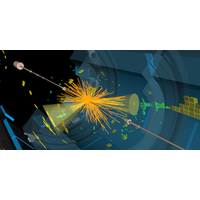
Evidence for the Dimuon Decay of the Higgs Boson in pp Collisions with the ATLAS Detector

G. Aad et al. (ATLAS Collaboration)

Phys. Rev. Lett. 135, 231802 (2025) - Published 3 December, 2025

Measurements of the decay of the Higgs boson into muon–antimuon pairs provide evidence for the mechanism by which quarks and leptons acquire their mass.

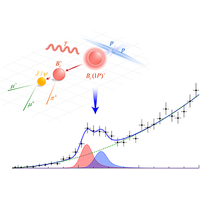
Observation of Orbitally Excited Bc+ States

R. Aaij et al. (LHCb Collaboration)

Phys. Rev. Lett. 135, 231902 (2025) - Published 3 December, 2025

Bc+, the only known meson made of two different flavors of heavy quarks, is observed in an orbitally excited state for the first time.

Tunable Einstein-Bohr Recoiling-Slit Gedankenexperiment at the Quantum Limit

Yu-Chen Zhang, Hao-Wen Cheng, Zhao-Qiu Zengxu, Zhan Wu, Rui Lin, Yu-Cheng Duan, Jun Rui, Ming-Cheng Chen, Chao-Yang Lu, and Jian-Wei Pan

Phys. Rev. Lett. 135, 230202 (2025) - Published 2 December, 2025

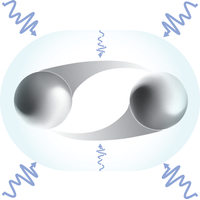
A single-atom interferometer confirms Niels Bohr’s resolution of a seemingly paradoxical thought experiment devised by Albert Einstein.

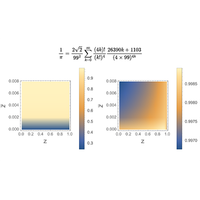
Ramanujan’s 1/π Series and Conformal Field Theories

Faizan Bhat and Aninda Sinha

Phys. Rev. Lett. 135, 231602 (2025) - Published 2 December, 2025

Ramanujan’s infinite series for 1/π leads to new expansions in logarithmic conformal field theories that converge faster than the standard conformal block decomposition.

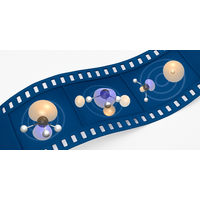
Probing Valence Electron and Hydrogen Dynamics Using Charge-Pair Imaging with Ultrafast Electron Diffraction

Tianyu Wang, Hui Jiang, Ming Zhang, Xiao Zou, Pengfei Zhu, Feng He, Zheng Li, and Dao Xiang

Phys. Rev. Lett. 135, 233002 (2025) - Published 2 December, 2025

Ultrafast electron diffraction can capture the motion of electrons and nuclei during light-induced reactions with high spatial and temporal resolution.

Molecular Anyons in the Fractional Quantum Hall Effect

Mytraya Gattu and J. K. Jain

Phys. Rev. Lett. 135, 236601 (2025) - Published 2 December, 2025

The quasiparticles associated with a phenomenon called the fractional quantum Hall effect can bind together into stable clusters.

Sign-Problem-Free Nuclear Quantum Monte Carlo Simulation

Zhong-Wang Niu and Bing-Nan Lu

Phys. Rev. Lett. 135, 222504 (2025) - Published 26 November, 2025

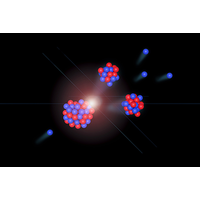
The construction of a sign-problem-free nuclear quantum Monte Carlo simulation is able to reproduce binding energies of a wide range of nuclei.

Possibility of Type-III Multiferroics Hosting d0 Ferroelectricity and d0 Ferromagnetism

Haojin Wang, Haitao Liu, Meng Ye, and Yuanchang Li

Phys. Rev. Lett. 135, 226402 (2025) - Published 26 November, 2025

A new type of multiferroic behavior—the coupling between magnetic ordering and electric polarization in a material—could facilitate applications, according to a theoretical proposal.

Hyperuniform Interfaces in Nonequilibrium Phase Coexistence

Raphaël Maire, Leonardo Galliano, Andrea Plati, and Ludovic Berthier

Phys. Rev. Lett. 135, 227102 (2025) - Published 26 November, 2025

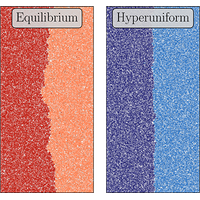
Simulations of three physically distinct scenarios reveal that long-wavelength interfacial fluctuations are suppressed strongly in nonequilibrium phase coexistence between bulk hyperuniform systems.

Fragmentation: Principles versus Mechanisms

Emmanuel Villermaux

Phys. Rev. Lett. 135, 228201 (2025) - Published 26 November, 2025
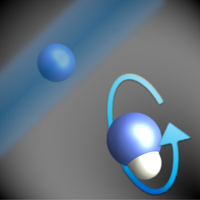
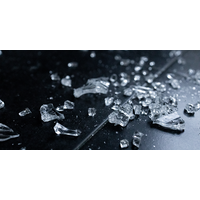
A new principle underlying the physics of fragmentation explains why fragment sizes follow a specific, universal distribution.

Sign In to Your Journals Account

Filter

Section

Filter

Article Lookup

Enter a citation