Highlights

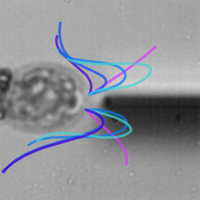
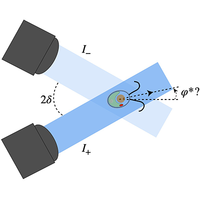
Phototactic Decision-Making by Microalgae

Shantanu Raikwar, Adham Al-Kassem, Nir S. Gov, Adriana I. Pesci, Raphaël Jeanneret, and Raymond E. Goldstein

Phys. Rev. Lett. 135, 228401 (2025) - Published 26 November, 2025

When subject to light coming from two different directions, Chlamydomonas reinhardtii, a phototactic unicellular algae, follows a tangent law, swimming opposite to the light sources in a direction which is the intensity-weighted average of both light propagation vectors.

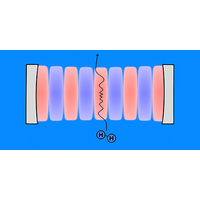
Letokhov-Chebotayev Intracavity Trapping Spectroscopy of H2

Wim Ubachs, Frank M. J. Cozijn, Meissa L. Diouf, Clement Lauzin, Hubert Jóźwiak, and Piotr Wcisło

Phys. Rev. Lett. 135, 223201 (2025) - Published 25 November, 2025

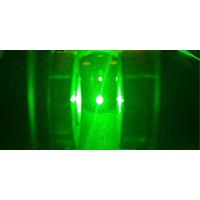
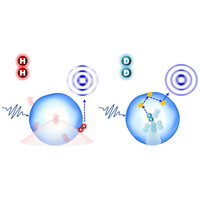
The one-dimensional confinement of molecules in an optical cavity allows researchers to measure a narrow absorption line without the blurring effects of molecular motion.

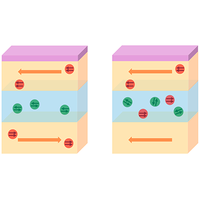
Unveiling Intrinsic Triplet Superconductivity in Noncentrosymmetric NbRe through Inverse Spin-Valve Effects

F. Colangelo, M. Modestino, F. Avitabile, A. Galluzzi, Z. Makhdoumi Kakhaki, Abhishek Kumar, J. Linder, M. Polichetti, C. Attanasio, and C. Cirillo

Phys. Rev. Lett. 135, 226002 (2025) - Published 25 November, 2025

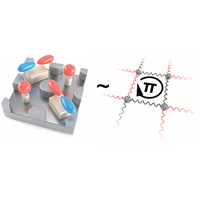
Observation of an inverse spin-valve effect in a structurally minimal Py/NbRe/Py heterostructure indicates intrinsic equal-spin triplet superconductivity in the noncentrosymmetric material, NbRe.

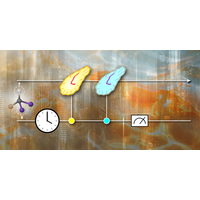
Extreme Violations of Leggett-Garg Inequalities for a System Evolving under Superposition of Unitaries

Arijit Chatterjee, H. S. Karthik, T. S. Mahesh, and A. R. Usha Devi

Phys. Rev. Lett. 135, 220202 (2025) - Published 24 November, 2025

Extending the superposition principle to the time domain gives rise to enhanced correlations that exceed a theoretical quantum limit—a result that could inspire new forms of quantum control.

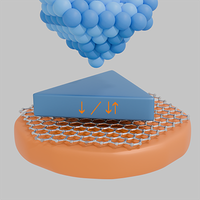
Local Control of Parity and Charge in Nanoscale Superconducting Lead Islands

Stefano Trivini, Jon Ortuzar, Katerina Vaxevani, Beatriz Viña-Bausá, F. Sebastian Bergeret, and Jose Ignacio Pascual

Phys. Rev. Lett. 135, 226001 (2025) - Published 24 November, 2025

Deterministic control of charge parity in Coulomb-blockaded superconducting Pb islands provides a key ingredient for qubit design.

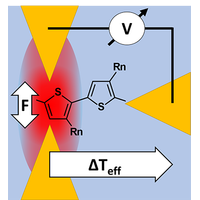
Direct Measurement of the Effective Electronic Temperature in Organic Semiconductors

Anton Kompatscher and Martijn Kemerink

Phys. Rev. Lett. 135, 226301 (2025) - Published 24 November, 2025

The first direct measurement of a field-driven effective electronic temperature in a disordered organic semiconductors reveals that charge carriers reach a locally thermal distribution even while the system remains globally out of equilibrium.

Nanoscale Quantum Imaging of Field-Free Deterministic Switching of a Chiral Antiferromagnet

Jingcheng Zhou, Senlei Li, Chuangtang Wang, Hanshang Jin, Stelo Xu, Zelong Xiong, Carson Jacobsen, Kenji Watanabe, Takashi Taniguchi, Valentin Taufour, Liuyan Zhao, Hua Chen, Chunhui Rita Du, and Hailong Wang

Phys. Rev. Lett. 135, 226701 (2025) - Published 24 November, 2025

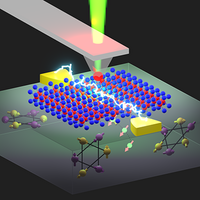
Unconventional spin-orbit torque generated from a low-symmetry van der Waals material WTe2 produces field-free deterministic magnetic switching in a chiral antiferromagnet, Mn3Sn.

Approaching the Ballistic Transport Limit in Single Crystalline Au

Xiaomeng Yang, Jianfei Zhang, Wei Li, Qing Zhang, Quan Zhou, Shengcheng Mao, Menglong Wang, Sikang Zheng, Lihua Wang, Ze Zhang, and Xiaodong Han

Phys. Rev. Lett. 135, 216302 (2025) - Published 21 November, 2025

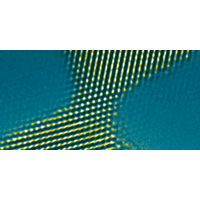
A new measuring system captures the point where a stretched wire becomes narrow enough that its electrons flow smoothly without scattering.

Using Optical Tweezers to Simultaneously Trap, Charge, and Measure the Charge of a Microparticle in Air

Andrea Stoellner, Isaac C. D. Lenton, Artem G. Volosniev, James Millen, Renjiro Shibuya, Hisao Ishii, Dmytro Rak, Zhanybek Alpichshev, Grégory David, Ruth Signorell, Caroline Muller, and Scott Waitukaitis

Phys. Rev. Lett. 135, 218202 (2025) - Published 20 November, 2025

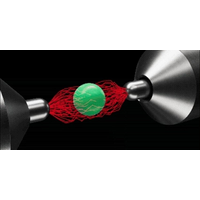
The laser that levitates a microscale particle can also charge it up, providing a useful tool for lab-based experiments for atmospheric science.

Extreme-Temperature Single-Particle Heat Engine

M. Message, F. Cerisola, J. D. Pritchett, K. O’Flynn, Y. Ren, M. Rashid, J. Anders, and J. Millen

Phys. Rev. Lett. 135, 217101 (2025) - Published 19 November, 2025

A levitated bead is driven to behave like a heat engine, revealing strong fluctuations that seemingly defy thermodynamic principles.

Search for Light Dark Matter with 259 Days of Data in PandaX-4T

Minzhen Zhang et al. (PandaX Collaboration)

Phys. Rev. Lett. 135, 211001 (2025) - Published 18 November, 2025

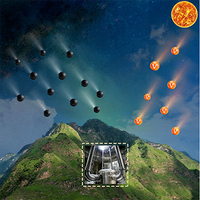
World-leading bounds are placed on dark matter in the 2.5 to 5.0 GeV mass range.

Localization and Delocalization of a Single Molecule in a Helium Nanodroplet

Zhengjun Ye, Haomai Hou, Linqian Zeng, Lianrong Zhou, Zhejun Jiang, Menghang Shi, Chenxu Lu, Shengzhe Pan, Ruolin Gong, Peifen Lu, Hongcheng Ni, Wenbin Zhang, Feng He, and Jian Wu

Phys. Rev. Lett. 135, 213202 (2025) - Published 18 November, 2025

An optical technique reveals the spatial extent of a molecule’s wave function when the molecule is embedded in a tiny helium droplet.

Experimental Realization of Synthetic π-Flux Photonic Crystals

Renwen Huang, Haotian Li, Shiyin Jia, Junzheng Hu, Shiqi Li, Jing Li, Biye Xie, Minghui Lu, Peng Zhan, Yanfeng Chen, and Zhenlin Wang

Phys. Rev. Lett. 135, 216603 (2025) - Published 18 November, 2025

An experimental demonstration of π-flux photonic crystals, a fundamental theoretical construct, reveals Mobius and nonsymmorphic topological phases.

Hot-Phonon-Induced Distortion of Diamond Defects on Ultrafast Timescales

Terng Junn Keat, Jiahui Zhao, Jack M. Woolley, Partha Malakar, Gregory M. Greetham, Xuxu Wu, Jonathan P. Goss, Robin J. Cruddace, Christopher B. Hartland, Matthew W. Dale, Vasilios G. Stavros, Mark E. Newton, and James Lloyd-Hughes

Phys. Rev. Lett. 135, 216902 (2025) - Published 18 November, 2025

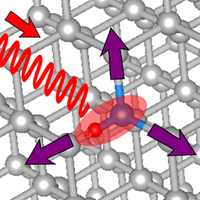
Vibrational excitation of a defect in diamond creates a transient hot ground state, challenging the long-standing assumption of rigid lattice behavior during defect relaxation.

Role of Hydrodynamics in the Synchronization of Chlamydomonas Flagella

Luc Zorrilla, Antoine Allard, Krish Desai, and Marco Polin

Phys. Rev. Lett. 135, 218402 (2025) - Published 18 November, 2025

Using a tipless AFM cantilever to selectively block hydrodynamic coupling between flagella of a single cell reveals a subtle balance of the intracellular forces and hydrodynamic interactions that underlies the coordination of flagella within a single-cell microswimmer.

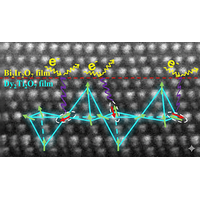
Probing Ice-Rule-Breaking Transition in Dy2Ti2O7 Thin Film by Proximitized Transport and Magnetic Torque

Chengkun Xing, Han Zhang, Kyle Noordhoek, Guoxin Zheng, Kuan-Wen Chen, Lukas Horák, Yan Xin, Eun Sang Choi, Lu Li, Haidong Zhou, and Jian Liu

Phys. Rev. Lett. 135, 216702 (2025) - Published 17 November, 2025

Experimental studies of spin-ice thin films reveal that proximitized transport provides an effective means to investigate frustrated magnetic systems.

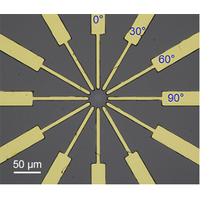
Third-Order Nonlinear Hall Effect in Altermagnet RuO2

R. Y. Chu, L. Han, Z. H. Gong, X. Z. Fu, H. Bai, S. X. Liang, C. Chen, S-W. Cheong, Y. Y. Zhang, J. W. Liu, Y. Y. Wang, F. Pan, H. Z. Lu, and C. Song

Phys. Rev. Lett. 135, 216703 (2025) - Published 17 November, 2025

Experimental demonstration of the third-order nonlinear Hall effect in RuO2 thin films provides a fingerprint for identifying altermagnets.

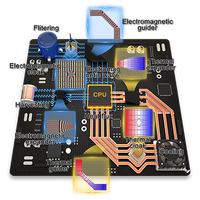
Rescaled Schwarz-Christoffel Transformations for Isotropic, Polygon, and Multiphysics Metamaterials

Pengfei Zhuang, Chengmeng Wang, Fubao Yang, Gaole Dai, Liujun Xu, Peng Tan, Fabio Marchesoni, and Jiping Huang

Phys. Rev. Lett. 135, 216901 (2025) - Published 17 November, 2025

A rescaled Schwarz–Christoffel transformation provides coordinated control of thermal and electromagnetic fields in isotropic metamaterials.

Entropic Costs of Extracting Classical Ticks from a Quantum Clock

Vivek Wadhia, Florian Meier, Federico Fedele, Ralph Silva, Nuriya Nurgalieva, David L. Craig, Daniel Jirovec, Jaime Saez-Mollejo, Andrea Ballabio, Daniel Chrastina, Giovanni Isella, Marcus Huber, Mark T. Mitchison, Paul Erker, and Natalia Ares

Phys. Rev. Lett. 135, 200407 (2025) - Published 14 November, 2025

Experiments reveal the surprisingly large amount of entropy—and thus heat—generated by a clock that could be part of a quantum processor.

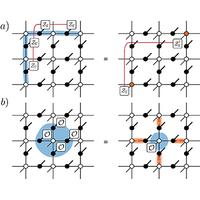
Protocols for Creating Anyons and Defects via Gauging

Anasuya Lyons, Chiu Fan Bowen Lo, Nathanan Tantivasadakarn, Ashvin Vishwanath, and Ruben Verresen

Phys. Rev. Lett. 135, 200405 (2025) - Published 13 November, 2025
Anyon and symmetry defect ribbons are derived from a comprehensive framework utilizing Kramers-Wannier duality.

Sign In to Your Journals Account

Filter

Section

Filter

Article Lookup

Enter a citation