Highlights

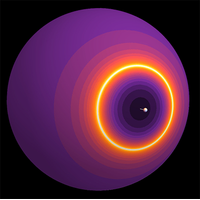
Enhancement of Electromagnetic Memory Effects

Jann Zosso

Phys. Rev. Lett. 135, 201602 (2025) - Published 13 November, 2025

The first explicit calculation of electromagnetic memory from a Lorentz symmetry-breaking wave equation reveals a novel mechanism that enhances the amplitude of electromagnetic memory by orders of magnitude.

Entropy of a Double Quantum Dot

David Kealhofer, Christoph Adam, Max J. Ruckriegel, Petar Tomić, Benedikt Kratochwil, Christian Reichl, Yigal Meir, Werner Wegscheider, Thomas Ihn, and Klaus Ensslin

Phys. Rev. Lett. 135, 206303 (2025) - Published 13 November, 2025

Researchers have taken a step toward using entropy to probe the quantum physics of nanoscopic many-electron systems.

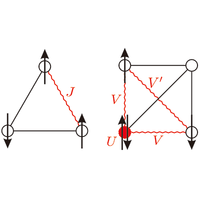
Polarization-Driven Charge Frustration and Emergent Phases in the One-Dimensional Extended Hubbard Model

Sourabh Saha, Jeroen van den Brink, Manoranjan Kumar, and Satoshi Nishimoto

Phys. Rev. Lett. 135, 206504 (2025) - Published 13 November, 2025

Charge frustration stemming from polarization-induced competing interactions drives unconventional insulating behavior in a one-dimensional extended Hubbard model.

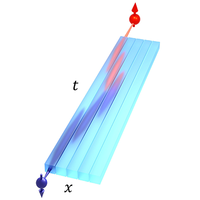
Demonstration of Returning Thouless Pump in a Berry Dipole System

Qingyang Mo, Shanjun Liang, Xiangke Lan, Jie Zhu, and Shuang Zhang

Phys. Rev. Lett. 135, 206603 (2025) - Published 13 November, 2025

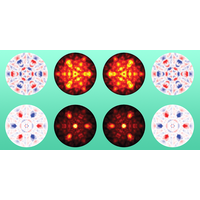
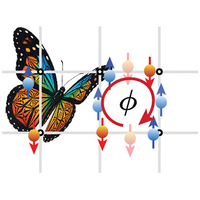
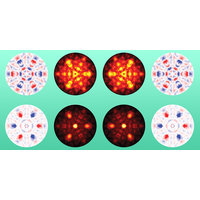
A returning Thouless pump driven by a Berry dipole in an acoustic system reveals dynamics driven by higher-order topological singularities where quantized spin inversion occurs without net displacement.

Spectroscopy and Ground-State Transfer of Ultracold Bosonic  K39133Cs Molecules

Krzysztof P. Zamarski, Charly Beulenkamp, Yi Zeng, Manuele Landini, and Hanns-Christoph Nägerl

Phys. Rev. Lett. 135, 203401 (2025) - Published 12 November, 2025

Observation of KCs molecules in their rovibrational ground state establishes a new viable species for ultracold molecule research.

Oxygen Opacity Measurements at High-Energy-Density Conditions

J. E. Bailey, D. C. Mayes, G. P. Loisel, T. Nagayama, D. Aberg, C. Blancard, J. Colgan, Ph. Cossé, G. S. Dunham, G. Faussurier, C. J. Fontes, F. Gilleron, I. Golovkin, T. A. Gomez, M. F. Gu, S. B. Hansen, H. Huang, C. A. Iglesias, C. Monton, J.-C. Pain, R. Santana, and B. W. Wilson

Phys. Rev. Lett. 135, 205101 (2025) - Published 12 November, 2025

Experiments with oxygen plasma at extreme densities and temperatures give new transparency to our picture of the Sun’s interior.

Latent Phase Transition in Two-Dimensional PdSe2

Qishuo Yang, Yabei Wu, Liang Zhu, Junjie Shan, Gang Wang, Xingxing Li, Erding Zhao, Shaolong Jiang, Xiao-lei Shi, Zhi-gang Chen, Jin Zou, Shi-Jun Liang, Feng Miao, Wenqing Zhang, and Junhao Lin

Phys. Rev. Lett. 135, 206102 (2025) - Published 12 November, 2025

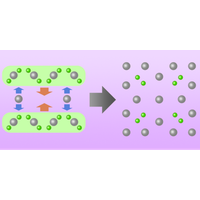
Adding extra atoms between sheets of PdSe2 doesn’t affect the material’s layered structure—until it does.

Probing Interfacial Water Dissociation at the Nanoscale with a Quantum Sensor

Wentian Zheng, Ke Bian, Jiyu Xu, Xiakun Chen, Shichen Zhang, Rainer Stöhr, Andrej Denisenko, Jörg Wrachtrup, Sheng Meng, and Ying Jiang

Phys. Rev. Lett. 135, 208001 (2025) - Published 10 November, 2025

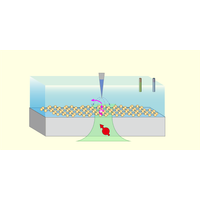
A scheme combining a scanning probe microscope with a quantum sensor can locally trigger water dissociation and observe the elementary steps of such a reaction.

Clock Precision beyond the Standard Quantum Limit at 10−18 Level

Y. A. Yang, Maya Miklos, Yee Ming Tso, Stella Kraus, Joonseok Hur, and Jun Ye

Phys. Rev. Lett. 135, 193202 (2025) - Published 7 November, 2025

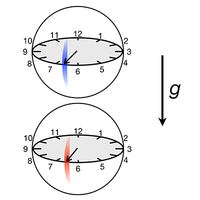
An entanglement-enhanced optical clock achieves unprecedented precision of 10−18 with 2dB quantum noise squeezing.

Why and When Merging Surface Nanobubbles Jump

Yixin Zhang, Xiangyu Zhang, and Detlef Lohse

Phys. Rev. Lett. 135, 194001 (2025) - Published 7 November, 2025

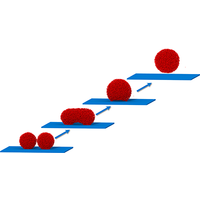
Molecular dynamics simulations and theory show how pressure energy, together with surface tension, drives coalescence-induced nanobubble release, offering fresh insights for enhancing gas evolution in key physicochemical processes.

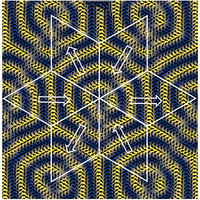
Gyromorphs: A New Class of Functional Disordered Materials

Mathias Casiulis, Aaron Shih, and Stefano Martiniani

Phys. Rev. Lett. 135, 196101 (2025) - Published 6 November, 2025

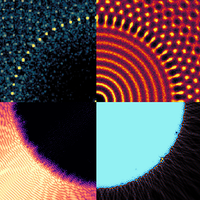
Gyromorphs are a new class of functional correlated disordered materials with high rotational order that exhibit deeper isotropic bandgaps.

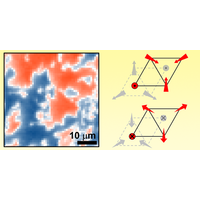
Circular Dichroism in Resonant Inelastic X-Ray Scattering: Probing Altermagnetic Domains in MnTe

D. Takegami, T. Aoyama, T. Okauchi, T. Yamaguchi, S. Tippireddy, S. Agrestini, M. García-Fernández, T. Mizokawa, K. Ohgushi, Ke-Jin Zhou, J. Chaloupka, J. Kuneš, A. Hariki, and H. Suzuki

Phys. Rev. Lett. 135, 196502 (2025) - Published 6 November, 2025

Two new techniques use circularly polarized x rays to characterize a new and potentially useful form of magnetism.

Orbital Magnetic Field Driven Metal-Insulator Transition in Strongly Correlated Electron Systems

Georg Rohringer and Anton Markov

Phys. Rev. Lett. 135, 196503 (2025) - Published 6 November, 2025

Orbital effects of the magnetic field trigger metal-insulator transitions in correlated systems.

Circular Dichroism in Resonant Photoelectron Diffraction as a Direct Probe of Sublattice Magnetization in Altermagnets

Peter Krüger

Phys. Rev. Lett. 135, 196703 (2025) - Published 6 November, 2025

Two new techniques use circularly polarized x rays to characterize a new and potentially useful form of magnetism.

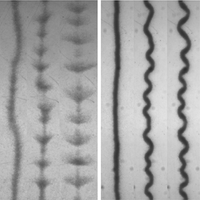
Pure Hydrodynamic Instabilities in Active Jets of Puller Microalgae

Isabelle Eisenmann, Marco Vona, Nicolas Desprat, Takuji Ishikawa, Eric Lauga, and Raphaël Jeanneret

Phys. Rev. Lett. 135, 198301 (2025) - Published 6 November, 2025

Using phototaxis to control cell orientation, various instabilities can be induced in jets of motile microalgae.

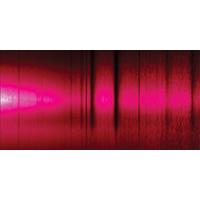
Zero-Point Motion of Polar Optical Phonons Revealed by Up-Converted Photoluminescence from a Single Perovskite Nanocrystal at Cryogenic Temperatures

Rentong Duan, Fengrui Hu, Chunyang Yin, Yan Lv, Chunfeng Zhang, Min Xiao, Zhi-Gang Yu, and Xiaoyong Wang

Phys. Rev. Lett. 135, 196901 (2025) - Published 5 November, 2025

A nanocrystal cooled to near absolute zero produces an unexpected light emission, which is shown to arise from quantum fluctuations in the crystal’s atomic lattice.

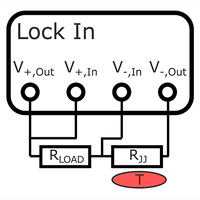
Josephson Junction Tuning Described by Depinning Physics

Oscar W. Kennedy, Jared H. Cole, and Connor D. Shelly

Phys. Rev. Lett. 135, 196202 (2025) - Published 4 November, 2025

Resistance optimization guided by a new theoretical model of qubit resistance leads to improved tuning of Josephson junctions used in the manufacture of superconducting qubits and quantum processors.

Topological Magneto-optics in the Noncoplanar Antiferromagnet Co1/3NbS2: Imaging and Writing Chiral Magnetic Domains

E. Kirstein, H. Park, I. Martin, J. F. Mitchell, N. J. Ghimire, and S. A. Crooker

Phys. Rev. Lett. 135, 196702 (2025) - Published 4 November, 2025

Researchers use a magneto-optical technique to image and manipulate magnetic domains in a chiral antiferromagnet, opening new routes for spin-based electronics.

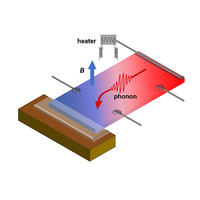
Discovery of Universal Phonon Thermal Hall Effect in Crystals

X. B. Jin, X. Zhang, W. B. Wan, H. R. Wang, Y. H. Jiao, and S. Y. Li

Phys. Rev. Lett. 135, 196302 (2025) - Published 3 November, 2025

Observation of the thermal Hall effect in nonmagnetic insulators and semiconductors characterized by a universal scaling behavior of the thermal Hall coefficient and the longitudinal thermal conductivity might point towards an intrinsic effect purely driven by phonons.

Moiré-Induced Magnetoelectricity in Twisted Bilayer NiI2

Haiyan Zhu, Hongyu Yu, Weiqin Zhu, Guoliang Yu, Changsong Xu, and Hongjun Xiang

Phys. Rev. Lett. 135, 196701 (2025) - Published 3 November, 2025
Twist-induced structural distortions induce ferroelectricity and polar magnetic topologies in bilayer NiI2.

Sign In to Your Journals Account

Filter

Section

Filter

Article Lookup

Enter a citation